
Declawing a cat is not simply removing its nails—it's a surgical procedure that involves amputating the last bone of each toe, equivalent to cutting off a human finger at the last knuckle. Despite being marketed as a solution to destructive scratching, declawing carries significant physical and psychological consequences. Increasingly, veterinary associations and animal welfare organizations condemn the practice as inhumane. Understanding why declawing is harmful, recognizing the risks, and learning about effective alternatives empowers cat owners to make compassionate, informed decisions.
The Anatomy and Reality of Declawing
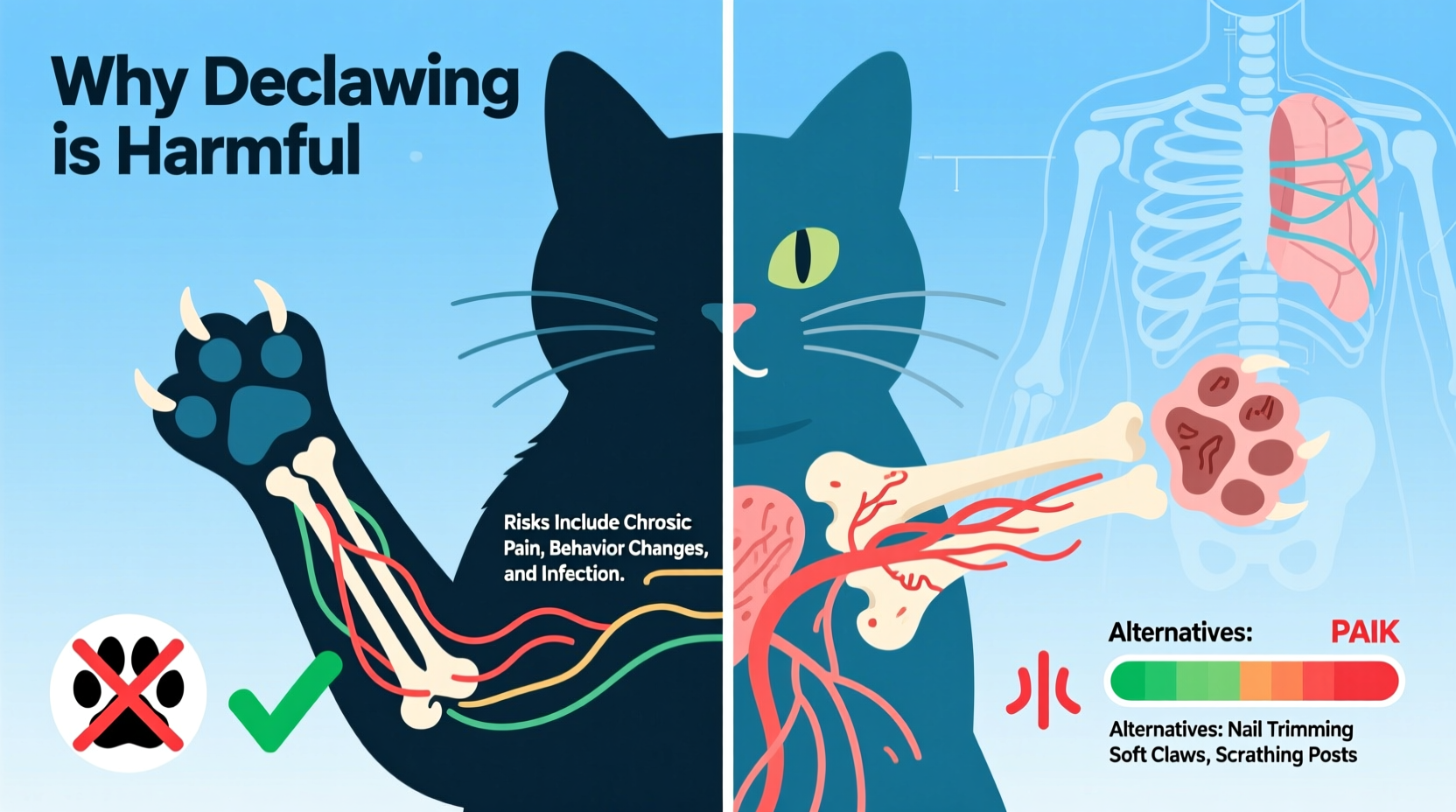
Onychectomy, the medical term for declawing, typically involves using a scalpel or guillotine-style clippers to remove the third phalanx (P3) of each front toe. In some cases, laser surgery is used, but this does not eliminate the trauma—only alter the method of tissue removal. This is not a nail trim; it’s an amputation that permanently alters the cat’s anatomy.
Cats rely on their claws for balance, climbing, stretching, and defense. Removing them disrupts natural biomechanics. The altered gait can lead to chronic pain, arthritis, and long-term musculoskeletal issues as the cat compensates for the loss of digit function.
“Declawing is a painful procedure with no medical justification in most cases. It violates the veterinarian’s oath to 'do no harm.'” — Dr. Jennifer Conrad, Veterinarian and Founder of The Paw Project
Physical and Behavioral Risks of Declawing
The immediate complications of declawing include hemorrhage, infection, and prolonged postoperative pain. However, many cats suffer from long-term issues that may not be immediately apparent to owners.
- Chronic Pain: Nerve damage or regrowth of improperly amputated bone can cause lifelong discomfort.
- Litter Box Avoidance: Pain when digging in litter leads many declawed cats to associate the box with suffering, resulting in inappropriate elimination.
- Biting Behavior: Without claws for defense, cats often resort to biting more aggressively when stressed.
- Gait Abnormalities: Altered weight distribution can lead to back pain and joint strain over time.
- Infection and Necrosis: Tissue death or abscesses may occur at surgical sites, sometimes requiring further amputation.
Legal and Ethical Status Worldwide
Over 25 countries—including the UK, Australia, Germany, and Brazil—have banned declawing except for medical necessity. In the United States, the trend is shifting: cities like Los Angeles, San Francisco, and Denver have outlawed the procedure, and New York became the first state to ban cosmetic declawing in 2019.
The American Veterinary Medical Association (AVMA) discourages declawing and recommends it only after “exhaustion of all other alternatives.” Meanwhile, the American Association of Feline Practitioners (AAFP) explicitly opposes non-therapeutic declawing, citing welfare concerns.
| Country/Region | Status of Declawing | Notes |
|---|---|---|
| United States | Limited bans | Banned in several cities and New York State |
| Canada | Discouraged | Major veterinary associations oppose it |
| United Kingdom | Illegal | Considered animal cruelty under animal welfare laws |
| Australia | Illegal | Classified as a form of mutilation |
| Italy | Illegal | Prohibited under national animal protection laws |
Humane Alternatives to Declawing
Scratching is a natural, instinctive behavior for cats. It marks territory, sheds old nail sheaths, and provides physical stretching. Instead of eliminating the behavior through surgery, responsible owners can redirect it appropriately.
1. Nail Trimming
Regular nail trims every 1–2 weeks reduce the damage caused by scratching. Use cat-specific clippers and avoid the quick (the pink vascular area inside the nail).
2. Soft Claws (Vinyl Nail Caps)
These lightweight caps glue over the cat’s natural nails and last 4–6 weeks. They prevent damage while allowing normal scratching motion.
3. Scratching Posts and Pads
Provide multiple scratching options made of sisal, cardboard, or carpet. Place them near sleeping areas and furniture the cat targets. Vertical and horizontal surfaces accommodate different preferences.
4. Environmental Enrichment
Cats scratch more when stressed or bored. Add climbing shelves, window perches, puzzle feeders, and daily play sessions to reduce unwanted behaviors.
5. Furniture Protection
Use double-sided tape, plastic covers, or slipcovers on vulnerable furniture. These deterrents train the cat to avoid specific areas without punishment.
“With patience and consistency, nearly every cat can learn appropriate scratching habits—no surgery required.” — Dr. Karen Sueda, Veterinary Behaviorist
Step-by-Step Guide to Prevent Destructive Scratching
- Assess the Environment: Identify where and why your cat scratches. Is it near a window? After waking up?
- Provide Alternatives: Place sturdy scratching posts in high-traffic areas. Reward use with treats or affection.
- Trim Nails Regularly: Start young to acclimate your cat. Even older cats can learn to tolerate it with gentle handling.
- Apply Nail Caps: Follow instructions carefully. Most cats adapt quickly and show no discomfort.
- Protect Furniture: Use temporary barriers or deterrents until desired behaviors are established.
- Reinforce Positive Behavior: Never punish scratching. Redirect and reward instead.
- Consult a Professional: If problems persist, seek help from a certified feline behaviorist.
Mini Case Study: Reversing Litter Box Issues Post-Declaw
Sophie, a 3-year-old domestic shorthair, was declawed at eight months old to protect her owner’s leather sofa. Within weeks, she began urinating beside the litter box. Her owner assumed she was acting out, but a veterinary exam revealed chronic paw pain and inflammation. After switching to a softer litter and providing pain management, Sophie gradually returned to using the box consistently. Behavioral therapy and environmental enrichment reduced her stress, but the damage to their bond lingered. Had humane alternatives been used initially, both the pain and behavioral fallout could have been avoided.
Frequently Asked Questions
Is declawing ever medically necessary?
Yes, in rare cases such as severe trauma, infection, or cancer affecting the claw bed. These are therapeutic procedures, not cosmetic, and are performed to relieve suffering—not protect furniture.
Can declawing cause personality changes in cats?
Yes. Many declawed cats become withdrawn, anxious, or more aggressive due to pain and loss of defense mechanisms. They may hiss or bite when previously they would have retreated.
Are there any long-term studies on declawed cats?
A 2017 study published in the Journal of Feline Medicine and Surgery found that declawed cats were significantly more likely to experience back pain, inappropriate elimination, and aggression compared to non-declawed cats.
Checklist: What to Do Instead of Declawing
- ✅ Trim your cat’s nails every 1–2 weeks
- ✅ Install multiple scratching surfaces around the home
- ✅ Use vinyl nail caps if needed
- ✅ Protect furniture with covers or deterrents
- ✅ Encourage scratching with toys and catnip
- ✅ Address underlying stress with enrichment
- ✅ Consult a vet or behaviorist for persistent issues
Conclusion: A Compassionate Choice for Cat Owners
Declawing inflicts unnecessary suffering on animals who rely on their claws for fundamental aspects of health and well-being. Modern veterinary science and animal behavior research confirm that the risks far outweigh any perceived benefits. Humane, effective alternatives exist—and they preserve both your cat’s dignity and your home’s integrity. By choosing empathy over convenience, cat owners uphold the trust placed in them by their pets. Educate others, advocate for bans, and commit to solutions that respect the nature of cats.
💬 Have you successfully transitioned from considering declawing to using humane alternatives? Share your story in the comments and help other cat owners make kinder choices.








