Coral reefs are among the most biologically diverse and economically valuable ecosystems on Earth. Often called the \"rainforests of the sea,\" they support over 25% of marine life despite covering less than 1% of the ocean floor. Yet today, these vibrant underwater cities face a silent but deadly threat: coral bleaching. This phenomenon, once rare, has become increasingly frequent and severe, signaling a profound imbalance in ocean health. Understanding why coral bleaching is happening, what drives it, and how it impacts reef systems is essential to protecting these fragile environments for future generations.
What Is Coral Bleaching?
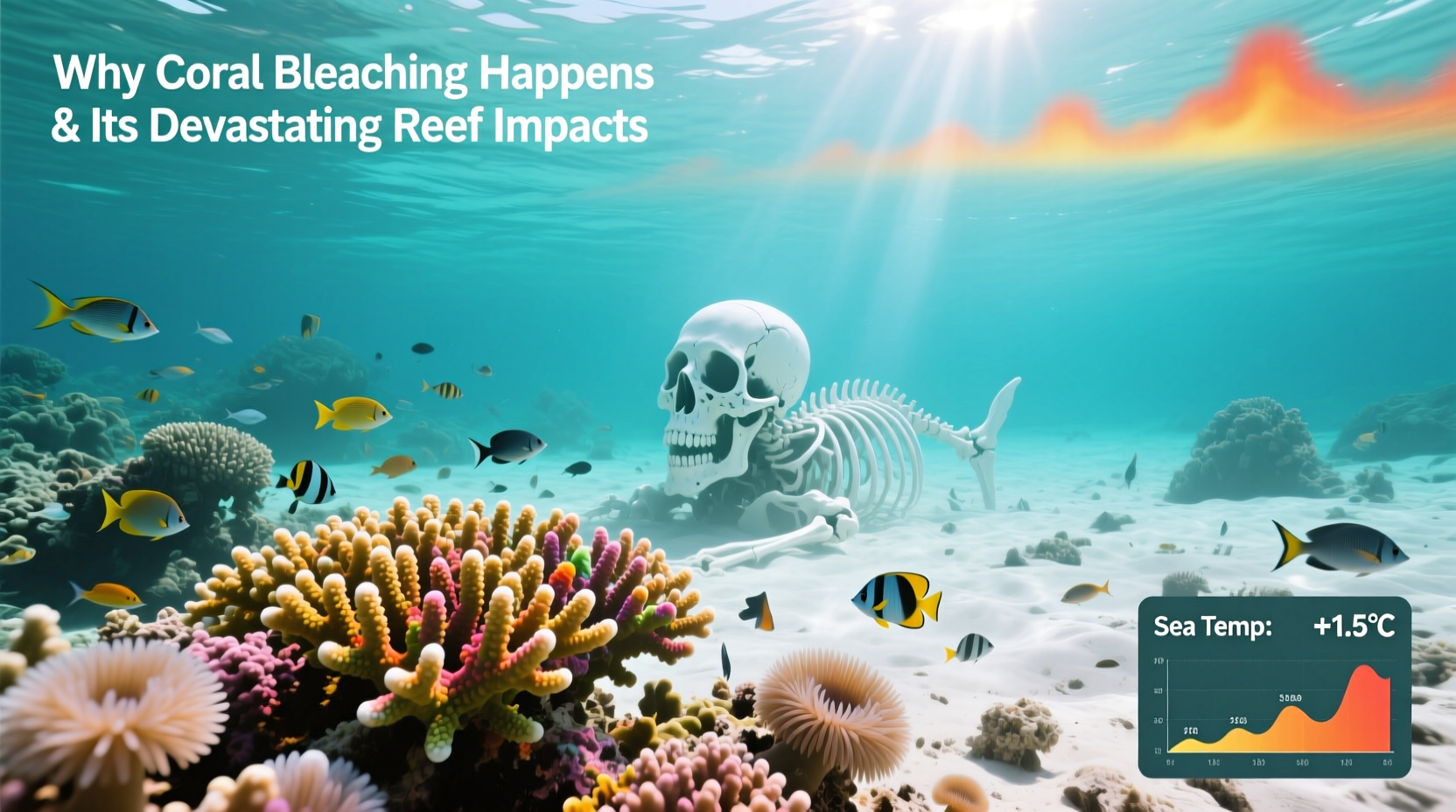
Coral bleaching occurs when corals expel the symbiotic algae (zooxanthellae) living in their tissues. These microscopic algae provide up to 90% of the coral’s energy through photosynthesis and give corals their brilliant colors. When stressed, corals lose their algae, turning white or “bleached.” While not immediately dead, bleached corals are severely weakened and at high risk of starvation and disease. If stressful conditions persist, mortality rates rise sharply.
Bleaching is not a single event but a physiological response triggered by environmental changes. The frequency and scale of mass bleaching events have increased dramatically since the 1980s, with global episodes recorded in 1998, 2010, and 2014–2017—each more destructive than the last.
The Primary Causes of Coral Bleaching
While multiple stressors contribute to coral bleaching, one factor stands above the rest: elevated sea temperatures due to climate change. However, other human-driven and natural factors compound the problem.
1. Rising Sea Temperatures
The leading cause of coral bleaching is prolonged exposure to warmer-than-average ocean temperatures. When water exceeds a coral’s thermal threshold—even by just 1–2°C (1.8–3.6°F)—for several days or weeks, the symbiosis breaks down. As greenhouse gas emissions trap heat in the atmosphere, oceans absorb over 90% of this excess warmth, creating widespread thermal stress.
Tip: Even small temperature increases can trigger bleaching; monitoring local sea surface temps helps scientists predict outbreaks.2. Ocean Acidification
Increased atmospheric CO₂ doesn’t just warm the planet—it dissolves into seawater, forming carbonic acid. This lowers the ocean’s pH, reducing the availability of carbonate ions that corals need to build their calcium carbonate skeletons. Weaker skeletal structures make corals more vulnerable to erosion, storms, and bleaching.
3. Solar Irradiance and UV Radiation
High light intensity, especially during low tides or calm, clear waters, amplifies heat stress. Ultraviolet radiation damages both coral tissues and zooxanthellae, further disrupting the symbiotic relationship.
4. Pollution and Runoff
Nutrient pollution from agricultural fertilizers, sewage, and urban runoff introduces excess nitrogen and phosphorus into coastal waters. This fuels algal blooms that smother corals and reduce oxygen levels. Sedimentation from deforestation or construction clouds the water, blocking sunlight and impairing photosynthesis.
5. Overfishing and Destructive Practices
Removing key reef species disrupts ecological balance. For example, overfishing herbivorous fish like parrotfish allows algae to overgrow and outcompete corals. Blast fishing and anchor damage also physically destroy reef frameworks, making recovery from bleaching nearly impossible.
“Coral reefs are facing a perfect storm of warming oceans, acidification, and local degradation. Without urgent action, we could lose most functioning reefs by mid-century.” — Dr. Ove Hoegh-Guldberg, Climate Scientist and Marine Biologist
Impacts of Coral Bleaching on Reef Ecosystems
The consequences of coral bleaching extend far beyond aesthetic whitening. They ripple through entire marine ecosystems and human communities alike.
Loss of Biodiversity
Reefs serve as nurseries, shelter, and feeding grounds for thousands of marine species. When corals die, fish populations decline rapidly. Studies show that bleached reefs can lose up to 60% of their fish diversity within months.
Economic Consequences
Over 500 million people worldwide depend on coral reefs for food, income, and coastal protection. Fisheries, tourism, and shoreline defense generate an estimated $375 billion annually. In places like the Maldives or the Caribbean, reef degradation threatens national economies.
Reduced Coastal Protection
Healthy reefs act as natural breakwaters, absorbing up to 97% of wave energy. As bleaching leads to structural collapse, coastlines become more vulnerable to erosion, storm surges, and flooding—especially dangerous in low-lying island nations.
Slowed Recovery and Regime Shifts
Repeated bleaching events shorten recovery windows. Corals grow slowly—some only a few centimeters per year. If bleaching occurs every few years, regeneration cannot keep pace. In many regions, degraded reefs shift to algal-dominated states, which are difficult to reverse.
Case Study: The Great Barrier Reef’s Triple Bleaching Events (2016–2020)
The Great Barrier Reef, the world’s largest coral reef system, experienced unprecedented back-to-back mass bleaching in 2016, 2017, and 2020. Triggered by record-breaking sea temperatures linked to climate change, these events affected over 80% of individual reefs across its 2,300-kilometer span.
In 2016 alone, an estimated 30% of shallow-water corals died, particularly in the northern sector where heat stress was most intense. Scientists documented large-scale mortality of branching and table corals—species critical for habitat complexity. Despite localized recovery efforts, recurring thermal stress has prevented full rebound, highlighting the limits of resilience under continuous pressure.
This case illustrates how even well-managed, protected reefs are not immune to global climate drivers. It underscores the urgent need for coordinated international action alongside local conservation.
How to Mitigate Coral Bleaching: A Practical Checklist
While reversing global warming requires systemic change, individuals, communities, and policymakers can take meaningful steps to reduce stress on coral reefs.
- Reduce carbon footprint: Transition to renewable energy, minimize air travel, and support climate-conscious policies.
- Use reef-safe sunscreen: Avoid oxybenzone and octinoxate, chemicals known to harm coral larvae and induce bleaching.
- Support sustainable seafood: Choose certified options and avoid species that damage reefs during harvest.
- Minimize plastic use: Plastics break down into microplastics ingested by marine life and can carry pollutants onto reefs.
- Participate in citizen science: Join reef monitoring programs like Reef Check or report bleaching via apps such as CoralWatch.
- Advocate for marine protected areas (MPAs): Well-enforced MPAs enhance reef resilience by reducing local stressors.
- Support coral restoration projects: Donate to or volunteer with organizations pioneering coral gardening and assisted evolution techniques.
Do’s and Don’ts for Protecting Coral Reefs
| Do | Don’t |
|---|---|
| Anchor in designated mooring buoys to prevent physical damage. | Drop anchors directly on coral—this crushes colonies and slows regrowth. |
| Wear reef-safe sunscreen or protective clothing when swimming near reefs. | Use chemical sunscreens containing oxybenzone, which can cause coral DNA damage. |
| Keep distance while snorkeling or diving—never touch or stand on coral. | Kick, grab, or walk on coral; even minor contact can kill polyps. |
| Dispose of waste properly to prevent runoff pollution. | Litter or dump wastewater near coastal zones—it eventually reaches reefs. |
Frequently Asked Questions
Can bleached corals recover?
Yes, if stress is short-lived and conditions return to normal, corals can regain their zooxanthellae and recover over weeks to months. However, repeated or prolonged bleaching significantly reduces survival chances.
Is coral bleaching natural?
Minor bleaching has occurred naturally in the past due to El Niño events or seasonal warming. But the current frequency, intensity, and geographic scale are unprecedented and clearly linked to human-caused climate change.
Are all corals equally affected?
No. Some species, like massive boulder corals, are more heat-tolerant. Branching corals (e.g., staghorn) bleach faster but may recover quickly if conditions improve. Genetic research is exploring “super corals” with enhanced resilience.
Conclusion: A Call to Action for Reef Survival
Coral bleaching is no longer a distant warning—it is a present-day emergency. From the tropics to subtropical zones, reefs are sending a distress signal through their whitened skeletons. The causes are clear: rising temperatures, acidifying oceans, and unchecked human activity. So too are the consequences—loss of biodiversity, economic hardship, and weakened coastal defenses.
Yet there is hope. Through global emission reductions, stronger marine protections, and community-led conservation, we can give reefs a fighting chance. Every degree of warming avoided, every reef-safe choice made, and every voice raised in advocacy contributes to a larger solution.
🚀 Start today: Calculate your carbon footprint, switch to reef-safe products, and share this knowledge. Together, we can turn the tide on coral bleaching and protect these irreplaceable ecosystems for generations to come.








