Turtles are naturally curious creatures, often exploring their environment with deliberate but steady movements. When a turtle consistently remains in one corner of its enclosure, it can signal an underlying issue related to health, stress, or habitat conditions. While occasional stillness is normal—especially during basking or digestion—prolonged inactivity in a single spot warrants attention. Understanding the reasons behind this behavior and making targeted environmental adjustments can significantly improve your turtle’s well-being.
This guide explores the most common causes for a turtle staying in one corner and provides actionable solutions rooted in animal behavior science and reptile husbandry best practices. Whether you're caring for a red-eared slider, box turtle, or another species, these insights will help you create a safer, more stimulating environment that encourages natural behaviors.
Common Reasons Turtles Stay in One Corner
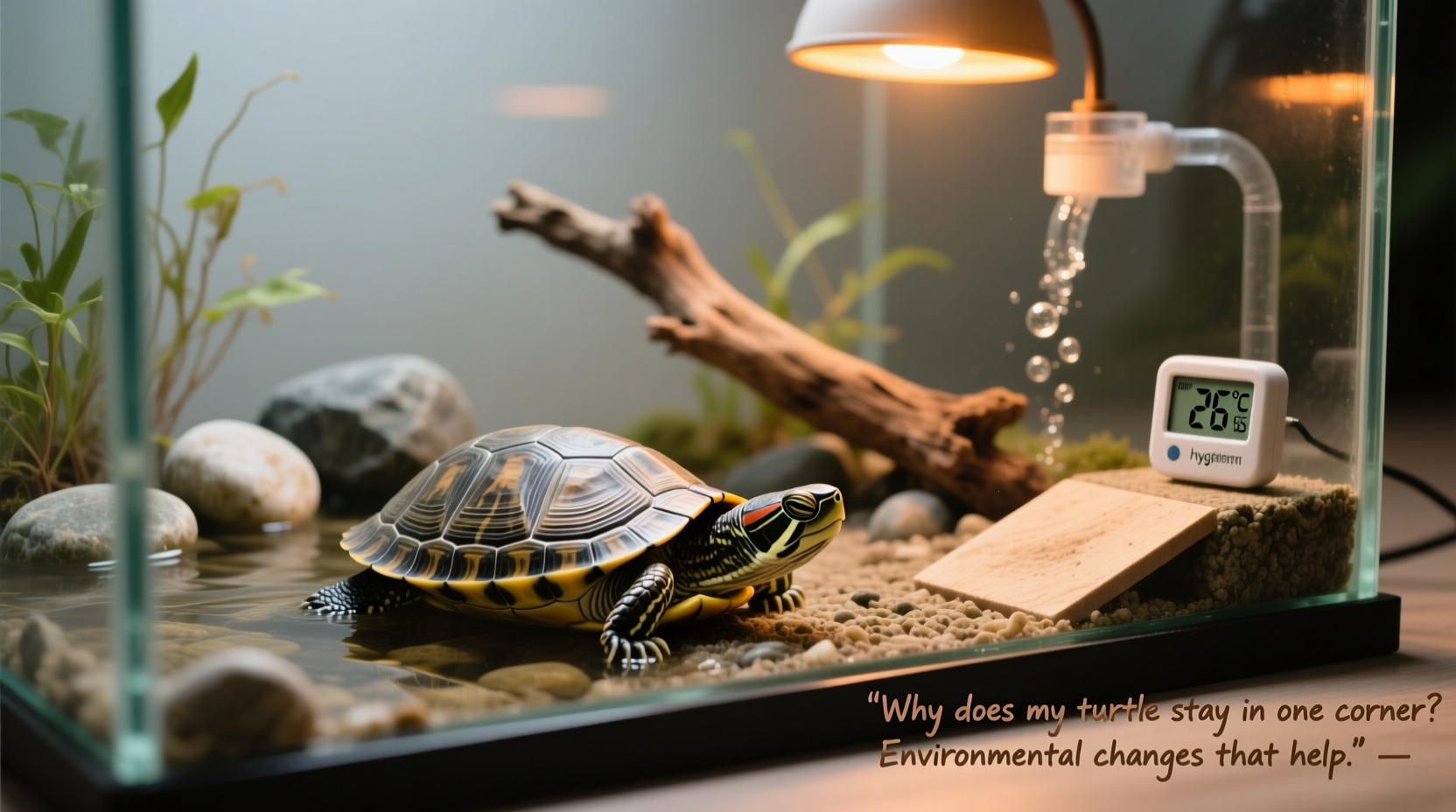
A turtle remaining in one area of its tank or enclosure isn’t always a sign of illness, but it should prompt a careful assessment of both physical and psychological factors. The following are among the most frequent explanations:
- Stress from new surroundings: Newly acquired turtles may hide or remain motionless as they acclimate to unfamiliar sights, sounds, and smells.
- Poor water quality: High ammonia, nitrite, or chlorine levels can irritate a turtle’s skin and eyes, prompting it to avoid swimming.
- Inadequate basking setup: If the basking area is too cold, unstable, or difficult to access, turtles may retreat to a corner where they feel safe but inactive.
- Incorrect temperature gradient: Water or air temperatures outside the ideal range (typically 75–80°F water, 85–90°F basking) can reduce metabolic activity and mobility.
- Lack of hiding spots: Some turtles prefer secure zones; without proper shelters, they may choose corners as makeshift refuges.
- Illness or injury: Respiratory infections, shell rot, eye problems, or limb injuries can limit movement and cause lethargy.
- Boredom or lack of enrichment: A单调 environment with no visual stimuli, obstacles, or exploration opportunities leads to disengagement.
Environmental Factors That Influence Turtle Behavior
The design and maintenance of a turtle’s habitat directly affect its activity level, appetite, and overall health. Unlike mammals, turtles are ectothermic, meaning they rely on external heat sources to regulate body functions. This makes environmental control crucial.
Water Quality and Filtration
Dirty water is one of the top reasons turtles avoid swimming and instead huddle in corners. Turtles produce significant waste, and without proper filtration, toxins accumulate rapidly. Cloudy, smelly water or visible algae growth indicates poor water hygiene.
Use a high-quality canister filter rated for at least double your tank’s capacity. Perform weekly partial water changes (25–30%) using dechlorinated water. Test water parameters regularly with a liquid aquarium test kit:
| Parameter | Safe Range | Danger Signs |
|---|---|---|
| pH | 6.5–8.0 | Below 6.0 or above 8.5 causes stress |
| Ammonia | 0 ppm | Even 0.5 ppm causes gill and eye irritation |
| Nitrite | 0 ppm | Causes respiratory distress |
| Nitrates | Under 40 ppm | Higher levels lead to chronic stress |
Thermal Regulation and Basking Zones
A turtle unable to thermoregulate properly will become sluggish. The enclosure must offer a thermal gradient so the animal can move between warmer and cooler areas.
The basking platform should be easily accessible, dry, and heated by a UVB/UVA-emitting lamp positioned 10–12 inches above the surface. Use a digital thermometer with a probe to verify actual surface temperature. If the basking zone is below 85°F, your turtle may not leave the water—or worse, avoid basking altogether, increasing the risk of respiratory infection.
“Turtles need reliable thermal gradients to digest food, fight off pathogens, and maintain immune function. Without a functional basking area, they’re essentially living in survival mode.” — Dr. Laura Simmons, DVM, Reptile Health Specialist
Step-by-Step Guide to Improving Your Turtle’s Habitat
If your turtle is staying in one corner, follow this structured approach to diagnose and correct potential issues:
- Assess immediate behavior: Note whether the turtle eats, swims briefly, or shows signs of labored breathing (e.g., bubbling from nose, open-mouth breathing).
- Check water parameters: Test pH, ammonia, nitrite, and nitrate levels. Correct imbalances with water changes and filter optimization.
- Verify temperatures: Measure water temperature with a submersible thermometer and basking surface with an infrared gun. Adjust heaters or lamps as needed.
- Evaluate basking accessibility: Ensure the platform has a gentle ramp or rock steps. It should occupy about 1/3 of the tank’s surface area.
- Inspect lighting schedule: Provide 10–12 hours of UVB light daily. Replace bulbs every 6–12 months, as UV output diminishes over time.
- Add visual barriers and hides: Place PVC pipes, ceramic caves, or floating plants to create shaded retreats, reducing anxiety.
- Introduce environmental enrichment: Rotate non-toxic decorations, add floating logs, or use puzzle feeders (e.g., placing food inside a perforated container).
- Monitor for 72 hours: Track movement patterns, feeding, and basking duration after changes. Improvement should be noticeable within three days.
Mini Case Study: Reviving Leo the Red-Eared Slider
Leo, a two-year-old red-eared slider, was brought to a local reptile clinic after his owner noticed he hadn’t moved from the back-right corner of his 40-gallon tank for over a week. He refused food and kept his eyes closed most of the time.
Initial examination revealed cloudy eyes and slight nasal discharge—classic signs of vitamin A deficiency and early respiratory infection. Further investigation showed:
- No UVB lighting (only a standard incandescent bulb)
- Water temperature fluctuating between 68°F and 72°F
- Basking area unreachable due to collapsed gravel mound
- High nitrate levels (65 ppm) from inadequate filtration
The veterinarian prescribed antibiotics and recommended habitat corrections. Over the next 10 days, the owner installed a UVB fixture, added a stable basking dock, upgraded the filter, and began supplementing Leo’s diet with gut-loaded insects and calcium-dusted greens.
By day 14, Leo was basking regularly, eating enthusiastically, and swimming across the entire tank. His preference for the corner disappeared entirely. This case underscores how interconnected environmental factors are with health and behavior.
Checklist: Quick Fixes to Encourage Movement
Use this checklist to troubleshoot and enhance your turtle’s environment:
- ✅ Test water quality (ammonia, nitrite, nitrate, pH)
- ✅ Confirm basking temperature is 85–90°F
- ✅ Ensure UVB light is present and recently replaced (within 12 months)
- ✅ Check that the basking area is dry, stable, and easy to climb onto
- ✅ Verify water temperature is 75–80°F with a reliable heater
- ✅ Add hiding places or shaded zones to reduce stress
- ✅ Clean or replace filter media if clogged or noisy
- ✅ Offer varied diet (commercial pellets, leafy greens, live prey)
- ✅ Remove sharp or unstable decorations near preferred corner
- ✅ Observe for signs of illness: swollen eyes, wheezing, buoyancy issues
Frequently Asked Questions
Is it normal for turtles to stay still for long periods?
Yes, turtles rest frequently and may remain motionless for hours, especially after eating or during cooler parts of the day. However, consistent immobility—particularly in one location—and refusal to bask or eat are red flags requiring investigation.
Can a turtle get depressed?
While turtles don’t experience emotions like humans, they do respond to chronic stress, boredom, and poor living conditions with behavioral withdrawal. Providing a complex, well-maintained environment reduces apathy and promotes natural instincts.
Should I handle my turtle more to encourage activity?
No. Frequent handling increases stress and exposes turtles to harmful bacteria from human hands. Instead, enrich the habitat and observe from a distance. Healthy turtles become more active when their environment supports their biological needs.
Conclusion: Creating a Thriving Turtle Environment
A turtle lingering in one corner is sending a silent message: something in its world isn’t working. Whether it’s a faulty heater, dirty water, or a missing UVB bulb, small oversights can have major consequences for reptile health. By systematically evaluating and improving habitat conditions, you empower your turtle to thrive—not just survive.
The key lies in consistency: maintaining clean water, reliable temperatures, proper lighting, and mental stimulation. These elements don’t just prevent corner-hiding—they foster vibrant, engaged behavior that reflects true well-being.
💬 Have you successfully helped your turtle become more active? Share your story or questions in the comments—your experience could help another pet owner make a life-changing adjustment.








