
It’s a familiar scene in homes with toddlers: You say “Time for bed,” and seconds later, your little one chirps back, “Time for bed.” Or you ask, “Do you want juice?” only to hear the same question echoed in a singsong voice. This kind of repetition—often called “parroting”—can seem odd or even excessive, but in most cases, it’s not only common, it’s a vital part of early language learning.
Toddlers absorb language through imitation. Repeating words and phrases they hear is one of the primary ways they practice speech, understand meaning, and build confidence in communication. However, when this behavior feels constant or delayed—repeating entire sentences hours after hearing them—parents often wonder whether it’s a sign of something more than just mimicry. The truth is, most toddlers who echo speech are developing normally. But understanding the nuances can help parents know what’s typical, what might need attention, and how to respond constructively.
What Is Echolalia and Why Do Toddlers Use It?
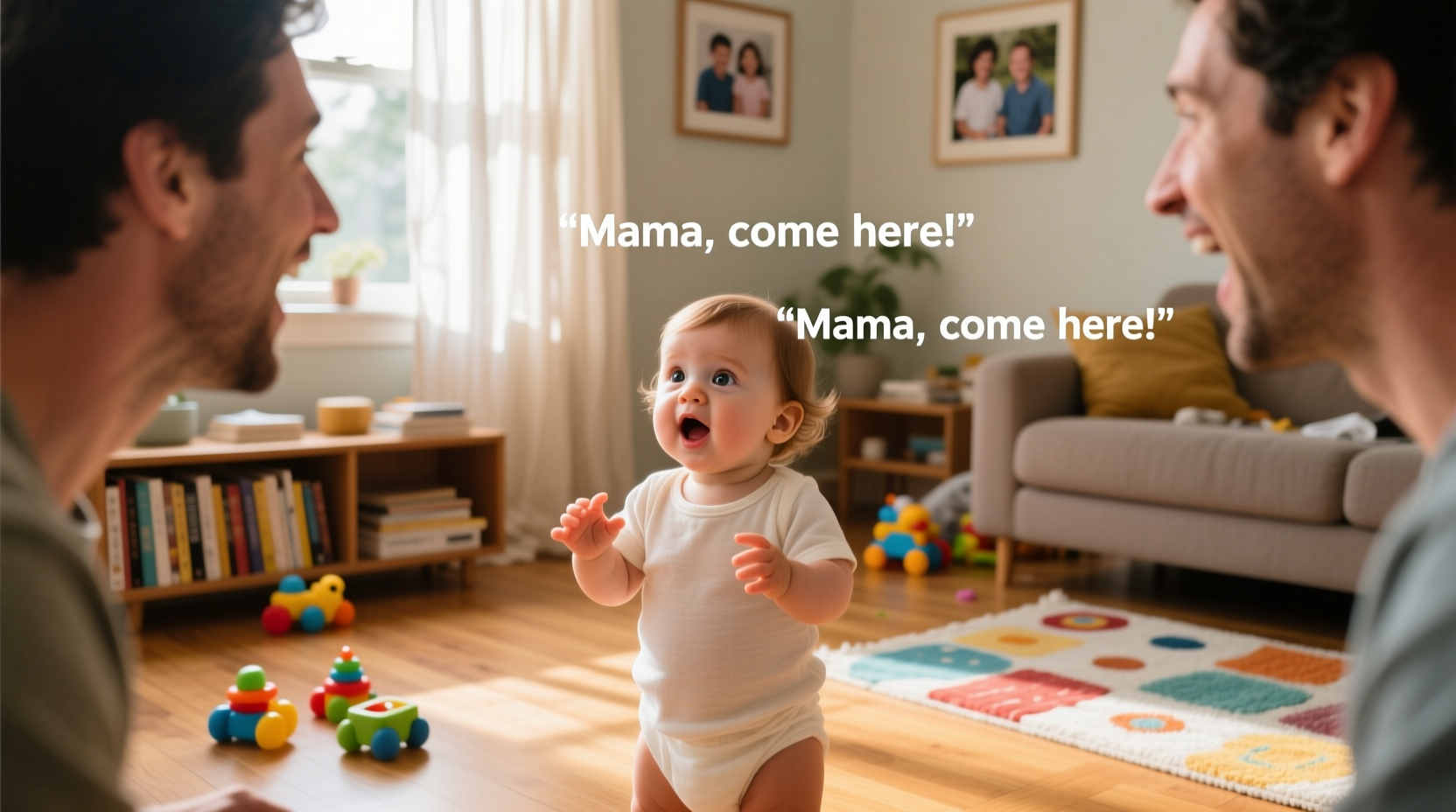
Echolalia is the technical term for repeating words or phrases without immediate comprehension. It comes from the Greek word *echō*, meaning “echo,” and *lalia*, meaning “speech.” There are two main types:
- Immediate echolalia: When a child repeats something right after hearing it—like mimicking your question instead of answering it.
- Delayed echolalia: When a child repeats something hours, days, or even weeks later—such as suddenly quoting a line from a cartoon during bath time.
For many toddlers, echolalia isn’t meaningless. It’s a stepping stone toward meaningful conversation. Think of it as mental rehearsal. Before children can generate original sentences, they borrow phrases from their environment. These “scripts” help them navigate social interactions until they develop the ability to formulate spontaneous responses.
“Echolalia is not a disorder—it’s a strategy. Children use it to process language, regulate emotions, and eventually build independent communication.” — Dr. Laura J. Mattison, Pediatric Speech-Language Pathologist
In neurotypical development, echolalia peaks between 18 and 30 months. During this window, toddlers are rapidly absorbing vocabulary and sentence structure. Repetition helps them decode grammar, tone, and context. For example, hearing and repeating “Let’s go outside!” teaches not just the words, but the excitement in the voice and the action that follows.
Is It Normal for My Toddler to Repeat Everything?
Yes—in most cases, it is completely normal. In fact, research shows that up to 75% of a toddler’s early utterances may involve some form of repetition. This mimicry serves several developmental purposes:
- Language acquisition: Repeating phrases helps solidify pronunciation and syntax.
- Social bonding: Mimicking tone and rhythm strengthens emotional connection.
- Cognitive processing: Echoing gives children extra time to process what was said.
- Self-regulation: Some toddlers repeat comforting phrases when anxious or overwhelmed.
Consider this real-life example:
Mini Case Study: Two-year-old Maya began repeating her mother’s questions verbatim: “Are you hungry?” “Are you hungry?” Instead of answering, she’d stare, then walk to the fridge. Over time, her parents responded by modeling answers: “Yes, I am hungry. I’ll have a banana.” Within weeks, Maya started saying “Banana!” on her own. The repetition wasn’t defiance—it was processing.The key to determining whether echolalia is typical lies in progression. If your child gradually begins using words meaningfully—if they start answering questions, initiating conversations, or combining words into new sentences—the repetition is likely part of healthy development.
When Should Parents Be Concerned?
While echolalia is usually a phase, certain patterns may signal underlying challenges, particularly if they persist beyond age 3 or dominate communication. Red flags include:
- Repeating phrases without attempting original speech
- No eye contact during or after echoing
- Lack of response to name or simple commands
- Using memorized scripts instead of functional language (e.g., reciting a TV ad instead of saying “I want snack”)
- Significant delay in other developmental areas (motor skills, social interaction)
Persistent echolalia is commonly associated with autism spectrum disorder (ASD), but it’s important to note: not all children who echo have ASD, and not all autistic children exhibit echolalia. Other conditions like language delays, hearing impairments, or apraxia of speech can also contribute.
If you notice limited back-and-forth interaction, absence of gestures (pointing, waving), or regression in language skills, consult a pediatrician or speech-language pathologist. Early evaluation leads to earlier support—and better outcomes.
How to Support Language Development at Home
Parents play a crucial role in helping toddlers transition from repetition to meaningful communication. Here are practical strategies grounded in speech therapy best practices:
- Model simple, clear language. Use short sentences and emphasize key words: “You’re drinking milk.”
- Expand on their echoes. If your child says “Want cookie,” respond with, “Yes! You want a cookie. Here’s a small cookie.”
- Ask open-ended questions. Replace “Do you want juice?” with “What do you want to drink?” This encourages original responses.
- Pause and wait. Give your child 5–10 seconds to respond after asking a question. Rushing to rephrase can reinforce echoing.
- Use parallel talk. Narrate what you’re doing: “Mommy is washing the spoon. Now I’m putting it in the drawer.” This builds vocabulary in context.
Step-by-Step Guide: Turning Echolalia Into Conversation
Follow this daily routine to encourage expressive language:
- Observe patterns (Day 1–3): Note when and what your child repeats. Is it questions? Commands? TV phrases?
- Select target phrases (Day 4): Choose 2–3 high-frequency echoes to work on (e.g., “Let’s go” or “More please”)
- Model alternatives (Day 5 onward): Each time the echo occurs, respond with a natural expansion: “Yes, let’s go to the park!”
- Introduce choices: Offer options: “Do you want apple or banana?” Wait for any verbal or gestural response.
- Reinforce attempts: Praise any effort to respond differently, even if unclear: “You said ‘banana’! Here’s your banana!”
This approach builds confidence and reduces pressure. Over time, the child learns that communication leads to results—and original speech becomes more rewarding than repetition.
Do’s and Don’ts of Responding to Echolalia
| Do | Don’t |
|---|---|
| Respond naturally and warmly to echoed speech | Correct or scold: “No, say it right!” |
| Expand on repeated phrases with new vocabulary | Assume the child understands the phrase just because they can say it |
| Use visual cues like pictures or gestures to support meaning | Overload with complex language or rapid-fire questions |
| Encourage turn-taking in play and conversation | Ignore the behavior completely—even if it seems robotic |
| Consult a professional if progress stalls after age 3 | Wait and hope it will “just go away” if other delays are present |
FAQ: Common Questions About Toddler Echolalia
Is echolalia a sign of autism?
Not always. While echolalia is more common in children with autism, many neurotypical toddlers use it heavily during language development. The difference lies in progression. Autistic children may rely on echolalia longer and struggle to shift to spontaneous speech without intervention. However, echolalia alone is not diagnostic—professionals assess social engagement, eye contact, joint attention, and other factors.
Should I stop my toddler from repeating things?
No. Stopping repetition can hinder language growth. Instead, redirect gently. If your child repeats “Wheels on the bus” for the tenth time, join in joyfully, then extend: “The wheels go round and round. What else goes round and round? The clock!” This validates their interest while introducing new concepts.
At what age should echolalia stop?
Most children reduce immediate echolalia by age 3 as they gain expressive language skills. Delayed echolalia (quoting movies, songs) may linger into preschool years, especially in imaginative play. If echolalia remains the primary form of communication past age 3–4, seek evaluation from a speech therapist.
Final Thoughts: Embrace the Echo, Encourage the Expression
Toddler parroting isn’t a quirk to correct—it’s a milestone to celebrate. Every echoed phrase is a step toward fluency. Behind those repeated words is a mind working hard to decode the complex world of human communication. With patience, modeling, and responsive interaction, most children naturally evolve from mimicking to meaning-making.
If concerns linger, trust your instincts. Early intervention is powerful, but so is reassurance. For the vast majority of families, echolalia fades as vocabulary grows, replaced by questions, jokes, and stories told in the child’s own voice. Until then, listen closely. That little echo might just be practicing how to tell you about their day—someday soon, in their own words.
💬 Have a story about your toddler’s repeating phase? Share your experience in the comments—your insight could comfort or inspire another parent navigating the same journey.








