Pets often exhibit behaviors that puzzle their owners. One of the most unsettling is when a dog or cat stares intently at a blank wall for minutes on end. While occasional glances may go unnoticed, prolonged or repetitive staring can signal anything from mild boredom to neurological disorders. Understanding the underlying cause is essential—not only to ease your concern but also to protect your pet’s well-being. This article explores the full spectrum of potential reasons, from environmental factors to medical conditions, and provides practical steps to assess and respond appropriately.
Behavioral Explanations: When It’s Not Medical
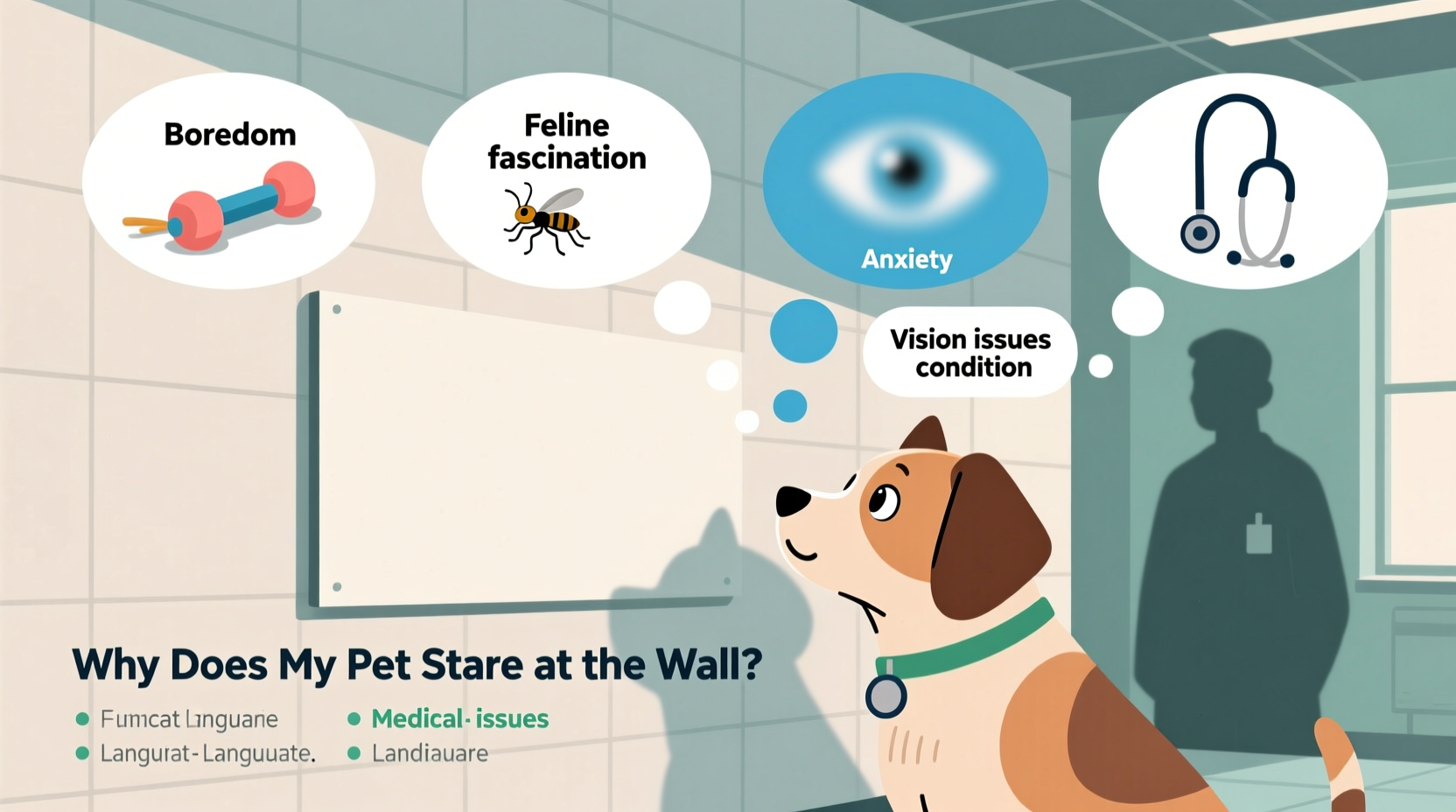
Not every instance of wall-staring indicates illness. In many cases, pets are reacting to stimuli humans can’t perceive or expressing psychological needs. Behavioral causes are often overlooked in favor of assuming something is “wrong,” but they’re just as important to consider.
- Boredom: Pets, especially dogs, require mental stimulation. Without adequate play, training, or social interaction, they may fixate on small movements—like dust motes or shadows on a wall—as a form of self-entertainment.
- Attention-seeking: Some animals learn that unusual behavior draws attention. If staring at the wall once resulted in being noticed or spoken to, they may repeat it to re-engage their owner.
- Obsessive-compulsive tendencies: Repetitive actions like tail-chasing, licking, or staring can develop into compulsions, particularly in high-anxiety environments or breeds predisposed to such behaviors (e.g., German Shepherds, Bull Terriers).
- Environmental triggers: Flickering lights, drafts moving curtains, or even insect activity behind walls might capture a pet’s attention without obvious signs to human observers.
Recognizing Stress-Related Behaviors
Chronic stress can manifest in subtle ways. A pet that feels insecure due to changes in routine, new household members, or loud noises may retreat into repetitive actions. Staring at a wall could be a displacement behavior—an attempt to cope with internal anxiety.
Watch for accompanying signs:
- Excessive grooming
- Avoidance of certain rooms
- Changes in appetite or sleep patterns
- Vocalizations during or after the staring episode
Medical Causes: When to Be Concerned
If behavioral adjustments don’t reduce the frequency or duration of wall-staring, a veterinary evaluation becomes critical. Several medical conditions can present with this symptom, some of which are progressive or life-threatening if left untreated.
Epilepsy and Seizure Disorders
Focal (partial) seizures are among the most common medical explanations. Unlike full-body convulsions, these seizures affect only a portion of the brain and may appear as vacant staring, lip-smacking, or unresponsiveness lasting seconds to minutes.
“Focal seizures in pets are often mistaken for daydreaming. But if your dog zones out repeatedly and doesn’t respond to their name, it’s worth investigating.” — Dr. Lena Reyes, Veterinary Neurologist
These episodes may occur at predictable times (e.g., during rest) and increase in frequency over time. Post-seizure confusion or disorientation strengthens the suspicion.
Cognitive Dysfunction Syndrome (CDS)
Commonly referred to as “doggy dementia,” CDS affects older pets, typically those over 10 years old. It mirrors Alzheimer’s disease in humans and includes symptoms like confusion, altered sleep cycles, and aimless behaviors—including prolonged staring at walls.
A 2020 study published in *Frontiers in Veterinary Science* found that nearly 28% of dogs aged 11–16 showed at least one sign of cognitive decline, with disorientation being the second most reported symptom after altered sleep-wake cycles.
Vision and Hearing Impairment
Sensory loss alters how pets interact with their environment. An animal with deteriorating vision may press its face close to a wall, mistaking it for an object or trying to detect movement. Similarly, hearing-impaired pets may focus visually on surfaces where vibrations or light changes are more perceptible.
Brain Tumors or Lesions
Though less common, space-occupying lesions in the brain can disrupt normal function and lead to abnormal behaviors. Wall-staring, especially when paired with circling, head tilt, or aggression, warrants immediate imaging (MRI/CT scan).
Differentiating Between Causes: A Practical Checklist
It’s not always clear whether wall-staring is behavioral or medical. Use this checklist to gather observations before visiting your vet:
Checklist: Assessing Your Pet’s Wall-Staring Behavior- How long does the episode last? (Note exact duration.)
- Is your pet responsive during the episode? (Try calling their name.)
- Does it happen at specific times? (E.g., after waking, during storms.)
- Are there physical signs? (Twitching, drooling, trembling.)
- Has the behavior increased in frequency or intensity?
- Have other behavior changes occurred recently? (House soiling, irritability.)
- Is your pet senior (7+ for cats, 8+ for dogs)?
- Have you changed their environment or routine?
Bring video evidence if possible. A short clip of the behavior helps veterinarians make a more accurate assessment than descriptions alone.
When to Seek Veterinary Care
While occasional odd behavior isn’t alarming, certain red flags demand prompt action:
| Symptom | Likely Cause | Action Required |
|---|---|---|
| Staring + unresponsiveness for >30 seconds | Focal seizure | Schedule neuro consult; consider EEG/MRI |
| Repetitive circling or pacing after staring | Cognitive dysfunction or tumor | Veterinary exam + bloodwork/imaging |
| Head pressing against wall | Neurological or metabolic issue (e.g., liver disease) | Seek emergency care |
| Episodes occur multiple times daily | Seizure disorder or OCD | Track frequency; consult vet within 48 hours |
| No response to name or touch during episode | Altered consciousness | Immediate evaluation recommended |
Note: Head pressing—where a pet leans its head persistently against a wall or furniture—is particularly concerning and linked to hepatic encephalopathy, toxins, or intracranial pressure. This requires urgent medical intervention.
Diagnostic Process: What to Expect
Your veterinarian will likely begin with a comprehensive physical and neurological exam. Blood tests help rule out metabolic causes like liver or kidney disease. If seizures are suspected, advanced diagnostics may include:
- Electroencephalogram (EEG)
- Magnetic Resonance Imaging (MRI)
- Cerebrospinal fluid analysis
In older pets, cognitive dysfunction is diagnosed by excluding other conditions and evaluating behavioral history using tools like the Canine Cognitive Dysfunction Rating (CCDR) scale.
Real-Life Example: Max the Border Collie
Max, a 9-year-old Border Collie, began staring at the kitchen wall for several minutes each evening. His owner initially dismissed it as fatigue. Over two months, the episodes grew longer and were followed by brief periods of confusion. Max once walked into a closed door afterward.
Video footage showed no twitching or drooling, but Max was completely unresponsive during the episodes. Bloodwork was normal, but an MRI revealed a small frontal lobe lesion consistent with a benign tumor. With anti-seizure medication, the staring stopped entirely within three weeks. Early recognition prevented worsening symptoms.
This case illustrates why timely investigation matters—even subtle changes deserve attention in aging pets.
Managing and Preventing Problematic Staring
Depending on the cause, management strategies vary widely. Here’s a step-by-step approach:
- Document the behavior: Keep a log of date, time, duration, and any triggers (e.g., post-nap, during thunder).
- Enhance environmental enrichment: Add interactive toys, scheduled walks, and training sessions to reduce idle time.
- Reduce stress: Maintain consistent routines, provide safe spaces, and consider pheromone diffusers (e.g., Adaptil, Feliway).
- Consult your vet: Share your log and video. Request a neurological screen if episodes persist.
- Follow treatment plans: If diagnosed with seizures or CDS, adhere strictly to medication and lifestyle recommendations.
For pets with cognitive decline, supplements like Senilife® (containing antioxidants, phosphatidylserine, and vitamin E) have shown promise in slowing progression. Always discuss supplements with your vet first.
Frequently Asked Questions
Is it normal for my cat to stare at the wall occasionally?
Occasional glancing is normal, especially if the cat reacts to sounds or movements. However, sustained staring (over a minute), lack of response, or repetition suggests an underlying issue needing evaluation.
Can anxiety really cause my dog to stare at walls?
Yes. Anxiety can lead to obsessive behaviors. Dogs under chronic stress may develop compulsions like staring, licking, or pacing as coping mechanisms. Addressing the root cause—such as separation distress or noise phobia—is key.
What’s the difference between zoning out and a seizure?
Zoning out usually lasts just a few seconds and the pet responds quickly to stimuli. A seizure-related episode involves fixed gaze, no response to voice or touch, and may be followed by disorientation. Duration and consistency matter—recurrent unresponsiveness is not normal daydreaming.
Conclusion: Trust Your Instincts and Act
Seeing your pet stare at a wall can be unnerving, but understanding the range of possible causes empowers you to respond wisely. While boredom or curiosity may explain isolated incidents, persistent or escalating behavior should never be ignored. The line between quirky habit and medical emergency can be thin—especially in older animals.
Early detection improves outcomes dramatically, whether you're managing epilepsy, slowing cognitive decline, or addressing anxiety. Document the behavior, consult your veterinarian with confidence, and take proactive steps to enrich your pet’s life.
💬 Your observations matter. Share your experience or questions below—your story could help another pet owner recognize a warning sign early.








