
Pet birds are naturally observant, intelligent creatures whose behaviors often reflect a complex interplay of instinct, environment, and emotion. One peculiar yet frequently reported behavior among bird owners is their pet’s tendency to chirp—sometimes persistently—at twinkling or flickering lights. Whether it's Christmas tree lights, LED candles, or reflections on a TV screen, many birds react vocally to these visual stimuli. Understanding why this happens requires a closer look at avian psychology, sensory perception, and social behavior.
Birds don’t interpret light the same way humans do. Their vision is more acute, sensitive to movement and rapid changes in brightness. What appears as a gentle twinkle to us may register as sudden motion or potential activity in a bird’s world. This article explores the behavioral reasons behind this fascinating response, offering insights into how birds perceive light, what drives their vocalizations, and how you can respond appropriately as a caretaker.
The Science Behind Avian Vision and Light Sensitivity
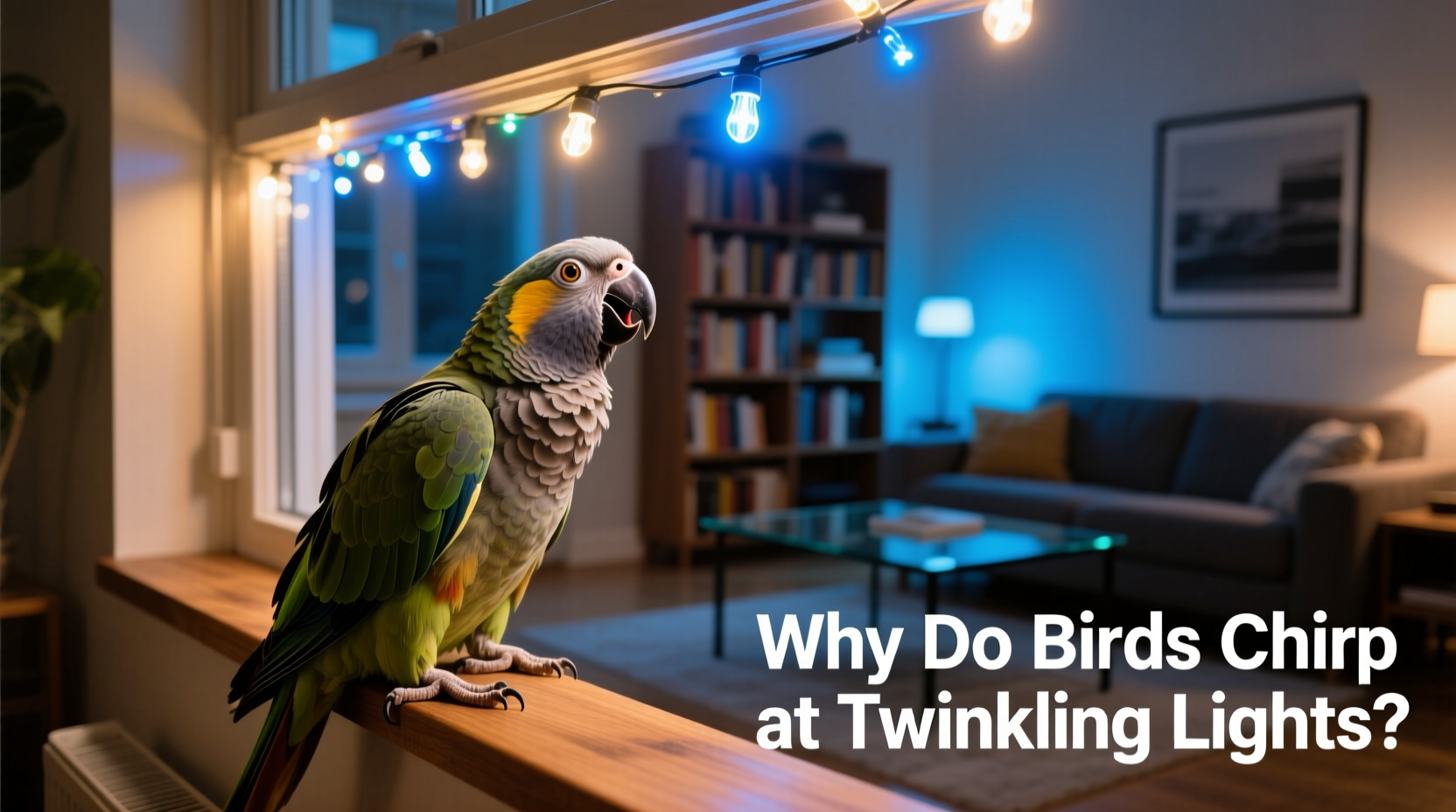
To understand why birds react to twinkling lights, it’s essential to appreciate how they see the world. Birds possess tetrachromatic vision, meaning they have four types of cone cells in their eyes—compared to three in humans. This allows them to detect ultraviolet (UV) light and perceive colors and contrasts beyond human capability. More importantly for this discussion, birds also process light flicker at much higher frequencies than people do.
Most artificial lights, including LEDs and fluorescents, operate with a subtle flicker—often imperceptible to humans—but visible to birds due to their faster flicker fusion threshold. Where we see a steady glow, a bird may perceive rapid pulses of light, creating an effect similar to strobing or flashing. This can be stimulating, confusing, or even stressful depending on the context.
Twinkling lights, such as those on decorative strands, amplify this effect. The irregular patterns mimic natural phenomena like sunlight filtering through leaves or water reflecting off a surface—both of which signal activity in the wild. For a bird, this could suggest the presence of other birds, insects, or predators, prompting vocal responses as part of its alert system.
Tip: Observe your bird under different lighting conditions. If chirping increases around certain lights, consider switching to warm-white, non-flickering LEDs or reducing exposure during rest periods.Social and Communicative Behavior: Chirping as Interaction
Birds are highly social animals, especially species commonly kept as pets like budgerigars, cockatiels, and lovebirds. In the wild, they rely heavily on vocal communication to maintain flock cohesion, signal danger, express excitement, or locate companions. When a pet bird chirps at a twinkling light, it may not be reacting out of fear—but rather attempting to engage.
From the bird’s perspective, the moving light might resemble another bird’s eye shine, feather glint, or motion within foliage. The chirp could be an attempt to initiate contact: “I see something—is that you?” This is particularly common in single-pet households where the bird views its human or even inanimate objects as part of its social group.
Vocalization in response to stimuli is also a form of cognitive engagement. Birds that are mentally stimulated tend to be healthier and less prone to behavioral issues like feather plucking or excessive screaming. Occasional chirping at lights may simply indicate curiosity—an expression of active awareness rather than distress.
“Birds use vocalizations not just to communicate with others, but to make sense of their environment. A chirp at a light isn’t always alarm—it can be inquiry.” — Dr. Laura Finch, Avian Behavioral Biologist, University of Queensland
Instinctual Triggers: Predation, Prey, and Environmental Cues
Beyond social interpretation, some reactions to twinkling lights stem from deep-seated survival instincts. Even domesticated birds retain evolutionary behaviors shaped by life in the wild. Rapid flashes of light can simulate the movement of prey (like insects darting in sunlight) or the sudden appearance of a predator (such as a snake’s glinting scale).
In response, birds may emit short alarm calls—sharp chirps or staccato notes—to warn their flock. These sounds are typically brief, high-pitched, and repeated in quick succession. Alternatively, if the bird perceives the light as potential prey, it may produce softer, exploratory chirps while leaning forward, tilting its head, or hopping toward the source.
Another factor is circadian rhythm disruption. Bright or flickering lights during evening hours can interfere with a bird’s internal clock. Many owners report increased vocalization when decorative lights are turned on after sunset. The bird may interpret the sudden illumination as dawn, triggering morning-like behaviors including singing, stretching, and calling out to its perceived flock.
Common Behavioral Responses to Twinkling Lights
| Behavior | Likely Trigger | Interpretation |
|---|---|---|
| Rapid, repetitive chirping | Flickering or strobe-like lights | Perceived threat or overstimulation |
| Soft, melodic warbling | Gentle, rhythmic twinkling | Curiosity or playful engagement |
| Head tilting + one-eye focus | Stationary reflective spot | Mistaking light for another bird |
| Retreating or fluffing up | Bright, erratic blinking | Fear or stress response |
| Singing or mimicking sounds | Evening light activation | Dawn confusion; circadian misalignment |
Environmental Enrichment vs. Overstimulation: Finding Balance
While some level of interaction with novel stimuli is beneficial, excessive exposure to twinkling lights can lead to overstimulation, especially in smaller or more anxious birds. Chronic stress from unpredictable lighting can result in sleep deprivation, weakened immunity, and behavioral disorders.
On the flip side, completely sterile environments lacking visual interest can cause boredom and depression in intelligent species. The key is balance—providing enriching experiences without overwhelming the bird’s senses.
Consider how and when you introduce twinkling lights. Using them briefly during daytime hours as part of playtime may offer harmless stimulation. However, leaving them on overnight—or placing them directly in the bird’s line of sight—can disrupt rest and increase anxiety.
Tip: Use timers to limit decorative lighting to 1–2 hours per day, preferably in the early evening before bedtime routines begin. Position lights outside the cage area to reduce direct fixation.Mini Case Study: Luna the Cockatiel and the Holiday Lights
Luna, a 3-year-old female cockatiel living in suburban Chicago, began chirping incessantly every evening when her owners turned on their outdoor holiday light display. At first, they assumed she was excited—but soon noticed she wasn’t sleeping well, becoming irritable and less interactive during the day.
After consulting an avian veterinarian, they learned that the rapid flicker of inexpensive LED string lights was likely causing sensory overload. Even though the display was visible only through a window, the intermittent flashes were enough to keep Luna in a state of low-level arousal.
The solution? They replaced the lights with steady-glow variants and installed blackout curtains in Luna’s room. Within two days, her chirping decreased significantly, and her sleep patterns normalized. Interestingly, once adjusted, Luna occasionally chirped softly at the new lights—not out of agitation, but seemingly in playful acknowledgment.
This case illustrates that while birds may initially react to twinkling lights due to instinct or curiosity, prolonged exposure without control can shift the behavior from engagement to stress.
Step-by-Step Guide: Managing Your Bird’s Response to Twinkling Lights
- Observe and Document: Note when chirping occurs, the type of light involved, duration, and accompanying behaviors (e.g., fluffing, retreating, singing).
- Assess Light Type: Determine whether the source is flickering (common in cheap LEDs). Use a smartphone camera—if you see rolling bars or strobing on screen, your bird sees it too.
- Relocate or Shield: Move the light source away from the bird’s primary living space or use physical barriers like blinds or furniture to block direct view.
- Limit Exposure Time: Use lights for short durations, ideally during daylight or early evening, avoiding use during wind-down hours.
- Introduce Gradually: If using seasonal décor, turn lights on for 10 minutes at first, then slowly increase time over several days to allow acclimation.
- Provide Alternatives: Offer visual enrichment like safe mirrors (used cautiously), foraging toys, or videos of birds in nature to redirect attention.
- Monitor Long-Term Effects: Watch for signs of chronic stress—excessive preening, loss of appetite, aggression—and adjust environment accordingly.
FAQ: Common Questions About Birds and Twinkling Lights
Is it harmful if my bird chirps at lights every night?
Occasional chirping is normal and usually not harmful. However, if it happens nightly and coincides with poor sleep, irritability, or obsessive staring, it may indicate overstimulation. Evaluate the lighting setup and ensure your bird has a dark, quiet place to rest for 10–12 hours daily.
Can birds become addicted to flickering lights?
Not technically \"addicted,\" but some birds may develop a compulsive fixation, especially if the light becomes a primary source of stimulation in an otherwise unengaging environment. This is more common in birds with limited toys, social interaction, or mental challenges. Address by enriching the overall habitat.
Should I stop using decorative lights altogether?
No—you don’t need to eliminate twinkling lights entirely. Instead, use them thoughtfully. Opt for warm-toned, non-flickering LEDs, limit usage to special occasions, and ensure your bird can look away if desired. Respect their need for both stimulation and calm.
Checklist: Healthy Lighting Practices for Pet Birds
- ✅ Use flicker-free LED bulbs indoors
- ✅ Avoid placing blinking lights directly across from the cage
- ✅ Provide a dim, quiet sleeping area free from artificial light
- ✅ Monitor behavior during and after light exposure
- ✅ Replace faulty or rapidly flickering bulbs immediately
- ✅ Introduce new lights gradually, not all at once
- ✅ Prioritize full-spectrum daylight lamps for daytime enrichment
Conclusion: Listening Beyond the Chirp
Your pet bird’s chirp at a twinkling light is more than a quirky habit—it’s a window into its mind. Whether driven by instinct, curiosity, or social impulse, each vocalization carries meaning shaped by millions of years of evolution and months or years of personal experience. As caregivers, our role isn’t to silence these expressions, but to understand them.
By recognizing the reasons behind this behavior, we can create environments that respect our birds’ sensory needs while still enjoying modern comforts like decorative lighting. The goal isn’t a perfectly quiet home, but a harmonious one—where both human and bird feel safe, engaged, and connected.
💬 Have a story about your bird and twinkling lights? Share your observations, solutions, or questions in the comments—your experience could help another bird owner find clarity and peace.








