Parrots are among the most intelligent and socially complex birds in the animal kingdom. Their ability to imitate human speech is well-known, but many owners are surprised—sometimes startled—when their pet suddenly replicates the shrill tone of a smoke alarm, doorbell, or car alarm. This behavior isn’t random. It stems from deep-rooted instincts, social learning patterns, and auditory preferences unique to parrots. Understanding why your parrot mimics alarms can help you manage the behavior, strengthen your bond, and even prevent household chaos.
The Biology of Sound Imitation in Parrots
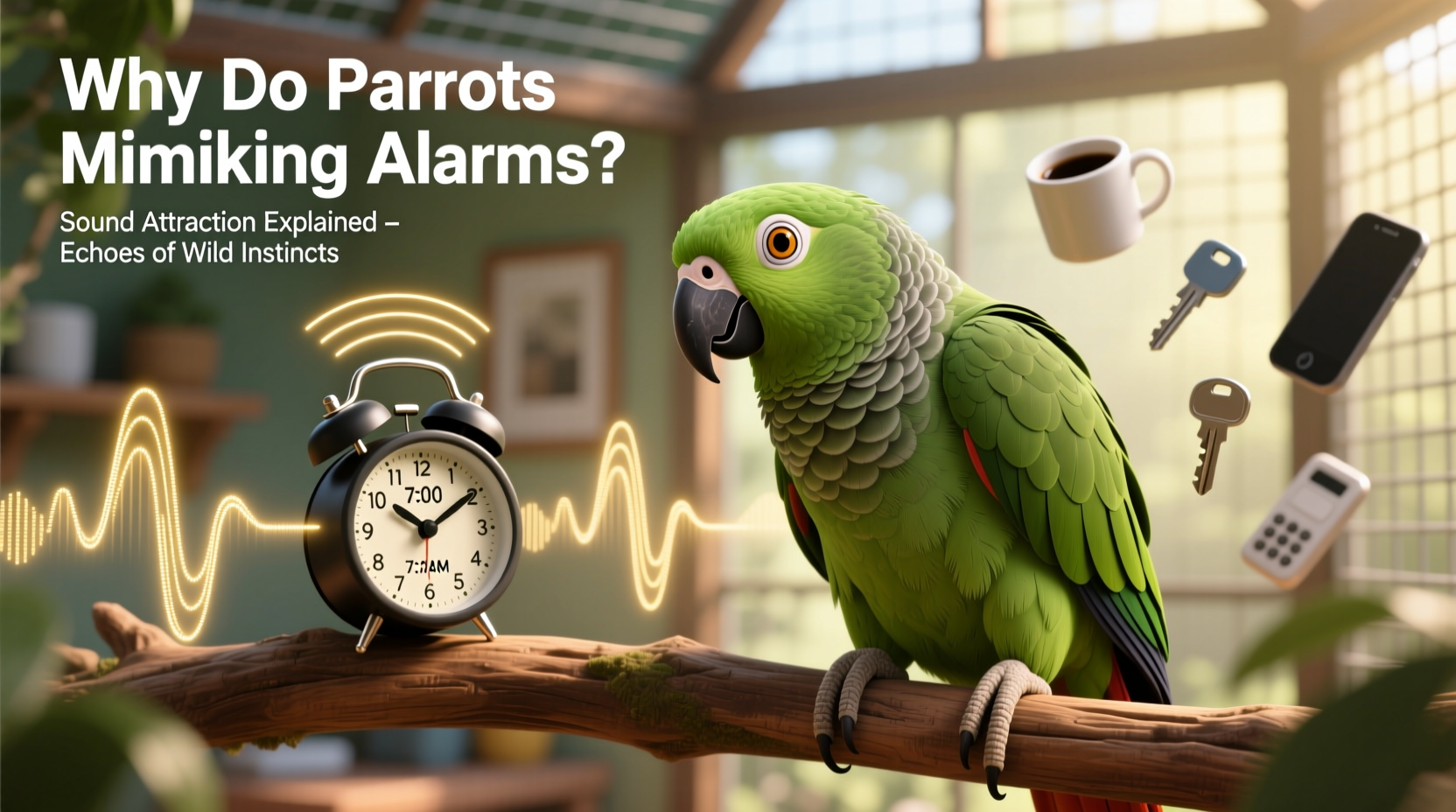
Unlike most animals, parrots possess a specialized brain structure called the “song system,” which enables vocal learning. This neurological network allows them to hear sounds, process them, and reproduce them with remarkable accuracy. In the wild, this skill helps young parrots learn their flock’s contact calls, strengthening group cohesion and aiding survival.
However, domesticated parrots don’t live in flocks—they live with humans. To them, household noises like phone rings, microwaves, and alarms aren’t just background noise; they’re part of the social environment. High-pitched, repetitive, and attention-grabbing sounds such as alarms stand out acoustically, making them especially appealing targets for mimicry.
Dr. Irene Pepperberg, a leading avian cognition researcher and author of *The Alex Studies*, explains:
“Parrots are not simply repeating sounds—they are using them as tools for communication. A loud alarm might be perceived as an important signal worth mastering.” — Dr. Irene Pepperberg, Avian Cognition Expert
This means that when your parrot mimics an alarm, it may believe it’s participating in a meaningful interaction—especially if the sound previously triggered a strong response from you or others.
Why Alarms Are Particularly Attractive to Parrots
Not all sounds captivate parrots equally. Certain acoustic features make alarms more likely to be mimicked than other household noises. These include:
- High frequency: Parrots naturally produce high-pitched vocalizations. Alarm tones often fall within their optimal hearing and vocal range (2–4 kHz), making them easier and more satisfying to reproduce.
- Sudden onset: The abrupt start of an alarm grabs attention. Parrots, being highly alert creatures, notice these shifts immediately.
- Repetition: Many alarms beep in rhythmic patterns (e.g., three beeps followed by silence). This predictability makes them easier to memorize and replicate.
- Emotional context: Alarms typically trigger urgent reactions—people jump up, shout, or rush around. Parrots interpret this as significance, reinforcing the idea that the sound is “important.”
In essence, alarms check multiple boxes on a parrot’s “interesting sounds” list. They are loud, structured, emotionally charged, and consistently rewarded by human reaction—even if that reaction is yelling “Stop!”
Tip: Avoid reacting strongly when your parrot mimics an alarm. Even negative attention reinforces the behavior. Instead, remain calm and redirect with a positive sound or command.How Parrots Learn and Reinforce Alarm Mimicry
Mimicry in parrots follows a cycle of observation, imitation, and reinforcement. Here’s how it typically unfolds:
- Exposure: The parrot hears a smoke alarm during a test or battery change.
- Imitation: Days later, it experiments with similar pitch and rhythm, producing a crude version of the sound.
- Reaction: You gasp, run into the room, or laugh—providing immediate feedback.
- Reinforcement: The parrot associates the sound with attention and repeats it more frequently.
This loop is powerful. In one documented case, a Congo African Grey named Jasper began mimicking his owner’s security alarm after hearing it once during a power surge. Over the next two weeks, he refined the imitation until it was nearly indistinguishable from the real thing. Each time he performed it, family members reacted with surprise, inadvertently turning the mimicry into a favorite party trick.
Mini Case Study: The Midnight Alarm Caller
Sarah, a parrot owner in Portland, noticed her Blue-fronted Amazon, Rio, started screeching in perfect imitation of her kitchen smoke detector every night at 2:17 a.m. Frustrated and sleep-deprived, she consulted an avian behaviorist. After reviewing video footage, the expert discovered that Rio had first made the sound shortly after Sarah tested the actual alarm while baking. She responded by rushing to the kitchen and waving her arms—exactly the kind of high-energy reaction a parrot craves.
The solution? Sarah began playing a recording of the alarm during daytime hours while ignoring Rio completely. When he stopped performing it, she rewarded him with treats and praise. Within three weeks, the nighttime alarms ceased entirely.
Managing and Redirecting Alarm Mimicry
You don’t have to eliminate mimicry altogether—many parrot owners enjoy their bird’s vocal talents. But when alarm sounds become disruptive, especially at inconvenient times, intervention is necessary. The key is not punishment, but redirection and environmental management.
Step-by-Step Guide to Reducing Unwanted Alarm Sounds
- Identify the trigger: Note when and where the mimicry occurs. Was there a recent alarm event? Is another device making a similar sound?
- Eliminate accidental reinforcement: Stop reacting dramatically. Don’t shout, laugh, or rush toward the bird when it performs the sound.
- Introduce competing behaviors: Train your parrot to say a pleasant phrase like “Hello!” or whistle a tune instead. Reward these sounds generously.
- Use distraction techniques: When the bird starts mimicking the alarm, calmly offer a toy or initiate a known command like “Step up.”
- Modify the environment: Replace overly loud or high-pitched alarms with lower-frequency models. Consider smart detectors with voice alerts instead of beeping.
- Provide mental stimulation: Boredom exacerbates attention-seeking mimicry. Rotate toys, introduce puzzle feeders, and increase social interaction.
Checklist: Preventing Problematic Sound Mimicry
- ✅ Avoid testing alarms near your parrot
- ✅ Respond calmly if mimicry occurs—don’t panic or yell
- ✅ Teach alternative vocalizations through consistent training
- ✅ Increase daily enrichment activities (foraging, climbing, social time)
- ✅ Use white noise or soft music to mask sudden household sounds
- ✅ Schedule regular vet checks to rule out stress or health issues
Do’s and Don’ts of Handling Sound-Mimicking Parrots
| Do’s | Don’ts |
|---|---|
| Do reward calm, appropriate vocalizations with treats and affection | Don’t punish your parrot for mimicking sounds—it won’t understand and may become anxious |
| Do use positive reinforcement training to shape desirable sounds | Don’t repeat alarm-like noises playfully—this can confuse the bird |
| Do provide a consistent daily routine to reduce anxiety-driven vocalizations | Don’t isolate the bird as punishment for noise—it increases distress |
| Do consult an avian behaviorist if mimicry becomes obsessive or disruptive | Don’t assume the behavior will fade on its own without intervention |
Frequently Asked Questions
Is it normal for my parrot to mimic alarms?
Yes, it’s very common—especially in highly intelligent species like African Greys, Amazons, and Cockatoos. If your parrot lives in a stimulating environment with frequent sounds, mimicry is a natural form of engagement and learning.
Can I train my parrot to stop mimicking alarms?
Absolutely. While you can’t erase the memory of the sound, you can reduce its frequency through consistent training and by removing reinforcement. Focus on rewarding alternative behaviors and minimizing dramatic reactions.
Does alarm mimicry mean my parrot is stressed?
Not necessarily. Some parrots mimic alarms out of curiosity or for attention, not distress. However, if the mimicry is accompanied by feather plucking, aggression, or excessive screaming, it could indicate underlying stress. Consult an avian veterinarian or behavior specialist if you observe these signs.
Conclusion: Turning Noise into Opportunity
Your parrot’s fascination with alarm sounds isn’t a flaw—it’s a testament to its intelligence, adaptability, and desire to connect. Rather than viewing mimicry as a nuisance, consider it a window into your bird’s mind. With patience, consistency, and empathy, you can guide this natural talent toward more harmonious expressions.
Start today by observing what triggers the behavior, adjusting your responses, and introducing new sounds for your parrot to master. Every interaction is a chance to build trust and deepen your relationship. And who knows? With the right guidance, your parrot might just trade the smoke alarm for a cheerful song instead.
💬 Have a story about your parrot mimicking unexpected sounds? Share your experience in the comments below—your insight could help fellow bird owners navigate the joys and challenges of life with a vocal companion.








