
If you’ve noticed your male cat trailing behind you from room to room—whether you're heading to the bathroom, kitchen, or even just shifting seats on the couch—you’re not alone. This behavior, while often endearing, can sometimes feel overwhelming, especially if it disrupts your daily routine or suggests underlying anxiety. Understanding the root causes behind this attachment is key to addressing it effectively. Male cats may follow their owners for a mix of emotional, instinctual, and environmental reasons. Some are rooted in feline psychology, while others stem from unmet needs or learned behaviors.
This article explores the most common explanations for why your male cat won’t leave your side, backed by behavioral science and veterinary insight. More importantly, it provides actionable strategies to help balance your cat’s need for connection with healthy independence.
The Bond Between Cats and Their Humans
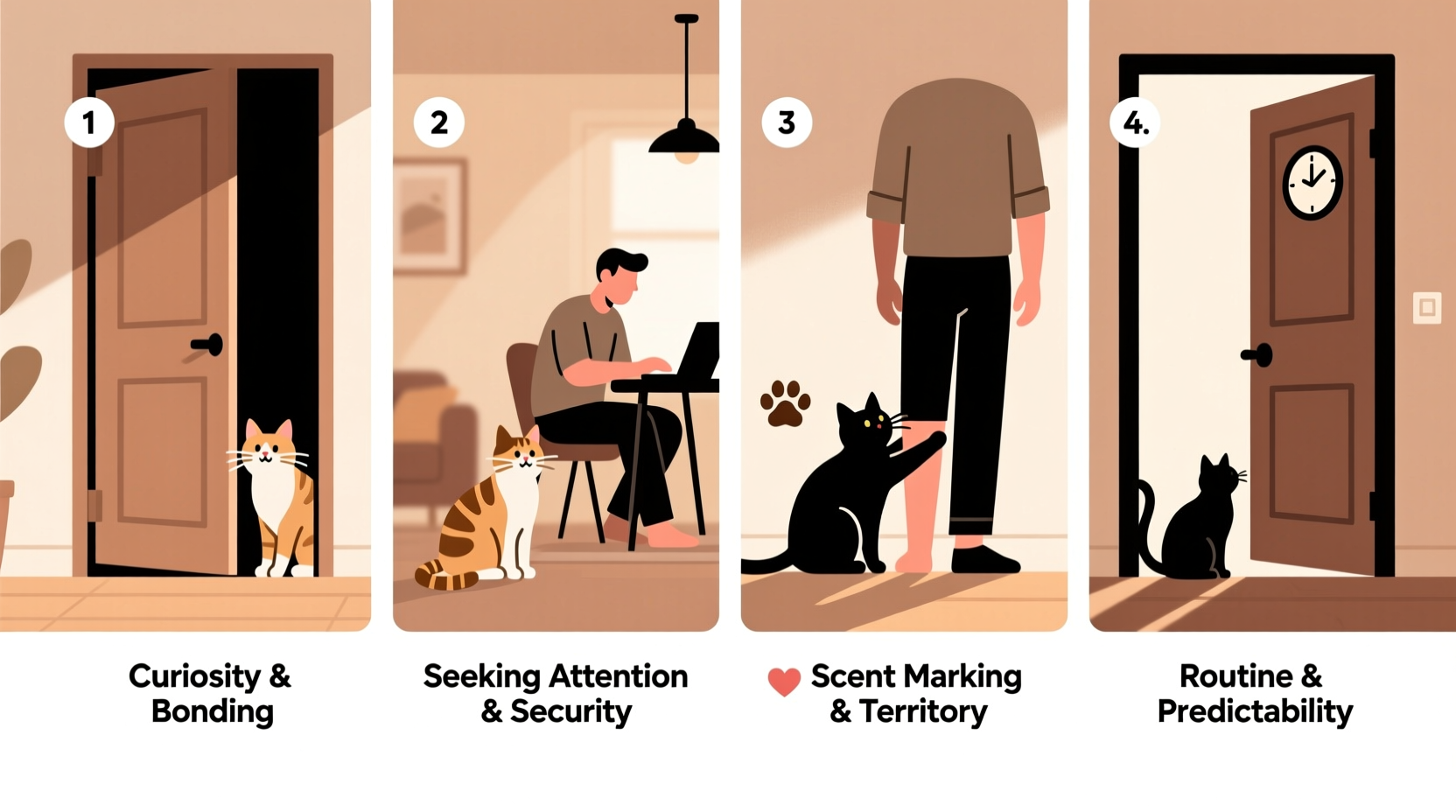
Cats are often mischaracterized as aloof or indifferent, but research shows they form strong emotional attachments to their caregivers. A 2019 study published in *Current Biology* found that over 60% of cats exhibit secure attachment to their owners—similar to patterns seen in human infants and dogs. For male cats, who may be more social than females depending on breed and upbringing, this bond can manifest as constant companionship.
Following you closely is one way your cat expresses trust and affection. It's a sign that you represent safety, comfort, and predictability in their world. However, when this behavior becomes obsessive or interferes with normal activities (like sleeping or using the litter box), it may point to deeper issues such as anxiety or over-dependence.
Tip: Observe whether your cat settles down after brief check-ins or remains tense and vigilant. The latter may indicate separation anxiety.Top 5 Reasons Your Male Cat Follows You Everywhere
- Seeking Attention or Food – Cats quickly learn routines. If feeding, petting, or playtime consistently follows your presence, your cat associates you with rewards and will follow accordingly.
- Emotional Attachment – Especially true for neutered males raised as indoor-only pets, strong bonds lead to shadowing behavior as a form of companionship.
- Curiosity and Environmental Monitoring – Cats are naturally curious. Your movements signal potential changes in their environment, prompting them to investigate.
- Underlying Anxiety or Insecurity – Unneutered males may display territorial or anxious following due to hormonal influences. Even neutered cats can develop anxiety after changes like moving homes or introducing new pets.
- Lack of Stimulation – Boredom leads to attention-seeking. Without sufficient mental or physical enrichment, your cat may fixate on you as the primary source of engagement.
When Following Becomes a Problem
Not all following behavior is problematic. Occasional tailing is normal feline conduct. But concern arises when:
- Your cat vocalizes excessively when out of sight
- He blocks doorways or trips you during movement
- He refuses to use the litter box or eat unless you’re present
- He shows signs of distress—panting, trembling, overgrooming—when separated
In these cases, what starts as affection can evolve into dependency, affecting both your quality of life and your cat’s emotional well-being.
Expert Insight: What Veterinarians Say
“Clinginess in male cats, especially post-neutering, often reflects redirected energy. When sexual motivation is reduced, cats may redirect their focus toward their favorite person. While sweet, it requires management through structure and enrichment.” — Dr. Lena Reyes, DVM, Feline Behavior Specialist
Solutions to Reduce Excessive Following
Managing this behavior isn't about discouraging affection—it's about fostering confidence and independence. The goal is to create a balanced relationship where your cat feels secure even when apart.
1. Establish Predictable Routines
Cats thrive on consistency. Feed, play, and interact at the same times daily. A predictable schedule reduces uncertainty, which minimizes anxiety-driven following.
2. Increase Mental and Physical Stimulation
Boredom fuels attention-seeking. Provide puzzle feeders, climbing shelves, interactive toys, and window perches. Rotate toys weekly to maintain novelty.
Tip: Use food-dispensing balls or treat puzzles before meals to simulate hunting and extend engagement time.3. Gradual Independence Training
Start with short separations. Close a door between rooms for 2–5 minutes while offering a treat or toy. Gradually increase duration. Reward calm behavior.
4. Create Safe, Enriched Spaces
Designate quiet zones with beds, scratching posts, and calming pheromone diffusers (e.g., Feliway). These areas should feel inviting so your cat chooses to spend time there voluntarily.
5. Avoid Reinforcing Clinginess
While it’s tempting to pet or talk to your cat every time he follows, doing so reinforces the behavior. Instead, reward him when he’s relaxed in another room.
Checklist: Managing Your Cat’s Following Behavior
- ✅ Neuter your cat if not already done (reduces hormonal drives)
- ✅ Schedule two 10–15 minute play sessions daily
- ✅ Use automatic feeders to break food association with your presence
- ✅ Introduce puzzle toys and rotating enrichment items
- ✅ Set up at least one quiet retreat space per floor
- ✅ Practice short, positive separation training daily
- ✅ Consult a vet if anxiety symptoms persist
Comparison: Healthy vs. Problematic Following
| Behavior | Healthy Sign | Red Flag |
|---|---|---|
| Follows you into rooms | Checks in briefly, then settles | Paces, vocalizes, won’t relax |
| Waits outside bathroom door | Sits quietly or grooms self | Scratches door, cries nonstop |
| Seeks interaction | Approaches when called, then leaves | Demand barks, blocks movement |
| Reaction to being alone | Rests or plays independently | Overgrooms, hides, stops eating |
Mini Case Study: Max, the Shadow Cat
Max, a 3-year-old neutered domestic shorthair, began following his owner Sarah from room to room after she started working from home. Initially cute, the behavior escalated—he’d cry if she closed the office door and even tried to jump into her laptop bag. Concerned, Sarah consulted a veterinary behaviorist.
The diagnosis? Environmental monotony combined with accidental reinforcement. Because Sarah responded to every meow with attention, Max learned that persistence paid off. The solution included scheduled play sessions before work, an automatic feeder for midday meals, and a cozy window perch with bird videos playing on a tablet nearby.
Within three weeks, Max began spending longer periods in the living room, napping in sunlight instead of pressing against Sarah’s chair. He still checks in, but no longer demands constant proximity.
Frequently Asked Questions
Is it normal for a male cat to follow me constantly?
Yes, especially if he’s neutered and highly bonded. However, if the behavior is sudden, intense, or accompanied by stress signals (excessive grooming, aggression), consult a veterinarian.
Will neutering reduce my cat’s clinginess?
Often, yes. Unneutered males may follow due to mating instincts or territorial patrol. Neutering typically reduces roaming and marking behaviors, though it doesn’t eliminate affectionate trailing.
Can I train my cat to stop following me?
You can’t eliminate the behavior entirely—and shouldn’t try, as some following is natural. But you can redirect it through enrichment, routine, and positive reinforcement of independent behavior.
Conclusion: Building Balance Through Understanding
Your male cat follows you because he sees you as central to his world—a protector, provider, and companion. That deep connection is something to cherish. But when it tips into overdependence, both you and your cat benefit from gentle re-balancing.
By combining environmental enrichment, consistent routines, and smart behavioral techniques, you can nurture a healthier dynamic—one where love isn’t measured by proximity. Start small: introduce one new toy, schedule a daily play session, or simply let your cat sit nearby without immediate interaction. Over time, these shifts build confidence and resilience.
💬 Have a clingy cat? Share your experience or success story in the comments below—your insight could help another cat owner find peace and balance!








