
Watching your hamster scurry around with bulging cheeks full of food is both amusing and puzzling. You might wonder: Is it hoarding? Is it overeating? Or is something wrong? In reality, this behavior is completely natural—and deeply rooted in the animal’s evolutionary past. Understanding why your hamster uses its cheeks to transport food offers valuable insight into its psychology, physiology, and care requirements. This article explores the biological mechanics, survival instincts, and environmental factors behind cheek-stuffing, offering practical tips for responsible pet ownership.
The Anatomy Behind the Behavior
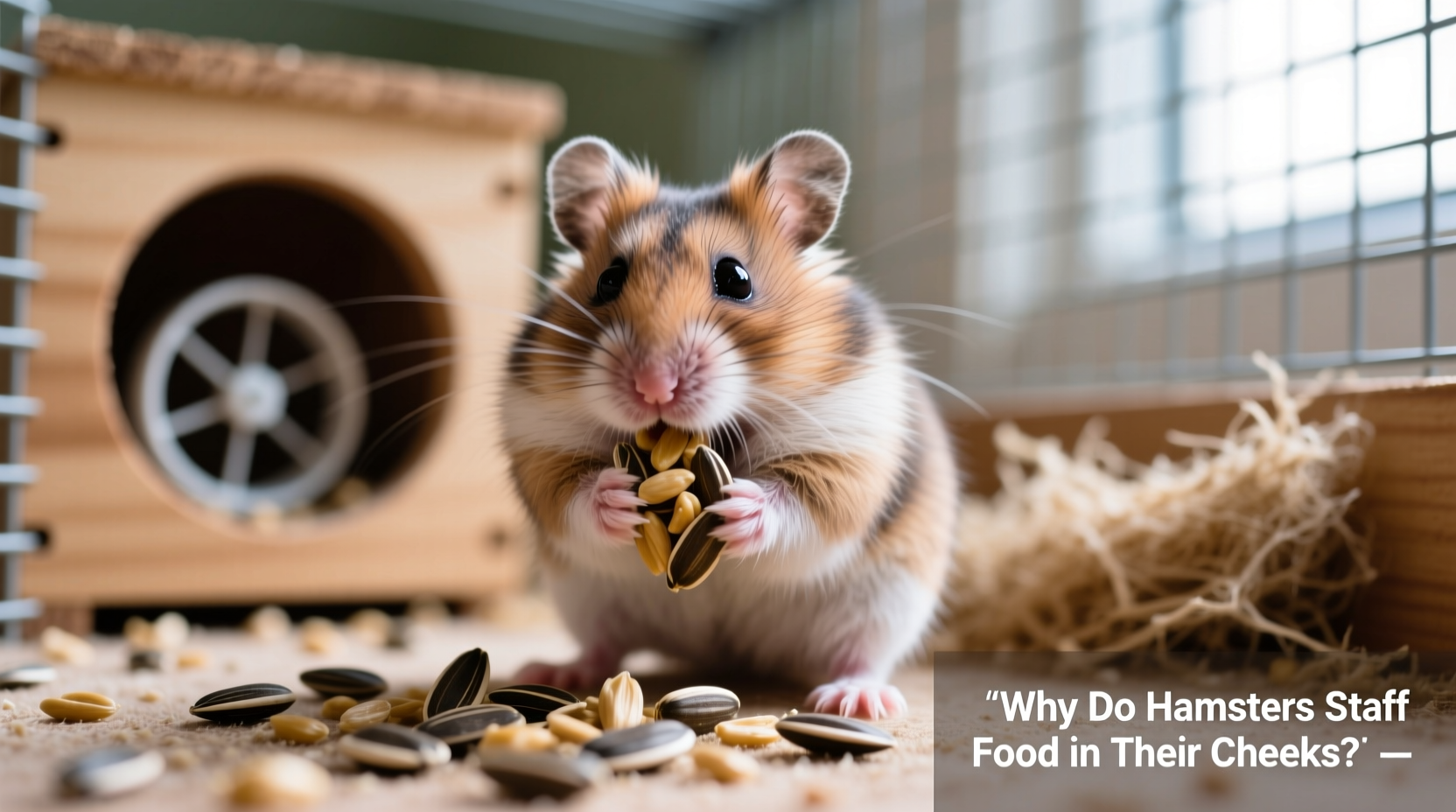
Hamsters possess specialized anatomical features that make cheek stuffing not only possible but highly efficient. Unlike most rodents, hamsters have expandable cheek pouches that extend from their mouths all the way back to their shoulders. These pouches are lined with soft, elastic skin capable of stretching several times the size of the hamster’s head. When filled, they can hold up to half the animal’s body weight in food.
The function of these pouches goes beyond mere storage. They act as a mobile pantry, allowing hamsters to gather large quantities of food quickly and transport them safely to a secure location. The inner lining of the pouch contains no salivary glands, which prevents premature digestion and keeps food dry during transit. A muscular valve at the mouth opening helps prevent spillage while the hamster runs.
Tip: Never attempt to touch or squeeze a hamster’s full cheek pouches—this can cause injury or lead to impacted food.An Evolutionary Survival Strategy
In the wild, Syrian and dwarf hamsters inhabit arid regions such as the steppes of Syria and the deserts of Mongolia. These environments offer sparse vegetation and unpredictable food sources. To survive, hamsters evolved to maximize foraging efficiency. Rather than making multiple trips between food sources and burrows, they collect as much as possible in one outing using their cheek pouches.
This behavior minimizes exposure to predators. Spending less time above ground reduces the risk of being caught by birds of prey, snakes, or foxes. Once safely inside their underground tunnels, hamsters empty the contents of their pouches into designated chambers used for food storage. Some wild hamsters have been observed storing enough food to last through lean periods, especially before hibernation-like torpor phases in colder months.
“Cheek pouch use is an elegant adaptation to high predation and low resource availability. It reflects millions of years of evolutionary refinement.” — Dr. Lena Torres, Mammalian Behavioral Ecologist, University of Edinburgh
Behavioral Patterns in Captivity
Pet hamsters retain these ancestral instincts despite living in safe, food-abundant environments. Even when fresh food is always available, they will often stuff their cheeks and carry it to another part of the cage. This doesn’t mean they’re dissatisfied with their diet or feel threatened—it simply means their survival programming remains intact.
Observations show that hamsters tend to prioritize certain types of food for transport. Seeds, nuts, dried fruits, and pellets are commonly selected over wet or soft foods, which are usually eaten immediately. This preference mirrors wild foraging patterns where durable, calorie-dense items are ideal for long-term storage.
Some owners report that their hamsters stash food near hiding spots or under bedding. This mimics denning behavior, where stored food is kept close to shelter for quick access. Interestingly, hamsters may also move food between locations multiple times—a behavior known as “re-caching.” While this seems inefficient, it likely serves to confuse potential thieves (a real threat in the wild) or adjust for changing environmental conditions like humidity or temperature.
Mini Case Study: Max the Over-Stuffer
Max, a two-year-old Syrian hamster owned by Sarah in Portland, had developed a habit of filling his cheeks to maximum capacity every evening after feeding. Concerned he wasn’t eating enough, Sarah reduced portion sizes, thinking he was hoarding due to scarcity. However, Max became more frantic during mealtimes, rushing to collect even larger amounts. After consulting a small animal veterinarian, Sarah learned that Max’s behavior was normal. She adjusted her approach by spreading food across different areas of the cage and introducing puzzle feeders. This gave Max mental stimulation without triggering anxiety. Within days, his pacing decreased, and he began consuming more on-site rather than transporting everything.
When Cheek Stuffing Becomes a Concern
While cheek stuffing is generally healthy, there are instances when it signals underlying problems. One common issue is **impacted cheek pouches**, where food becomes lodged and begins to rot. Symptoms include swelling on one side of the face, foul odor, drooling, or difficulty eating. If left untreated, infections or abscesses can develop.
Certain foods increase the risk of impaction. Sticky items like peanut butter, gooey treats, or moist vegetables can adhere to the pouch lining and harden over time. Sharp-edged foods such as sunflower seed shells may cause internal scratches, leading to infection.
Another concern is **chronic hoarding without consumption**. If a hamster consistently stores food but never eats it, nutritional deficiencies may arise. This is particularly dangerous for older or immunocompromised animals. Similarly, obsessive caching behavior—such as spending excessive time gathering instead of resting or grooming—can indicate stress or inadequate enclosure design.
Checklist: Signs of Healthy vs. Problematic Cheek Use
- Healthy Indicators:
- Cheeks return to normal size after a few hours
- No visible swelling or asymmetry
- Hamster eats some food immediately
- Stored food is eventually consumed
- No bad breath or discharge
- Warning Signs:
- One-sided facial bulge lasting more than 24 hours
- Bleeding or pus from the mouth
- Lethargy or refusal to eat
- Foul smell emanating from the face
- Repeated pawing at the mouth
Optimizing Environment to Support Natural Behavior
Understanding the root causes of cheek stuffing allows owners to create enriching habitats that support both physical health and psychological well-being. A well-designed enclosure should accommodate natural foraging, caching, and exploration behaviors.
Step-by-Step Guide: Enriching Your Hamster’s Habitat
- Provide a spacious cage (minimum 450 square inches floor space) with multiple levels and hideouts to simulate burrow complexity.
- Distribute food strategically using scatter feeding or treat balls so your hamster must work to find meals, promoting mental engagement.
- Include nesting materials like unscented toilet paper strips or hay, allowing your hamster to line its sleeping area and build caches.
- Avoid overcrowding with toys or accessories—hamsters need clear pathways to transport food efficiently.
- Offer safe chewables such as wooden blocks or mineral chews to maintain dental health and prevent overgrown teeth, which can interfere with pouch function.
| Food Type | Suitable for Cheek Transport? | Notes |
|---|---|---|
| Dry pellets | Yes | Ideal base diet; compact and non-sticky |
| Seeds & grains | Yes | Preferred by hamsters; high energy density |
| Fresh vegetables | No | Best fed in moderation and consumed immediately |
| Fruit (dried) | Limited | Can stick; offer sparingly due to sugar content |
| Peanut butter | No | Highly adhesive; avoid entirely |
| Boiled egg or cooked chicken (small pieces) | No | Nutritious protein source but unsuitable for storage |
FAQ: Common Questions About Cheek Pouch Behavior
Can hamsters sleep with food in their cheeks?
No, hamsters do not sleep with food still packed in their cheeks. They typically empty the pouches before settling into their nest. If you see persistent fullness overnight, check for possible impaction.
How long can food stay in a hamster’s cheek pouch?
Food should be transported and emptied within a few hours. Leaving food inside for longer increases the risk of bacterial growth, especially if moisture is present. Never allow food to remain packed for more than 12 hours.
Do all hamster species use their cheeks the same way?
All five commonly kept species—Syrian, Roborovski, Campbell's dwarf, Winter White dwarf, and Chinese dwarf—have functional cheek pouches. However, Syrians tend to carry larger loads due to their bigger size and solitary nature, while dwarfs may cache smaller amounts more frequently.
Conclusion: Respecting Instinct, Enhancing Care
The sight of a hamster with cheeks full of food isn't just endearing—it's a window into a sophisticated survival mechanism shaped by evolution. By recognizing this behavior as instinctual rather than odd or wasteful, caregivers can better appreciate their pet’s natural drives and respond with informed, compassionate practices. Providing appropriate diets, monitoring pouch health, and designing stimulating environments ensure that your hamster thrives both physically and psychologically.
Instead of discouraging cheek stuffing, embrace it as a sign of a healthy, engaged animal acting on deep-seated instincts. With proper understanding and care, you can support your hamster’s well-being while enjoying the quirks that make these tiny creatures so fascinating.
💬 Have a story about your hamster’s cheeky habits? Share your observations or questions in the comments below—we’d love to hear how your little forager expresses its wild side at home!








