
It’s a familiar scene: you reach for the refrigerator door, and before it even opens, your guinea pig erupts into a series of high-pitched squeaks from across the room. No visual cue, no movement toward the cage—just the sound of the fridge latch triggering an instant vocal reaction. This behavior isn’t random. It’s a learned response rooted in routine, association, and the animal’s natural instinct to anticipate rewards. Guinea pigs are intelligent, socially attuned rodents capable of forming strong cognitive links between environmental cues and outcomes—especially when food is involved.
Their squeaking at the sound of the fridge opening is not just noise; it’s communication. Understanding this behavior requires looking at the psychology of conditioning, the role of auditory cues, and the social dynamics of feeding time. More than just a quirky habit, this behavior reveals how deeply your pet observes and responds to your daily rhythms. By decoding what drives this anticipation, you can improve your care practices, strengthen your bond, and even use this knowledge to support training and enrichment.
The Science Behind Sound and Association
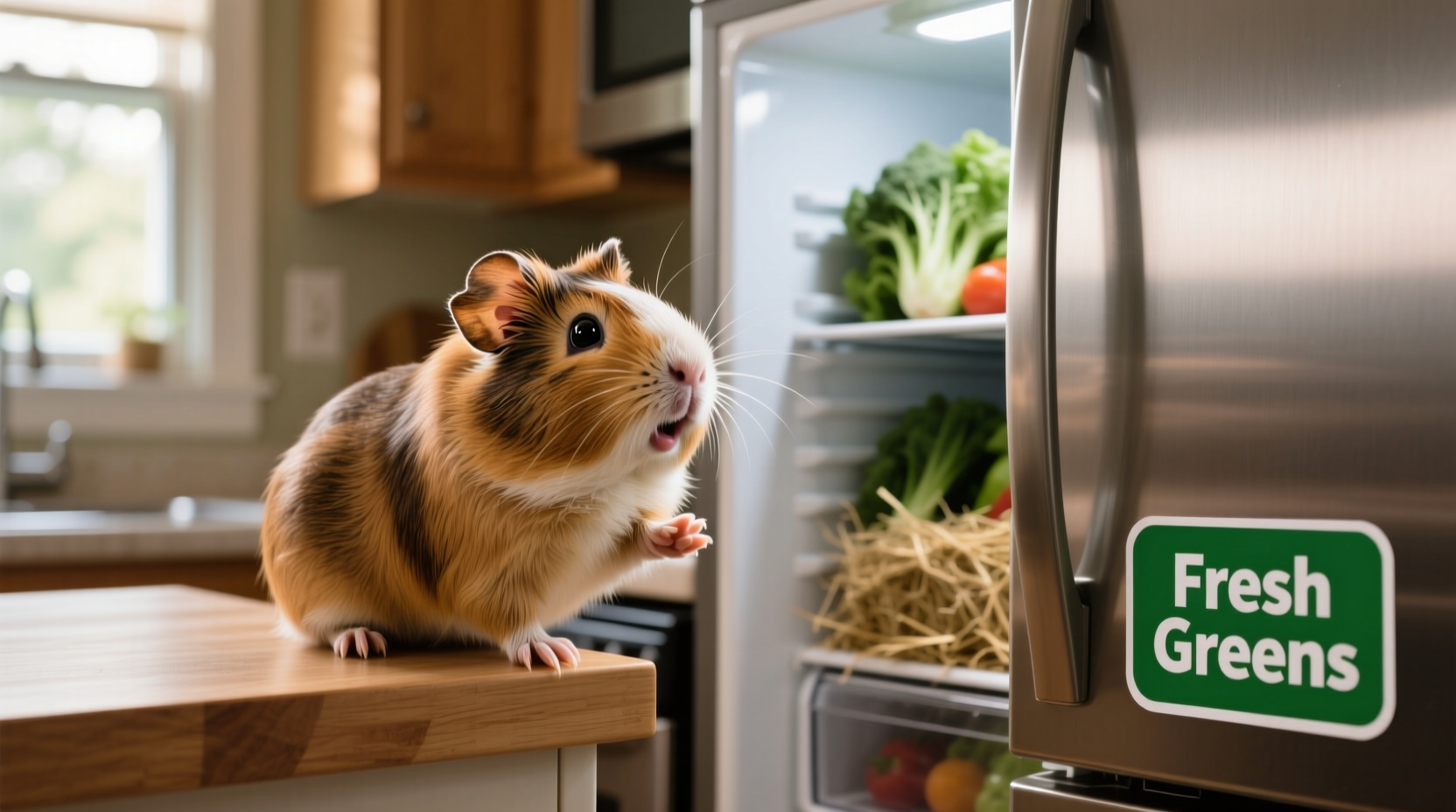
Guinea pigs rely heavily on auditory signals to navigate their world. In the wild, they live in social groups where vocalizations play a crucial role in maintaining cohesion, signaling danger, or indicating resource availability. Domesticated guinea pigs retain these instincts, adapting them to human environments. When your pet hears the distinct click or hum of the refrigerator opening, it doesn’t just hear a mechanical sound—it recognizes a reliable predictor of food delivery.
This is a textbook example of classical conditioning, a concept first demonstrated by Ivan Pavlov in his experiments with dogs. Just as Pavlov’s dogs began salivating at the sound of a bell previously linked to meals, your guinea pig has learned that the fridge sound precedes the arrival of fresh vegetables, fruits, or hay. Over repeated exposures, the neutral stimulus (the fridge noise) becomes a conditioned signal for food, triggering a behavioral response—in this case, excited squeaking.
What makes guinea pigs particularly adept at this kind of learning is their strong memory for patterns. They quickly pick up on timing, location, and sequence. If you consistently offer cucumber slices or bell peppers after retrieving something from the fridge, your pet begins to associate that appliance with positive outcomes. The squeak, known scientifically as a “wheek,” is a high-frequency call used primarily in anticipation of food or social interaction. It’s not a sign of distress but rather excitement and expectation.
Tip: Be consistent with feeding times and locations to reinforce positive associations without causing confusion or anxiety.How Routine Shapes Guinea Pig Behavior
Routine is everything to a prey animal like a guinea pig. Predictability reduces stress and increases feelings of safety. When your pet learns that certain actions lead to specific results—like the fridge opening leading to food—it gains a sense of control over its environment. This predictability fosters confidence and strengthens the human-animal bond.
Feeding schedules are among the most influential factors shaping guinea pig behavior. Most owners feed fresh produce once or twice a day, often pulling items directly from the refrigerator. Over time, the guinea pig notes the sequence: human walks to kitchen → fridge opens → footsteps return → food appears. Eventually, the earliest detectable cue—the fridge opening—becomes enough to trigger a response. Some guinea pigs will begin wheeking seconds before you even enter the room, having memorized not only the sound but also the timing of your habits.
This level of awareness underscores their cognitive abilities. Studies have shown that guinea pigs can recognize individual humans, remember spatial layouts, and differentiate between tones and frequencies. Their ability to link the fridge sound with food delivery demonstrates associative learning comparable to that seen in more traditionally recognized intelligent species like rats or parrots.
Daily Feeding Timeline: How Anticipation Builds
- 7:00 AM: Owner wakes up, walks past guinea pig enclosure.
- 7:05 AM: Fridge opens to retrieve water bottle and vegetable container.
- 7:06 AM: Guinea pig emits first wheek upon hearing fridge latch.
- 7:07 AM: Owner approaches cage with greens; guinea pig runs to front.
- 7:08 AM: Food is placed in bowl; squeaking stops, eating begins.
This simple sequence, repeated over days or weeks, becomes embedded in the animal’s behavioral repertoire. Deviate from it—skip a morning feeding, use pre-washed veggies from the counter instead—and your guinea pig may still respond to the fridge sound out of habit, then appear confused when food doesn’t arrive.
Decoding the Squeak: Communication Beyond Hunger
Not all squeaks mean the same thing. Guinea pigs have a diverse vocal range, including purring, rumbling, chutting, and teeth chattering. The food-related wheek is typically sharp, repetitive, and insistent. It often starts low and builds in frequency and volume if ignored. Unlike alarm calls (short, staccato shrieks) or discomfort grunts, the anticipatory squeak carries a clear tone of eagerness.
Interestingly, some guinea pigs develop personalized variations of the wheek based on their relationship with their owner. A confident, well-socialized pig might squeak once and wait patiently. A more excitable or attention-seeking individual may persist until acknowledged. Others may combine vocalization with physical behaviors—running laps around the enclosure, standing on hind legs, or nudging the cage door.
“Guinea pigs are far more perceptive than many realize. Their ability to associate household sounds with events shows advanced cognitive processing for a small mammal.” — Dr. Lena Torres, Exotic Animal Behavior Specialist
Best Practices for Managing Food Anticipation
While it’s endearing when your guinea pig greets you with enthusiastic squeaks, unchecked anticipation can lead to stress if expectations aren’t met. Sudden changes in routine, missed feedings, or inconsistent responses can cause frustration or anxiety. To maintain emotional balance and reinforce healthy behavior, consider the following strategies.
Tip: If you're not feeding at that moment, acknowledge your guinea pig with eye contact or a verbal cue to prevent confusion.Do’s and Don’ts of Responding to Fridge-Triggered Squeaking
| Do’s | Don’ts |
|---|---|
| Respond consistently during actual feeding times | Ignore persistent squeaking without explanation |
| Use a verbal cue like “Coming!” to signal intent | Reinforce squeaking by feeding every single time the fridge opens |
| Vary feeding locations occasionally to reduce fixation | Yell or tap the cage to stop the noise |
| Offer enrichment toys to redirect focus | Feed sugary treats that create dependency and health issues |
Mini Case Study: Luna the Overexcited Wheeker
Luna, a two-year-old American guinea pig, lived with her owner Sarah in a small apartment. Every time Sarah opened the fridge—even late at night for a glass of water—Luna would erupt into frantic squeaking from her enclosure in the living room. Initially cute, the behavior became disruptive, especially when Luna continued for minutes after realizing no food was coming.
A consultation with a small animal behaviorist revealed that Luna had formed an overly rigid association between the fridge sound and food delivery. Because Sarah fed her exclusively from refrigerated produce and always retrieved it at the same time each evening, Luna interpreted any fridge use as a feeding signal.
The solution involved three steps: First, Sarah began prepping a portion of Luna’s veggies earlier in the day and storing them in a sealed container on the counter. Second, she introduced a verbal cue—“Dinner soon!”—only when preparing food. Third, she started offering puzzle feeders and chew toys during non-feeding fridge visits to redirect Luna’s attention.
Within two weeks, Luna’s indiscriminate squeaking decreased by 80%. She still wheeked during actual feeding prep, but no longer reacted to unrelated fridge use. Her overall demeanor became calmer, and Sarah reported stronger engagement during quiet bonding sessions.
Building a Balanced Feeding Routine
To harness your guinea pig’s intelligence without encouraging obsessive behavior, structure your feeding routine with intention. Here’s a step-by-step guide to creating a balanced system:
- Establish fixed feeding times – Feed fresh produce at the same times daily to build predictability.
- Separate food prep from fridge access – Pull out vegetables earlier and store them in a cupboard or drawer.
- Introduce a feeding cue – Use a word or gentle knock before approaching the cage to signal mealtime.
- Rotate treat types and delivery methods – Offer some food by hand, some in bowls, and some hidden in foraging toys.
- Limit reinforcement of unwanted vocalizations – Avoid rewarding squeaking outside of scheduled feeding unless intentional.
Incorporating variety prevents fixation on a single trigger while supporting mental stimulation. For example, using a crinkle paper bag filled with hay and a few carrot shreds encourages exploration and delays immediate gratification—skills that help regulate anticipation-driven behaviors.
Checklist: Healthy Food Anticipation Habits
- ✅ Feed at consistent times each day
- ✅ Use a verbal or tactile cue before feeding
- ✅ Pre-portion fridge-stored food to minimize exposure
- ✅ Provide foraging opportunities daily
- ✅ Monitor for signs of stress if routine changes
- ✅ Avoid feeding from the fridge every single time it opens
- ✅ Spend quiet time with your guinea pig outside of feeding
Frequently Asked Questions
Is it normal for my guinea pig to squeak every time I open the fridge?
Yes, it’s completely normal and even a sign of a healthy, observant pet. As long as the squeaking stops once the feeding routine concludes and your guinea pig remains calm otherwise, this behavior reflects successful learning and attachment to routine.
Should I stop opening the fridge around my guinea pig to prevent squeaking?
No. Instead, manage the association by decoupling the fridge sound from food delivery. Use alternative storage for produce, introduce feeding cues, and provide distractions. Complete avoidance reinforces uncertainty and may increase anxiety.
Can excessive squeaking be a sign of stress?
Potentially. While occasional food-related wheeking is normal, constant, shrill, or prolonged squeaking—especially if accompanied by pacing, refusal to eat, or hiding—may indicate stress. Evaluate environmental factors, diet, and routine consistency if behavior seems extreme.
Conclusion: Turning Anticipation into Connection
Your guinea pig’s squeak when you open the fridge is more than a reflex—it’s a testament to their perceptiveness, memory, and emotional connection to you. Rather than viewing it as a nuisance, see it as an invitation to refine your caregiving approach. By understanding the roots of food anticipation, you gain insight into your pet’s inner world and the subtle ways they communicate.
Use this knowledge to build routines that balance predictability with flexibility, enrichment with nutrition, and responsiveness with boundaries. A guinea pig that feels understood and securely bonded will not only squeak less out of frustration but will also display greater confidence, curiosity, and companionship.
💬 Have a story about your guinea pig’s clever habits? Share your experience below and connect with fellow owners who know exactly what it means to be “wheeked at” from across the room.








