
Guinea pigs are among the most expressive small pets, relying heavily on vocalizations to communicate with their human caregivers and fellow herd members. If your guinea pig is squeaking constantly, it’s natural to feel concerned or confused. The truth is, each squeak carries meaning—some signals are urgent, others joyful, and a few simply habitual. Understanding what drives this behavior is key to ensuring your pet's well-being.
Unlike many animals that rely primarily on body language, guinea pigs use an extensive range of sounds to express emotions and physical states. From excitement to distress, their vocal repertoire can be surprisingly nuanced. By learning to interpret these cues, you can respond appropriately, prevent stress, and deepen your bond with your furry companion.
The Science Behind Guinea Pig Vocalizations
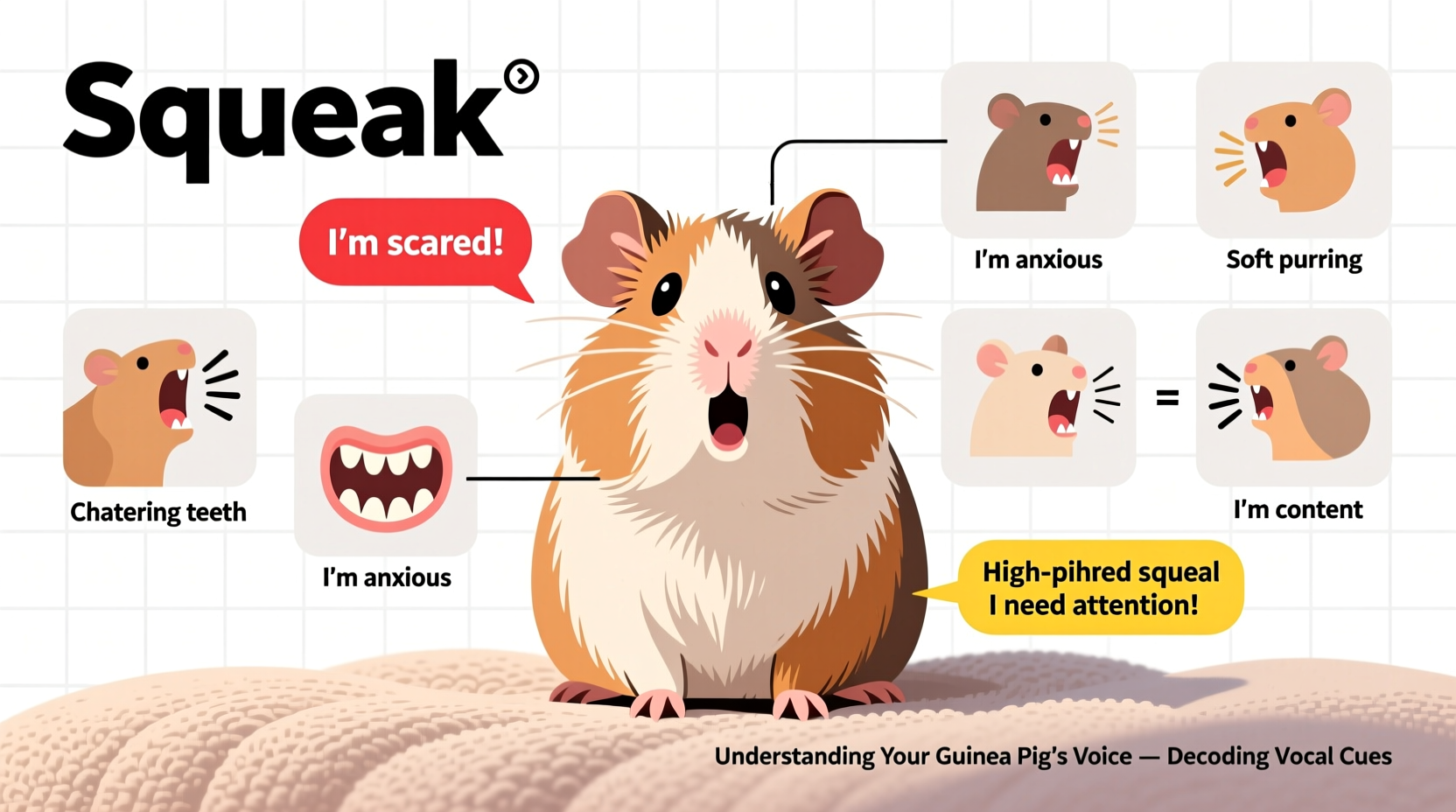
Guinea pigs (Cavia porcellus) evolved as social prey animals in the Andes Mountains of South America. In the wild, survival depended on effective communication within tight-knit groups. Without the ability to hide easily from predators, early warning systems and coordinated responses were essential. Vocal communication became a primary tool for maintaining group cohesion and signaling danger.
Modern domesticated guinea pigs retain these instincts. Their brains are wired to vocalize frequently, especially when they sense changes in their environment, seek attention, or interact socially. Researchers have identified over ten distinct vocalizations, each linked to specific emotional or physiological states. These include purring, rumbling, chutting, whining, and, most notably, the high-pitched squeak known as \"wheeking.\"
Wheeking—the loud, repetitive squeal—is often mistaken for distress, but context determines its true meaning. It may indicate anticipation during feeding time or frustration when separated from companions. Decoding these sounds requires observation of accompanying behaviors: ear position, movement, and body posture all contribute to accurate interpretation.
Tip: Record your guinea pig’s squeaks using your phone. Over time, you’ll begin to distinguish subtle differences in pitch and rhythm tied to different needs.Common Reasons for Nonstop Squeaking
Continuous squeaking isn’t always a sign of distress. However, persistent vocalization should never be ignored. Below are the most common causes behind excessive squeaking, categorized by emotional and physical triggers.
1. Hunger or Anticipation (Feeding Wheeks)
One of the most frequent reasons for constant squeaking is food-related anticipation. Guinea pigs quickly learn routines and will wheek loudly when they expect meals or treats. This sound is typically high-pitched, rhythmic, and repeated at regular intervals—especially near feeding times.
This type of squeaking is generally harmless and even considered endearing by owners. However, if it becomes obsessive or occurs outside normal feeding windows, it may suggest inconsistent meal timing or nutritional imbalance.
2. Loneliness or Social Isolation
Guinea pigs are inherently social creatures. Solitary individuals often vocalize excessively out of loneliness. They may call out repeatedly, hoping to attract companionship. In multi-pig households, one pig might wheek persistently if temporarily separated during cleaning or medical care.
“Guinea pigs thrive on social interaction. A single pig without companionship is more likely to develop anxiety-driven vocalizations.” — Dr. Lena Torres, Exotic Animal Behaviorist
3. Pain or Discomfort
Persistent, sharp squeaking—particularly when accompanied by hunched posture, reluctance to move, or teeth grinding—can indicate pain. Common sources include dental issues (malocclusion), urinary tract infections, bloating, or injuries from cage mates.
Squeaks born of discomfort tend to be shorter, higher in pitch, and occur sporadically rather than rhythmically. If your guinea pig vocalizes while being handled or avoids certain movements, a veterinary evaluation is warranted.
4. Fear or Environmental Stress
Loud noises, sudden movements, unfamiliar people, or changes in enclosure setup can trigger fear-based squeaking. These sounds are often abrupt and may be followed by freezing or fleeing behavior. Guinea pigs kept near high-traffic areas or noisy appliances may remain in a state of low-grade stress, leading to chronic vocalization.
5. Mating Behavior and Hormonal Activity
Unneutered males may wheek persistently when detecting a female in heat. Females may also vocalize more during estrus cycles. This type of squeaking is usually paired with rumbling (a low-frequency vibration) and mounting attempts.
Vocalization Types and What They Mean
To better understand your guinea pig, it helps to recognize the full spectrum of their vocal language. Below is a breakdown of common sounds and their meanings:
| Vocalization | Description | Meaning |
|---|---|---|
| Wheeking | Loud, high-pitched squeal | Excitement (usually food-related), anticipation, or frustration |
| Purring | Soft vibrating sound | Contentment (short purrs); annoyance or fear (longer, deeper purrs) |
| Rumbling | Low, vibrating growl | Dominance display or mating behavior, often with hip swaying |
| Chutting | Clicking or clucking noise | Exploration, curiosity, or mild irritation |
| Whining/Whimpering | High-pitched, drawn-out cry | Discomfort, fear, or submission |
| Teeth Chattering | Sharp clicking of teeth | Aggression, threat, or extreme discomfort |
| Squealing | Sharp, piercing scream | Pain, fear, or serious threat |
By familiarizing yourself with this table, you can begin to differentiate between harmless excitement and genuine distress. For example, a pig that wheeks every time you enter the kitchen is likely associating your presence with food—not expressing fear.
Step-by-Step Guide to Addressing Excessive Squeaking
If your guinea pig is squeaking nonstop and you’re unsure why, follow this structured approach to identify and resolve the cause.
- Observe the Timing and Context: Note when the squeaking occurs. Is it around feeding time? During handling? After introducing a new toy? Patterns reveal triggers.
- Check for Physical Signs of Illness: Look for drooling, lethargy, diarrhea, weight loss, or labored breathing. Any of these warrant immediate vet attention.
- Evaluate Social Needs: Ensure your guinea pig has at least one compatible companion. Single pigs often vocalize more due to loneliness.
- Assess the Environment: Reduce exposure to loud noises, bright lights, or foot traffic. Provide hiding spots and quiet zones within the enclosure.
- Review Diet and Routine: Feed hay continuously, offer fresh vegetables daily, and maintain consistent feeding times. Sudden diet changes can cause digestive upset and vocal discomfort.
- Minimize Handling Stress: Approach slowly, support their body fully, and avoid picking them up unnecessarily. Some pigs dislike being held altogether.
- Consult a Veterinarian: If squeaking persists without clear cause, schedule an exam with an exotic animal specialist to rule out underlying health issues.
Mini Case Study: Bella the Lonely Wheeker
Sarah adopted a young female guinea pig named Bella after seeing her at a local shelter. Within days, she noticed Bella squeaked constantly—especially at night. Concerned, Sarah recorded the behavior and brought it to her vet’s attention.
The vet ruled out medical issues but suggested social enrichment. Sarah researched proper pairing and introduced a calm male guinea pig, Milo, after a careful quarantine and introduction process. Within 48 hours, Bella’s nighttime squeaking decreased dramatically. She began chutting softly during play and only wheeked briefly at mealtimes.
Sarah realized that Bella wasn’t “demanding” anything—she was calling out for connection. With Milo by her side, Bella became more relaxed, slept better, and communicated less urgently. This case highlights how misinterpreted vocalizations can stem from unmet social needs rather than behavioral problems.
Prevention Checklist: Reducing Unnecessary Squeaking
- ✅ House guinea pigs in pairs or small compatible groups (same sex or neutered males)
- ✅ Maintain a consistent daily routine for feeding and cleaning
- ✅ Provide unlimited access to Timothy hay and fresh water
- ✅ Offer multiple hiding places and tunnels for security
- ✅ Keep the cage in a quiet, draft-free area away from predators (e.g., cats, dogs)
- ✅ Schedule annual checkups with an exotic veterinarian
- ✅ Avoid sudden changes in environment or diet
- ✅ Spend quality time daily through gentle interaction and supervised floor time
Frequently Asked Questions
Is it normal for guinea pigs to squeak all day?
No, constant squeaking throughout the day is not typical. While some vocalization is normal—especially around feeding time—nonstop squeaking suggests an unmet need, such as hunger, loneliness, pain, or environmental stress. Observe the context and accompanying behaviors to determine the cause.
Can guinea pigs wheek because they’re happy?
Yes. Many guinea pigs wheek out of excitement, particularly when they see their owner approaching with food. This type of wheeking is rhythmic, repetitive, and often stops once the pig is fed or engaged. It’s a sign of anticipation, not distress.
Should I be worried if my guinea pig suddenly stops squeaking?
Yes. While excessive squeaking raises concern, a sudden silence can also be alarming. Guinea pigs that stop vocalizing may be depressed, ill, or in severe pain. Combined with lethargy, loss of appetite, or hunched posture, silence demands prompt veterinary evaluation.
Conclusion: Listening with Empathy
Your guinea pig’s squeaks are not random noise—they are intentional messages shaped by instinct, emotion, and experience. When your pet squeaks nonstop, it’s asking for something: attention, comfort, food, or relief. Responding with patience and insight transforms confusion into connection.
Take time to listen beyond the sound. Watch their eyes, their posture, their habits. Learn their individual personality. With consistent care and attentive observation, you’ll begin to understand not just *why* they squeak, but *what* they’re trying to tell you. That understanding fosters trust, reduces stress, and creates a healthier, happier life for your small companion.
💬 Have a story about your guinea pig’s unique vocalizations? Share your experience in the comments and help other pet parents decode their pets’ voices.