Ferrets are playful, curious, and intelligent animals with complex social behaviors. One of the most common concerns new and even experienced ferret owners face is soft biting—those gentle nips that don’t break the skin but leave you wondering: Is this play? Affection? Or a subtle warning? Understanding the intent behind your ferret’s soft bites requires careful observation of body language, context, and interaction patterns. Unlike dogs or cats, ferrets communicate through a nuanced blend of tactile signals, vocalizations, and movement, making their behavior both fascinating and occasionally confusing.
Soft biting in ferrets can stem from several motivations, including playfulness, exploration, overstimulation, or mild discomfort. The key to interpreting these actions lies not in the bite itself, but in what surrounds it—the posture, timing, environment, and your ferret’s history with you. Recognizing the difference between playful mouthing and a cautionary nip helps strengthen your bond and prevents escalation into harder, more painful bites down the line.
The Nature of Ferret Play: Biting as Interaction
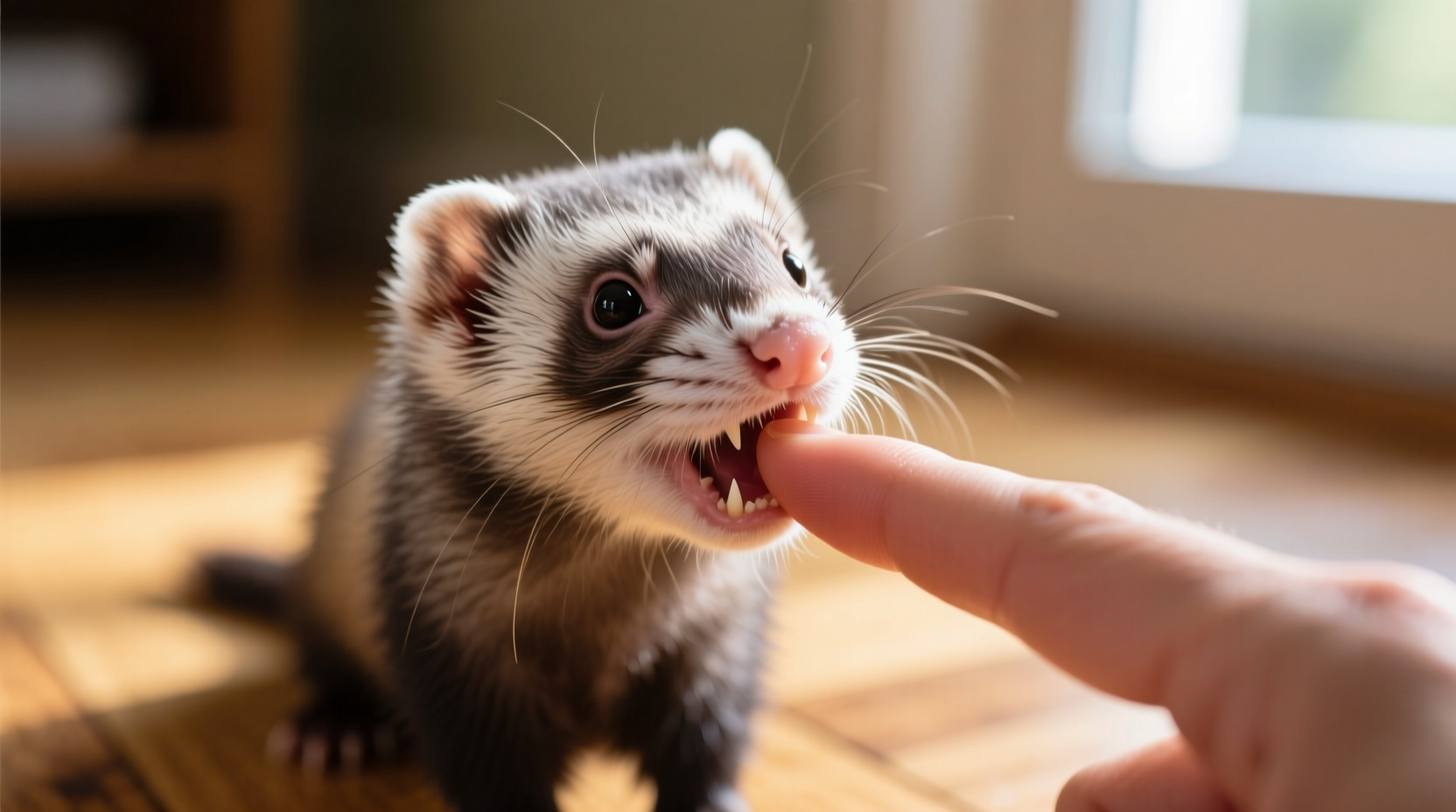
Ferrets are born hunters. Even domesticated, they retain strong instincts to chase, pounce, and mouth objects—including fingers, toes, and clothing. Soft biting during play is entirely normal and often mimics how young ferrets interact with littermates. During “war dances” (a series of hops, arches, and playful lunges), gentle nipping is part of the ritual. These bites rarely cause pain and are usually accompanied by relaxed body language: ears forward, eyes bright, tail up, and movements bouncy rather than stiff.
In multi-ferret households, you’ll frequently see ferrets grabbing each other’s necks, wrestling, and tumbling—all while emitting soft clucking sounds known as “dooking.” This same behavior may be directed at humans, especially during bonding sessions. When your ferret grabs your hand gently and shakes it sideways, it’s not an act of aggression but an invitation to engage. It’s their version of saying, “Let’s play!”
Tip: Respond to playful bites with interactive toys—not your hands—to redirect energy and reinforce appropriate play boundaries.Warning Signs: When Soft Bites Signal Discomfort
Not all soft bites are friendly. A ferret may use a gentle nip to communicate mild irritation or a desire for space. This type of bite is often preceded by subtle cues: flattened ears, a slight hiss, a tense posture, or attempts to back away. If you’re petting your ferret and they turn their head to lightly grab your finger without dooking or bouncing, it could be a polite way of saying, “Enough for now.”
Ferrets have sensitive bodies and may not enjoy prolonged handling, especially if they’re tired, hungry, or feeling overwhelmed. A soft bite in such moments serves as a boundary-setting behavior. Ignoring these early warnings can lead to firmer bites later, as the ferret escalates its communication. Respecting these signals builds trust and teaches your ferret that they can express discomfort without fear of retaliation.
“Ferrets are excellent communicators when we learn their language. A soft bite isn’t always aggression—it’s often a conversation starter.” — Dr. Lena Reyes, Exotic Animal Behavior Specialist
Context Clues: Decoding the Moment of the Bite
Interpreting soft bites requires situational awareness. The same action can mean different things depending on when and how it occurs. Consider these scenarios:
- During active play: Likely playful. Accompanied by excitement, chasing, and toy engagement.
- While being held still: Possibly a request to be released. Especially common if the ferret struggles slightly before biting.
- After being woken up: Could be disoriented or defensive. Ferrets startled from deep sleep may react instinctively.
- When exploring your hand: Often investigative. They use their mouths like we use our hands—to feel texture and taste.
- Following loud noises or sudden movements: May indicate fear or stress. The bite is a reflexive defense mechanism.
Timing matters. A bite that happens mid-laugh during a game is far less concerning than one that follows repeated petting after the ferret has tried to squirm away. Observing the sequence of events helps distinguish between affectionate nibbling and a signal to stop.
Do’s and Don’ts of Responding to Soft Bites
| Scenario | Appropriate Response (Do) | Avoid (Don’t) |
|---|---|---|
| Playful mouthing during interaction | Offer a toy, make a high-pitched \"ouch\" sound, pause briefly | Pull hand away abruptly or shout angrily |
| Bite after being handled too long | Gently place ferret down, give space, return later calmly | Scold or confine as punishment |
| Nibbling out of curiosity | Allow brief exploration, redirect if excessive | Yank hand back every time—it increases suspicion |
| Bite during sleep disturbance | Back off immediately, avoid waking suddenly in future | Continue handling or interpret as defiance |
| Repeated soft bites with no clear trigger | Assess health—check for dental issues or pain | Assume it's purely behavioral without medical check |
Step-by-Step Guide to Managing Soft Biting Behavior
- Observe the full context. Note what happened just before the bite—activity, tone, duration of interaction.
- Check body language. Are ears forward or pinned? Is the tail up or tucked? Is the ferret dooking or hissing?
- Respond appropriately. For play: redirect to a toy. For discomfort: end the interaction gently.
- Use vocal feedback. A sharp but calm “ouch!” mimics how ferrets communicate pain to each other.
- Reinforce positive alternatives. Reward non-biting play with treats or praise.
- Adjust handling routines. Limit session length, respect withdrawal cues, avoid overstimulation.
- Consult a vet if pattern persists. Rule out pain, dental disease, or neurological issues.
Real Example: Learning the Language of Nips
Sarah adopted two young ferrets, Pip and Scout. At first, she loved how they’d climb on her and nibble her sleeves during play. But soon, she noticed Pip would gently bite her wrist after about five minutes of petting—even when he seemed relaxed. She initially thought it was affection, but when she continued petting, Pip began harder biting.
After consulting a ferret-savvy veterinarian, Sarah learned to watch for micro-signals: Pip’s tail would twitch slightly, and his ears would tilt back just before the soft bite. She started ending petting sessions right after the first gentle nip, placing him back in his enclosure with a treat. Within two weeks, Pip stopped biting altogether—he learned that walking away was enough to get space, and Sarah respected his cues. The soft bite had been a consistent, polite request all along.
Checklist: Assessing Your Ferret’s Soft Biting
- ☑ Am I observing body language before and after the bite?
- ☑ Have I ruled out medical causes like tooth decay or gum disease?
- ☑ Am I using hands as toys during play?
- ☑ Do I respond consistently—same reaction every time?
- ☑ Am I respecting attempts to escape or disengage?
- ☑ Have I introduced alternative outlets (toys, tunnels, puzzles)?
- ☑ Is my ferret getting enough mental and physical stimulation daily?
FAQ
Is it normal for ferrets to bite softly when they’re happy?
Yes. Many ferrets engage in “love bites”—gentle nips during grooming or cuddling. These are typically painless and occur alongside relaxed postures and dooking. It’s part of their tactile bonding process, similar to allogrooming in social animals.
How can I tell if a soft bite is a prelude to aggression?
Aggression is rare in healthy ferrets, but escalating behavior includes hissing, puffing up, low growls, and repeated hard bites. A single soft bite followed by play is not aggression. However, if bites become frequent, deeper, or occur without provocation, consult a vet or behaviorist.
Should I discourage all biting, even if it doesn’t hurt?
Not necessarily. Gentle mouthing during play is natural. However, you should guide your ferret toward appropriate targets. Discourage biting on skin by redirecting to toys, but don’t suppress all oral exploration—it’s how they interact with the world.
Conclusion: Building Trust Through Understanding
Soft biting in ferrets is rarely malicious. More often, it’s a form of communication—whether exuberant play, sensory investigation, or a polite boundary. By learning to read the full picture—body language, timing, and environment—you transform confusion into connection. Ferrets thrive on consistency and clarity. When they know their signals are heard, they feel safer and more bonded.
Instead of reacting to every nip with concern, approach it as an opportunity to deepen your understanding. Adjust your interactions, provide enriching alternatives, and honor their limits. Over time, the soft bites will decrease not because you’ve suppressed behavior, but because mutual trust has replaced the need for correction.
💬 Have a ferret with unique biting habits? Share your experience below—your story might help another owner decode their furry companion’s quiet language.








