
Dogs are masters of expression. From the wag of a tail to the flick of an ear, they communicate in subtle yet meaningful ways. One of the most endearing behaviors pet owners witness is the head tilt—when a dog cocks their head to one side, often with wide, curious eyes, as if trying to solve a riddle. While many find it irresistibly cute, others wonder: what’s really going on behind that tilt? Is it simply a reflex, or could it be a sign of canine intelligence? The answer lies at the intersection of anatomy, cognition, and communication.
Far from being just a photogenic quirk, the head tilt may reveal how dogs process sound, interpret human language, and even empathize with their owners. Scientists and veterinarians have studied this behavior for years, uncovering layers of meaning beneath its charming surface. Understanding why dogs tilt their heads not only deepens our appreciation of their minds but also strengthens the bond we share with them.
The Anatomy Behind the Tilt
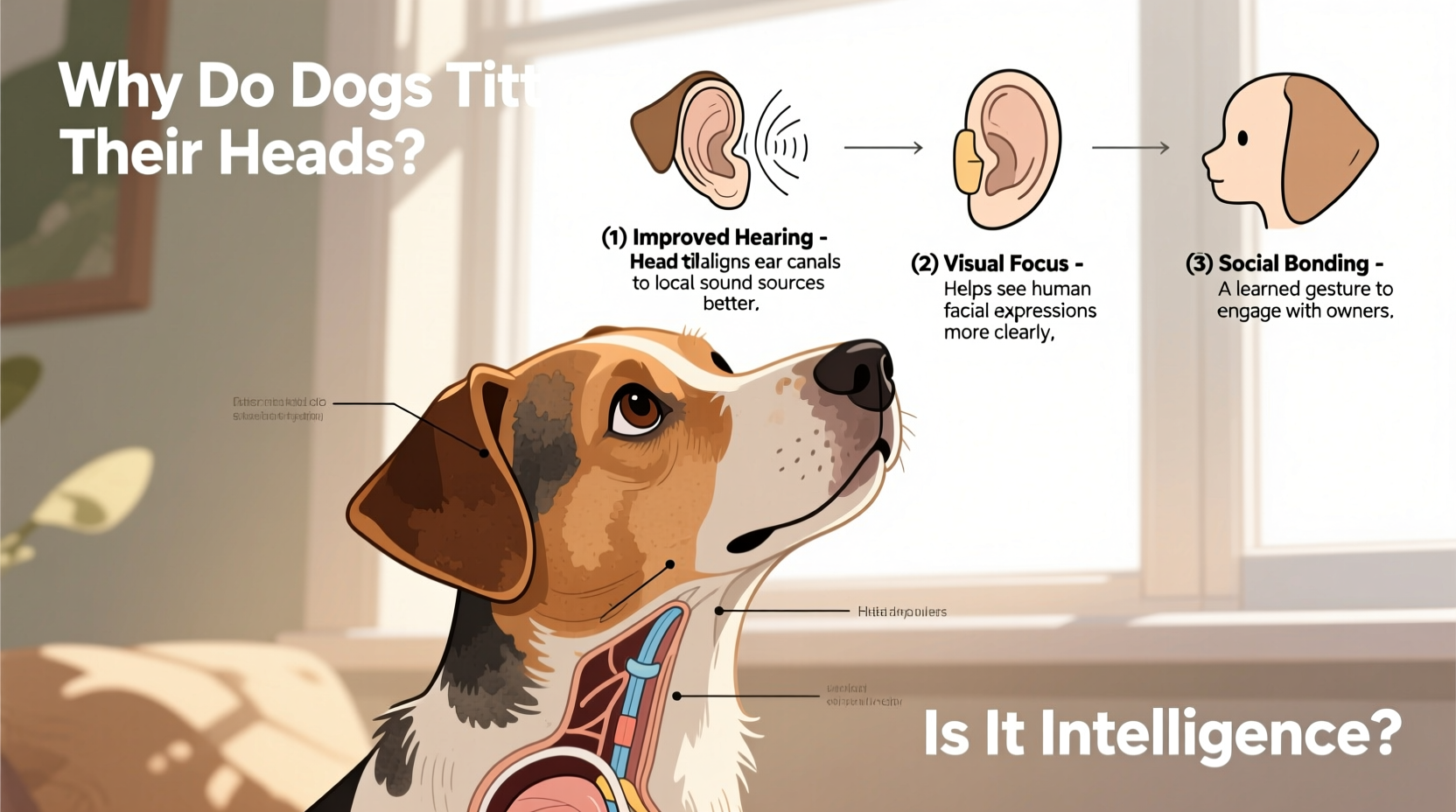
To understand the head tilt, it helps to consider a dog’s physical structure. Unlike humans, dogs rely heavily on auditory and visual cues from specific angles due to the shape of their skulls, muzzle length, and ear placement. When a dog hears an unfamiliar or high-pitched sound—a squeaky toy, a doorbell chime, or a sudden change in tone—they may tilt their head to adjust how sound waves enter the ear canal.
Dogs with longer muzzles, such as Collies or Greyhounds, may tilt more frequently than breeds like Pugs or Bulldogs. This is because their snouts can partially obstruct sound localization. By tilting, they reposition their ears to better capture sound, much like humans cupping a hand behind their ear to hear more clearly.
In addition, the pinnae—the external part of the dog’s ears—are highly mobile. Tilting helps align these structures to pinpoint where a sound originates. This behavior is especially common when a dog hears a noise from another room or detects subtle changes in a person’s vocal pitch.
Tip: If your dog tilts their head frequently in quiet environments or seems disoriented, consult a veterinarian—excessive tilting can sometimes indicate ear infections or neurological issues.Hearing and Sound Localization
Dogs hear frequencies far beyond the human range—up to 65,000 Hz compared to our 20,000 Hz limit. But while their hearing is superior, accurately locating the source of a sound requires coordination between both ears. This process, called binaural hearing, depends on slight differences in the time and intensity of sound reaching each ear.
When a sound comes from directly in front of a dog, both ears receive it almost simultaneously. But when the source is off to one side or at an unusual angle, the brain needs extra data to determine direction. A head tilt shifts the position of one ear slightly forward, improving the dog’s ability to compare volume and timing between ears. This micro-adjustment enhances spatial awareness, helping the dog “lock on” to the origin of a sound.
For example, if you rustle a treat bag behind your back, your dog might tilt their head first to the left, then the right, as they triangulate the exact location. This isn’t just curiosity—it’s active listening in motion.
“Dogs use head tilting as a dynamic tool for auditory processing. It’s not passive; it’s problem-solving through movement.” — Dr. Sarah Caldwell, Veterinary Neurologist
Is Head Tilting a Sign of Intelligence?
The question of whether head tilting reflects intelligence is complex. While the act itself isn’t direct proof of high IQ, it often correlates with cognitive engagement. Dogs that tilt their heads when spoken to may be demonstrating heightened attention, pattern recognition, and social learning—all hallmarks of intelligent behavior.
Research from the Journal of Comparative Psychology suggests that dogs who respond to human gestures and vocal cues with behaviors like head tilting tend to perform better on object-choice tasks (where they must follow a human point or gaze to find hidden food). These dogs show advanced social cognition—the ability to interpret human communication signals.
Moreover, some studies indicate that dogs can learn hundreds of words. A Border Collie named Chaser, for instance, learned over 1,000 proper nouns. Observations show that dogs like Chaser often tilt their heads when hearing new or infrequently used words, suggesting they’re mentally processing linguistic input.
This doesn’t mean every head tilt equals Einstein-level thinking. However, frequent, context-aware tilting—especially in response to speech or novel stimuli—can signal a dog actively trying to understand its environment.
| Behavior | Possible Meaning | Link to Intelligence? |
|---|---|---|
| Tilts when hearing new sounds | Sound localization | Moderate – shows sensory awareness |
| Tilts during human speech | Attempting to interpret tone/words | High – indicates social cognition |
| Tilts after commands | Processing instruction | High – linked to obedience learning |
| Frequent unexplained tilting | Potential medical issue | No – may indicate discomfort |
Social Bonding and Emotional Intelligence
Beyond hearing and cognition, the head tilt plays a role in social interaction. Dogs are acutely attuned to human emotions, and they often mirror our expressions and body language. A head tilt can function as a nonverbal gesture of empathy—similar to a human raising their eyebrows in concern.
When a dog sees their owner frowning, speaking softly, or crying, they may tilt their head as part of a broader set of comforting behaviors. This posture exposes the eyes more fully, enhancing eye contact, which strengthens emotional connection. In fact, some trainers believe dogs have learned that tilting elicits positive reactions from humans—pets, praise, laughter—making it a reinforced social strategy.
A 2020 study published in Animal Cognition found that dogs were significantly more likely to tilt their heads when their owners used emotionally expressive speech, particularly sad or surprised tones. This suggests the behavior isn’t purely mechanical; it’s modulated by emotional context.
Mini Case Study: Bella the Rescue Beagle
Bella, a three-year-old Beagle adopted from a rural shelter, initially showed little interest in human conversation. Her new owner, Maria, spoke to her regularly, read aloud, and played music around the house. Over several weeks, Maria noticed Bella began tilting her head whenever she used exaggerated intonation—especially during storytime.
After two months, Bella started responding to simple questions like “Where’s your ball?” with a head tilt followed by searching behavior. Though not formally trained, Bella demonstrated increasing attentiveness and contextual understanding. Her vet noted that her hearing was normal, suggesting the development of the head tilt was tied to growing trust and cognitive engagement.
In this case, the head tilt evolved from a rare occurrence to a consistent communication tool—indicating both emotional bonding and emerging problem-solving skills.
Training and Reinforcement: Are Dogs Doing It for Attention?
There’s no denying that humans love the head tilt. We smile, coo, and often reward the behavior unconsciously with treats or affection. Over time, dogs learn what works. If tilting gets them attention, they’ll do it more—especially in situations where they want something.
This doesn’t make the behavior fake. Rather, it highlights a dog’s ability to adapt communicative strategies based on feedback. In behavioral terms, this is known as operant conditioning: the dog performs an action (head tilt) that leads to a desirable outcome (petting, treats), increasing the likelihood of repetition.
Some dogs become so skilled at using the tilt strategically that they deploy it on cue—even without a sound present. This level of intentionality speaks to their social intelligence and understanding of cause-and-effect relationships.
Tip: Avoid over-rewarding the head tilt if it becomes excessive or obsessive. Balance reinforcement with other desired behaviors like sitting or staying calm.Checklist: What Your Dog’s Head Tilt Might Mean
- ✅ Trying to locate a sound (e.g., bird chirping, doorbell)
- ✅ Processing human speech or tone of voice
- ✅ Responding to emotional cues (sadness, surprise)
- ✅ Seeking attention or rewards
- ✅ Reacting to a command or question
- ⚠️ Showing signs of ear infection (if accompanied by scratching, odor, or imbalance)
- ⚠️ Indicating neurological discomfort (if constant or uncontrolled)
When to Be Concerned: Medical Causes of Head Tilting
While occasional head tilting is normal, persistent or abnormal tilting warrants veterinary evaluation. A constant head tilt—especially if the dog appears off-balance, walks in circles, or shows nystagmus (rapid eye movement)—can indicate underlying health problems.
Common causes include:
- Ear infections: Inflammation in the middle or inner ear disrupts balance.
- Polyps or tumors: Growths in the ear canal can affect nerve function.
- Vestibular disease: Often called “old dog vestibular syndrome,” this condition mimics stroke symptoms but usually resolves within days.
- Neurological disorders: Seizures, inflammation, or trauma affecting the brainstem.
If your dog suddenly starts tilting their head constantly—even when resting—or seems disoriented, seek immediate veterinary care. Early diagnosis improves outcomes significantly.
FAQ: Common Questions About Dog Head Tilting
Do all dogs tilt their heads?
No—not all dogs exhibit head tilting. Some breeds or individuals may rarely or never do it. Factors like ear shape, temperament, and socialization influence the frequency. Just because a dog doesn’t tilt doesn’t mean they’re less intelligent or attentive.
Can I train my dog to tilt their head on command?
Yes, using positive reinforcement. Wait for a natural tilt, mark it with a clicker or verbal cue (“Yes!”), then reward. Over time, introduce a hand signal or word like “think.” However, avoid encouraging the behavior excessively, as it could lead to strain or confusion.
Does head tilting mean my dog understands me?
It can be a sign they’re trying to. Dogs pick up on tone, rhythm, and familiar words. A head tilt during speech often means they’re focusing on decoding your message. Pair this with consistent training, and you’ll likely see improved comprehension over time.
Conclusion: Embracing the Curiosity Behind the Tilt
The dog’s head tilt is more than a charming habit—it’s a window into their perceptual world. Whether adjusting for sound, seeking emotional clarity, or engaging socially, this small movement reveals a mind actively interpreting its surroundings. While not every tilt is a burst of genius, the behavior often reflects attention, adaptability, and emotional attunement—qualities closely linked to canine intelligence.
Understanding why dogs tilt their heads enriches our relationship with them. It reminds us that even the simplest gestures carry meaning. Instead of merely smiling at the cuteness, we can respond with curiosity of our own: What are they trying to understand? How can we communicate more clearly?
💬 Have a dog that tilts their head in funny or thoughtful moments? Share your story in the comments—your experience might help others appreciate the depth behind this beloved behavior.








