
Dogs are masters of communication, even when they don’t use words. One of their most endearing behaviors—tilting their head when we speak—is more than just a cute trick. It’s a complex blend of auditory processing, visual adaptation, social learning, and emotional engagement. While it may seem like your dog is simply being curious or charming, this subtle motion carries layers of meaning rooted in both biology and behavior. Understanding why dogs tilt their heads can deepen your bond and help you interpret their needs more accurately.
The Science Behind the Tilt: How Dogs Process Sound
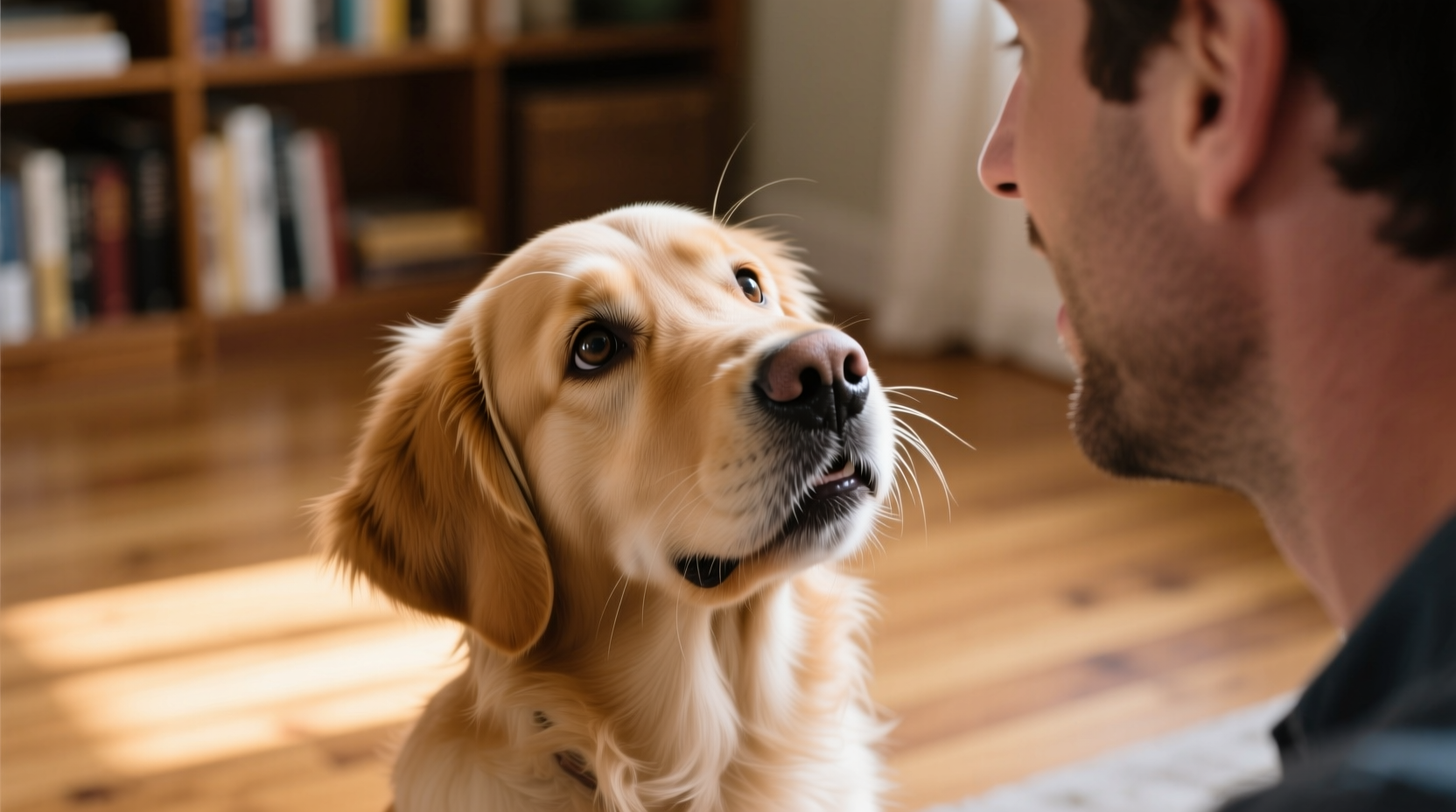
Dogs have far superior hearing compared to humans, detecting frequencies up to 65,000 Hz (versus our 20,000 Hz). However, precision in locating where a sound originates isn’t always automatic. The shape and length of a dog’s ears, along with how they’re positioned on the skull, influence how sound waves travel into the ear canal. When a dog hears an unfamiliar or intriguing noise—especially human speech—they often tilt their head to adjust the position of their ears and improve sound localization.
This adjustment helps them determine not only the direction but also the tone, pitch, and emotional intent behind your words. For example, high-pitched tones often signal excitement or affection, while low, firm tones may indicate caution or correction. By tilting their head, dogs fine-tune their auditory focus, much like someone cupping their hand behind their ear to hear better.
Tip: Speak in varied tones during training—it helps your dog associate different sounds with specific actions or emotions.Breed Differences in Head Tilting Behavior
Not all dogs tilt their heads equally. Breeds with longer muzzles (dolichocephalic), such as Collies, Greyhounds, or Setters, tend to tilt more frequently than brachycephalic breeds like Pugs or Bulldogs. This is partly due to facial structure: longer snouts can obstruct peripheral vision, especially when looking upward at a person’s face. Tilting compensates for this obstruction, allowing them a clearer view of your mouth and facial expressions.
A study published in *Animal Cognition* (2019) observed that dogs who were more adept at understanding human gestures and vocal cues exhibited head-tilting behavior more consistently. The researchers suggested that the tilt might be linked to cognitive processing—essentially, the dog is “thinking harder” when trying to decode what you're saying.
Visual Advantage: Seeing Your Face More Clearly
When a dog looks up at you from a standing or sitting position, their muzzle can block part of their field of vision, particularly the lower half of your face. Since dogs rely heavily on facial cues—including lip movements, eyebrow raises, and eye contact—to interpret human emotion and intention, any obstruction limits their ability to read you accurately.
Tilting the head shifts the angle of view, bringing your mouth and chin into clearer sight. This is especially important because dogs learn to recognize familiar words not just by sound but by watching how we form them. Words like “walk,” “treat,” or “bath” come with distinct mouth shapes, and over time, dogs become skilled lip-readers.
“Dogs don’t just listen to our words—they watch them. The head tilt is often a visual recalibration, helping them see the full picture of what we’re communicating.” — Dr. Sarah Caldwell, Canine Behavior Researcher, University of Edinburgh
Facial Recognition and Emotional Interpretation
Dogs are remarkably attuned to human emotional states. They can distinguish between happy, angry, and neutral faces, often responding more positively to smiling expressions. When your dog tilts its head while you're speaking, it may be attempting to confirm your emotional state before deciding how to respond.
This behavior is especially common in social breeds like Golden Retrievers, Border Collies, and German Shepherds—dogs bred for close cooperation with humans. These breeds have evolved to pay closer attention to human signals, making the head tilt not just functional but also socially strategic.
Conditioned Response: When Cuteness Pays Off
While some head tilts are instinctive, others are learned. If your dog has ever tilted its head while you were speaking—and you responded with praise, laughter, or treats—that behavior was reinforced. Over time, dogs learn that this gesture elicits positive attention from their owners.
In behavioral psychology, this is known as operant conditioning. A naturally occurring action becomes more frequent because it leads to a desirable outcome. So, while the initial tilt may have been triggered by curiosity or sound processing, repeated reinforcement turns it into a go-to move for gaining favor.
Mini Case Study: Max the Rescue Terrier
Max, a mixed-breed rescue adopted by a family in Portland, rarely interacted during conversations. After six months, his owners noticed he began tilting his head whenever someone said “want to play?” Curious, they started marking the behavior with a clicker and rewarding it immediately with a ball toss. Within weeks, Max was tilting his head on cue—even without a toy present. Eventually, the behavior generalized: he’d tilt his head during any emotionally charged conversation, seemingly to stay engaged.
What began as a trained response evolved into genuine communicative effort. His veterinarian noted that Max had mild hearing loss in one ear, suggesting the original tilt may have helped him process sound asymmetrically—but now, it served multiple purposes: listening, seeing, and connecting.
Cognitive Engagement: Is My Dog Thinking Harder?
Recent research suggests a correlation between head tilting and mental effort. In one Hungarian study using fMRI scans, dogs showed increased activity in the auditory cortex when exposed to familiar words spoken in emotionally expressive tones. Notably, many of these dogs physically tilted their heads during the scans, indicating that the movement coincides with active neural processing.
This implies that head tilting isn’t just about improving hearing or vision—it may also reflect internal cognitive work. Your dog might be piecing together fragmented information: tone + word + context + past experience—to arrive at a meaningful interpretation.
When the Tilt Signals Something Else
While occasional head tilting is normal and healthy, persistent or uncontrolled tilting—especially if accompanied by circling, loss of balance, or disorientation���can indicate a medical issue. Common causes include:
- Ear infections (otitis externa)
- Vestibular disease (often called “old dog vestibular syndrome”)
- Possible neurological disorders or tumors
- Exposure to toxins affecting balance
If your dog suddenly begins tilting its head constantly—even when not interacting with people—or shows signs of discomfort, consult a veterinarian promptly. Early diagnosis can prevent complications.
Tip: Monitor changes in frequency or duration of head tilting. A sudden increase could signal underlying health concerns.Actionable Guide: How to Encourage Healthy Communication
You can't—and shouldn't—stop your dog from tilting its head. It's a natural, often beneficial behavior. But you can support clear communication and overall well-being through intentional practices.
Step-by-Step: Building Stronger Vocal Understanding
- Use consistent keywords: Choose specific words for common activities (e.g., “leash” = walk, “crate” = bedtime) and use them regularly.
- Pair words with gestures: Point toward the door when saying “walk,” or hold a treat bag when saying “dinner.” This reinforces comprehension.
- Speak clearly and calmly: Avoid exaggerated baby talk; instead, use moderate pitch variations to convey emotion without confusion.
- Observe responses: Note when your dog tilts its head—what were you saying? This helps identify which words trigger recognition.
- Reinforce attentiveness: Reward focused listening with praise or small treats, especially during training sessions.
Checklist: Signs Your Dog Understands You
- Responds correctly to verbal commands without hand signals
- Looks at your face when spoken to
- Tilts head in response to novel or emotionally charged phrases
- Shows excitement upon hearing key words (“vet,” “park,” “no”)
- Moves toward relevant objects (e.g., runs to door when you say “leash”)
Do’s and Don’ts of Responding to Head Tilting
| Do’s | Don’ts |
|---|---|
| Do acknowledge the behavior warmly—your dog is engaging with you. | Don’t over-reward every single tilt, or you risk encouraging attention-seeking over real comprehension. |
| Do use it as a moment to reinforce training—say a command they know and reward correct responses. | Don’t assume the tilt means full understanding—many dogs react to tone, not vocabulary. |
| Do monitor for changes in frequency or asymmetry (e.g., always tilting to one side). | Don’t mimic the tilt excessively; it may confuse your dog or dilute meaningful cues. |
Frequently Asked Questions
Is head tilting a sign of intelligence?
Not directly. While intelligent breeds may exhibit more frequent head tilting due to higher engagement and problem-solving tendencies, the act itself reflects sensory adjustment and attention rather than IQ. However, dogs that tilt more often may be more attuned to human communication, which is a form of social intelligence.
Why does my dog only tilt its head when I use certain words?
Dogs recognize specific sounds associated with positive outcomes. Words like “walk,” “treat,” “car,” or “park” are often paired with action and excitement. When they hear these, their brains activate memory centers, prompting physical reactions like head tilting, tail wagging, or perking ears. It’s not the word alone—it’s the history behind it.
Can puppies learn to tilt their heads on command?
Yes, through positive reinforcement. While the behavior starts organically, you can shape it using a clicker or verbal marker the moment the puppy tilts. Pair it with a cue like “listen” and reward consistently. Over time, they’ll perform the action intentionally. Just ensure it doesn’t replace actual obedience—focus on useful commands first.
Conclusion: Listening Beyond Words
Your dog’s head tilt is a window into a rich world of perception, emotion, and connection. It combines biological adaptation with learned behavior, blending survival instinct with deep social bonding. Far from being mere cuteness, this gesture reveals how attentively dogs observe us, strive to understand us, and seek meaningful interaction.
Next time your dog cocks its head while you speak, take a moment to pause and connect. Use it as an opportunity to strengthen your relationship—through clearer communication, thoughtful training, and mutual respect. These small moments build the foundation of a lifelong companionship.
💬 Did your dog recently surprise you with a new trick or expression? Share your story in the comments—let’s celebrate the little ways our dogs speak to us every day.








