
Dog owners know that moment well: you say something—maybe just their name or a familiar word like “walk” or “treat”—and instantly, your dog cocks their head to one side. The eyes widen, the ears perk up, and that irresistible tilt happens. It’s undeniably endearing, often prompting smiles and camera grabs. But beyond the cuteness, what’s actually going on in your dog’s mind? Is it curiosity? Confusion? A bid for attention? Or is there a deeper cognitive or physiological explanation?
This seemingly simple gesture is more complex than it appears. Scientists, veterinarians, and animal behaviorists have studied the phenomenon for years, uncovering layers of sensory adaptation, social learning, and emotional intelligence. Far from being mere theatrics, head tilting is a window into how dogs perceive language, sound, and human emotion. Understanding it offers insight not only into their hearing and cognition but also into the depth of the bond between dogs and humans.
The Role of Canine Hearing and Sound Localization
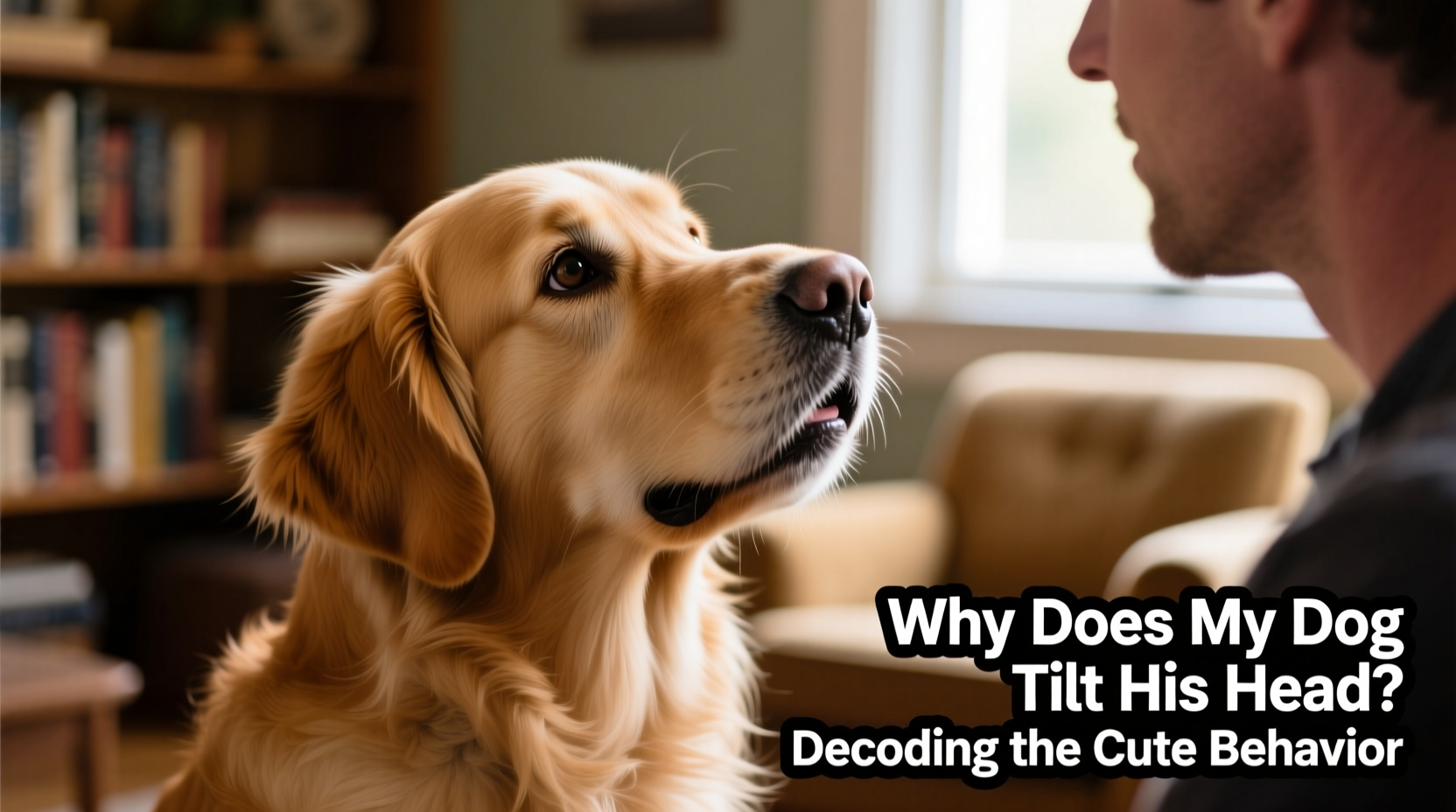
Dogs hear a broader range of frequencies than humans—up to 65,000 Hz compared to our 20,000 Hz limit—but that doesn’t mean they always understand what they’re hearing. One primary reason dogs tilt their heads is to improve sound localization. Unlike humans, whose ear canals are shorter and more open, many dog breeds have longer ear canals and floppy ears that can partially block incoming sounds.
By tilting their head, dogs reposition their ears to better capture sound waves. This subtle adjustment helps them pinpoint the source of a noise more accurately. Think of it as fine-tuning an antenna. For example, if you call your dog from another room, they might tilt their head to determine whether the voice is coming from left, right, above, or behind them. This is especially useful in environments with background noise or echoes.
Breeds with long, droopy ears—like Basset Hounds or Cocker Spaniels—are more likely to tilt their heads frequently than those with upright ears like German Shepherds or Siberian Huskies. The physical obstruction caused by floppy ears makes sound processing slightly less efficient, increasing the need for compensatory behaviors such as head tilting.
Tip: If your dog tilts their head excessively or seems disoriented, consult a veterinarian—it could signal an ear infection or vestibular issue.Processing Human Language and Tone
Dogs don’t understand words the way we do, but they’re remarkably skilled at interpreting tone, rhythm, and context. Research from Eötvös Loránd University in Hungary found that dogs process human speech using similar brain regions as humans—particularly the left hemisphere for meaning and the right for emotional tone.
When you speak, your dog listens not just for keywords (like “dinner,” “park,” or “vet”) but also for changes in pitch and inflection. A high-pitched, cheerful tone usually signals something positive; a low, stern voice may indicate correction. Head tilting often occurs when a dog detects a new or unusual word, or when the tone doesn’t match expected patterns. It’s a sign they’re actively trying to decode the message.
In one observational study, researchers played recordings of familiar commands in both normal and reversed speech. Dogs tilted their heads significantly more during reversed speech, suggesting the behavior increases when auditory input is confusing or unfamiliar. This implies the tilt isn’t random—it’s a focused response to linguistic ambiguity.
“Dogs use head tilting as a form of active listening. It’s their way of saying, ‘I’m concentrating—say that again.’” — Dr. Alexandra Horowitz, Cognitive Scientist and Author of *Inside of a Dog*
Social Reinforcement and Learned Behavior
While biology plays a role, psychology amplifies it. Many dogs learn early that head tilting elicits positive reactions from humans. A quick glance upward, followed by a tilt, often results in laughter, praise, treats, or affection. Over time, this becomes a reinforced behavior—a tool in the dog’s social toolkit.
Consider this scenario: A puppy tilts their head innocently while listening. The owner responds with “Aww, so smart!” and offers a treat. The next time the dog wants attention or a reward, they may repeat the gesture intentionally. In households where this behavior is consistently rewarded, it becomes more frequent—even in situations where no new sound is present.
This doesn’t make the behavior “fake.” Rather, it shows how dogs adapt their natural instincts to fit human social dynamics. They observe what works and refine their communication accordingly. Much like children learn to smile to gain approval, dogs learn which expressions earn rewards.
Mini Case Study: Max the Border Collie
Max, a five-year-old Border Collie in Boulder, Colorado, began tilting his head frequently whenever his owner said the word “squirrel.” Initially, it was a genuine reaction to the high-pitched excitement in her voice. But after months of receiving treats and enthusiastic petting each time he responded, Max started performing the tilt even when she whispered the word or used it sarcastically.
His owner noticed that Max would tilt his head not only at “squirrel” but also at other emotionally charged words like “bath” or “veterinarian”—even when spoken calmly. A behaviorist confirmed that Max had associated the head tilt with attention and was deploying it strategically, especially when he sensed tension or uncertainty in his owner’s tone.
This case illustrates how instinctual behavior evolves into learned communication. Max wasn’t pretending—he was adapting intelligently to his environment.
Emotional Intelligence and Empathy in Dogs
Perhaps the most profound reason dogs tilt their heads relates to empathy. Dogs are highly attuned to human emotions. They read facial expressions, body language, and vocal tones with remarkable accuracy. When a person speaks with concern, sadness, or excitement, dogs often respond with attentive behaviors—including head tilting—to show engagement.
A 2016 study published in *Animal Cognition* found that dogs were more likely to tilt their heads when listening to emotionally expressive human voices, particularly those conveying distress or surprise. The researchers suggested that the tilt might help dogs get a better visual angle on the speaker’s face, allowing them to pick up subtle cues like eyebrow movements or lip tension.
In essence, the head tilt may serve a dual purpose: improving auditory input and enhancing visual perception. By shifting their skull slightly, dogs can see more of your face around the obstruction of their muzzle—especially important for brachycephalic breeds like Pugs or Bulldogs, whose flat faces limit peripheral vision.
| Factor | How It Influences Head Tilting |
|---|---|
| Hearing Sensitivity | Dogs tilt to adjust ear position and localize sound sources more precisely. |
| Vocal Tone | Unusual or emotional tones trigger increased focus and head tilting. |
| Facial Obstruction | Breeds with muzzles or flat faces tilt to improve line of sight to human expressions. |
| Social Reward | Positive human reactions reinforce the behavior over time. |
| Cognitive Load | New words or complex sentences prompt mental effort, reflected in physical posture. |
When Head Tilting Warrants Attention
While occasional or frequent head tilting is normal, persistent or uncontrolled tilting can be a red flag. If your dog holds their head tilted to one side constantly—even when not interacting with people—or shows signs of imbalance, circling, or nausea, it could indicate a medical issue.
Possible causes include:
- Ear infections: Painful inflammation in the middle or inner ear can disrupt balance.
- Persistent tilting may suggest a tumor or polyp affecting the vestibular system.
- Vestibular disease: Often seen in older dogs, mimicking stroke-like symptoms including dizziness and head tilt.
- Neurological disorders: Seizures or brain abnormalities may manifest through abnormal postures.
If you notice any of the following, contact your vet promptly:
Checklist: Signs That Head Tilting May Be Medical- Constant head tilt lasting more than a few hours
- Loss of balance or difficulty walking
- Nystagmus (rapid eye movement)
- Vomiting or refusal to eat
- Foul odor or discharge from the ears
- Lethargy or disorientation
FAQ: Common Questions About Head Tilting
Do all dogs tilt their heads?
No—not every dog exhibits this behavior regularly. Some breeds are more prone to it due to anatomy or temperament. Individual personality also plays a role; more curious or socially engaged dogs tend to tilt more often.
Can I train my dog to tilt their head on command?
Yes, using positive reinforcement. Hold a treat near their ear to encourage the motion, then reward immediately when the tilt occurs. With consistency, you can shape the behavior into a cue like “What?” However, avoid overuse to prevent strain or confusion.
Is head tilting a sign of intelligence?
Not directly, but it reflects attentiveness and problem-solving. Dogs who tilt their heads are actively processing information, which suggests cognitive engagement. However, lack of tilting doesn’t imply lower intelligence—some dogs simply express focus differently.
Conclusion: A Gesture Full of Meaning
The head tilt is far more than a photogenic quirk. It’s a multifaceted behavior rooted in biology, shaped by experience, and refined through social interaction. Whether your dog is fine-tuning their hearing, seeking clarity in your tone, or silently asking, “What do you mean?”—each tilt is a small act of connection.
Understanding why dogs do this deepens our appreciation for their perceptiveness and emotional attunement. It reminds us that even the simplest gestures carry layers of meaning in the silent dialogue we share with our pets.
💬 Does your dog tilt their head often? What usually triggers it? Share your observations in the comments—your insights might help others better understand their furry companions!








