Dog owners often find themselves pausing mid-sentence just to watch their pet cock their head to the side with curious eyes fixed on them. This endearing gesture seems almost theatrical—like a canine version of deep listening. While many assume it’s simply a cute habit, the truth is more complex. Head tilting is a multifaceted behavior rooted in biology, communication, and sometimes, health. Understanding why your dog does this—and knowing when it might signal an underlying issue—is essential for responsible pet ownership.
The Science Behind the Tilt
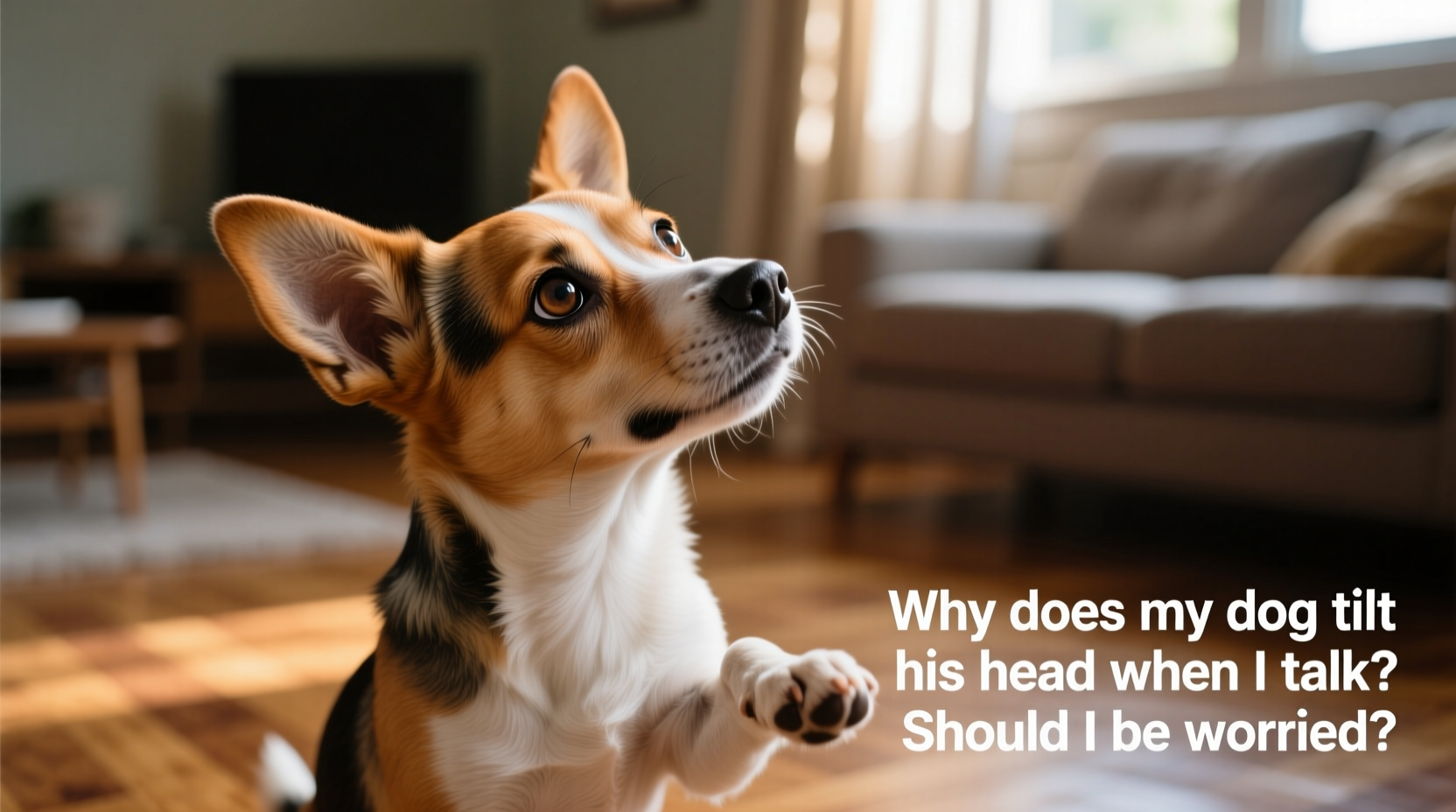
Dogs rely heavily on auditory cues to interpret their environment, but their hearing range and physical anatomy differ significantly from humans. The shape of a dog’s skull, ear placement, and muzzle length all influence how sound reaches their eardrums. When a dog tilts its head, it subtly adjusts the position of its ears to better capture sound waves, especially those coming from unfamiliar directions or at varying frequencies.
This adjustment helps pinpoint the source of a sound, much like humans cupping their ears to hear better. In particular, dogs may tilt their heads when they hear high-pitched tones, sudden noises, or speech patterns that stand out from background noise. Research suggests that dogs are highly attuned to human vocal intonations, particularly words associated with positive experiences such as “walk,” “treat,” or their name.
A 2019 study published in *Animal Cognition* observed that dogs were more likely to tilt their heads when presented with familiar verbal commands embedded in novel sentences. The researchers concluded that the behavior correlates with increased auditory processing effort, especially when trying to isolate meaningful words within complex auditory input.
Tip: If your dog tilts his head more frequently during certain conversations, try varying your tone or using clearer pronunciation—it may reduce confusion and repeated tilting.Communication and Social Bonding
Beyond hearing mechanics, head tilting plays a role in social interaction. Dogs are keen observers of human behavior and quickly learn which actions elicit positive responses. A head tilt often draws attention, affection, or verbal praise from owners who find the gesture charming. Over time, dogs may repeat the behavior because it works—they get rewarded for it.
This learned component doesn’t make the behavior any less genuine. Instead, it reflects the dog’s ability to adapt communicative signals based on feedback. Just as humans smile to convey friendliness, dogs use subtle body language—including eyebrow raises, ear flicks, and head tilts—to express interest and engagement.
Veterinary behaviorists note that dogs with strong bonds to their owners exhibit head tilting more frequently during one-on-one interactions. It appears to function as both a cognitive response and a relational cue—a way of saying, “I’m paying attention, and I care what you’re saying.”
“Dogs have evolved to read human faces and voices with remarkable precision. The head tilt isn’t just about hearing; it’s part of their emotional toolkit for connecting with us.” — Dr. Sarah Carter, Canine Behavior Specialist, University of Edinburgh
When Head Tilting May Signal a Health Concern
While occasional head tilting is perfectly normal, persistent or uncontrolled tilting can indicate medical problems. Unlike the brief, responsive tilt seen during conversation, pathological head tilting is typically constant, involuntary, and accompanied by other neurological signs.
The most common medical cause is vestibular disease, which affects the balance system located in the inner ear and brainstem. Symptoms include:
- Continuous head tilt (often to one side)
- Circling or falling to one side
- Nystagmus (rapid, uncontrolled eye movements)
- Vomiting or loss of appetite
- Loss of coordination
In older dogs, idiopathic vestibular syndrome—sometimes called “old dog vertigo”—can appear suddenly but often resolves within days to weeks without treatment. However, similar symptoms may also stem from ear infections, trauma, tumors, or strokes, making veterinary evaluation crucial.
Ear infections, particularly affecting the middle or inner ear, are another frequent culprit. These can distort spatial awareness and create discomfort that leads to a sustained head tilt. Breeds with floppy ears (like Cocker Spaniels or Basset Hounds) or excessive hair in the ear canal (such as Poodles or Shih Tzus) are at higher risk.
Red Flags That Warrant a Vet Visit
| Behavior | Normal? (Conversational Tilt) | Potentially Concerning |
|---|---|---|
| Duration | Seconds to a minute | Persistent throughout the day |
| Triggers | Hearing specific words or sounds | No clear trigger; occurs randomly |
| Eye Movement | Normal tracking | Rapid twitching (nystagmus) |
| Balance | Stable posture | Leaning, circling, or stumbling |
| Pain Response | None | Sensitivity when touching head or ears |
Step-by-Step: Assessing Your Dog’s Head Tilt
If you're unsure whether your dog’s head tilting is behavioral or medical, follow this structured approach to gather information before consulting your veterinarian:
- Observe frequency and context: Note when the tilting happens. Is it only during speech, or does it occur while eating, resting, or walking?
- Check for asymmetry: Look at your dog’s face and ears. Is one ear held lower? Are there signs of discharge, odor, or redness?
- Test responsiveness: Call your dog’s name or say a known command. Does he tilt his head then respond appropriately?
- Monitor balance: Watch how your dog walks. Does he veer to one side, stumble, or seem disoriented?
- Document changes: Keep a short log over 24–48 hours noting episodes, duration, and associated behaviors.
- Contact your vet: Share your observations. They may recommend an otoscopic exam, neurological assessment, or imaging tests like an MRI if needed.
Mini Case Study: Max, the Golden Retriever with a Persistent Tilt
Max, a seven-year-old Golden Retriever, began tilting his head to the left after returning from a weekend at a lakeside cabin. His owner initially thought it was his usual “listening” pose, but within two days, Max started walking in circles and refused to eat. Concerned, she brought him to the vet.
Upon examination, the veterinarian detected a foul-smelling discharge from Max’s right ear and mild nystagmus. An otoscope revealed a severe bacterial infection in the middle ear, likely caused by water exposure during swimming. After a course of antibiotics, anti-inflammatory medication, and ear flushes, Max’s balance returned, and the head tilt resolved completely within three weeks.
This case illustrates how environmental factors can lead to medical issues mimicking behavioral quirks. Early intervention prevented potential complications like permanent hearing loss or facial nerve paralysis.
Prevention and Care Tips
While not every head tilt can be prevented, proactive care reduces the risk of underlying conditions that manifest through this behavior. Consider the following checklist to support your dog’s auditory and neurological health:
📋 **Head Tilt Prevention Checklist**- ✔ Clean ears regularly using vet-approved solutions (especially after swimming or bathing)
- ✔ Inspect ears weekly for redness, wax buildup, or odor
- ✔ Schedule annual wellness exams, including ear and neurological checks
- ✔ Use ear-drying products for dogs prone to moisture retention
- ✔ Avoid inserting cotton swabs into the ear canal
- ✔ Monitor changes in behavior, especially in senior dogs
For breeds predisposed to ear issues, routine maintenance is non-negotiable. Regular grooming appointments that include ear plucking and cleaning can prevent infections before they start.
Frequently Asked Questions
Is head tilting a sign of intelligence in dogs?
Not directly. While head tilting indicates attentiveness and auditory processing, it doesn’t correlate with IQ. Some highly intelligent breeds tilt less than others due to skull structure or temperament. The behavior reflects focus, not cognitive superiority.
Do puppies tilt their heads more than adult dogs?
Yes, young dogs often tilt more frequently as they are still learning human language and social cues. As they grow and become familiar with common commands, the frequency may decrease unless reinforced by positive reactions from owners.
Can deaf dogs tilt their heads?
Sometimes, but less commonly. Deaf dogs rely more on visual cues and vibrations. If a deaf dog exhibits head tilting, it’s more likely related to vestibular dysfunction than auditory curiosity, warranting immediate veterinary review.
Conclusion: Listen to What the Tilt Tells You
The head tilt is one of the most beloved gestures in the canine world—not because it serves a single purpose, but because it sits at the intersection of instinct, intelligence, and intimacy. Most of the time, it’s a harmless, even heartwarming, expression of your dog’s desire to understand you. But like any behavior, it deserves context. When isolated and situational, it’s likely nothing more than focused curiosity. When persistent or paired with other symptoms, it could be your dog’s way of signaling distress.
Being attentive to your dog’s habits means you’re not just watching—you’re truly seeing. By understanding the difference between charm and concern, you strengthen your bond and ensure your companion stays healthy, happy, and balanced—both physically and emotionally.
💬 Have a story about your dog’s head tilt? Whether it’s adorable or alarming, share your experience in the comments below. Your insight could help another pet owner recognize the signs early.








