
Dogs have a way of capturing our hearts with the smallest gestures—one of the most endearing being the classic head tilt. Whether they’re listening to a high-pitched voice, hearing an unfamiliar word, or simply reacting to your tone, that lopsided look tugs at our emotions. But beyond its charm, what’s really going on when your dog tilts his head? Is it a sign of comprehension, curiosity, or something more instinctual? The answer lies at the intersection of anatomy, cognition, and communication.
While many pet owners interpret the head tilt as a sign their dog “understands” what’s being said—almost like a furry therapist nodding in empathy—the truth is more nuanced. Scientists and animal behaviorists have studied this behavior for years, and while no single explanation fits every instance, a growing body of evidence points to a combination of auditory processing, visual adjustment, and learned social reinforcement.
The Anatomy Behind the Tilt
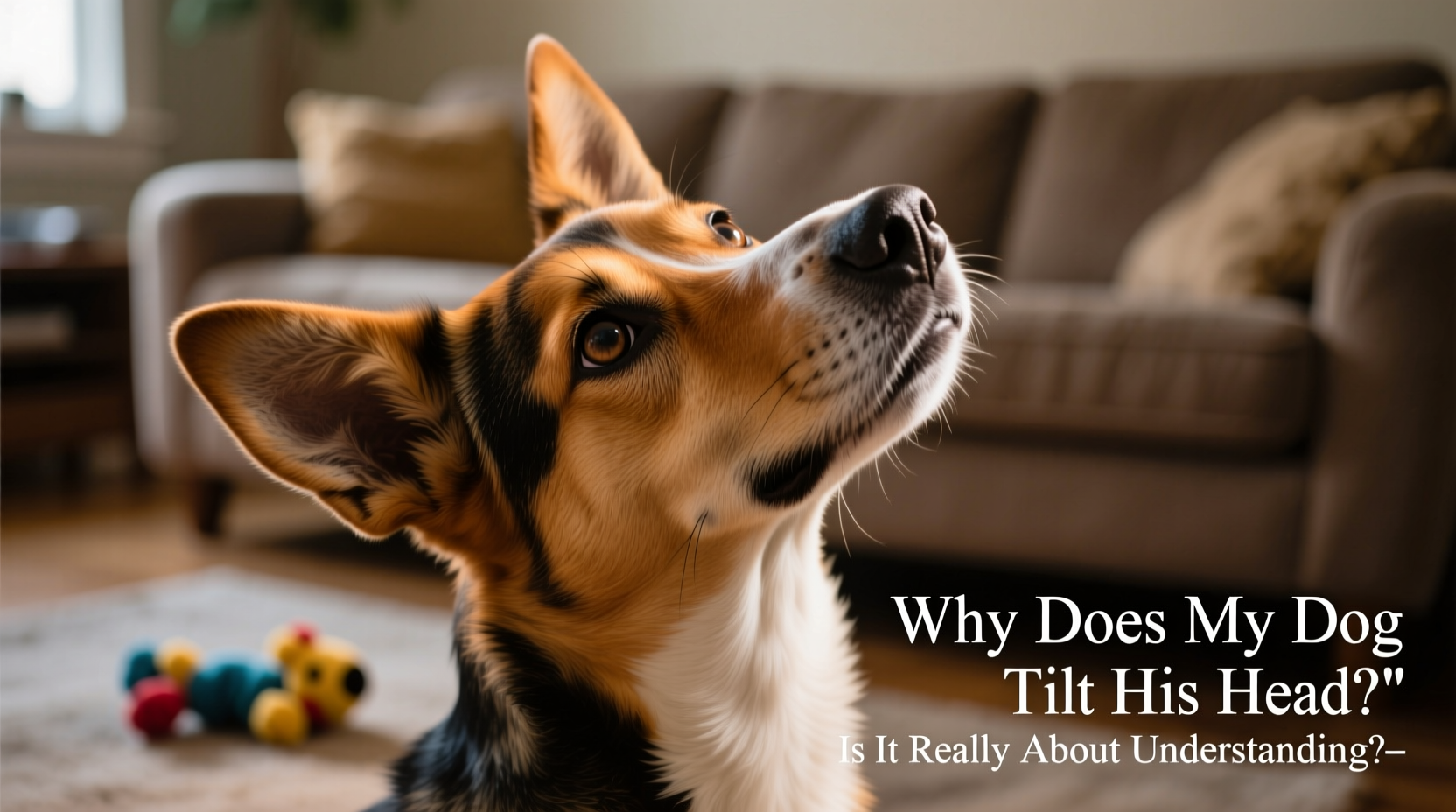
To understand why dogs tilt their heads, we must first consider their physical structure. A dog’s skull shape, ear placement, and muzzle length all influence how sound reaches their ears and how they perceive their environment visually. Dogs with longer muzzles, such as Collies or Greyhounds, may tilt their heads more frequently than brachycephalic breeds like Pugs or Bulldogs. Why? Because their snouts can partially obstruct their field of vision, especially when looking up at a human face.
When a dog tilts its head, it subtly shifts the position of its ears and adjusts the angle of its eyes relative to the sound source or speaker. This minor movement can help them:
- Better localize where a sound is coming from
- Improve auditory reception by adjusting ear canal alignment
- Get a clearer view of facial expressions, especially around the mouth
In essence, the tilt isn’t just cute—it’s functional. It helps dogs gather more sensory information from their surroundings, particularly during interactions with humans.
Tip: If your dog tilts his head frequently in quiet environments or seems disoriented, consult a veterinarian. Excessive tilting can sometimes indicate ear infections or neurological issues.Cognitive Processing and Sound Recognition
One of the most compelling theories behind head tilting involves auditory processing. Dogs are highly attuned to human voices and can distinguish between tones, pitches, and even specific words over time. Research conducted at Eötvös Loránd University in Hungary found that dogs process speech in ways similar to humans—they use the left hemisphere for meaning and the right for emotional tone.
When a dog hears a familiar command like “walk” or “treat,” he may not need to tilt his head. But when confronted with a novel word, unusual intonation, or muffled speech, the brain works harder to decode the input. The head tilt may be a physical manifestation of that cognitive effort—a momentary pause where the dog is actively trying to match sound patterns with stored memories.
“Dogs don’t understand language the way we do, but they excel at pattern recognition. A head tilt often signals that they’re filtering auditory cues and searching for context.” — Dr. Alexandra Horowitz, Canine Cognition Researcher, Barnard College
This aligns with observations made by trainers and owners alike: dogs tend to tilt their heads more when spoken to in higher-pitched, emotionally expressive tones—commonly used in “dog-directed speech.” These exaggerated vocal patterns capture attention and prompt increased engagement, including the iconic tilt.
Social Reinforcement and Learned Behavior
Not all head tilts are driven purely by sensory or cognitive needs. Some are shaped by social interaction. When a dog tilts his head and receives positive feedback—such as laughter, affection, or treats—he learns that this behavior yields rewards. Over time, it becomes a conditioned response.
Consider this scenario: Your dog tilts his head while you're talking. You respond by saying, “Aww, are you thinking hard?” and give him a treat. He doesn’t know why you reacted that way, only that the action led to something pleasant. Repeat this enough times, and the dog may begin tilting on cue, especially when seeking attention.
This phenomenon illustrates operant conditioning in action. Even if the initial tilt was spontaneous or reflexive, repeated reinforcement turns it into a strategic social tool. In households where owners consistently react positively to the gesture, dogs may perform it more frequently—even without an obvious auditory trigger.
Mini Case Study: Max the Border Terrier
Max, a three-year-old Border Terrier, lived with a couple who frequently used pet-directed speech and rewarded quirky behaviors. His owners noticed he rarely tilted his head during training sessions but did so constantly when they chatted casually or sang to him. Curious, they conducted an informal experiment: one week, they responded neutrally to the head tilt; the next, they lavished praise each time.
The results were telling. During the neutral week, Max tilted his head in only 3 out of 15 observed interactions. During the praise week, it occurred in 12 out of 15. While Max still tilted occasionally in response to new sounds, the dramatic increase during the reward phase suggested that social reinforcement played a significant role in amplifying the behavior.
Do Dogs Understand What We Say?
The central question remains: Is the head tilt a sign of understanding? The short answer is both yes and no—but not in the way most people assume.
Dogs do understand certain aspects of human language, primarily through associative learning. They can learn hundreds of words, especially nouns linked to objects (like “ball” or “leash”), and respond appropriately. However, their comprehension is based on context, tone, and routine—not grammar or syntax.
A head tilt doesn’t mean your dog grasps the full sentence you just uttered. Instead, it likely indicates he’s focusing on key auditory clues—perhaps a familiar word embedded in an otherwise confusing phrase. For example, if you say, “Would you like to go to the park and get a snack?” your dog might not comprehend the entire question, but the words “park” or “snack” could trigger recognition and prompt a head tilt as he tunes in.
Moreover, dogs are masters of reading nonverbal cues. They observe your posture, facial expressions, and hand movements far more than they parse individual words. So when your dog tilts his head while you speak, he’s likely combining multiple inputs—sound, sight, and emotion—to form a best guess about your intentions.
Checklist: Signs Your Dog May Be \"Understanding\"
While the head tilt alone isn't proof of linguistic comprehension, these accompanying behaviors suggest your dog is processing information effectively:
- Targeted gaze: Eyes locked on your face, especially the mouth area
- Ears forward: Alert positioning indicating active listening
- Tail stillness or slow wag: Focused rather than excited movement
- Body orientation: Facing you directly, ready to respond
- Action follow-through: Responding correctly to verbal cues without hand signals
If your dog exhibits several of these signs alongside a head tilt, it’s a strong indicator that he’s engaged in meaningful interpretation—not just reacting cutely.
When Head Tilting Warrants Attention
While occasional head tilting is normal and often harmless, persistent or uncontrolled tilting can signal underlying health problems. Unlike the brief, responsive tilt seen during conversation, medical-related tilting tends to be constant, involuntary, and accompanied by other symptoms.
Common causes include:
- Otitis externa/media: Ear infections affecting balance and hearing
- Vestibular disease: Disruption of the inner ear or brain pathways controlling equilibrium
- Ear mites or polyps: Physical obstructions altering auditory perception
- Neurological disorders: Including tumors or inflammation affecting cranial nerves
If your dog displays any of the following, seek veterinary evaluation promptly:
Tip: Monitor the frequency and context of head tilting. Occasional tilts during interaction are normal; constant tilting at rest is not.Table: Normal vs. Abnormal Head Tilting
| Feature | Normal Head Tilt | Abnormal Head Tilt |
|---|---|---|
| Duration | Seconds, during interaction | Prolonged or constant |
| Triggers | Voice, new sounds, commands | No clear trigger |
| Control | Voluntary, responsive | Involuntary, rigid |
| Accompanying Symptoms | None | Nystagmus (eye flickering), circling, loss of balance |
| Response to Commands | Normal | Impaired or absent |
Frequently Asked Questions
Do all dogs tilt their heads?
No, not all dogs tilt their heads. Frequency varies by breed, individual personality, hearing ability, and life experience. Some dogs never develop the habit, while others do so regularly. Breeds with longer muzzles or heightened auditory sensitivity may be more prone to the behavior.
Can I train my dog to tilt his head on command?
Yes—many dog owners successfully shape the head tilt using positive reinforcement. By waiting for a natural tilt and immediately rewarding it, then gradually introducing a verbal cue like “think,” you can condition the behavior. However, avoid overuse, as it may encourage attention-seeking at inappropriate times.
Does head tilting mean my dog is intelligent?
Not necessarily. While the behavior reflects attentiveness and sensory processing, it’s not a direct measure of intelligence. Some highly trained working dogs rarely tilt their heads, while some companion dogs do so frequently without advanced cognitive skills. Intelligence in dogs is better assessed through problem-solving, adaptability, and obedience learning.
Conclusion: More Than Just Cute
The dog’s head tilt is far more than a charming quirk—it’s a window into canine perception, communication, and connection. Whether driven by the need to hear better, see more clearly, or earn a smile from their favorite human, each tilt tells a story of engagement. While it may not mean your dog understands language the way you do, it does show that he’s trying to make sense of your world.
Next time your dog cocks his head in that familiar way, take a moment to appreciate the complexity behind the gesture. You’re witnessing a blend of biology, learning, and emotional attunement—an everyday act rooted in millions of years of evolution and decades of domestic partnership.
💬 Have a story about your dog’s head tilt? Share your experience in the comments. Let’s celebrate the little behaviors that deepen the bond between dogs and humans.








