
Dogs are naturally curious, expressive animals, and their behaviors often reflect their physical health, emotional state, and environment. While occasional odd actions—like chasing their tail or barking at nothing—are usually harmless, one behavior that can raise concern is when a dog stares intently at a blank wall for extended periods. Unlike playful or attention-seeking actions, prolonged wall-staring lacks an obvious trigger, leaving many pet owners puzzled and anxious.
Animal behaviorists, veterinarians, and neurologists have studied this phenomenon extensively. While it’s not always a sign of serious illness, persistent wall-gazing can point to underlying medical conditions, cognitive decline, or psychological distress. Understanding why your dog might be doing this—and when to seek help—is crucial for ensuring their well-being.
Medical Causes Behind Wall-Staring in Dogs
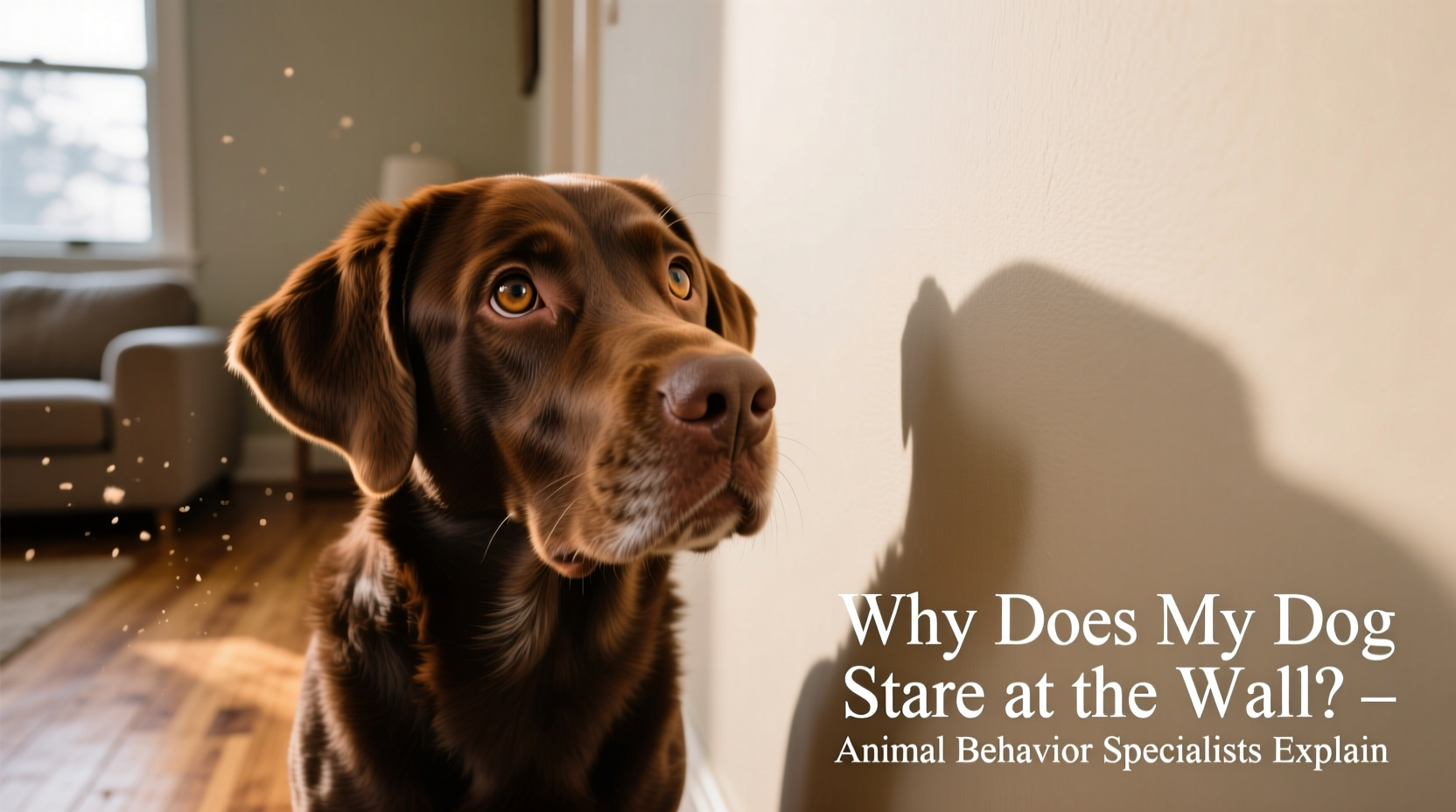
One of the most critical considerations when a dog fixates on a wall is the possibility of neurological or sensory issues. Unlike humans, dogs cannot verbally communicate discomfort or confusion, so unusual behaviors often serve as early warning signs.
Epilepsy and Seizure Activity: Partial (focal) seizures in dogs may not involve full-body convulsions. Instead, they can manifest as “absence” episodes where the dog appears dazed, unresponsive, or locked into repetitive behaviors like staring at a wall, licking the air, or circling. These episodes can last from seconds to minutes and may go unnoticed if infrequent.
“Focal seizures are often misinterpreted as quirks. But when a dog repeatedly stares into space or at walls without cause, it's worth a veterinary neurology evaluation.” — Dr. Laura Simmons, DVM, Veterinary Neurologist
Vision or Hearing Impairment: As dogs age, sensory decline is common. A dog with deteriorating vision might perceive shadows, light patterns, or movement on a wall that isn’t actually there. Similarly, hearing loss could make them hyper-focus on visual stimuli, leading to prolonged fixation on surfaces where they expect to see movement.
Canine Cognitive Dysfunction (CCD): Similar to Alzheimer’s in humans, CCD affects older dogs and can lead to disorientation, confusion, and repetitive behaviors. Dogs with CCD may walk in circles, forget commands, or stare blankly at walls for no apparent reason. This condition impacts up to 60% of dogs over the age of 15.
Tip: Keep a journal of your dog’s wall-staring episodes—note duration, frequency, time of day, and any accompanying behaviors (e.g., drooling, trembling). This log will help your vet make an accurate diagnosis.Behavioral and Environmental Triggers
Not all wall-staring is medically rooted. Sometimes, the cause lies in the dog’s environment or learned behavior patterns.
Boredom and Lack of Stimulation: Dogs left alone for long periods without toys, exercise, or mental engagement may develop stereotypic behaviors—repetitive actions with no clear function. Staring at a wall can become a self-soothing habit, much like pacing or excessive licking. Breeds prone to high energy or intelligence (e.g., Border Collies, German Shepherds) are especially vulnerable.
Attention-Seeking Behavior: If a dog learns that staring at the wall gets a reaction—such as being spoken to, moved, or even just noticed—they may repeat the act to gain interaction. Even negative attention reinforces the behavior.
Environmental Stimuli: Subtle cues invisible to humans might capture a dog’s attention. Ultrasonic sounds, vibrations from appliances, or tiny insects moving behind baseboards can draw focus to a specific wall. In some cases, drafts, temperature changes, or reflections from windows may create sensations that intrigue or unsettle the dog.
Common Behavioral vs. Medical Indicators
| Factor | Likely Behavioral Cause | Likely Medical Cause |
|---|---|---|
| Frequency | Intermittent, during downtime | Regular, predictable timing (e.g., same time daily) |
| Duration | Short bursts (seconds to 1–2 minutes) | Long episodes (2+ minutes), sometimes with glazed eyes |
| Response to Owner | Breaks focus when called | No response, appears “zoned out” |
| Other Symptoms | None; normal appetite and energy | Trembling, drooling, disorientation, accidents in house |
| Age of Dog | Any age, often younger | Senior dogs (7+ years) more commonly affected |
When to See a Veterinarian
While occasional odd behavior is normal, certain red flags warrant immediate veterinary consultation:
- Staring episodes lasting more than two minutes
- Accompanying symptoms like drooling, twitching, or loss of balance
- Increased frequency or intensity over time
- Sudden onset in an older dog
- House soiling, confusion, or failure to recognize family members
A veterinarian will likely conduct a full physical exam, blood work to rule out metabolic disorders (e.g., liver disease, kidney dysfunction), and possibly refer you to a veterinary neurologist for advanced imaging such as an MRI. EEGs are rarely used in dogs but may be considered in complex cases.
In cases of suspected seizures, anticonvulsant medications like phenobarbital or levetiracetam may be prescribed. For cognitive dysfunction, vets often recommend supplements (e.g., Senilife, antioxidants), prescription diets (e.g., Hill’s b/d), and structured routines to reduce anxiety.
Real-Life Case Study: Max, the Confused Labrador
Max, a 12-year-old yellow Labrador, began staring at the kitchen wall every evening around 7 PM. His owner, Sarah, initially thought he was watching a fly or reacting to the refrigerator hum. But over weeks, the behavior intensified—he’d stand motionless for up to five minutes, unresponsive to calls or treats.
Concerned, Sarah recorded a video and brought it to her vet. After a thorough exam and blood tests (which came back normal), Max was referred to a neurologist. An MRI revealed mild brain atrophy consistent with canine cognitive dysfunction. There were also signs of early-stage cataracts affecting his depth perception.
The vet recommended a multi-pronged approach: switching to a brain-supportive diet, adding daily walks in familiar areas to maintain routine, using puzzle toys for mental stimulation, and administering a low dose of selegiline. Within six weeks, Max’s episodes decreased by 70%. While he still had moments of confusion, the wall-staring became rare and brief.
This case illustrates how overlapping factors—age-related cognitive decline and sensory impairment—can combine to produce confusing behaviors. Early intervention made a significant difference in Max’s quality of life.
Step-by-Step Guide to Addressing Wall-Staring Behavior
If your dog exhibits wall-staring, follow this practical sequence to determine the cause and take appropriate action:
- Observe and Document: Record when, where, and how long the behavior occurs. Note any triggers (e.g., after meals, during storms).
- Eliminate Environmental Causes: Check for insects, drafts, appliance noises, or reflections. Use a flashlight to inspect walls for cracks or movement.
- Increase Mental and Physical Stimulation: Introduce puzzle feeders, obedience training, scent games, and longer walks to reduce boredom.
- Consult Your Veterinarian: Schedule a check-up, especially if your dog is senior or shows other abnormal behaviors.
- Follow Up with Specialists if Needed: If seizures or cognitive decline are suspected, request a referral to a veterinary neurologist or behaviorist.
- Implement Treatment Plan: Whether medical or behavioral, consistency is key. Monitor progress and adjust as needed.
Actionable Tips to Prevent and Manage Wall-Staring
Tip: Rotate your dog’s toys weekly to maintain novelty and engagement. Boredom is a major contributor to compulsive behaviors. Tip: Use white noise or calming music during times when your dog typically zones out—it may redirect their focus and reduce anxiety. Tip: Avoid punishing the behavior. Dogs don’t understand why they’re being scolded for staring, and punishment can increase stress and worsen compulsions.Prevention Checklist for Dog Owners
Use this checklist to minimize the risk of wall-staring and support your dog’s overall mental health:
- ✅ Provide at least 30–60 minutes of daily physical exercise
- ✅ Engage in 10–15 minutes of mental training (commands, tricks, puzzles) each day
- ✅ Maintain a consistent daily routine (feeding, walks, bedtime)
- ✅ Schedule annual vet check-ups, including hearing and vision screening for seniors
- ✅ Monitor for changes in sleep patterns, appetite, or social interaction
- ✅ Create a calm, safe space free from loud noises or chaotic activity
- ✅ Consider cognitive supplements for dogs over 7 years old
Frequently Asked Questions
Is it normal for dogs to stare at walls occasionally?
Yes, brief moments of fixation can happen due to curiosity or environmental stimuli. However, if the behavior becomes frequent, prolonged, or is accompanied by other odd symptoms, it should be evaluated by a vet.
Can stress cause my dog to stare at walls?
Absolutely. Dogs under chronic stress—due to changes in household, lack of routine, or separation anxiety—may develop repetitive behaviors as coping mechanisms. Wall-staring can be one such outlet, especially if the dog feels trapped or overstimulated.
Do certain breeds stare at walls more than others?
There’s no breed-specific predisposition to wall-staring itself. However, high-drive working breeds (e.g., Border Collies, Australian Shepherds) are more prone to developing compulsive behaviors when under-stimulated. Senior dogs of any breed are at higher risk due to cognitive decline.
Conclusion: Understanding Is the First Step to Help
Your dog’s wall-staring may seem baffling, but it’s often a signal—not a quirk. Whether rooted in medical issues like seizures or cognitive decline, or driven by boredom and anxiety, this behavior deserves thoughtful attention. By observing patterns, consulting professionals, and making targeted lifestyle adjustments, you can significantly improve your dog’s comfort and mental well-being.
Dogs rely on us to interpret their silent language. When they stare at a wall, they’re not being strange—they’re communicating in the only way they can. Take the next step: observe closely, act proactively, and give your companion the care they need. Your vigilance today could prevent suffering tomorrow.
💬 Have a story about your dog’s unusual behavior? Share your experience in the comments—your insight might help another pet owner find answers.








