Many dog owners have experienced it: lying in bed, lights off, the house quiet—when suddenly you feel a pair of eyes locked onto you from across the room. Your dog sits or lies nearby, motionless, staring intently. It’s not aggressive, not anxious—at least not obviously so—but the gaze is steady, almost unblinking. What does it mean? Is your dog trying to tell you something? Are they hungry? Scared? Or are they simply being their watchful, loyal selves?
While a midnight stare might seem eerie or even intrusive, it’s usually rooted in natural canine instincts and social dynamics. Dogs are highly attuned to human behavior, especially at night when sensory input diminishes and attention sharpens. Understanding why your dog stares at you after dark requires insight into their psychology, evolutionary history, and emotional connection to you.
The Emotional Connection: Bonding Through Eye Contact
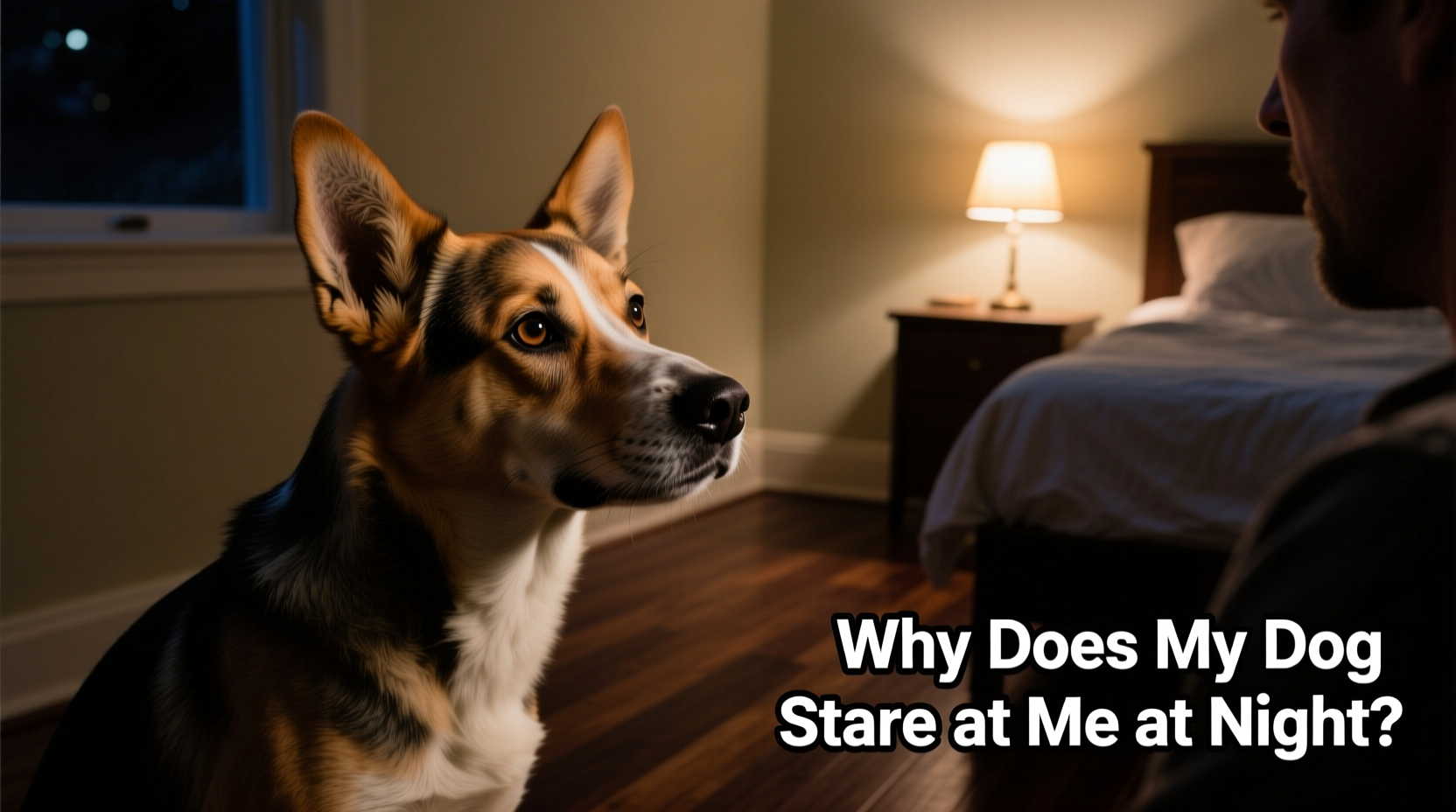
Contrary to outdated beliefs that direct eye contact from dogs is a challenge or sign of dominance, modern animal behavior research shows that mutual gazing between dogs and humans can be a powerful expression of affection and bonding.
A landmark study published in *Science* (2015) revealed that when dogs and their owners engage in prolonged eye contact, both experience a surge in oxytocin—the so-called \"love hormone.\" This neurochemical response mirrors the bond between a mother and infant and suggests that your dog may stare at you at night as a way of reinforcing emotional attachment.
“Dogs have evolved to use eye contact as a communicative tool with humans, much like infants do. That gaze isn’t just cute—it’s biologically meaningful.” — Dr. Brian Hare, Canine Cognition Researcher, Duke University
This oxytocin loop explains why many dogs seek out visual contact before settling down for sleep. In a quiet environment, the act of looking becomes a ritual of reassurance—a silent “I see you, I’m here” exchange that strengthens trust.
Tip: If your dog stares calmly and softly, without tension in the body, respond gently with slow blinks. This mimics canine calming signals and reinforces a peaceful connection.Is My Dog Trying to Communicate a Need?
Not all stares are emotional. Some are functional. At night, when routines shift and activity slows, your dog may use sustained eye contact to signal a physical need. Common motivations include:
- Hunger or thirst: If bedtime feeding times vary, your dog may remind you they’re ready for a snack or water refill.
- Need to go outside: Older dogs or puppies often develop predictable elimination patterns. A persistent stare could be a polite request to step outside.
- Discomfort: Arthritis, gastrointestinal upset, or anxiety can make dogs restless. They may fixate on you hoping for intervention or comfort.
- Desire for attention: Some dogs learn that staring gets results—whether it’s a pat, a toy, or being invited onto the bed.
Distinguishing between affectionate and demand-based staring comes down to context and body language. A dog seeking something often pairs eye contact with other cues: pacing, whining, pawing, or positioning near the door.
Case Study: Max, the Midnight Stalker
Max, a 4-year-old Border Collie, began staring at his owner, Sarah, every night around 10:30 PM. Initially endearing, the behavior became disruptive when Max would stand by the bed, unblinking, until Sarah got up. A veterinary check ruled out medical issues. After tracking Max’s routine, Sarah noticed he always stared shortly after drinking water. She shifted his last water offering to two hours before bedtime. The staring stopped within three days.
This real-life example illustrates how seemingly mysterious behaviors often have simple, solvable causes tied to routine and physiology.
Environmental Awareness and Protective Instincts
Dogs possess superior night vision and hearing compared to humans. While you may perceive your bedroom as quiet and safe, your dog might detect subtle sounds—a creak in the floorboards, distant traffic, or wind against the window—that trigger alertness.
In such moments, your dog may look at you not just to monitor your reaction but to assess whether action is needed. This behavior stems from pack mentality: in the wild, subordinate members observe the leader for cues during uncertain situations.
Additionally, many dogs view their owners as part of their territory to protect. A nighttime stare might be your dog silently standing guard, checking in periodically to ensure everything is secure. This is especially common in breeds with strong guarding instincts, such as German Shepherds, Dobermans, or Terriers.
| Staring Trigger | Signs to Watch For | What You Can Do |
|---|---|---|
| Protective vigilance | Ears up, still posture, occasional scanning of room | Reassure with calm voice; provide a designated sleeping spot near you |
| Sensory sensitivity | Startled reactions, dilated pupils, head tilting | Reduce nighttime noises; use white noise machines |
| Separation anxiety | Panting, pacing, inability to settle | Establish consistent bedtime routine; consider behavioral training |
| Cognitive decline (older dogs) | Confusion, staring into space, disorientation | Consult vet; rule out Canine Cognitive Dysfunction |
When Staring Signals Anxiety or Discomfort
While most nighttime gazing is benign, it can sometimes reflect underlying stress. Dogs experiencing separation anxiety, fear, or cognitive decline may stare persistently due to confusion or hyper-vigilance.
Key red flags include:
- Fixed, intense gaze without blinking
- Tense body posture (rigid tail, raised hackles)
- Panting, trembling, or drooling
- Inability to lie down or relax
- Following you from room to room at night
Older dogs, in particular, may develop Canine Cognitive Dysfunction (CCD), a condition similar to dementia in humans. One symptom is aimless staring or getting “stuck” in corners while fixating on nothing—or on you—with apparent confusion.
If your dog’s staring is new, sudden, or accompanied by other behavioral changes, consult a veterinarian. Blood work, neurological exams, or behavioral assessments may be necessary to rule out medical causes.
Tip: Monitor changes in your dog’s nighttime behavior over time. Use a journal or voice notes to track frequency, duration, and associated actions.How to Respond: A Step-by-Step Guide
Instead of reacting impulsively—either rewarding or scolding the stare—follow this structured approach to understand and address the behavior appropriately.
- Observe the context: Note the time, location, and what your dog did immediately before staring. Was there a sound? Did they just wake up?
- Assess body language: Look at ear position, tail movement, breathing rate, and overall muscle tone. Relaxed = likely affectionate. Tense = possible anxiety.
- Check recent routine changes: Has feeding time shifted? New pet in the home? Construction noise? Even minor disruptions affect dogs.
- Respond appropriately:
- If affectionate: return soft eye contact with slow blinks; offer quiet praise.
- If demanding: avoid reinforcement by not giving treats or attention unless it’s truly needed (e.g., bathroom break).
- If anxious: create a calming environment with familiar bedding, background noise, or pheromone diffusers.
- Adjust environment if needed: Provide a comfortable dog bed near your room, ensure access to water earlier in the evening, and maintain a consistent bedtime schedule.
- Consult professionals: If staring persists or worsens, seek advice from a certified dog trainer or veterinary behaviorist.
Common Misconceptions About Dog Staring
Several myths persist about why dogs stare, often leading to misinterpretation and inappropriate responses.
- Myth: Staring is always dominant. Reality: In domestic settings, most staring is affiliative, not confrontational. True dominance displays involve additional aggressive signals.
- Myth: Ignoring the stare will stop it. Reality: Sometimes, but not always. If the dog is anxious or needs something, ignoring may increase distress.
- Myth: All dogs should make eye contact. Reality: Some dogs, especially those with trauma histories, find eye contact stressful. Respect individual differences.
Frequently Asked Questions
Is it bad if my dog stares at me all night?
Not necessarily. If your dog appears relaxed and eventually lies down, the staring is likely normal bonding behavior. However, if they remain tense, don’t sleep, or seem distressed, it may indicate anxiety or discomfort requiring attention.
Should I stare back at my dog?
It depends on the context. A soft, brief gaze with slow blinks can strengthen your bond. But prolonged, direct, unblinking eye contact may be perceived as threatening, especially by shy or fearful dogs. Mimic canine communication: look, blink, look away.
Can staring be a sign of illness?
Yes. Sudden onset of staring into space, disorientation, or zoning out can indicate neurological issues, seizures, or cognitive decline. Always consult a vet if you notice abrupt changes in behavior, especially in senior dogs.
Action Checklist: Responding to Nighttime Staring
Use this checklist to evaluate and manage your dog’s nighttime gaze effectively:
- ✅ Observe the timing and frequency of the staring episodes
- ✅ Assess body language: relaxed or tense?
- ✅ Rule out basic needs: bathroom, water, pain, hunger
- ✅ Evaluate environmental factors: noise, lighting, routine changes
- ✅ Respond with appropriate signals: slow blinks for calm, redirection for demands
- ✅ Maintain a consistent bedtime routine
- ✅ Consult a vet if behavior is sudden, intense, or paired with other symptoms
Conclusion: Seeing Beyond the Stare
Your dog’s nighttime gaze is rarely random. Whether it’s an instinctual check-in, a quiet plea for comfort, or a deep emotional connection unfolding in silence, each stare carries meaning. By learning to interpret the nuances—body language, timing, environment—you deepen your understanding of your dog’s inner world.
Rather than dismiss or discourage the behavior automatically, approach it with curiosity and compassion. With patience and observation, you’ll not only decode the reason behind the stare but also strengthen the unique bond you share. Dogs don’t speak our language, but they communicate constantly—often with just their eyes.
💬 Have a story about your dog’s nighttime stare? Share your experience in the comments—your insight might help another pet owner feel less alone in the dark.








