
Dogs exhibit a wide range of behaviors that often leave their owners both charmed and puzzled. One of the most common yet curious habits is spinning in tight circles before settling down to rest. Whether your dog makes one careful rotation or three frantic loops, this behavior is nearly universal across breeds and ages. While it may seem like a quirky ritual, there’s more beneath the surface than meets the eye. This article explores the deep-rooted origins of circling behavior, its role in canine evolution, and how to distinguish between normal instinct and potential health issues.
The Evolutionary Roots of Circling Behavior
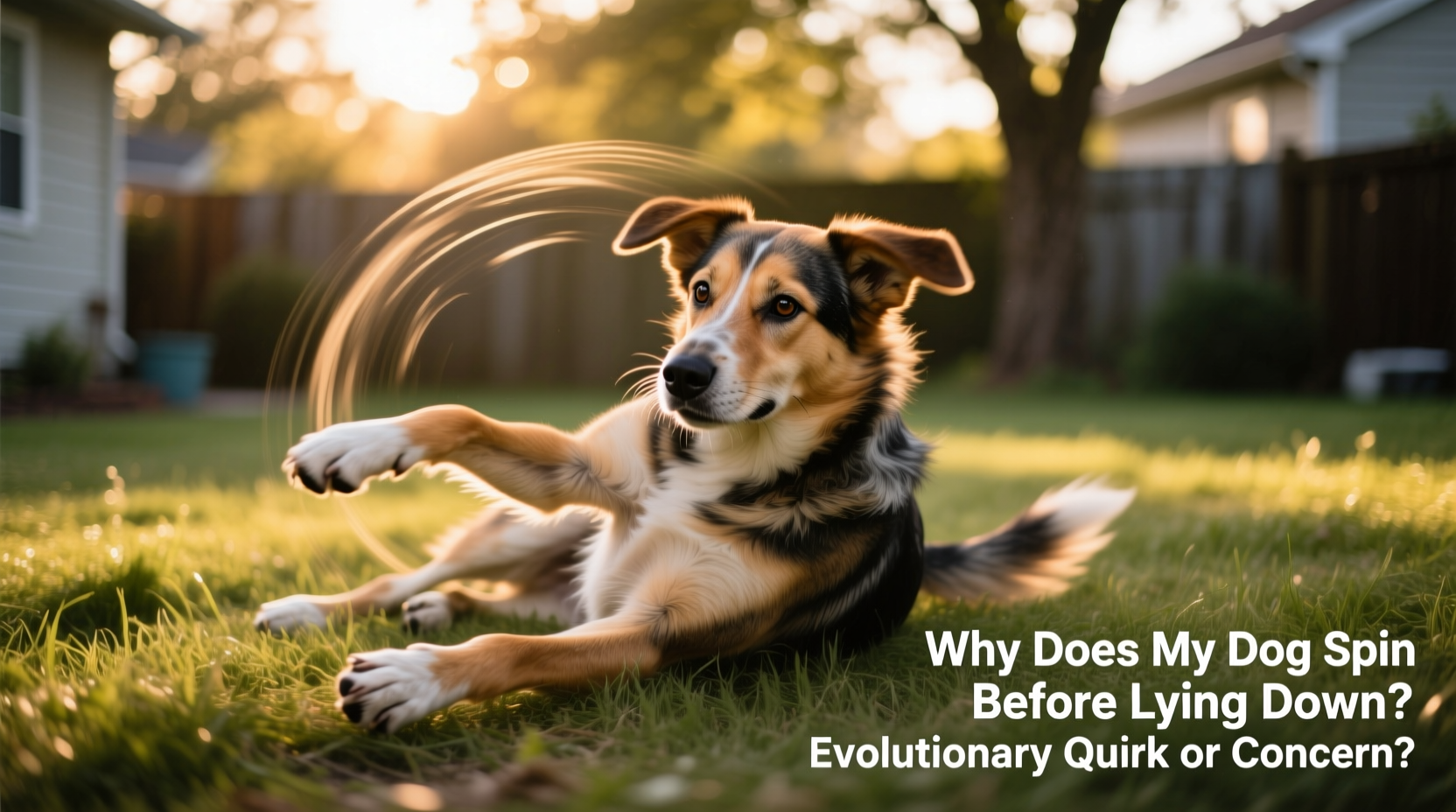
Circling before lying down is not a learned habit—it's an inherited instinct passed down from wild ancestors. Long before dogs lived on orthopedic memory foam beds, their predecessors—wolves and early proto-dogs—slept in open fields, forests, and rocky terrain. In such environments, safety and comfort were not guaranteed. The act of circling served multiple practical purposes:
- Flattening the ground: Grass, leaves, snow, or uneven soil could harbor insects, sharp objects, or moisture. By trampling the area, dogs created a safer, flatter sleeping surface.
- Checking for threats: Spinning allowed animals to scan their surroundings one last time before vulnerability set in during sleep.
- Scent marking: As dogs walk in circles, they release pheromones from glands in their paws, subtly marking the space as their own and reinforcing a sense of security.
- Temperature regulation: In colder climates, circling helped pack down grass or snow into insulation. In warmer areas, it exposed cooler earth beneath the surface layer.
This behavior was so crucial to survival that it became hardwired into canine DNA. Even today, domesticated dogs with plush beds and climate-controlled homes continue the practice—not because they need to, but because their instincts compel them to.
“Circling is a deeply ingrained survival mechanism. It’s not just about comfort; it’s about creating a safe micro-environment.” — Dr. Lena Torres, Canine Ethologist, University of Colorado
Is Circling Always Normal? When to Be Concerned
While occasional circling is perfectly natural, certain patterns can indicate underlying medical or neurological problems. The key lies in frequency, intensity, and accompanying symptoms. A dog that spins once or twice before lying down is likely following instinct. But repeated, obsessive spinning—especially when not followed by rest—can be a red flag.
Tip: Observe the full sequence. If your dog circles, settles, and sleeps peacefully, it’s likely normal. If they circle repeatedly without lying down, investigate further.Excessive circling may stem from conditions such as:
- Vestibular disease: A disruption in the inner ear or brain affecting balance. Dogs may tilt their heads, walk in circles, or lose coordination.
- Cognitive dysfunction syndrome (CDS): Similar to dementia in humans, CDS affects older dogs and can cause disorientation, repetitive behaviors, and confusion.
- Pain or discomfort: Arthritis, hip dysplasia, or spinal issues may make it difficult for a dog to lie down comfortably, leading to repeated attempts.
- Anxiety or OCD: Stress-induced compulsions can manifest as repetitive movements, including spinning.
One study published in the Journal of Veterinary Behavior found that dogs exhibiting repetitive circling without settling were 3.5 times more likely to have an underlying medical condition than those who circled briefly and rested.
Red Flags to Monitor
| Behavior | Normal? | Potential Concern |
|---|---|---|
| 1–2 rotations before lying down | Yes | None |
| Spinning 5+ times without settling | No | Pain, anxiety, or neurological issue |
| Circling in one direction only | No | Vestibular disorder or brain abnormality |
| Circling accompanied by whining or limping | No | Physical discomfort or injury |
| Sudden onset in older dogs | No | Cognitive decline or illness |
A Real-Life Example: Max the Border Collie
Max, a 9-year-old Border Collie from Vermont, began spinning in tight circles multiple times a day—not just before bed, but also in the middle of walks and after meals. His owner, Sarah, initially dismissed it as a harmless quirk. However, she noticed he was no longer jumping onto the couch, seemed disoriented at night, and sometimes walked into furniture.
After a veterinary exam, Max was diagnosed with early-stage cognitive dysfunction. His circling was not instinctual but a sign of mental confusion. With a combination of medication, environmental enrichment, and a structured routine, his symptoms improved significantly within six weeks. His circling decreased, and he regained much of his former alertness.
Max’s case illustrates how subtle behavioral changes can signal deeper issues—especially in senior dogs. Early detection made all the difference in managing his condition.
Step-by-Step Guide to Assessing Your Dog’s Circling Behavior
If you’re unsure whether your dog’s spinning is normal or problematic, follow this step-by-step evaluation process:
- Observe the pattern: Use a notebook or phone app to log when and how often your dog circles. Note duration, number of rotations, and whether they lie down afterward.
- Check for physical discomfort: Watch for signs of pain—limping, stiffness, reluctance to move, or vocalizing when lying down.
- Evaluate environmental factors: Is the sleeping area too hot, cold, hard, or noisy? Sometimes simple adjustments reduce agitation.
- Monitor for other symptoms: Look for head tilting, loss of balance, changes in appetite, or altered sleep cycles.
- Consult your veterinarian: If circling is frequent, one-sided, or new in onset, schedule a check-up. Blood work, neurological exams, or imaging may be recommended.
This systematic approach helps separate instinctual behavior from medical concerns and ensures timely intervention if needed.
Tips for Supporting Your Dog’s Natural Instincts
You don’t need to stop your dog from circling—it’s a natural, comforting ritual. Instead, support it in healthy ways:
Tip: Provide a soft, supportive bed in a quiet, draft-free area. This satisfies your dog’s instinct to “nest” while reducing strain on joints.- Choose elevated or orthopedic beds for older dogs to ease pressure on hips and spine.
- Allow access to outdoor spaces where your dog can naturally perform nesting behaviors if desired.
- Minimize stressors—noise, unfamiliar people, or chaotic routines—that may heighten anxiety and trigger compulsive actions.
- Introduce calming aids like pheromone diffusers (e.g., Adaptil) for anxious dogs.
FAQ: Common Questions About Dog Circling
Why do some dogs spin multiple times while others barely turn?
Breed, age, and individual personality play roles. Herding breeds like Collies or Shepherds may spin more due to high instinctual drive. Older dogs may reduce spinning due to joint pain, while puppies often overdo it as they learn the ritual.
Can I train my dog to stop spinning?
Not easily—and not advised. Since it’s an instinct, suppression may increase stress. Instead, focus on ensuring the behavior isn’t driven by pain or anxiety. If it becomes obsessive, consult a veterinary behaviorist.
Is circling related to chasing tails?
Not directly. Tail-chasing is often playful or compulsive, while circling before lying down is functional. However, both can become repetitive disorders if linked to anxiety or neurological issues.
Final Checklist: Is Your Dog’s Circling Normal?
Use this quick checklist to assess your dog’s behavior:
- ✅ Circles 1–3 times before lying down
- ✅ Settles quickly and sleeps soundly
- ✅ No signs of pain or distress
- ✅ Behavior has been consistent over time
- ✅ No head tilting, imbalance, or confusion
- ❌ Spins excessively without resting
- ❌ Shows sudden changes in behavior
- ❌ Favors one direction consistently
If most of your answers are “yes” to the first five and “no” to the last three, your dog is likely expressing normal instinct. If concerns persist, professional evaluation is warranted.
Conclusion: Honor the Habit, But Stay Observant
The ritual of spinning before lying down is a living echo of your dog’s wild ancestry—a small but profound reminder of how deeply instinct shapes behavior. In most cases, it’s nothing to worry about. In fact, it’s a sign of a dog engaging with natural, self-soothing routines.
Yet, as responsible pet owners, we must remain vigilant. What begins as a harmless habit can sometimes mask discomfort, illness, or cognitive change. By understanding the why behind the spin, you empower yourself to support your dog’s well-being—honoring their nature while protecting their health.
💬 Have you noticed changes in your dog’s circling behavior? Share your experiences in the comments—your story could help another pet owner recognize a warning sign early.








