
Dogs do many things that seem whimsical to us—tilting their heads, chasing their tails, or suddenly zooming around the house for no apparent reason. But few behaviors are as consistently observed yet quietly mysterious as the pre-sleep spin. You’ve likely seen it: your dog circles once, twice, sometimes three times before finally settling into a nap. It’s endearing, predictable, and deeply rooted in biology. This seemingly odd ritual isn’t random; it’s an echo of ancient survival instincts passed down through generations of wild canines.
Understanding why dogs spin before lying down offers more than just a fun fact—it provides insight into their evolutionary history, sensory perception, and even their physical well-being. What appears to be a quirky habit is actually a finely tuned behavior shaped by thousands of years of adaptation. From flattening grass to checking for predators, every turn serves a purpose that once meant the difference between comfort and danger—or even life and death.
The Origins of the Spinning Behavior
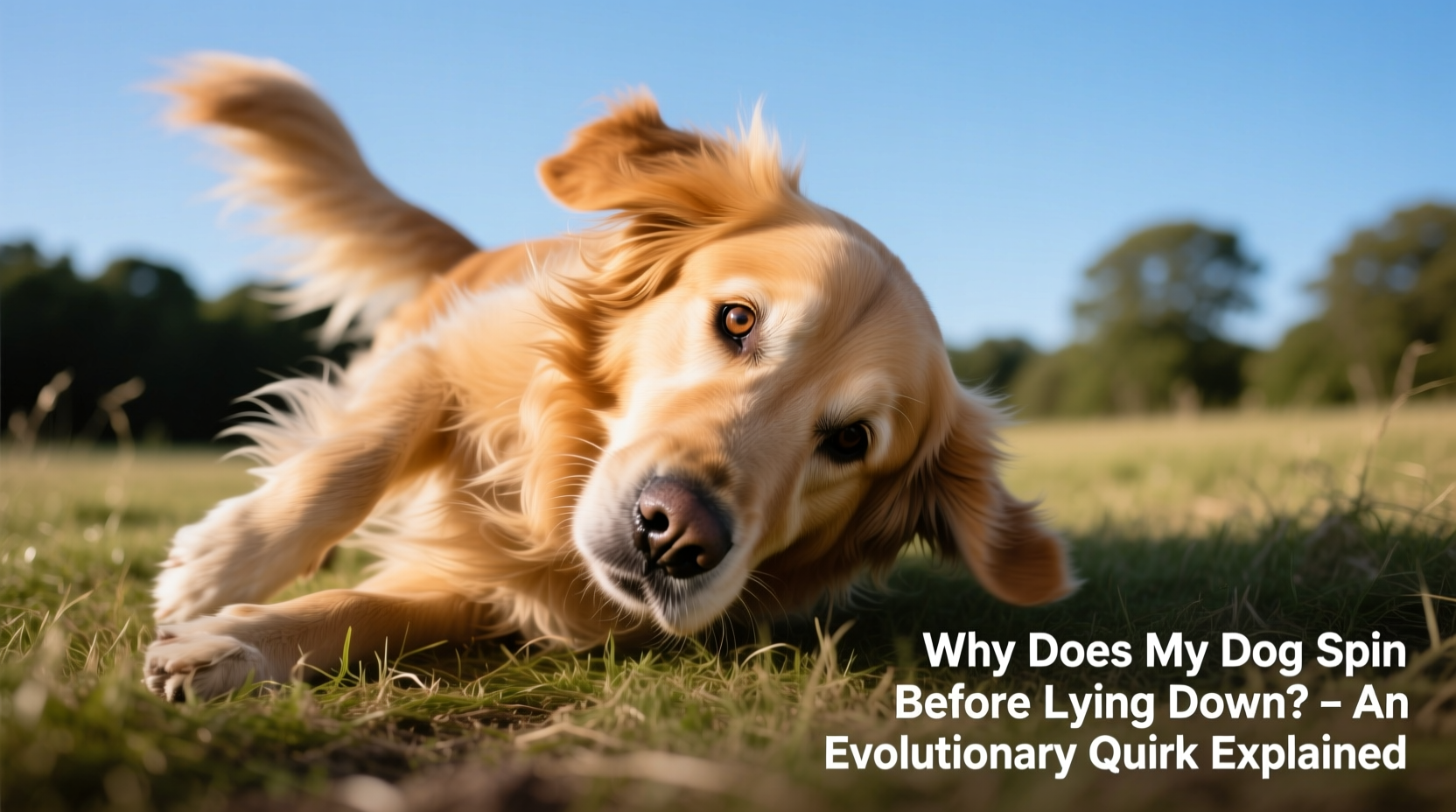
To understand the spinning ritual, we must look beyond modern living rooms and consider the environments in which early canids evolved. Wolves, the ancestors of domestic dogs, lived in open fields, forests, and tundra where natural bedding was far from plush. Their resting areas were often covered in tall grass, snow, or uneven terrain. Before lying down, circling helped flatten vegetation, creating a makeshift nest that provided insulation and protection from dampness.
This behavior also served as a safety check. In the wild, unseen threats like snakes, insects, or sharp objects could lurk beneath the surface. By pacing in circles, wolves and other wild canines disturbed hidden dangers, reducing the risk of injury while vulnerable during rest. Additionally, scent marking played a role—each rotation allowed them to deposit pheromones from glands in their paws, subtly claiming the space as their own and signaling to others that the area was occupied.
“Circling before lying down is a deeply ingrained behavior inherited from wild ancestors. Even in safe, controlled environments, dogs continue this ritual because it’s hardwired into their instincts.” — Dr. Lydia Chen, Canine Ethologist at the Institute for Animal Behavior Research
Domestication has softened many of these survival pressures, but the genetic programming remains. Today’s dogs may sleep on orthopedic memory foam, yet they still perform the same circling motion their wolf ancestors used to prepare a bed of leaves. The environment has changed, but the instinct persists.
Physiological and Sensory Functions
Beyond instinct, there are practical physiological reasons behind the spin. One theory suggests that dogs use circular movement to orient themselves relative to environmental cues such as wind direction, temperature gradients, or magnetic fields. A 2013 study published in *Frontiers in Zoology* found that dogs prefer to align their bodies along the north-south axis when defecating—a behavior believed to be linked to magnetoreception. While not yet confirmed for lying down, similar orientation mechanisms may influence how and where dogs choose to rest.
Another function involves muscle preparation. Just as humans might stretch or adjust pillows before sleeping, dogs may use the spinning motion to loosen joints, shift weight, and find optimal balance before settling. Older dogs with arthritis may circle more slowly or exhibit hesitation, suggesting that the act helps them assess joint stability and comfort level before committing to a lying position.
Tip: If your senior dog struggles excessively while trying to lie down, consult a veterinarian. Excessive circling or difficulty settling may indicate pain or neurological issues.Behavioral Variations Across Breeds and Individuals
Not all dogs spin the same way—or at all. Some make a single precise turn; others whirl multiple times like tiny tornadoes. These differences often correlate with breed lineage and individual temperament. Herding breeds like Border Collies or Shetland Sheepdogs tend to display more pronounced circling, possibly due to heightened vigilance and spatial awareness traits selected during breeding.
In contrast, brachycephalic breeds (such as Bulldogs or Pugs) may skip the ritual altogether or perform abbreviated versions, partly due to physical limitations or reduced energy levels. Similarly, shelter dogs or those with trauma histories may suppress natural behaviors out of anxiety, only re-emerging once trust and security are established.
Interestingly, some dogs develop unique variations of the spin—backing into corners, pawing at blankets, or even nudging furniture into place. These personalized routines reflect both learned habits and innate drives, blending evolution with individual experience.
When Spinning Signals a Health Concern
While occasional spinning is normal, excessive or compulsive circling can indicate underlying medical problems. Neurological disorders such as vestibular disease, cognitive dysfunction syndrome (similar to dementia in humans), or brain tumors may cause disoriented walking patterns. Dogs experiencing inner ear infections or vertigo may also walk in tight circles, often leaning to one side.
Obsessive-compulsive behaviors, sometimes triggered by stress or lack of stimulation, can manifest as repetitive actions—including relentless spinning without lying down. These behaviors differ from instinctual circling in frequency, context, and persistence. For example, a dog that spins 20 times before lying down, seems distressed, or attempts to lie down repeatedly without success may require behavioral or veterinary intervention.
| Normal Spinning | Potentially Problematic Spinning |
|---|---|
| 1–4 rotations before lying down | Repeated spinning without settling |
| Calm demeanor throughout | Signs of distress (panting, whining) |
| Occurs only before rest | Happens at random times, including mid-activity |
| No loss of balance | Leaning, stumbling, or head tilt |
Mini Case Study: Max, the Rescue Shepherd
Max, a five-year-old German Shepherd mix, was adopted from a rural shelter where he had spent nearly two years in confinement. Initially, he showed little interest in circling before lying down—instead collapsing wherever he felt tired. Over several months of consistent routine, enrichment activities, and positive reinforcement training, Max began to exhibit typical pre-sleep behaviors, including a deliberate clockwise spin before settling on his bed.
His adopter noted that the emergence of this ritual coincided with increased confidence and reduced anxiety. “It was like watching him rediscover parts of himself,” she said. “Once he felt safe enough to follow his instincts, the spinning started naturally.” This case illustrates how environmental security allows innate behaviors to resurface, reinforcing the idea that circling is not merely mechanical but emotionally regulated.
Practical Tips for Observing and Supporting Natural Dog Behaviors
Recognizing the significance of your dog’s spinning habit doesn’t mean intervening every time—but being attentive can enhance their comfort and well-being. Here are actionable ways to support healthy expression of this instinct:
Tip: Provide a designated sleeping area with soft, moldable material (like cushioned beds or blankets) to satisfy nesting instincts.- Avoid interrupting your dog mid-spin unless they appear distressed.
- Ensure the resting space is free of obstacles that could interfere with safe movement.
- Monitor changes in frequency or intensity of circling, especially in older dogs.
- Use calming signals (soft voice, slow blinks) if your dog seems anxious during bedtime routines.
- Introduce puzzle toys or scent games earlier in the day to reduce compulsive tendencies.
Checklist: Is Your Dog’s Spinning Normal?
- Does the spinning occur primarily before lying down?
- Is it limited to 1–4 full turns?
- Does your dog appear relaxed and focused?
- Have there been recent changes in health or environment?
- Is the behavior consistent over time, without escalation?
If you answered “yes” to the first three and “no” to negative changes, the behavior is likely instinctual and healthy. If concerns persist, consult a veterinarian or certified animal behaviorist.
Frequently Asked Questions
Do all dogs spin before lying down?
No, not all dogs spin. Some skip the behavior entirely, especially if they’ve learned alternative settling routines or have physical constraints. Puppies may not begin spinning until several months old, as motor coordination develops over time.
Can I train my dog to stop spinning?
You can redirect the behavior using positive reinforcement, but eliminating it entirely is neither necessary nor recommended. Since it’s an instinctive action tied to comfort and safety, suppressing it may increase stress. Focus instead on ensuring the environment supports safe execution of the spin.
Why does my dog spin and then not lie down?
This can happen if the dog detects something amiss—such as noise, drafts, or discomfort in the surface. It may also indicate indecision or mild anxiety. Try adjusting the location, adding padding, or establishing a consistent bedtime routine to improve confidence.
Conclusion: Honoring Instinct in Modern Companionship
The simple act of spinning before lying down connects today’s pets to a vast ancestral lineage stretching back to the earliest canids. Far from being a meaningless quirk, it embodies a convergence of survival strategy, sensory processing, and emotional regulation. As dog owners, understanding these behaviors allows us to appreciate our companions not just as affectionate family members, but as complex beings shaped by deep evolutionary currents.
By observing, respecting, and supporting natural instincts—even in small ways—we foster healthier, happier relationships with our dogs. Whether your pet makes one graceful turn or a dizzying series of loops, each rotation tells a story millions of years in the making. Next time you watch your dog spin before curling up, take a moment to recognize the quiet wisdom embedded in that motion. It’s not just routine—it’s legacy.
💬 Have you noticed unique sleeping rituals in your dog? Share your observations in the comments and join the conversation about the fascinating instincts behind everyday pet behaviors!








