
Dogs do many things that seem odd to human eyes: chasing their tails, tilting their heads at strange noises, or barking at nothing visible. One of the most common yet curious behaviors is spinning in circles before lying down. You’ve likely seen your dog take two, three, or even five full rotations before finally settling into a nap. While it might appear whimsical or even obsessive, this behavior has deep roots in canine ancestry and survival instinct.
This seemingly simple act is not random. It’s a hardwired ritual passed down from wild ancestors — wolves, coyotes, and early proto-dogs — who relied on environmental awareness and physical preparation for safety and comfort. Understanding why dogs spin before lying down offers insight into their evolutionary past, their sensory world, and how domestication has shaped (but not erased) primal habits.
The Evolutionary Origins of Spinning Behavior
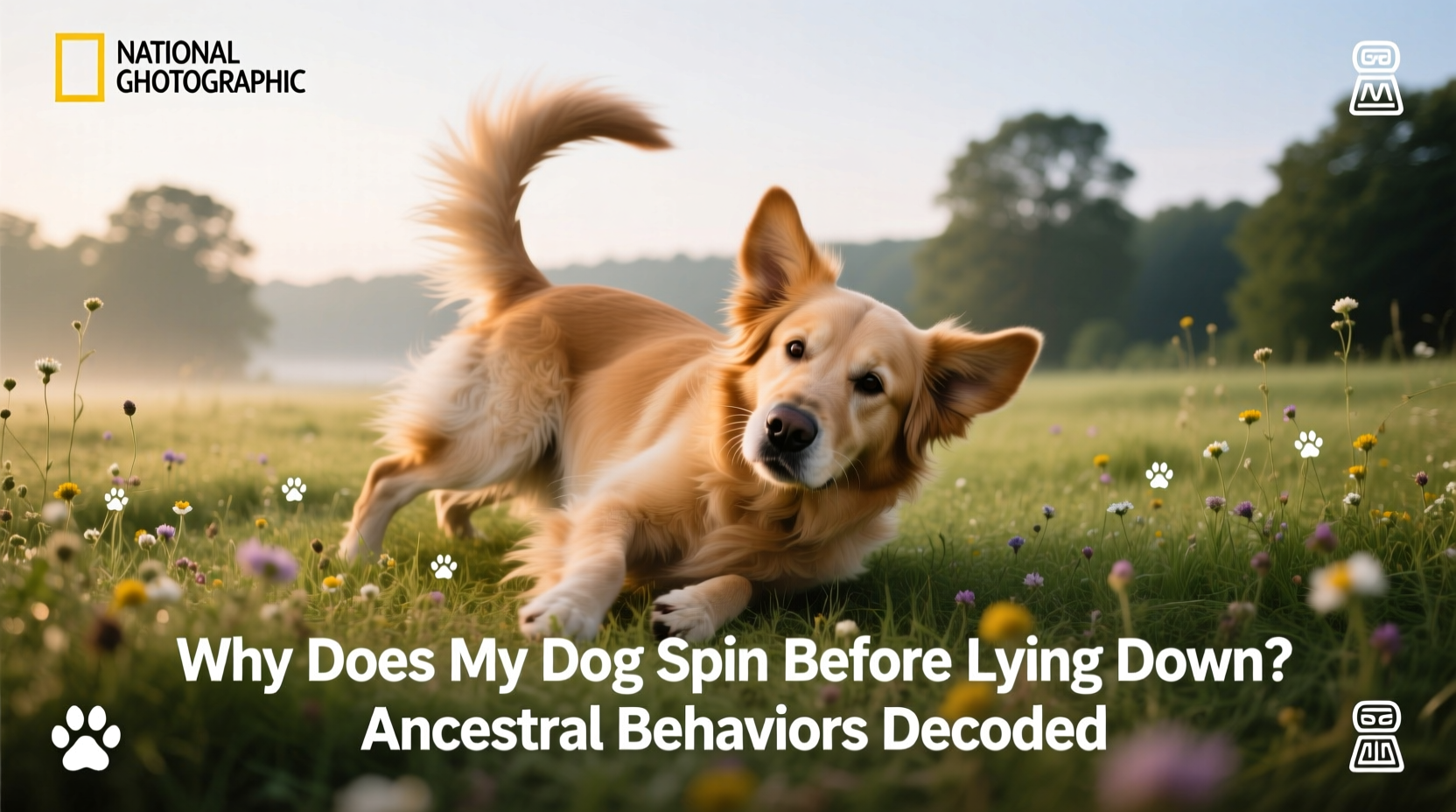
In the wild, canines did not have plush dog beds or climate-controlled homes. Their sleeping areas were often open fields, forest clearings, or shallow dens made from natural materials. Before resting, these animals needed to ensure their chosen spot was safe, comfortable, and free of threats like snakes, insects, or sharp objects.
Spinning served multiple practical purposes:
- Flattening terrain: By walking in circles, wild dogs trampled down tall grass, snow, or loose soil to create a flatter, more level surface.
- Checking for predators: The rotation allowed them to scan their surroundings one last time using peripheral vision and acute hearing.
- Distributing scent: As they moved, dogs left behind pheromones from glands in their paws, marking the space as theirs and potentially deterring other animals.
- Thermoregulation: In colder climates, circling helped pack down snow or insulate a nest with body heat; in warmer regions, it could help uncover cooler ground beneath the surface layer.
Over thousands of years, this behavior became ingrained in canine DNA. Even today’s pampered pets retain the instinct, despite sleeping on orthopedic memory foam or heated mats. The action persists because evolution favors traits that enhance survival — and neural pathways don’t disappear just because the environment changes.
“The circular pre-lie-down routine is a vestigial survival mechanism. It’s not learned — it’s inherited.” — Dr. Lena Torres, Canine Ethologist, University of Edinburgh
How Modern Dogs Express Ancestral Instincts
Domestication has softened many of the harsh edges of wild life, but it hasn't rewritten biology. Today’s dogs still carry genetic blueprints optimized for survival in unpredictable environments. The spinning ritual is one expression of what scientists call \"fixed action patterns\" — automatic sequences triggered by specific stimuli (in this case, preparing to rest).
Interestingly, the number of spins varies between individuals and breeds. Some dogs make a single turn; others perform elaborate pirouettes. This variation may be influenced by breed lineage. Herding dogs like Border Collies or livestock guardians such as Great Pyrenees often exhibit stronger nesting behaviors, possibly due to historical roles requiring vigilance and territory management.
Additionally, sensory input plays a role. A dog may spin more when lying on unfamiliar surfaces, in new environments, or during times of stress. The behavior appears to serve both physical and psychological functions — creating comfort while also providing a sense of control over the immediate space.
Tip: If your dog spins excessively or seems unable to settle, consider whether anxiety, pain, or cognitive decline might be contributing factors — especially in older dogs.When Spinning Might Signal a Health Concern
While occasional spinning is normal, repetitive, uncontrolled, or frantic circling can indicate underlying medical issues. Unlike the deliberate, calm rotations seen in typical pre-sleep behavior, abnormal spinning may involve:
- Multiple rapid circles without lying down
- Loss of balance or head tilt during movement
- Disorientation after stopping
- Circling in confined spaces like corners
Potential causes include:
| Condition | Symptoms | Recommended Action |
|---|---|---|
| Ear infections (especially inner ear) | Head shaking, odor from ears, loss of coordination | Veterinary exam with otoscopic evaluation |
| Vestibular disease | Nystagmus (jerky eye movements), falling, nausea | Immediate vet consultation; often resolves with treatment |
| Canine Cognitive Dysfunction (CCD) | Confusion at night, house soiling, pacing | Blood work, behavioral assessment, possible medication |
| Neurological disorders (e.g., tumors, seizures) | Seizures, weakness, changes in appetite or behavior | Advanced imaging (MRI/CT) and neurology referral |
If your dog suddenly begins spinning more than usual, struggles to lie down, or shows signs of distress, consult a veterinarian promptly. Early diagnosis significantly improves outcomes, particularly in age-related conditions.
Mini Case Study: Max, the Senior Labrador
Max, a 12-year-old Labrador Retriever, began circling four to five times before lying down — up from his usual one or two turns. His owner initially dismissed it as aging, but soon noticed he would sometimes spin without lying down afterward, appearing confused and anxious.
A veterinary visit revealed mild vestibular imbalance and early-stage cognitive dysfunction. With dietary adjustments (including medium-chain triglycerides for brain health), a low-dose sedative at night, and environmental modifications (non-slip rugs, consistent bedtime routine), Max’s circling decreased and his sleep quality improved.
This case illustrates how subtle changes in instinctive behaviors can serve as early warning signs — turning a routine quirk into a valuable diagnostic clue.
Environmental Influences on Pre-Sleep Rituals
Even healthy dogs modify their spinning behavior based on surroundings. Observe your dog in different settings:
- On carpet vs. hardwood floors
- Outdoors versus indoors
- In quiet rooms compared to noisy households
Dogs tend to spin less on soft, predictable surfaces where there's no need to flatten vegetation or check for debris. Conversely, outdoor environments — especially grassy or uneven terrain — often trigger more pronounced circling. This responsiveness shows that while the behavior is instinctual, it remains partially adaptive.
Temperature also influences the ritual. In cooler weather, dogs may press more firmly into their beds after spinning, mimicking the heat-conserving nest-building of wild ancestors. In summer, they might skip spinning altogether if lying directly on cool tile.
Step-by-Step: How to Support Natural Canine Behaviors
You can’t — and shouldn’t — stop your dog from spinning if it’s part of their normal routine. Instead, support this instinctive behavior through thoughtful care and environment design:
- Provide appropriate bedding: Choose firm yet cushioned surfaces that allow your dog to “nest” slightly without sinking too deeply.
- Maintain consistency: Keep sleeping areas in the same location to reduce anxiety and reinforce security.
- Ensure ample space: Allow enough room around the bed for full, unrestricted turns without bumping into furniture.
- Monitor changes: Note any increase in frequency, duration, or agitation during the spinning sequence.
- Respect the ritual: Avoid interrupting or rushing your dog during this process — it’s an important part of their wind-down routine.
FAQ: Common Questions About Dog Spinning Behavior
Is spinning before lying down a sign of OCD in dogs?
Not necessarily. Occasional, purposeful spinning tied to settling down is normal. True obsessive-compulsive disorder (OCD) involves repetitive actions that serve no function, are difficult to interrupt, and interfere with daily life. Tail-chasing, flank-sucking, or constant licking are more typical OCD indicators. If spinning occurs outside of rest contexts or dominates waking hours, consult a veterinary behaviorist.
Do all dog breeds spin before lying down?
Most do, but the intensity and frequency vary. Breeds closer to wild ancestors (e.g., Siberian Huskies, Alaskan Malamutes) often display more pronounced nesting behaviors. Brachycephalic breeds (like Bulldogs) may spin less due to physical limitations or reduced stamina. Puppies typically spin more as they explore routines, while seniors may reduce or exaggerate the behavior depending on health status.
Can I train my dog to stop spinning?
You can redirect or manage certain behaviors, but suppressing deeply rooted instincts isn’t advisable. Attempting to stop natural rituals may cause frustration or anxiety. Instead, channel energy positively through exercise and mental stimulation earlier in the day, which can lead to smoother, calmer settling routines naturally.
Checklist: Is Your Dog’s Spinning Normal?
Use this checklist to assess whether your dog’s spinning falls within typical range:
- ✅ Spins occur only before lying down or repositioning
- ✅ Number of turns is consistent (usually 1–4)
- ✅ Dog appears relaxed and focused, not frantic
- ✅ Lies down promptly after completing the circle(s)
- ✅ No signs of dizziness, falling, or vocalization
- ✅ Behavior hasn’t increased suddenly or spread to other contexts
- ✅ Appetite, mood, and activity levels remain normal
If you answer “no” to three or more items, schedule a wellness check with your veterinarian.
Conclusion: Honoring the Legacy in Every Spin
Your dog’s pre-nap pirouette is more than a cute quirk — it’s a living echo of ancient survival strategies. From flattening prairie grass to scent-marking a den, each rotation connects your pet to a lineage millions of years in the making. Rather than viewing it as odd or unnecessary, recognize it as a testament to the resilience and adaptability encoded in canine DNA.
By understanding the roots of this behavior, you become better equipped to distinguish between instinct and illness, to support rather than suppress, and to appreciate the complex minds of the animals we share our homes with. These small rituals are windows into a deeper relationship — one built on trust, biology, and mutual respect.
💬 Have you noticed differences in how your dog spins? Share your observations in the comments — your experience could help fellow dog owners understand this fascinating behavior!








