
Dogs communicate in ways that often go beyond barking or tail wagging. One of the most common yet misunderstood behaviors is the deep, audible sigh they release when settling down. You’ve likely seen your dog stretch out on the floor, lower their head, and let out a long, dramatic exhale—sometimes sounding almost human-like. It’s easy to wonder: Is my dog expressing frustration? Are they bored? Or is this just part of their routine?
Understanding canine body language is essential for building a deeper connection with your pet. While a loud sigh might seem like a sign of discontent, in many cases, it’s actually a positive signal. However, context matters. The meaning behind your dog’s sigh can vary based on their posture, environment, recent activity, and overall health.
This article explores the science and psychology behind why dogs sigh when lying down, separates myth from fact, and helps you determine whether boredom is truly at play—or if something else is going on.
The Science Behind Canine Sighing
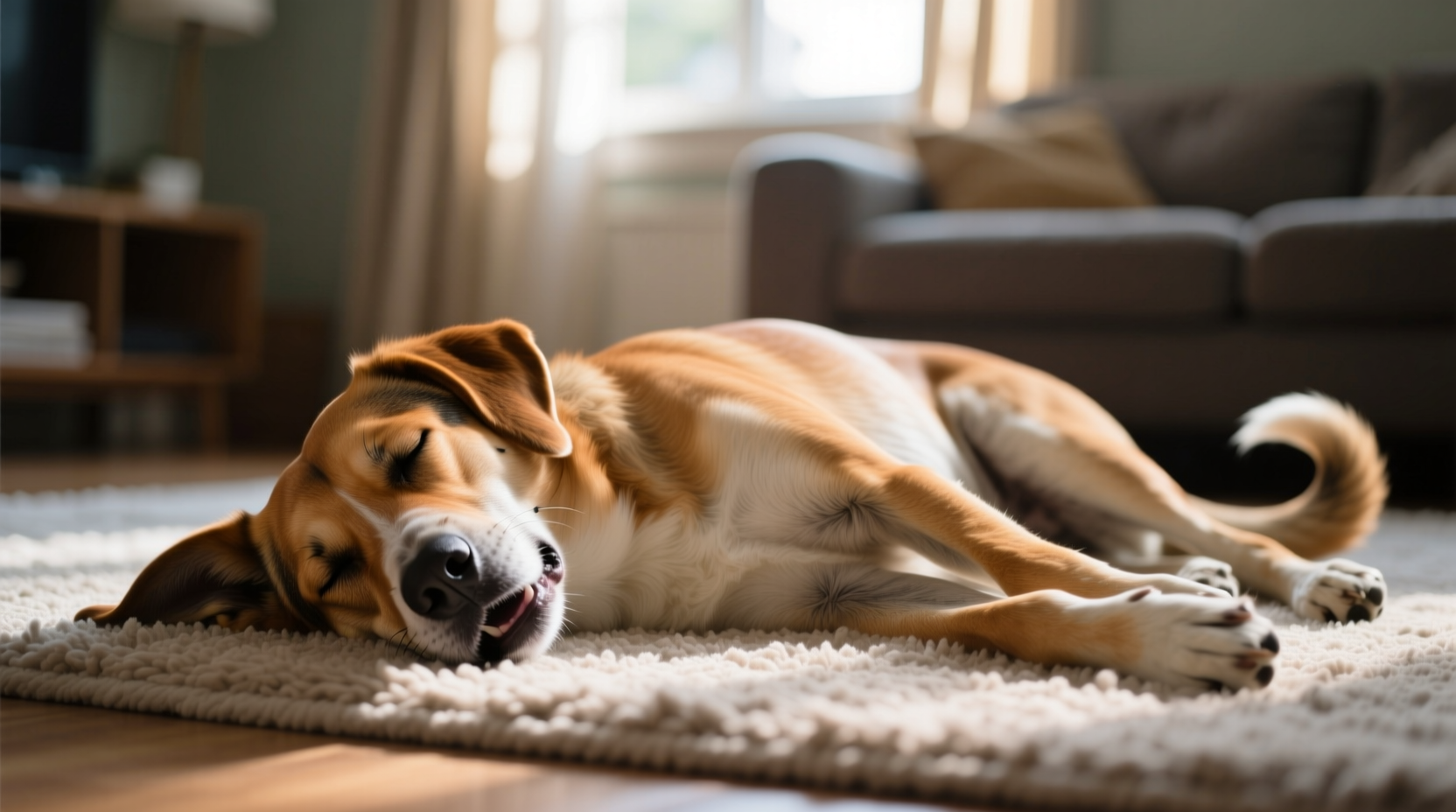
In both humans and animals, sighing serves a physiological purpose. A study published in the journal *Experimental Physiology* found that spontaneous sighs help reset breathing patterns and reinflate tiny air sacs in the lungs called alveoli. In dogs, a deep sigh after lying down may simply be a natural respiratory reset after a change in posture or activity level.
When a dog transitions from standing or walking to lying down, their diaphragm shifts, and their breathing pattern adjusts. The loud sigh you hear could be their body’s way of regulating oxygen intake and releasing built-up tension in the chest muscles. This kind of sigh is typically accompanied by relaxed body language—soft eyes, loose limbs, and a calm facial expression.
Dr. Alexandra Horowitz, cognitive scientist and author of *Inside of a Dog*, explains:
“Dogs use vocalizations not just to express emotion but also as self-regulatory behaviors. A sigh can serve to calm the nervous system, much like a deep breath does in humans.” — Dr. Alexandra Horowitz, Canine Cognition Researcher
Common Reasons Dogs Sigh When Lying Down
Sighing is not a one-size-fits-all behavior. Below are the most common explanations for why your dog might sigh loudly upon lying down:
- Contentment and relaxation: A deep, slow sigh with half-closed eyes and a loose body is often a sign of satisfaction. Your dog may be signaling they feel safe and comfortable.
- Physical relief: After physical exertion, such as playing fetch or a long walk, dogs may sigh as they release muscle tension and settle into rest.
- Emotional communication: Dogs learn that certain sounds get human attention. If sighing has previously earned pets or verbal reassurance, your dog may use it strategically.
- Boredom or mild frustration: In some cases, especially if the sigh is sharp or followed by pacing or pawing, it may indicate under-stimulation.
- Discomfort or pain: Chronic sighing, especially when paired with restlessness, reluctance to lie down, or frequent position changes, can be a subtle sign of physical discomfort.
Boredom vs. Relaxation: How to Tell the Difference
One of the biggest concerns among pet owners is whether their dog is bored. Boredom in dogs can lead to destructive behaviors, excessive barking, or attention-seeking actions. But is sighing a reliable indicator?
Not always. The key is distinguishing between a relaxed sigh and a frustrated one.
| Relaxed Sigh | Potential Boredom Signal |
|---|---|
| Occurs after lying down or following a routine activity (e.g., post-walk) | Repetitive sighing throughout the day with no clear trigger |
| Accompanied by closed or half-closed eyes, loose limbs | Dog looks at you expectantly or paws at you afterward |
| Single or infrequent occurrence | Paired with other signs: chewing furniture, scratching doors, pacing |
| No change in appetite or energy levels | Lethargy or hyperactivity outside normal patterns |
If your dog lies down, sighs deeply, and immediately falls asleep or remains still for an extended period, it’s almost certainly a sign of comfort. On the other hand, if they sigh, get up, circle, sigh again, and repeat this cycle while glancing at you, they may be seeking engagement.
Mini Case Study: Max the Border Collie
Max, a 4-year-old Border Collie, began sighing loudly every evening after his owner returned from work. At first, his owner assumed Max was happy to see her. But she noticed he would sigh, look at her, then nudge his toy basket with his nose. If ignored, he’d bark softly or pace.
After consulting a dog behaviorist, she realized Max wasn’t bored per se—but under-stimulated. As a high-energy breed, Max needed structured mental challenges after a long day alone. His sigh was a subtle cue that he wanted interaction. Once his routine included puzzle toys and 15 minutes of training games each evening, the “demand sighs” decreased significantly.
This case illustrates how sighing can be context-dependent. For Max, the sigh wasn’t about physical comfort—it was part of a communication strategy.
When Sighing Might Signal a Health Issue
While most sighing is harmless, there are times when it warrants closer attention. Excessive or labored sighing—especially when combined with other symptoms—can point to underlying medical conditions.
Potential health-related causes include:
- Respiratory issues: Conditions like bronchitis, pneumonia, or collapsing trachea can cause frequent deep exhalations.
- Heart disease: Dogs with heart problems may sigh due to difficulty breathing or fluid buildup in the lungs.
- Chronic pain: Arthritis or joint pain can make lying down uncomfortable, leading to repeated attempts to find a comfortable position—often punctuated by sighs.
- Anxiety or stress: Some dogs sigh as a displacement behavior when stressed, similar to nail-biting in humans.
If your dog exhibits any of the following, consult your veterinarian:
- Sighing more than usual without obvious triggers
- Shallow or rapid breathing between sighs
- Coughing, wheezing, or gagging
- Reluctance to lie down or lie on certain sides
- Lethargy, loss of appetite, or weight changes
Step-by-Step Guide: Assessing Your Dog’s Sighing Behavior
Follow this timeline to evaluate whether your dog’s sighing is normal or concerning:
- Observe frequency and timing: Note when the sighing occurs—after exercise, during downtime, or randomly throughout the day.
- Check body language: Look for signs of relaxation (soft eyes, drooping ears) versus tension (tucked tail, stiff posture).
- Review daily routine: Has anything changed recently? New environment, schedule shift, or lack of stimulation?
- Monitor for additional symptoms: Track appetite, energy levels, coughing, or mobility issues.
- Test enrichment: Introduce puzzle toys, training sessions, or longer walks to rule out boredom.
- Consult a professional: If sighing persists or worsens, schedule a vet check-up or behavioral consultation.
How to Address Boredom-Related Sighing
If you’ve ruled out medical causes and suspect boredom, proactive enrichment is the best solution. Dogs thrive on mental and physical engagement. A well-exercised dog is a quiet, content dog.
“The difference between a bored dog and a fulfilled one isn’t just behavior—it’s quality of life.” — Dr. Karen Becker, Integrative Veterinarian
Actionable Checklist: Reduce Boredom & Promote Calmness
- ✅ Provide daily physical exercise (walks, runs, fetch) tailored to breed and age
- ✅ Incorporate mental stimulation: food puzzles, scent games, obedience drills
- ✅ Rotate toys weekly to maintain novelty
- ✅ Establish a consistent daily routine for feeding, walks, and rest
- ✅ Use calming aids if needed: pheromone diffusers, soothing music, designated quiet spaces
- ✅ Avoid leaving your dog alone for extended periods without enrichment
For example, a simple DIY sniffing game—hiding treats around the living room—can occupy a dog for 20–30 minutes and reduce attention-seeking behaviors, including exaggerated sighing.
Tip: Record a short video of your dog sighing. Share it with your vet or trainer—they can often spot subtle cues you might miss.Frequently Asked Questions
Is it normal for my dog to sigh every time he lies down?
Yes, if the sigh is soft, infrequent, and accompanied by relaxed body language. Many dogs develop this as a habitual comfort signal, especially after activity. As long as there are no signs of distress, it’s typically nothing to worry about.
Can dogs sigh when they’re sad or depressed?
Dogs don’t experience sadness the same way humans do, but they can exhibit low mood due to lack of stimulation, illness, or environmental changes. A persistent, heavy sigh combined with withdrawal, loss of interest in play, or changes in sleep patterns may indicate emotional or physical discomfort and should be evaluated.
Should I respond when my dog sighs?
It depends. If your dog is clearly relaxed, avoid reinforcing the behavior with attention—it may encourage performative sighing. However, if the sigh seems to be a request for interaction and your dog is otherwise healthy, engaging briefly (with a toy or gentle petting) can strengthen your bond. Just be consistent to avoid confusion.
Conclusion: Listen Beyond the Sound
Your dog’s loud sigh when lying down is rarely a cause for alarm. In most cases, it’s a natural expression of physical release or emotional contentment—a sign that your dog feels safe enough to let their guard down. However, like all forms of animal communication, it must be interpreted within context.
By paying attention to timing, body language, and accompanying behaviors, you can better understand what your dog is trying to tell you. Whether it’s a plea for play, a sign of fatigue, or simply a deep breath of relief, each sigh offers a window into your dog’s inner world.
Don’t dismiss these small moments. They’re part of the quiet dialogue that makes life with a dog so meaningful. If in doubt, err on the side of care—consult a professional, enrich your dog’s environment, and continue building a relationship rooted in trust and understanding.
💬 Did your dog’s sighing have a surprising cause? Share your story in the comments—your experience could help another pet owner decode their dog’s silent language.








