
It’s a familiar moment: you glance over at your dog, lock eyes, and suddenly he lets out a long, drawn-out sigh—sometimes so deep it sounds like a human expressing relief or mild exasperation. You might chuckle, wonder if he’s bored, or even worry that something’s wrong. But canine sighing is far more nuanced than it appears. Unlike barking or whining, sighs are subtle vocalizations often tied to emotional states, physical comfort, or social communication. Understanding why your dog sighs when you look at him can deepen your bond and help you respond more empathetically to his needs.
Dogs use a combination of body language, vocal tones, and behavioral cues to express themselves. A sigh is not just noise—it’s a meaningful signal. In many cases, a loud sigh upon eye contact is completely normal and even positive. However, in others, it may hint at underlying stress, discomfort, or learned behavior patterns. This article explores the science behind canine sighing, decodes common triggers, and provides practical guidance for interpreting your dog’s emotional state.
The Science Behind Canine Sighing
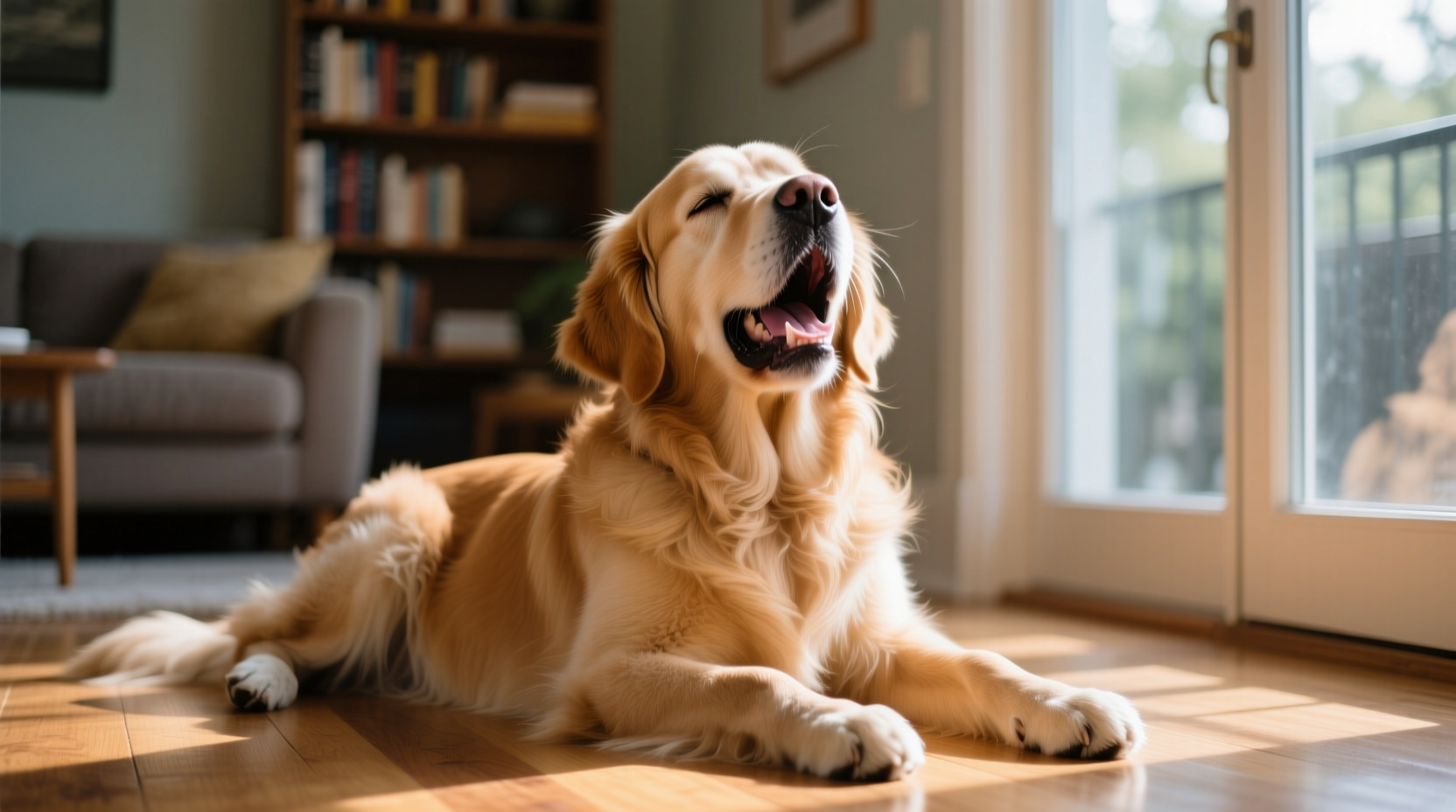
Sighing in dogs is a physiological and emotional response involving a deep inhalation followed by a slow, audible exhalation. It’s not random; research in animal behavior suggests that sighs serve regulatory functions in both humans and animals. In mammals, sighs help reinflate alveoli in the lungs and maintain respiratory efficiency. But beyond physiology, sighs also play a role in emotional regulation.
Dr. Patricia McConnell, renowned animal behaviorist and author, explains:
“Sighs in dogs are often self-soothing behaviors. They occur when a dog is transitioning between states—like from alertness to relaxation, or from tension to calm. It’s one of the clearest signs of emotional release we see in non-primate species.” — Dr. Patricia McConnell, Ethologist and Dog Behavior Expert
When your dog sighs after you look at him, especially if he then lies down or closes his eyes, this is likely a sign of settling into a relaxed state. The eye contact may act as a social cue—your attention signals safety, prompting him to release built-up tension through a sigh. This kind of sigh is typically soft, low-pitched, and accompanied by relaxed body language: half-closed eyes, loose muscles, and a lowered posture.
Common Reasons Dogs Sigh When Looked At
Not all sighs mean the same thing. Context is key. Here are the most frequent explanations for why your dog might sigh loudly when you make eye contact:
- Contentment and Relaxation: If your dog is lying on his favorite spot and sighs deeply after you glance at him, he may be signaling comfort. Your presence reassures him, and the sigh marks a shift into deeper relaxation.
- Attention-Seeking Behavior: Some dogs learn that sighing gets a reaction—whether it’s a laugh, a pet, or verbal acknowledgment. Over time, they may use it as a manipulative tool to engage you.
- Mild Frustration or Disappointment: A louder, more exaggerated sigh—especially if paired with turning away or avoiding eye contact—can indicate mild annoyance. For example, if you’ve just stopped petting him, the sigh may say, “I wish you hadn’t done that.”
- Physical Discomfort: Chronic pain, arthritis, or fatigue can cause sighing as your dog adjusts his position. If the sigh happens when he shifts from standing to lying down (or vice versa), it may be effort-related.
- Stress or Anxiety: In anxious dogs, sighing can be a displacement behavior—a way to cope with low-level stress. If the sigh occurs during tense situations (e.g., around strangers, loud noises), it may reflect unease rather than peace.
Decoding the Emotional Message: A Step-by-Step Guide
To accurately interpret your dog’s sigh, follow this observational process:
- Pause and Watch: When your dog sighs after you look at him, don’t react immediately. Instead, observe silently for 10–15 seconds.
- Check Body Language: Are his ears relaxed? Is his tail down and still? Are his eyes soft or squinted? These signs point to contentment.
- Note Timing: Did the sigh happen right after you stopped playing? Or after a loud noise? Timing helps determine whether it’s a response to change or interaction.
- Assess Frequency: Occasional sighing is normal. Frequent or repetitive sighing, especially without obvious triggers, may warrant a vet visit.
- Test the Response: Try looking away and then back again. If he consistently sighs each time, it could be a learned behavior seeking engagement.
This method allows you to move beyond assumptions and build a more accurate understanding of your dog’s emotional world.
When Sighing Might Signal a Problem
While most sighing is benign, certain patterns should raise concern. Excessive or labored sighing—especially if new or worsening—can indicate medical or psychological issues.
| Sign | Likely Meaning | Action to Take |
|---|---|---|
| Sighing with heavy panting | Possible overheating or pain | Check for fever, injury, or heat exposure |
| Sighing followed by restlessness | Discomfort or anxiety | Monitor environment and consult vet |
| Frequent sighing without relaxation | Chronic stress or GI discomfort | Evaluate routine and diet |
| Sighing with limping or stiffness | Arthritis or musculoskeletal pain | Veterinary exam recommended |
| Sudden onset of loud sighing | Potential respiratory or cardiac issue | Seek immediate veterinary care |
Respiratory conditions such as bronchitis, heart disease, or tracheal collapse can manifest with abnormal breathing patterns, including exaggerated sighs. Older dogs, brachycephalic breeds (like Bulldogs or Pugs), and overweight dogs are particularly at risk. If your dog’s sigh sounds congested, wheezy, or requires visible effort, do not dismiss it as normal.
Real-Life Example: Max the Rescue Beagle
Max, a 7-year-old Beagle adopted from a shelter, had a habit of sighing loudly whenever his owner, Sarah, made eye contact. At first, she found it endearing—almost comical, like he was saying, “There you are.” But over time, she noticed the sighs increased when guests visited or when the vacuum cleaner ran.
Concerned, Sarah consulted a certified dog behaviorist. After observing Max, the expert noted that while the sigh occurred during eye contact, it was almost always preceded by subtle stress signals: rapid blinking, nose licking, and slight head turning. The eye contact wasn’t calming Max—it was heightening his alertness, and the sigh was a self-soothing mechanism.
The solution? Sarah was advised to soften her gaze, avoid prolonged staring, and pair her presence with treats and calm speech. Within three weeks, Max’s sighing decreased significantly. He began choosing to lie near her without tension, and his overall demeanor improved. This case illustrates how a seemingly innocent behavior can mask deeper anxiety—and how small changes in human behavior can have profound effects on a dog’s emotional well-being.
Tips for Responding to Your Dog’s Sighs
Tip: Never punish or scold your dog for sighing. It’s a natural expression. Instead, focus on understanding the cause and adjusting the environment accordingly.- If the sigh reflects relaxation, enjoy the moment. Your dog feels safe with you—that’s a win.
- If it seems attention-seeking, avoid reinforcing it with laughter or touch unless you want the behavior to continue.
- For anxious sighing, create a quiet retreat space with a bed, blanket, and familiar scents.
- Regular vet checkups can rule out pain or illness contributing to frequent sighing.
- Use positive reinforcement to encourage calm behavior instead of reactive sighing.
Checklist: Is Your Dog’s Sigh Normal?
Use this checklist to evaluate whether your dog’s sighing is typical or concerning:
- ✅ Does the sigh occur during or after relaxation?
- ✅ Is body language loose and peaceful (soft eyes, wagging tail)?
- ✅ Does it happen only occasionally, not repetitively?
- ✅ Has the pattern been consistent over time?
- ✅ Is your dog otherwise active, eating well, and behaving normally?
If you answered “yes” to all, the sigh is likely a healthy emotional release. If you answered “no” to two or more, consider consulting your veterinarian or a certified animal behaviorist.
Frequently Asked Questions
Is it normal for dogs to sigh when you look at them?
Yes, it’s very common—especially if your dog feels safe and relaxed in your presence. A soft, low-pitched sigh following eye contact is typically a sign of contentment and emotional release.
Can sighing be a sign of pain in dogs?
Yes. While not all sighing indicates pain, dogs in discomfort—particularly when shifting positions—may sigh as they adjust. If sighing is paired with stiffness, reluctance to move, or changes in appetite, consult your vet.
Should I respond when my dog sighs at me?
It depends on the context. If your dog is relaxed, a gentle stroke or soft word can reinforce bonding. If the sigh seems stressed or attention-seeking, it’s better to remain neutral to avoid reinforcing unwanted behavior.
Conclusion: Listening Beyond the Sound
Your dog’s loud sigh when you look at him isn’t just noise—it’s communication. Whether it’s a sigh of deep contentment, a bid for attention, or a quiet cry for relief, each exhalation carries meaning. By learning to read the full picture—body language, timing, frequency, and environment—you become not just a pet owner, but a fluent speaker in your dog’s emotional language.
Dogs rely on us to notice the subtle cues they can’t put into words. That sigh might be the only way your dog tells you he’s tired, uncomfortable, or simply grateful for your presence. Pay attention. Respond with empathy. And never underestimate the depth hidden in a single breath.
💬 What does your dog’s sigh sound like—and what do you think it means? Share your experiences in the comments to help other dog owners understand their furry companions better.








