Dogs communicate in ways that go far beyond barking and tail wagging. One of the most subtle yet expressive behaviors pet owners observe is their dog letting out a long, dramatic sigh after settling into a resting position. While it might resemble human exasperation or fatigue, canine sighing is deeply rooted in emotional expression, physical comfort, and social signaling. Understanding this behavior offers valuable insight into your dog’s inner world—what they’re feeling, how they’re coping, and whether everything is truly okay.
This seemingly simple act can convey relaxation, contentment, or even mild frustration. More importantly, it's part of a broader system of non-verbal cues dogs use to interact with their environment and humans. By learning to interpret these signals accurately, you strengthen your bond and improve your ability to respond to your dog’s needs.
The Science Behind Canine Sighing
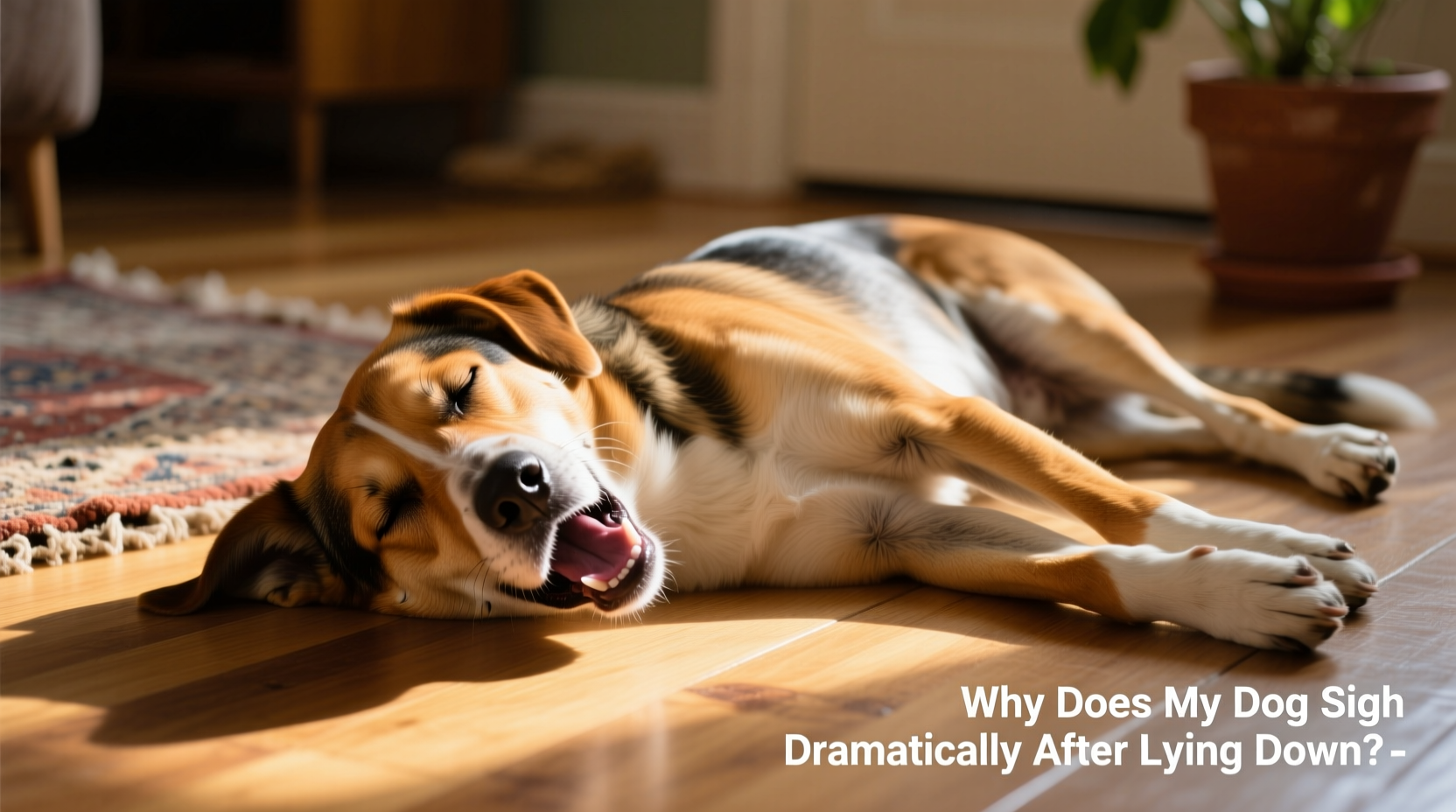
In both humans and animals, sighing serves a physiological purpose: it helps reinflate alveoli in the lungs and maintain respiratory efficiency. A spontaneous sigh—a deep inhale followed by a slow exhale—resets lung volume and oxygen exchange. Research on animal behavior shows that mammals, including dogs, naturally sigh during transitions between states of alertness and rest.
However, in dogs, sighing also functions as a communicative tool. Ethologists have observed that sighs often occur at behavioral transition points—such as when shifting from standing to lying down, or after an interaction ends. These moments are rich with emotional context. The sigh may signal closure, relief, or even resignation depending on body language and situation.
“Dogs use sighs not just to regulate breathing but as emotional punctuation marks—they help the animal reset emotionally after stimulation.” — Dr. Patricia McConnell, Animal Behaviorist and Author
A 2018 study published in *Animal Cognition* found that domestic dogs were more likely to sigh following periods of anticipation (e.g., waiting for food or play) than during neutral downtime. This suggests that sighing plays a role in emotional regulation, especially when excitement or tension subsides.
Common Reasons Dogs Sigh After Lying Down
While each dog has its own personality and habits, certain patterns emerge when analyzing postures and vocalizations together. Here are the most frequent explanations for dramatic sighing after lying down:
- Contentment and relaxation: A low-pitched, drawn-out sigh accompanied by soft eyes, relaxed ears, and a loose body posture typically indicates deep comfort. Your dog feels safe and satisfied.
- Physical release: After being active or holding a tense stance (like sitting still during training), lying down and sighing can be a way to release muscle tension.
- Emotional de-escalation: If your dog was excited, anxious, or frustrated earlier (e.g., wanting to chase a squirrel), the sigh marks the end of that emotional state.
- Attention-seeking behavior: Some dogs learn that sighing gets a reaction—especially if owners coo, “Oh, poor baby!” over exaggerated breaths. In these cases, the sigh becomes a learned tactic.
- Mild disappointment: Think of a dog who wanted to go outside but was told “not now.” They lie down and sigh heavily—a gesture akin to a child flopping onto the couch after being denied dessert.
Decoding the Body Language Around the Sigh
To fully understand what your dog’s sigh means, you must read it within the full context of their body language. A single sound without visual cues can be misleading. Below is a comparison chart outlining key indicators associated with different types of sighs:
| Sigh Type | Body Language | Likely Meaning |
|---|---|---|
| Deep, slow exhale | Eyes partially closed, head lowered, tail relaxed | Relaxation, contentment |
| Loud, abrupt sigh | Ears back, avoiding eye contact, paw lift | Mild stress or appeasement |
| Exaggerated \"huff-sigh\" | Rolling eyes, turning head away, lying down suddenly | Frustration or giving up |
| Repeated short sighs | Panting slightly, restless movement, whining | Discomfort or pain (possible medical issue) |
For example, a golden retriever lying on the rug after a long walk, eyes half-shut, letting out a gentle “ahhh” sound, is clearly expressing satisfaction. Conversely, a border collie who lies down abruptly after failing to catch a ball and emits a loud huff followed by a drawn-out sigh might be showing signs of mental fatigue or mild frustration.
When Sighing May Signal Discomfort
While most sighing is benign, there are times when it warrants closer attention. Chronic or abnormal sighing—especially when paired with other symptoms—can indicate underlying issues:
- Increased frequency of sighing throughout the day
- Sighing while avoiding movement or touch
- Vocalization during or immediately after lying down
- Restlessness despite appearing tired
- Changes in appetite or energy levels
In older dogs, joint pain or arthritis can make lying down uncomfortable. The sigh may reflect effort or discomfort rather than relaxation. Similarly, dogs with respiratory conditions like bronchitis or heart disease may sigh more frequently due to labored breathing.
“If a dog starts sighing excessively or seems reluctant to lie down altogether, consider a veterinary check-up. Pain isn’t always obvious.” — Dr. Karen Becker, Integrative Veterinarian
Mini Case Study: Max the Rescue Beagle
Max, a three-year-old beagle adopted from a shelter, had developed a habit of sighing loudly every time he lay down on his bed near the living room window. His owner initially interpreted this as affectionate behavior—he seemed happy to be home. However, she noticed that Max never fully relaxed; his muscles stayed tense, and he’d often get up minutes later.
After consulting a certified dog behavior consultant, video analysis revealed subtle signs: Max would glance toward the front door before sighing, his ears would flick backward, and his tail remained low. The sigh wasn't one of contentment—it was an appeasement signal, possibly linked to past anxiety from uncertain environments.
The trainer recommended environmental enrichment and desensitization exercises to build confidence. Over six weeks, Max’s sighs became softer and less frequent. He began sleeping through the night in the same spot, no longer tensing up. The change confirmed that his original sighing was a coping mechanism, not relaxation.
How to Respond to Your Dog’s Sighing: A Step-by-Step Guide
Understanding your dog’s sigh is only half the equation. Knowing how to respond appropriately strengthens trust and supports emotional well-being. Follow this timeline-based approach to assess and act:
- Observe consistently (Days 1–3): Note when the sigh occurs, what precedes it, and your dog’s full body posture. Keep a brief log.
- Identify patterns (Day 4): Determine if the sigh follows excitement, activity, commands, or isolation. Is it consistent in specific locations?
- Assess health factors (Day 5): Check for stiffness, limping, reluctance to jump, or changes in breathing. Consult your vet if concerns arise.
- Modify environment (Days 6–10): Provide better bedding, reduce noise triggers, or increase mental stimulation if boredom is suspected.
- Evaluate response (Day 11+): Has the sighing changed in tone or frequency? Does your dog appear more relaxed overall?
This structured observation allows you to distinguish between normal expressive behavior and potential red flags.
Checklist: Is Your Dog’s Sigh Normal?
Use this checklist to quickly evaluate whether your dog’s sighing falls within healthy ranges:
- ✅ Occurs mainly after activity or settling into rest
- ✅ Accompanied by relaxed facial features and open mouth
- ✅ Happens once or twice per session, not constantly
- ✅ No visible pain or hesitation when lying down
- ✅ Consistent with known personality traits (e.g., dramatic flair)
- ❌ Frequent sighing during sleep or quiet time
- ❌ Paired with panting, trembling, or avoidance behaviors
- ❌ New onset without clear cause
If three or more negative signs apply, further investigation—including a vet visit—is advisable.
FAQ
Is it bad if my dog sighs all the time?
Not necessarily. Some dogs are naturally expressive and use sighs as part of their communication style. However, constant sighing—especially if new or accompanied by other behavioral shifts—could indicate discomfort, anxiety, or medical issues. Monitor closely and consult a professional if unsure.
Can dogs fake sighs for attention?
Yes. Dogs are highly attuned to human reactions. If a dog learns that sighing results in comforting words, pets, or treats, they may repeat the behavior to elicit that response. This doesn’t mean the dog is deceptive—it simply means they’ve learned an effective strategy for engagement.
Should I ignore my dog when they sigh dramatically?
It depends on the context. If the sigh reflects genuine relaxation, acknowledging it quietly is fine. But if you suspect attention-seeking, avoid reinforcing it with excessive sympathy. Instead, reward calm silence with affection so healthier behaviors are encouraged.
Conclusion: Listening Beyond the Sound
Your dog’s dramatic sigh after lying down is more than just a quirky habit—it’s a nuanced form of communication shaped by emotion, physiology, and experience. Whether signaling peace, releasing tension, or subtly expressing unmet desires, this behavior invites deeper connection. By paying attention not just to the sound but to the story behind it, you become a more intuitive and responsive companion.
Dogs don’t need words to tell us how they feel. They rely on us to notice the subtleties—the tilt of an ear, the pace of a breath, the weight of a sigh. When we learn to listen with our eyes and hearts, we give them something invaluable: understanding.
💬 Have a dog who sighs like a Shakespearean actor? Share your observations or questions in the comments—we’d love to hear your stories and help decode your dog’s unique voice.








