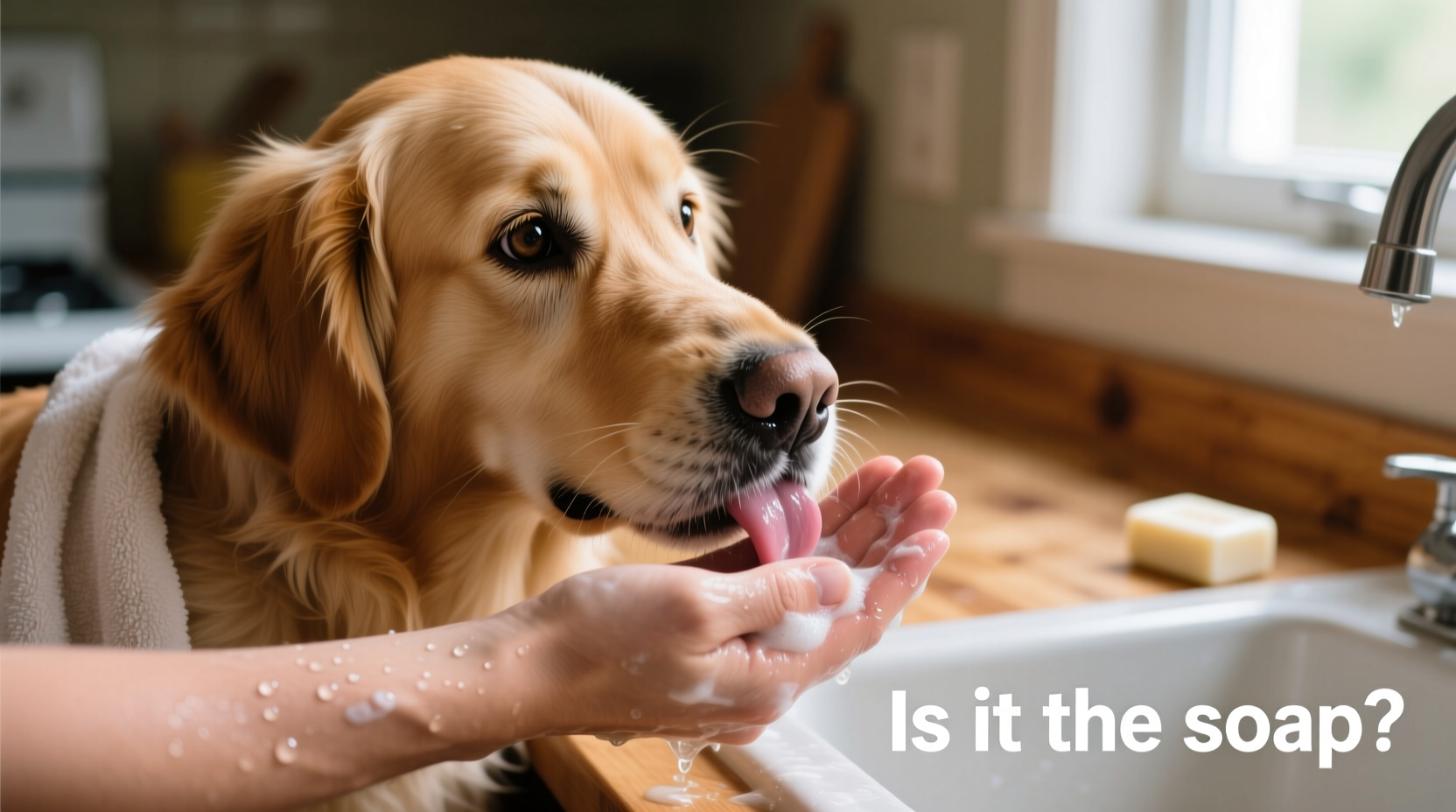
It’s a familiar scene: you step away from the sink, hands freshly washed and still slightly damp, only to feel the warm, wet rasp of your dog’s tongue almost instantly. Your pup isn’t just being affectionate—they’re intensely interested in what’s on your skin. While it may seem like a quirky habit, there’s a blend of biology, instinct, and sensory curiosity driving this behavior. And yes, the soap you use could very well be part of the reason.
Dogs rely heavily on their sense of smell and taste to interpret the world. Their tongues are not just tools for hydration but also instruments of investigation. When you wash your hands, you’re removing dirt and bacteria—but you’re also leaving behind residues, scents, and chemical traces that can be highly stimulating to a dog’s sensitive palate. Understanding why this happens involves exploring canine sensory perception, grooming instincts, and even emotional bonding.
The Science Behind Canine Licking Behavior
Licking is a deeply ingrained behavior in dogs, rooted in both survival and social dynamics. From birth, puppies are licked by their mothers to stimulate breathing, digestion, and cleanliness. This early-life experience establishes licking as a form of care, communication, and comfort. As they grow, dogs continue to use licking to express submission, seek attention, or self-soothe when anxious.
But when directed at humans, especially after handwashing, the motivation often shifts toward sensory exploration. A dog’s nose contains up to 300 million olfactory receptors (compared to about 6 million in humans), and their sense of taste is closely linked to smell through the vomeronasal organ. This means that what you perceive as a faint scent of lavender or citrus from your soap might register as a bold, complex flavor profile to your dog.
Moreover, licking triggers the release of endorphins in dogs—natural brain chemicals that produce feelings of pleasure and calm. So, while your dog may start licking out of curiosity, the act itself becomes reinforcing, encouraging repetition.
Tip: If your dog licks excessively after handwashing, consider switching to fragrance-free, pet-safe soaps to reduce sensory attraction.Is It the Soap? How Scented Products Attract Dogs
The short answer: yes, it could absolutely be the soap. Many hand soaps contain essential oils, fragrances, glycerin, or moisturizing agents that leave behind residual scents and tastes appealing to dogs. For example:
- Fruit-scented soaps (like lemon, mango, or coconut) may mimic natural food aromas.
- Milk-based or oatmeal soaps contain organic compounds that resemble food molecules.
- Glycerin-rich formulas have a slightly sweet residue that some dogs find palatable.
A study published in *Applied Animal Behaviour Science* found that dogs show increased oral investigation behaviors when exposed to human skin treated with scented lotions or soaps compared to unscented controls. The researchers concluded that volatile organic compounds in personal care products can activate a dog’s gustatory and olfactory systems, prompting licking as a form of environmental sampling.
“Dogs don’t just smell the world—they taste it. Residual fragrances on human skin can be as intriguing to them as new foods.” — Dr. Karen Becker, DVM, Integrative Veterinary Specialist
Other Reasons Your Dog Licks Your Hands Post-Wash
While soap residue is a strong contender, it’s rarely the only factor. Several overlapping motivations explain why your dog zeroes in on your clean hands:
1. Taste of Salt and Minerals
Sweat contains sodium, potassium, and other electrolytes. Even after washing, trace amounts remain on the skin. Dogs evolved as scavengers and omnivores, making mineral-rich substances inherently attractive. The slight saltiness of post-wash skin—especially if you’ve been active—can be a tasty treat.
2. Removal of Unfamiliar Scents
Dogs have a strong instinct to “clean” their pack members. In the wild, canines groom each other to remove foreign odors that might attract predators or disrupt group cohesion. By licking your hands, your dog may be attempting to restore your natural scent profile, effectively “resetting” you to their familiar baseline.
3. Seeking Attention or Reinforcing Bonding
Licking releases pleasurable endorphins in dogs and often elicits a positive response from owners—petting, verbal praise, or laughter. Over time, this creates a feedback loop: your dog learns that licking your hands gets a reaction, so they repeat the behavior, especially during routine moments like handwashing.
4. Anxiety or Compulsive Behavior
In some cases, excessive licking may signal underlying stress. If your dog licks your hands obsessively—even to the point of ignoring commands or showing signs of agitation—it could be a displacement behavior used to cope with uncertainty. This is more common in high-anxiety breeds like Border Collies or German Shepherds.
When Should You Be Concerned?
Occasional licking is normal and usually harmless. However, frequent or intense licking may pose risks, especially if:
- You’ve used antibacterial soaps containing triclosan or alcohol, which can irritate your dog’s digestive tract if ingested in large amounts.
- Your dog licks to the point of chafing your skin or themselves.
- The behavior occurs alongside other compulsive actions like paw licking, tail chasing, or restlessness.
In such cases, veterinary consultation is recommended to rule out medical issues like gastrointestinal discomfort, nutrient deficiencies, or obsessive-compulsive disorder (OCD) in dogs.
Checklist: Is Your Dog’s Licking Normal or Problematic?
- Does the licking happen only occasionally, especially after handwashing? → Likely normal.
- Does your dog stop when asked and engage in other activities? → Healthy behavioral balance.
- Is there visible skin irritation on your hands or their mouth? → Possible over-licking.
- Do they lick non-food items (walls, floors, furniture) frequently? → May indicate compulsive behavior.
- Have you recently changed soaps, lotions, or detergents? → Could be scent-driven curiosity.
How to Manage Hand-Licking Behavior
If you’d prefer your dog didn’t turn your clean hands into a tasting menu, several strategies can help redirect or reduce the behavior without suppressing natural instincts.
Step-by-Step Guide to Reducing Unwanted Licking
- Wipe Hands Thoroughly After Washing
Use a dry towel to remove moisture and residue. Consider using a microfiber cloth to ensure no lingering scent film remains. - Switch to Unscented, Pet-Safe Soaps
Choose mild, fragrance-free formulas without artificial dyes or essential oils. Look for products labeled “hypoallergenic” or “dermatologist-tested.” - Redirect with a Toy or Treat
Immediately after washing your hands, offer a chew toy or dental stick. This teaches your dog to associate the post-wash moment with an alternative reward. - Use Positive Reinforcement
When your dog refrains from licking, reward them with praise or a small treat. Consistency over 2–3 weeks can reshape the habit. - Establish a Routine Cue
Say a phrase like “hands are clean” in a calm tone each time you finish washing. Paired with redirection, this can become a conditioned signal to disengage.
Real-Life Example: The Citrus Soap Incident
Sarah, a nurse from Portland, noticed her Labrador Retriever, Max, became unusually fixated on her hands after she started using a citrus-scented antibacterial soap at home. Initially amused, she soon realized Max was following her from room to room after handwashing, persistently licking her palms until she gave him a treat to stop.
Concerned about potential ingestion of chemicals, Sarah consulted her veterinarian. The vet suggested switching to an unscented castile soap and implementing a redirection routine. Within ten days of using the new soap and offering Max a rubber Kong toy filled with peanut butter after handwashing, the licking decreased by over 80%. Six weeks later, Max no longer approached her hands at all after washing.
This case highlights how a simple product change, combined with behavioral training, can resolve seemingly persistent habits rooted in sensory appeal.
Do’s and Don’ts of Handling Post-Wash Licking
| Do’s | Don’ts |
|---|---|
| Use fragrance-free, non-toxic soaps | Use heavily perfumed or medicated soaps |
| Redirect with toys or treats | Punish or yell at your dog |
| Dry hands completely after washing | Allow excessive licking without monitoring |
| Observe licking patterns for changes | Assume all licking is purely affectionate |
| Consult a vet if licking becomes obsessive | Ignore signs of anxiety or skin irritation |
Frequently Asked Questions
Can soap residue hurt my dog if licked?
Most commercial hand soaps are not toxic in small amounts, but ingredients like essential oils (e.g., tea tree, eucalyptus), alcohol, or synthetic fragrances can cause mild stomach upset or oral irritation if ingested regularly. To be safe, opt for plant-based, fragrance-free soaps and avoid antibacterial agents like triclosan.
Why does my dog only lick me after I wash my hands and not others?
This likely comes down to scent familiarity and routine. Your dog knows your typical scent and notices when it changes. The contrast between your usual smell and the altered one post-wash makes the difference more noticeable. Additionally, if you consistently react to the licking (even by laughing), your dog learns it’s a reliable way to engage with you.
Is licking a sign of dominance?
No. Licking is generally a submissive or affiliative behavior, not dominant. In canine hierarchies, lower-ranking animals lick higher-ranking ones as a gesture of respect. When your dog licks your hands, they’re more likely seeking connection or gathering information than asserting control.
Final Thoughts: Balancing Instinct and Safety
Your dog’s urge to lick your freshly washed hands is a fascinating intersection of biology, chemistry, and emotion. While the soap you use may indeed be a key trigger—thanks to its scent, taste, or residue—the behavior is also shaped by instinctual grooming impulses and the deep bond you share. Rather than viewing it as annoying, consider it a window into how your dog experiences the world: through taste, touch, and scent.
That said, responsible pet ownership means ensuring this natural behavior doesn’t lead to health risks. By choosing safer personal care products, understanding your dog’s motivations, and gently guiding their actions, you can maintain both hygiene and harmony.
🚀 Ready to better understand your dog’s habits? Start tonight by switching to an unscented soap and observing how your dog responds. Share your experience in the comments—your insight could help another pet owner solve the same puzzle!








