Dogs howling at sirens is a familiar sound in neighborhoods across the world. Whether it's a fire truck racing down the street or an ambulance cutting through traffic, many dogs respond with a sudden, soulful howl. While it might seem like a quirky habit, this behavior has deep roots in canine evolution and social communication. Understanding why dogs react this way requires looking beyond the moment and into their ancestry, auditory perception, and pack-oriented instincts. This article explores the evolutionary underpinnings of siren-induced howling, offering insight into one of the most enduring mysteries of dog behavior.
The Canine Ancestry Behind Howling
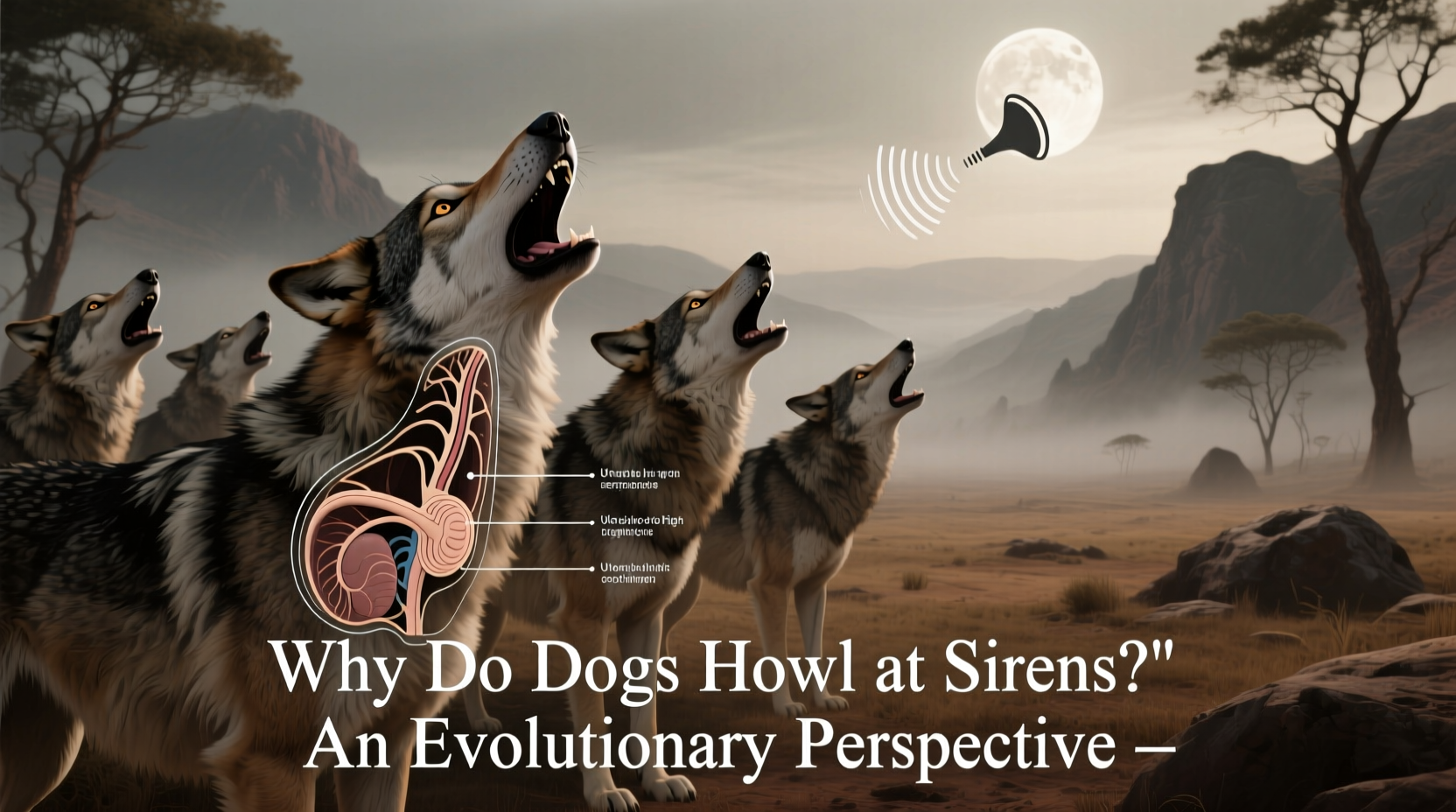
Dogs are descendants of wolves, animals that rely heavily on vocalizations to maintain contact within their packs. Howling is one of the most effective long-distance communication tools in the wild. Wolves use howls to assemble scattered members, mark territory, signal danger, or locate one another across vast distances. The high-pitched, sustained tone carries farther than barks or growls, especially in open or forested terrain.
Domestication has changed many aspects of dog behavior, but core instinctual patterns remain intact. Modern dogs may live in homes rather than forests, but their brains still process certain sounds through an evolutionary lens. When a dog hears a siren—a loud, rising-and-falling tone—it closely resembles the acoustic profile of a wolf’s howl. To a dog, this sound may trigger an automatic response: joining in as if replying to a distant pack member.
“Dogs haven’t lost their ancestral communication instincts. A siren doesn’t just make noise—it mimics a call they’re genetically wired to answer.” — Dr. Karen Becker, Veterinary Ethologist
This isn't learned behavior; it's deeply embedded in their neurobiology. Studies using brain imaging have shown that certain high-frequency, tonal sounds activate regions in the dog’s brain associated with social bonding and vocal response—similar to those triggered during actual pack interactions.
Auditory Triggers and Sound Perception
Dogs hear at frequencies far beyond human capability, detecting sounds between 40 Hz and 60,000 Hz (compared to humans’ 20 Hz–20,000 Hz). Sirens typically operate in the 700–3,000 Hz range, which falls squarely within a dog’s sensitive hearing spectrum. More importantly, the modulating pitch of a siren—rising and falling like a yodel—mimics the natural inflection of a howl.
To a dog, this isn’t just noise. It’s structured sound with emotional and communicative weight. The fluctuating pitch may be interpreted as urgency, distress, or a challenge. Some researchers suggest that dogs perceive sirens as either a rival’s territorial call or a distress signal from a fellow canine “pack” member. In response, they howl to assert presence, offer reassurance, or defend their space.
Tip: If your dog howls excessively at sirens, consider playing white noise or calming music during emergency vehicle activity to reduce auditory stimulation.Howling as Social Communication
In wild canids, howling strengthens social bonds. Pack members often engage in group howling, a phenomenon known as \"chorusing.\" This synchronized vocalization reinforces unity and deters rival packs. Domestic dogs, though isolated from true packs, still seek connection. When a siren sounds, a dog may interpret it as a call for group participation—and respond accordingly.
This explains why some dogs howl alone while others wait for household pets to join in. Multi-dog homes frequently experience cascading howls: one dog starts, and others follow in sequence, mimicking the choral structure seen in wolves. Even solitary dogs may howl persistently, attempting to initiate contact with perceived outsiders.
Interestingly, not all breeds howl equally. Northern breeds such as Siberian Huskies, Alaskan Malamutes, and Shiba Inus are more prone to howling due to their closer genetic ties to wolves and historical roles in long-distance communication. Conversely, breeds selected primarily for silent work—like many terriers or toy breeds—rarely respond to sirens.
Evolutionary Mismatch in Domestic Environments
The modern urban environment presents an evolutionary mismatch: dogs possess ancient instincts but live in settings where those instincts serve no practical purpose. Howling at sirens doesn’t help them find pack members or ward off threats. Yet the neural circuitry remains active, responding automatically to stimuli that resemble ancestral signals.
This concept, known as \"evolutionary lag,\" explains many seemingly odd pet behaviors. Just as birds sometimes collide with glass windows (a material absent in nature), dogs react to artificial sounds that mimic biologically significant cues. The siren is a man-made sound, but its acoustic similarity to a howl tricks the dog’s brain into treating it as real social input.
Moreover, reinforcement plays a role. If a dog howls and receives attention—positive or negative—from owners, the behavior may become habitual. Even scolding can act as reinforcement, since any response validates the action in the dog’s mind. Over time, the association between sirens and attention strengthens the behavior, layering learned responses over innate ones.
Behavioral Differences Across Breeds and Individuals
While evolutionary roots explain the general tendency to howl, individual variation is significant. Some dogs never howl at sirens, even in breed groups known for vocalization. Personality, early socialization, and environmental exposure all influence responsiveness.
For example, a well-socialized Border Collie raised in a quiet rural area may never encounter frequent sirens and thus never develop the habit. In contrast, a Husky living near a hospital may howl daily, reinforcing the behavior through repetition. Age also matters: younger dogs are more likely to respond impulsively, while older dogs may ignore sirens after repeated non-eventful exposures.
| Breed Type | Howling Tendency | Reason |
|---|---|---|
| Siberian Husky | Very High | Close wolf ancestry; bred for endurance and vocal communication |
| Alaskan Malamute | High | Historically used in teams requiring coordination over distance |
| Beagle | Moderate-High | Hunting background; uses howling to signal prey location |
| German Shepherd | Low-Moderate | Bred for obedience and silence in police/military roles |
| Poodle | Low | Selectively bred for companionship; minimal ancestral howling traits |
When Howling Becomes a Concern
Occasional siren-related howling is normal and harmless. However, excessive or distressed howling may indicate underlying issues. Dogs that tremble, hide, or appear agitated when sirens sound may suffer from noise anxiety. Chronic stress from frequent exposure—especially in cities with constant emergency traffic—can lead to behavioral problems like pacing, destructive chewing, or house soiling.
It’s important to distinguish between instinctive response and fear-based reaction. A relaxed dog may tilt its head, trot to the window, and howl briefly before moving on. A stressed dog may exhibit panting, drooling, or attempts to escape. In such cases, intervention is warranted.
Tip: Use desensitization training with recorded siren sounds at low volume, gradually increasing exposure while rewarding calm behavior.Mini Case Study: Luna the Husky Mix
Luna, a three-year-old Siberian Husky-German Shepherd mix living in downtown Denver, began howling at every passing ambulance. Her owner, Mark, initially found it amusing, but concern grew when Luna started pacing and refusing food during peak emergency hours. A veterinary behaviorist diagnosed mild noise aversion. Using a structured desensitization plan—playing siren recordings at low volume paired with treats—Mark helped Luna associate the sound with positive outcomes. Within six weeks, her howling decreased by 80%, and signs of distress disappeared. The case illustrates how instinctive behaviors can escalate when combined with anxiety, but also how they can be managed with patience and science-based techniques.
Practical Steps to Manage Siren-Induced Howling
If your dog’s howling is disruptive or stress-related, consider the following step-by-step approach:
- Assess the context: Observe whether your dog appears calm or anxious when howling. Note frequency, duration, and accompanying behaviors.
- Reduce auditory triggers: Close windows during high-traffic emergency periods or use soundproof curtains.
- Provide distraction: Offer puzzle toys or chew bones when sirens are common, redirecting focus.
- Train alternative behaviors: Teach a “quiet” command using positive reinforcement when your dog stops howling on cue.
- Consult a professional: If anxiety is suspected, seek guidance from a certified animal behaviorist or veterinarian.
Checklist: Managing Your Dog’s Response to Sirens
- ✅ Observe and record howling episodes (time, duration, triggers)
- ✅ Differentiate between casual howling and signs of distress
- ✅ Minimize exposure with closed windows or background noise
- ✅ Use positive reinforcement to reward calm behavior
- ✅ Avoid yelling or punishment, which can increase anxiety
- ✅ Consult a vet if howling is accompanied by fear symptoms
Frequently Asked Questions
Is it normal for dogs to howl at sirens?
Yes, it’s completely normal and rooted in evolutionary behavior. Many dogs interpret the rising and falling pitch of sirens as a form of howling and respond instinctively. As long as the dog appears relaxed and the behavior is occasional, no intervention is needed.
Can I train my dog not to howl at sirens?
You can reduce the behavior through training, especially if it’s attention-seeking or anxiety-driven. Focus on desensitization and counter-conditioning techniques. While you may not eliminate howling entirely—particularly in predisposed breeds—you can significantly minimize it with consistency.
Does howling at sirens mean my dog is in pain?
No, howling at sirens does not indicate physical pain. However, extremely loud or close sirens may cause temporary discomfort due to sensitive hearing. If your dog shows signs of distress—such as whimpering, shaking, or fleeing—the issue may be noise sensitivity rather than instinctive response.
Conclusion: Honoring Instinct While Supporting Well-Being
Dogs howl at sirens not because they dislike the sound, but because their evolutionary programming interprets it as meaningful communication. This behavior connects them to a lineage stretching back thousands of years, linking your living room companion to ancient wolves roaming frozen tundras. Rather than viewing it as a nuisance, we can appreciate it as a window into the rich inner world of canine perception.
That said, our responsibility as caregivers is to ensure that instinctive behaviors don’t compromise a dog’s comfort or quality of life. With awareness, empathy, and informed strategies, we can allow natural tendencies to express themselves safely—while intervening when stress or disruption arises.
💬 Have a dog that serenades every siren? Share your story or tips in the comments—your experience could help other pet owners understand this fascinating behavior!








