Dogs barking at the mail carrier is a near-universal experience for pet owners. It’s loud, sudden, and often seems irrational—especially when that same dog greets human visitors at the door with tail wags and licks. This contrast raises a legitimate question: Why does your dog react so aggressively to someone delivering mail, yet remain calm or even friendly when actual guests arrive? The answer lies in canine psychology, territorial instincts, and learned associations. Understanding these factors doesn’t just explain the behavior—it empowers you to address it effectively.
The Territorial Trigger: Movement and Predictability
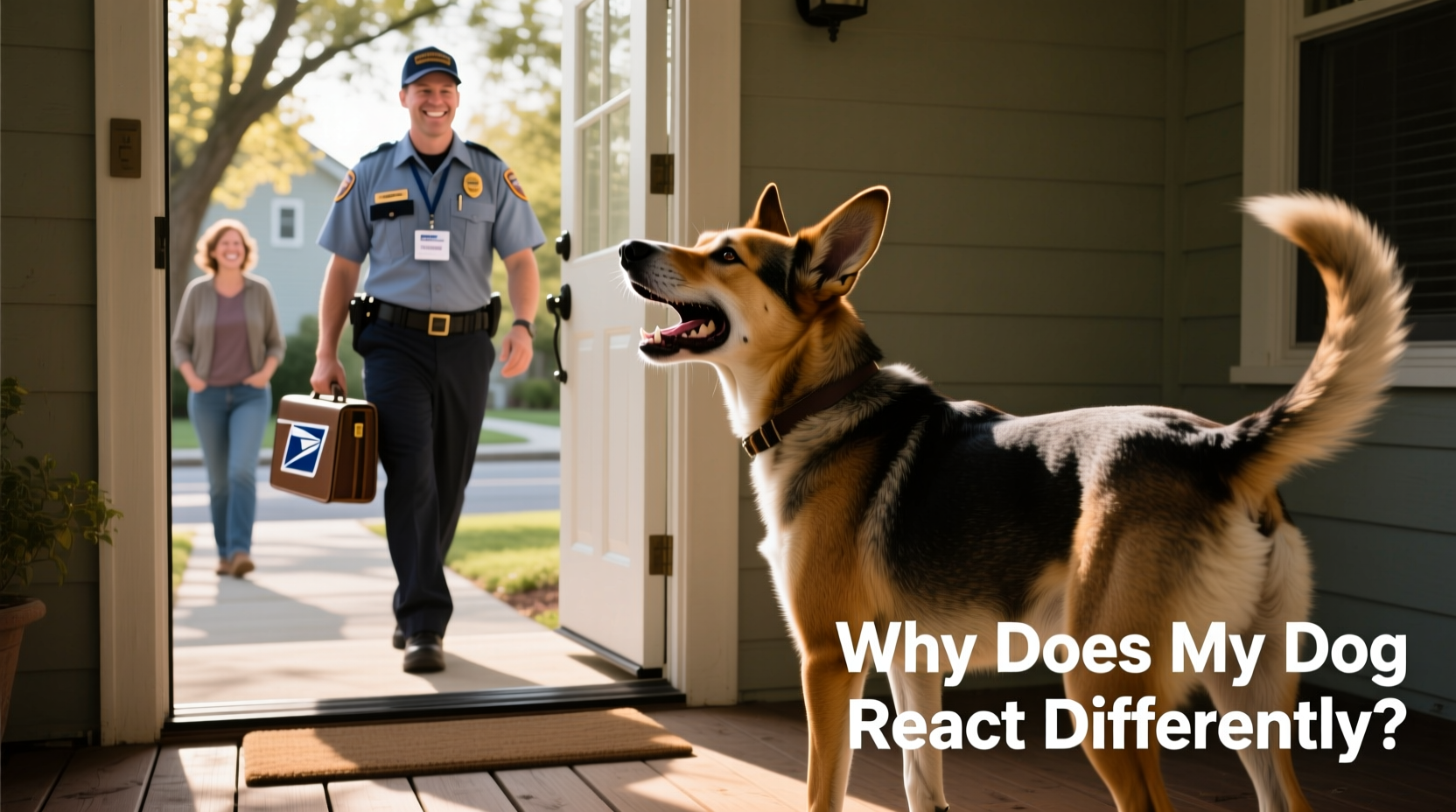
Dogs are inherently territorial animals. Their ancestors relied on vigilance to protect resources, and modern domesticated dogs retain this instinct. When a stranger approaches their perceived territory—your home—they assess intent based on movement, sound, and familiarity.
The mail carrier represents a unique stimulus: they approach the front door regularly, often at roughly the same time each day, but never engage socially with the household. To a dog, this pattern becomes predictable—and threatening. Unlike visitors who stop, knock, and interact, postal workers typically walk directly up to the door, place a package down, and leave without acknowledgment. This abrupt intrusion followed by retreat reinforces the dog’s belief that their barking “chased” the person away. Over time, this creates a self-reinforcing cycle: bark → stranger leaves → success (from the dog’s perspective).
Tip: Record your dog’s reaction over several days to identify patterns in timing, intensity, and triggers. This helps tailor training more effectively.Visitors vs. Delivery Personnel: A Canine Perception Breakdown
To humans, both visitors and delivery personnel may seem similar—one person coming to the door. But dogs perceive critical differences:
- Body language cues: Visitors often pause, smile, make eye contact, or speak softly—signals dogs interpret as non-threatening.
- Auditory signals: Guests usually ring the doorbell or knock, giving the dog time to prepare. In contrast, some mail carriers move quickly and silently before dropping off packages.
- Social reinforcement: When family members greet a visitor warmly, the dog reads this as social approval. No such cue exists for postal workers.
- Predictable interaction: Visitors typically enter the home, reducing uncertainty. Delivery people appear suddenly and vanish just as fast, leaving unresolved tension.
This mismatch between expectation and outcome fuels anxiety. The dog cannot predict what will happen next, so they default to vocal defense.
How Dogs Learn Through Consequences
Dog behavior is shaped heavily by operant conditioning—a psychological principle where actions are reinforced or discouraged by outcomes. In the case of mail carrier barking:
- The dog sees or hears the carrier approaching.
- The dog begins barking.
- The carrier completes their task and walks away.
- The dog interprets the departure as a direct result of their barking.
- The behavior is reinforced: Barking = threat eliminated.
This accidental reinforcement makes the behavior extremely persistent. Even if you scold your dog afterward, the core reward—the intruder leaving—has already occurred, overshadowing any delayed correction.
“Dogs don’t generalize well between similar stimuli. Just because your dog loves your neighbor doesn’t mean they’ll accept all strangers near their home.” — Dr. Karen Overall, Veterinary Behavioral Medicine Specialist
Environmental Cues and Scent Profiles
Another key factor is scent. Humans rely primarily on sight; dogs depend on smell. Most visitors come from within your social circle—relatives, friends, coworkers. Over time, your dog learns their scent profile and associates it with positive experiences like play, treats, or affection.
In contrast, mail carriers rotate shifts, wear uniforms treated with industrial detergents, and carry parcels from unknown locations. Their scent is unfamiliar, inconsistent, and often masked by packaging materials, perfumes, or cleaning agents. This olfactory ambiguity increases suspicion.
Additionally, many postal workers use bicycles, scooters, or vehicles that emit unfamiliar sounds—metallic clinks, engine hums, or sudden braking noises—that can startle sensitive dogs before visual contact even occurs.
Visual Barriers and Line of Sight
The layout of your home also plays a role. If your dog can see the mailbox or sidewalk through a window or glass door, they’re likely monitoring activity constantly. This creates a “guard post” mentality, especially in breeds historically used for alert duties (e.g., German Shepherds, Shetland Sheepdogs, Terriers).
Conversely, when visitors arrive, they’re often announced by a doorbell or knock, allowing you to control the greeting context. You might call your dog, offer reassurance, or even remove them from the area. With surprise deliveries, no such buffer exists.
| Factor | Mail Carrier | Visitor |
|---|---|---|
| Approach Pattern | Sudden, silent, routine | Announced, variable |
| Social Interaction | None | Positive engagement |
| Scent Familiarity | Low/unknown | Often high/familiar |
| Reinforcement for Dog | Barking precedes departure (reward) | No defensive action needed |
| Human Mediation | Rarely present during event | Typically involved in greeting |
Training Strategies to Reduce Mail Carrier Reactivity
Changing this behavior requires consistency, patience, and a shift in how your dog associates the mail carrier with outcomes. Punishment-based methods often backfire, increasing fear and aggression. Instead, focus on counter-conditioning and environmental management.
Step-by-Step Guide: Reducing Doorside Reactivity
- Control visibility: Close curtains, apply frosted film to glass doors, or use baby gates to block access to entry areas during delivery hours.
- Create an alternative zone: Designate a quiet room with a bed, toys, and water where your dog can stay during peak delivery times.
- Introduce positive associations: During non-delivery times, simulate door approach sounds (recordings or ask a friend to walk toward the door). Reward calm behavior with high-value treats.
- Practice desensitization: Start with low-intensity exposure (e.g., someone walking far from the door), rewarding relaxation. Gradually decrease distance over weeks.
- Use distraction techniques: Offer a stuffed Kong or chew toy 5–10 minutes before expected delivery to redirect focus.
- Engage postal workers (if possible): With permission, have the carrier toss treats (through a closed door or fence) without making eye contact. This changes the dog’s association from “threat” to “predictor of good things.”
Real-Life Example: Managing Max, the Reactive Beagle
Max, a 3-year-old Beagle living in suburban Chicago, would erupt into frantic barking every afternoon when the mail truck turned onto his street. His owner, Lisa, tried yelling “No!” and pulling him away, but the behavior worsened. After consulting a certified dog trainer, she implemented a structured plan:
- Installed opaque window decals to block street view.
- Began playing classical music during delivery hours.
- Started daily 5-minute sessions using a recorded mail truck audio track paired with chicken treats.
- Coordinated with her carrier (via a note left in the mailbox) to toss liver treats from a safe distance.
Within six weeks, Max no longer rushed the door. He still perked up at the sound of the truck but remained lying on his mat, looking to Lisa for a treat. The transformation wasn’t instant—but it was sustainable.
Common Mistakes That Worsen the Behavior
Even well-meaning owners can accidentally reinforce unwanted barking. Avoid these pitfalls:
- Yelling at the dog during episodes: Adds to household arousal and may be interpreted as joining the alert.
- Letting the dog “work it out” at the window: Prolonged exposure without positive intervention strengthens the habit.
- Inconsistent rules: Allowing barking sometimes but correcting others confuses the dog.
- Using shock collars or aversive tools: These increase fear and can lead to redirected aggression.
“Behavior modification isn’t about dominance—it’s about changing emotional responses. A dog that feels safe doesn’t need to bark at every passerby.” — Jean Donaldson, Founder of The Academy for Dog Trainers
Checklist: How to Address Mail Carrier Barking
- ✅ Identify your dog’s trigger zone (window, door, yard)
- ✅ Block visual access during delivery hours
- ✅ Establish a designated calm space with enrichment items
- ✅ Begin desensitization training using recorded sounds
- ✅ Pair delivery-related cues with high-value treats
- ✅ Consult a force-free certified trainer if progress stalls
- ✅ Communicate politely with delivery personnel about safety protocols
Frequently Asked Questions
Is my dog aggressive if they bark at the mail carrier?
Not necessarily. Barking in this context is typically reactive or fear-based, not true aggression. True aggression involves intent to harm, such as lunging, growling with stiff posture, or attempting to bite. Reactive barking is a communication attempt driven by anxiety or territorial instinct.
Can I train an older dog to stop this behavior?
Yes. While puppies are more adaptable, adult dogs can learn new associations at any age. Progress may take longer, but consistent, reward-based training yields results. Patience and repetition are essential.
Should I punish my dog for barking at the mail carrier?
No. Punishment increases stress and can damage your bond. It also fails to address the root cause: fear or over-arousal. Instead, focus on teaching an alternative behavior (like going to a mat) and rewarding calmness.
Conclusion: Building Calm Through Understanding
Your dog isn’t misbehaving out of defiance—they’re responding to a world they perceive as unpredictable and occasionally threatening. The fact that they don’t bark at visitors shows they can distinguish between people; they just haven’t been taught how to respond appropriately to those brief, repetitive intrusions. By reshaping their environment, managing exposure, and building new positive associations, you can transform a daily outburst into a peaceful routine.
Start small. Close a curtain. Offer a treat when you hear the truck. Celebrate quiet moments. These actions may seem minor, but together, they rewire your dog’s expectations. With time, the mail carrier won’t be a foe to fend off—but just another passerby in a world that’s finally starting to make sense.
💬 Have a story about your dog’s reactions to delivery people? Share your experience or tips in the comments—your insight could help another pet owner find peace at the front door.








