Many dog owners have experienced the unsettling moment when their pet suddenly erupts into a series of sharp barks in the dead of night—eyes fixed on an empty corner, tail stiff, yet nothing visibly there. It’s not a ghost, but it can feel like one. This behavior is more common than you might think, and while it may seem mysterious, it usually has logical explanations rooted in canine biology, psychology, and environment. Understanding why your dog barks at seemingly nothing can help you address the cause, improve sleep quality for both you and your pet, and strengthen your bond through better communication.
Canine Senses Are Sharper Than Ours
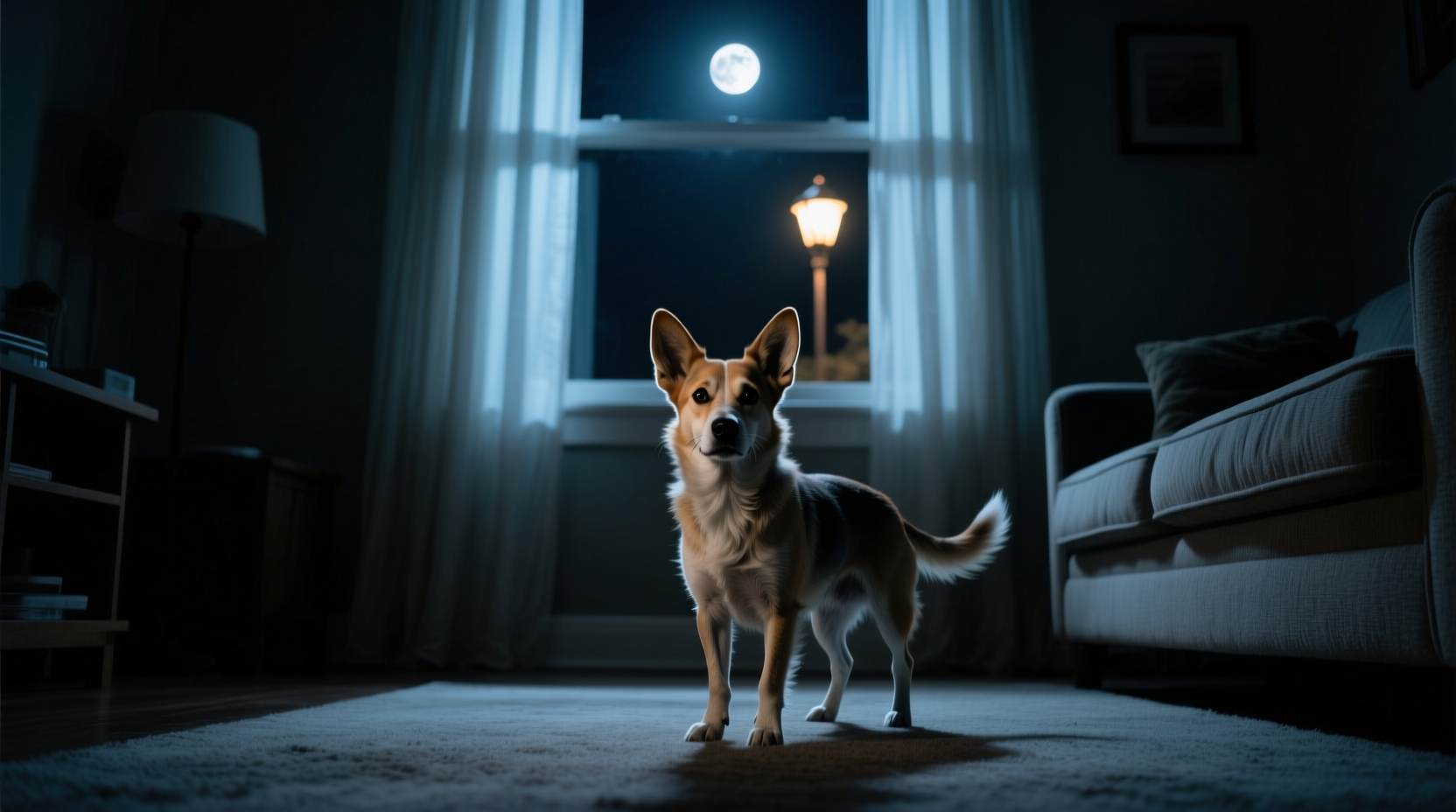
Dogs perceive the world differently than humans. Their senses of hearing, smell, and even vision are tuned to detect stimuli far beyond human capability. What appears as “nothing” to you may be very real to your dog.
A dog’s hearing range extends up to 65,000 Hz, compared to the human limit of about 20,000 Hz. This means they can hear high-pitched sounds such as rodent squeaks inside walls, electrical buzzing from appliances, or distant animal calls—all imperceptible to you. Similarly, dogs can detect subtle changes in air pressure, vibrations through floors, or faint scents carried by drafts that signal the presence of something unfamiliar.
Tip: If your dog barks suddenly at night, pause and listen carefully. You might detect a faint noise—a dripping pipe, a creaking floorboard, or a distant siren—that triggered their alert.In rural areas, nocturnal animals like raccoons, opossums, or bats may pass near windows or under decks, triggering a territorial or predatory response. Even indoor pests such as mice can create enough sound or scent disturbance to provoke barking.
Instinctive Behavior and Territorial Alertness
Barking is a natural form of communication for dogs. Historically bred as guardians, hunters, and companions, dogs are wired to alert their pack (you) to potential threats. A sudden noise or movement—even if unseen by humans—can activate this instinct.
At night, homes become quieter, amplifying small sounds and increasing a dog’s vigilance. In these still hours, your dog may interpret a shadow shift, a flicker of light, or a reflection off glass as an intruder. This is especially true for breeds with strong guarding instincts, such as German Shepherds, Rottweilers, or Terriers.
Moreover, dogs often develop routines around environmental cues. If they’ve successfully alerted you to a real threat before—like a burglar or a stray animal—they may repeat the behavior expecting reinforcement, even when no actual danger exists.
“Dogs don’t bark without reason. Even if we can’t see the trigger, the behavior is a response to perceived stimuli. The key is understanding what they might be sensing.” — Dr. Karen Becker, Veterinary Biologist and Canine Behavior Specialist
Medical and Cognitive Factors
While environmental triggers are common, persistent nighttime barking can also stem from underlying health issues, particularly in older dogs. Canine Cognitive Dysfunction (CCD), often referred to as doggy dementia, affects up to 60% of dogs over the age of 15. Symptoms include confusion, disorientation, altered sleep-wake cycles, and vocalization during quiet hours.
Dogs with CCD may stare at walls, walk in circles, or bark at empty spaces because their brains misinterpret sensory input. They might forget where they are, fail to recognize family members, or react fearfully to familiar objects. Hearing loss can compound the issue—dogs may bark louder because they can’t regulate their own volume or become anxious due to reduced auditory feedback.
Pain or discomfort can also lead to nighttime agitation. Arthritis, gastrointestinal issues, or dental pain may worsen when lying down, prompting restlessness and vocalization. Vision problems, such as cataracts or progressive retinal atrophy, can make shadows or reflections appear threatening.
When to See a Veterinarian
If your dog’s nighttime barking is new, escalating, or accompanied by other behavioral changes—such as pacing, house soiling, or lack of appetite—it’s essential to consult a veterinarian. A full physical exam, blood work, and possibly neurological screening can rule out medical causes.
Tip: Keep a log of your dog’s barking episodes: time, duration, location, and any observed behaviors. This record helps veterinarians identify patterns and possible triggers.Environmental and Behavioral Triggers
Not all nighttime barking stems from supernatural silence. Everyday household factors can contribute:
- Nocturnal wildlife: Animals moving outside windows or under porches can trigger alert barking.
- Electronic devices: Faint hums from refrigerators, HVAC systems, or Wi-Fi routers emit frequencies some dogs find irritating.
- Light reflections: Moonlight hitting mirrors, glass tables, or shiny appliances can create moving glints that dogs perceive as motion.
- Separation anxiety: Some dogs become anxious when family members are asleep and unreachable, leading to attention-seeking barks.
- Lack of mental stimulation: Under-stimulated dogs may develop compulsive behaviors, including barking at imagined threats.
Additionally, inconsistent training can reinforce unwanted barking. If your dog barks and you respond by turning on lights, speaking, or comforting them, they may learn that barking gets attention—even negative attention is still attention.
Do’s and Don’ts of Responding to Nighttime Barking
| Do | Don't |
|---|---|
| Stay calm and avoid loud reactions | Yell at or punish your dog |
| Check for real threats (intruders, pests) | Immediately comfort the dog (may reinforce behavior) |
| Use a quiet command like “Quiet” or “Settle” | Turn on bright lights frequently (disrupts sleep cycle) |
| Redirect with a chew toy or calming activity | Allow prolonged barking without intervention |
| Consult a vet if behavior is new or worsening | Assume it’s “just a phase” without investigation |
Real-Life Example: Max the Border Collie
Max, a 7-year-old Border Collie living in suburban Ohio, began barking every night around 2:30 a.m., fixated on the basement door. His owners initially thought he was reacting to noises from the furnace. After ruling out plumbing and electrical issues, they set up a night-vision camera. The footage revealed nothing unusual—until slow-motion playback showed a tiny flicker of light reflecting off a metal shelf whenever the furnace kicked on.
Further investigation found that the timing coincided with a neighbor’s security light activating. The combination of vibration from the HVAC system and the flash of reflected light created a stimulus Max interpreted as movement. By covering the shelf with a matte fabric and adding white noise with a fan, the barking stopped within three nights.
This case illustrates how subtle, multisensory triggers can combine to provoke a strong reaction—even in highly intelligent, well-trained dogs.
Step-by-Step Guide to Reducing Nighttime Barking
Addressing unexplained nighttime barking requires a systematic approach. Follow these steps to identify and resolve the root cause:
- Document the behavior: Note the time, frequency, duration, and your dog’s body language during each episode.
- Inspect the environment: Walk through your home at night with lights off. Listen for sounds, check for reflections, and smell for unusual odors.
- Eliminate obvious triggers: Cover reflective surfaces, seal entry points for pests, and relocate sensitive dogs from noisy areas.
- Improve daytime enrichment: Provide puzzle toys, obedience training, and daily exercise to reduce anxiety and boredom.
- Establish a calming bedtime routine: Include a potty break, gentle play, and a chew session to signal it’s time to settle.
- Introduce white noise or calming music: Use fans, sound machines, or playlists designed for dogs to mask disruptive sounds.
- Train a “quiet” command: During the day, reward your dog for stopping barking on cue using positive reinforcement.
- Consult professionals: If the behavior persists, seek help from a veterinarian or certified canine behaviorist.
Frequently Asked Questions
Is my dog seeing ghosts or spirits?
There is no scientific evidence that dogs perceive supernatural entities. What may seem like a reaction to “ghosts” is more likely a response to sensory stimuli beyond human perception—such as high-frequency sounds, air currents, or faint scents. Dogs’ heightened awareness can make them appear psychic, but their behavior is grounded in biology, not the paranormal.
Should I ignore my dog when they bark at night?
Ignoring barking entirely isn’t always the best approach. First, ensure there’s no real threat, such as an intruder or medical emergency. Once safety is confirmed, avoid reinforcing the behavior with attention. Instead, use a calm, low-volume command like “Enough” or “Lie down,” then redirect quietly. Complete ignoring may increase anxiety in some dogs, especially those with separation concerns.
Can anxiety medication help with nighttime barking?
In cases of diagnosed anxiety, cognitive dysfunction, or extreme stress, veterinarians may prescribe medications such as fluoxetine (Reconcile) or trazodone. These are typically used alongside behavioral modification and environmental adjustments. Never medicate your dog without veterinary guidance, as underlying conditions must be properly diagnosed first.
Checklist: Action Plan for Nighttime Barking
Use this checklist to systematically address your dog’s nighttime barking:
- ☐ Record barking episodes (time, duration, context)
- ☐ Conduct a nighttime sensory audit of your home
- ☐ Remove or cover reflective surfaces
- ☐ Seal gaps where pests could enter
- ☐ Increase daily physical and mental exercise
- ☐ Implement a consistent pre-sleep routine
- ☐ Introduce white noise or calming audio
- ☐ Train a reliable “quiet” command during daylight
- ☐ Schedule a veterinary check-up to rule out medical causes
- ☐ Consult a professional trainer or behaviorist if needed
Conclusion: Peaceful Nights Start with Understanding
Your dog isn’t trying to ruin your sleep—they’re responding to their world in the only way they know how. Barking at “nothing” is rarely about nothing at all. By tuning into your dog’s senses, addressing health concerns, and modifying their environment, you can transform restless nights into peaceful ones. Remember, patience and consistency are key. Small changes can yield big results when grounded in empathy and observation.
💬 Have a story about your dog’s mysterious nighttime barking? Share your experience or solution in the comments below—your insight could help another pet owner finally get a good night’s rest.








