It’s 2:00 a.m., the house is quiet, and suddenly your dog barks—sharply, insistently—at what appears to be nothing. No intruder, no animal outside, not even a creaking floorboard. You check the windows, reassure your pet, but the behavior repeats night after night. If this sounds familiar, you’re not alone. Many dog owners struggle with unexplained nighttime barking. While it may seem random, there are often identifiable causes rooted in biology, environment, and psychology. Understanding these triggers is the first step toward restoring peace to your home.
Understanding Canine Senses and Nighttime Behavior
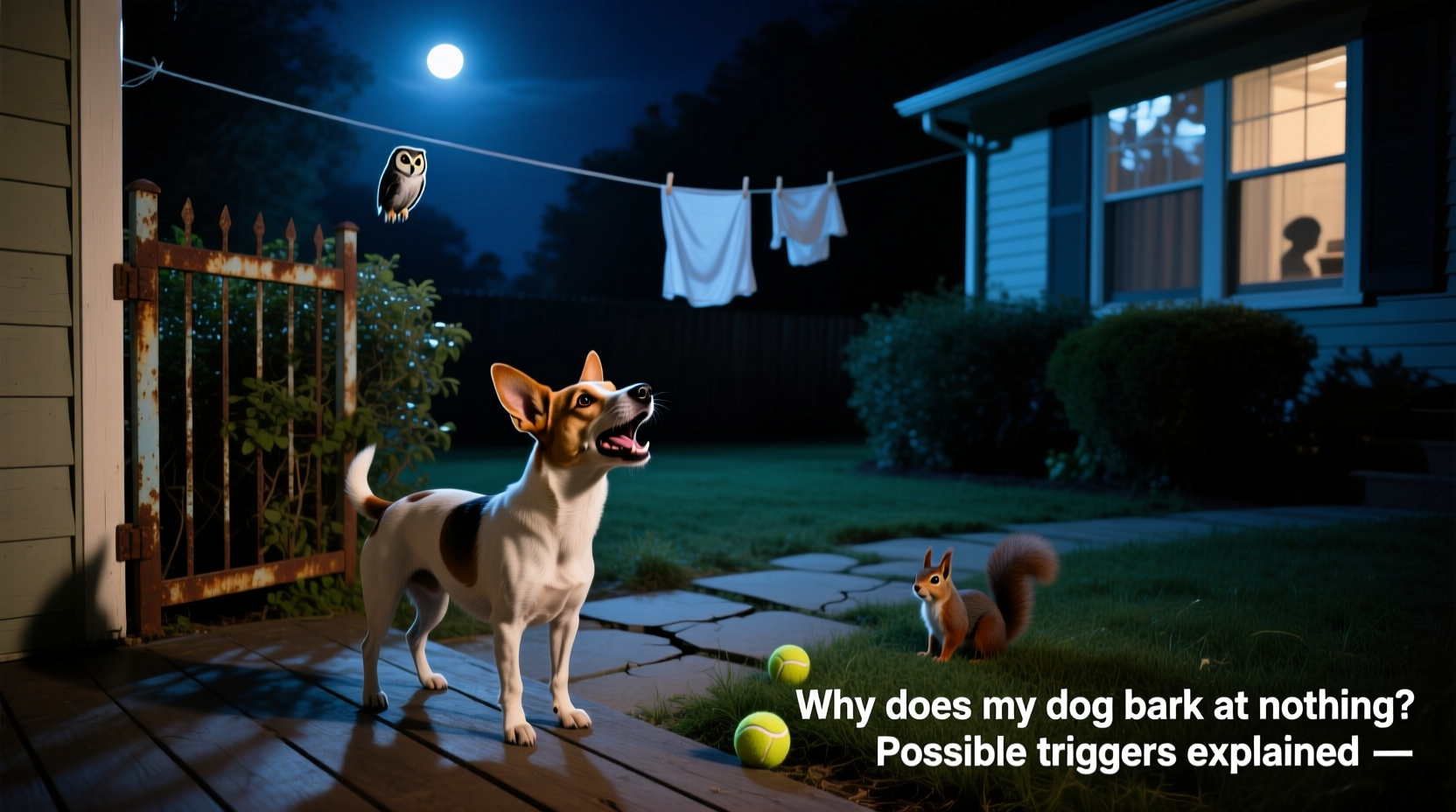
Dogs perceive the world differently than humans, especially at night. Their senses of hearing and smell far exceed ours, allowing them to detect stimuli we can’t. A dog might react to a distant sound, a faint scent, or subtle environmental changes that go unnoticed by human occupants. At night, when background noise decreases, these stimuli become more pronounced.
For example, dogs can hear frequencies up to 65,000 Hz, compared to the human limit of about 20,000 Hz. This means they may pick up on high-pitched electronic noises from appliances, HVAC systems, or even wildlife calls miles away. Similarly, their sense of smell allows them to detect animals passing near the yard hours after they’ve gone. These sensory inputs can trigger alert barking—even if nothing visibly happens.
“Dogs don’t bark at ‘nothing.’ They’re responding to something we simply can’t perceive. The key is identifying what that stimulus might be.” — Dr. Laura Bennett, Veterinary EthologistTip: Walk through your home at night with all lights off and listen carefully. You might detect faint sounds your dog reacts to—like a buzzing outlet or distant traffic.
Common Triggers Behind Late-Night Barking
While each dog is different, several recurring patterns explain why dogs bark at seemingly nothing during the night. Below are the most frequent culprits:
1. Heightened Sensory Perception
As mentioned, dogs hear and smell things beyond human range. Common nighttime stimuli include:
- High-frequency electronic hums (refrigerators, Wi-Fi routers)
- Distant animal movements (raccoons, rodents, birds)
- Air pressure shifts before weather changes
- Nearby construction or industrial activity (even miles away)
2. Separation Anxiety or Insecurity
Some dogs feel vulnerable at night, especially if left alone. The dark reduces visual cues, increasing reliance on sound and instinct. A normally confident dog may become hyper-vigilant, interpreting minor disturbances as threats. This is common in rescue dogs or those with past trauma.
3. Cognitive Decline in Senior Dogs
Dogs over the age of 7–8 may develop canine cognitive dysfunction (CCD), similar to dementia in humans. Symptoms include confusion, disorientation, and altered sleep-wake cycles. A senior dog might bark at shadows, walls, or empty spaces due to misperception or memory lapses.
4. Learned Attention-Seeking Behavior
If barking once resulted in attention—even negative correction—the dog may repeat it to re-engage. Over time, this becomes a conditioned habit, especially effective at night when owners are more likely to respond.
5. Territorial or Protective Instincts
Breeds with strong guarding tendencies (e.g., German Shepherds, Shih Tzus) may bark at perceived intrusions. Even a shadow moving across a wall or a reflection from headlights can trigger a territorial response.
Do’s and Don’ts When Addressing Nighttime Barking
| Do’s | Don’ts |
|---|---|
| Observe patterns: Note time, duration, and location of barking. | Yell or punish: This increases anxiety and reinforces the behavior. |
| Use white noise: Fans or sound machines can mask triggering sounds. | Ignore medical issues: Pain or illness can cause vocalization. |
| Establish a calming routine: Evening walks, mental stimulation, and quiet time help regulate sleep. | Reinforce barking with attention: Avoid rushing to the dog immediately. |
| Consult a vet: Rule out pain, hearing loss, or CCD. | Assume it’s “just behavior”: Underlying health problems must be ruled out first. |
Step-by-Step Guide to Reducing Nighttime Barking
Addressing unexplained barking requires a structured approach. Follow these steps to identify and resolve the root cause:
- Document the behavior: Keep a log for one week noting when barking occurs, duration, and any environmental factors (weather, household activity, appliance use).
- Rule out medical issues: Schedule a veterinary exam. Request blood work and a neurological evaluation if your dog is older.
- Conduct a sensory audit: Sit quietly in each room at night. Listen for high-pitched noises, drafts, or vibrations. Use a sound meter app to detect ultrasonic frequencies.
- Modify the sleeping environment: Provide a comfortable, enclosed bed. Use blackout curtains and white noise to reduce stimuli.
- Implement desensitization training: Gradually expose your dog to recorded sounds that mimic triggers, starting at low volume and rewarding calm behavior.
- Adjust daily routines: Increase physical and mental exercise during the day. A tired dog is less reactive at night.
- Introduce calming aids: Consider pheromone diffusers (Adaptil), anxiety wraps (Thundershirt), or natural supplements (L-theanine, melatonin—only under vet guidance).
- Seek professional help: If barking persists, consult a certified dog behaviorist or veterinary behaviorist.
Mini Case Study: Bella the Beagle
Bella, a 6-year-old beagle, began barking intensely between 1:00 and 3:00 a.m. Her owners initially thought she needed to go outside, but bathroom breaks didn’t stop the behavior. After ruling out medical issues, they installed a night-vision camera. It revealed Bella staring intently at the kitchen wall each time she barked. A technician later discovered the refrigerator’s compressor emitted a 22,000 Hz tone when cycling on—a frequency audible to dogs but not humans. Replacing the unit eliminated the barking within two nights.
This case illustrates how invisible stimuli can drive persistent behavior. Without investigation, Bella’s owners might have resorted to punishment or medication, missing the true cause entirely.
Checklist: How to Respond to Unexplained Nighttime Barking
- ✅ Keep a barking journal for at least 7 days
- ✅ Schedule a full veterinary checkup
- ✅ Audit your home for hidden sounds or smells
- ✅ Ensure your dog gets adequate daytime exercise
- ✅ Introduce white noise or calming music at bedtime
- ✅ Avoid reinforcing barking with immediate attention
- ✅ Try a pheromone diffuser in the sleeping area
- ✅ Consult a professional if no improvement in 2–3 weeks
Frequently Asked Questions
Can dogs see ghosts or spirits when they bark at nothing?
There’s no scientific evidence that dogs perceive supernatural entities. What may seem like a reaction to the paranormal is more likely a response to subtle sensory input—such as air currents, infrasound, or faint scents—that humans can’t detect. Attributing barking to ghosts may delay addressing real behavioral or medical causes.
Is nighttime barking a sign of illness?
Yes, it can be. Pain, hearing loss, thyroid imbalances, and cognitive dysfunction often manifest as restlessness or vocalization at night. Older dogs are especially prone to CCD, which includes confusion, pacing, and inappropriate barking. Always consult a veterinarian before assuming the cause is behavioral.
Should I ignore my dog when they bark at night?
Not entirely. Immediate ignoring may work if the barking is attention-seeking, but it’s important to first rule out discomfort or danger. A better approach is delayed response: wait for a pause in barking, then calmly acknowledge your dog. Pair this with a consistent bedtime routine so your dog learns nighttime is for resting, not interaction.
Conclusion: Restoring Quiet Nights Through Understanding
Your dog isn’t barking at nothing—they’re reacting to something real in their world. Whether it’s an inaudible sound, a lingering scent, or internal anxiety, the behavior has meaning. By approaching the issue with patience, observation, and science-based strategies, you can uncover the trigger and take meaningful action. Start with a vet visit, document the patterns, and adjust your dog’s environment and routine accordingly. With consistency, most cases of nighttime barking improve significantly.
💬 Have a story about your dog’s mysterious nighttime barking? Share your experience or solution in the comments—your insight could help another pet owner find peace at last.








