
It’s a familiar scene: you’re deep in sleep when suddenly, your dog erupts into a series of sharp barks at exactly 3 a.m. You sit up, heart racing, scanning the room for intruders or dangers—but there’s nothing. No noise, no movement, just silence. Your dog, however, is convinced something is wrong. This behavior is more common than many pet owners realize, but it can be deeply unsettling. Understanding why dogs bark at seemingly “nothing” during the early hours isn’t about dismissing their actions—it’s about recognizing their instincts, senses, and emotional states. From heightened hearing to cognitive decline, several factors may explain this mysterious behavior.
Heightened Senses: Dogs Hear What We Can’t
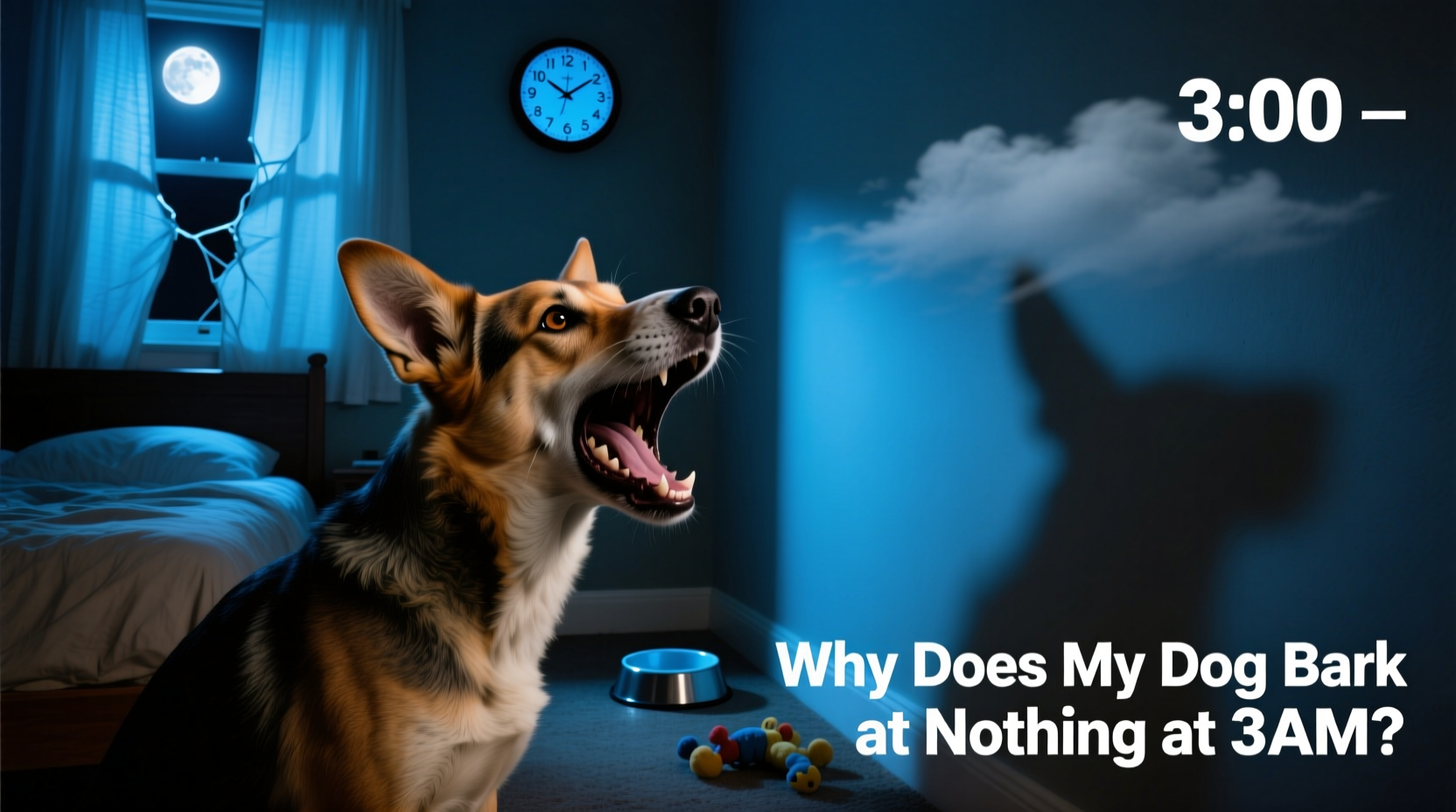
Dogs possess auditory capabilities far beyond human range. While humans typically hear sounds between 20 Hz and 20,000 Hz, dogs can detect frequencies from 40 Hz up to 60,000 Hz. This means they can perceive ultrasonic noises such as rodents scurrying inside walls, bats flying overhead, or even distant electronic devices emitting high-pitched signals. At 3 a.m., homes are quiet, and ambient noise is minimal, allowing dogs to focus on subtle sounds that go unnoticed by their owners.
In rural or suburban areas, nocturnal wildlife activity peaks during these hours. A fox yipping half a mile away, raccoons rustling in the attic, or even wind vibrating through loose siding might trigger an alert response. Because dogs evolved as pack guardians, their instinct is to vocalize when they detect potential threats—even if those threats pose no real danger.
Tip: Record audio near your dog during a nighttime barking episode. Play it back slowly—you might catch faint sounds your dog reacted to.Cognitive Decline in Older Dogs: The Role of Canine Cognitive Dysfunction
Just like humans, older dogs can experience age-related cognitive decline. Known as Canine Cognitive Dysfunction (CCD), this condition affects approximately 14% of dogs aged 8 and older. CCD disrupts normal brain function, leading to confusion, disorientation, altered sleep-wake cycles, and increased anxiety—all of which can manifest as unexplained barking during the night.
A dog with CCD may stare at walls, forget house training, or appear lost in familiar spaces. Barking at 3 a.m. could stem from misinterpreting shadows as intruders, forgetting where they are, or reacting to internal stimuli due to neurological changes. These behaviors aren't willful; they're symptoms of a medical condition requiring attention.
“Dogs with CCD often lose the ability to distinguish between real and perceived threats. Their barking isn’t disobedience—it’s distress.” — Dr. Linda Shell, DVM, Board-Certified Veterinary Behaviorist
Signs Your Dog May Have Cognitive Dysfunction
- Barking or whining without apparent cause
- Pacing or wandering aimlessly at night
- Staring into corners or at ceilings
- Difficulty recognizing family members
- Changes in appetite or sleep patterns
Anxiety and Fear Triggers Hidden in Plain Sight
Not all triggers are audible. Some dogs react to visual cues, scent changes, or shifts in atmospheric pressure. For example, a flickering streetlight casting moving shadows across the ceiling might resemble a predator to a sensitive dog. Similarly, changes in barometric pressure before dawn can affect joint pain in arthritic dogs, increasing irritability and reactivity.
Separation anxiety also plays a role. If your dog sleeps alone while you’re in another room, the isolation combined with low-light conditions can heighten fear. The stillness of 3 a.m. amplifies every small sound or movement, making anxious dogs hyper-vigilant. In some cases, dogs develop a conditioned response—they bark because they’ve done so before and received attention, reinforcing the behavior.
| Trigger Type | Example | How It Causes Barking |
|---|---|---|
| Auditory | Rodents in walls, distant sirens | Dog perceives threat via superior hearing |
| Visual | Shadows, light reflections | Movement mistaken for intruder |
| Olfactory | New scents from open windows | Unfamiliar smell triggers alert barking |
| Emotional | Loneliness, past trauma | Anxiety leads to hypervigilance |
| Environmental | Temperature drops, electrical hums | Physical discomfort increases sensitivity |
Sleep Cycle Disruption: When Dogs Wake Up Reactive
Dogs don’t sleep continuously like humans. They cycle through short bursts of deep and light sleep, totaling about 12–14 hours per day (more for puppies and seniors). During light sleep phases, especially around 2–4 a.m., dogs are more likely to wake partially. If startled by a dream, muscle twitch, or external stimulus, they may snap awake and bark instinctively.
This phenomenon is similar to human sleep starts or night terrors. A dog dreaming of chasing prey or defending territory might vocalize mid-dream. Since their brains aren’t fully conscious, they can’t rationalize that the threat isn’t real. Once awake, they may continue barking out of residual arousal.
Mini Case Study: Bella, the Rescue Beagle
Bella, a 7-year-old rescue beagle, began barking violently every night around 3:15 a.m. Her owner, Sarah, checked windows, installed cameras, and found no evidence of intruders. After ruling out pests and neighborhood noise, she consulted a veterinary behaviorist. It turned out Bella had been abandoned in a wooded area years earlier—her trauma resurfaced during vulnerable nighttime hours. The darkness, silence, and isolation triggered flashbacks. With a combination of environmental enrichment, white noise, and anti-anxiety supplements, Bella’s episodes decreased by 80% within six weeks.
Medical Conditions That Mimic Behavioral Issues
Barking at “nothing” isn’t always behavioral. Underlying health problems can cause discomfort, confusion, or neurological disturbances that lead to vocalization. Common culprits include:
- Hearing loss: Partial deafness causes dogs to misinterpret sounds, leading to reactive barking.
- Vision impairment: Cataracts or retinal degeneration make shadows and shapes appear distorted.
- Pain (arthritis, dental issues): Discomfort increases irritability and lowers tolerance for stimuli.
- Neurological disorders: Seizures, brain tumors, or vestibular disease can cause hallucinations or confusion.
If your dog’s nighttime barking is new, escalating, or accompanied by other odd behaviors (circling, trembling, loss of balance), a full veterinary exam is essential. Blood work, neurological screening, and imaging may reveal treatable conditions.
Tip: Keep a symptom journal—note the date, time, duration, and any environmental factors during each barking episode. This helps vets identify patterns.Step-by-Step Guide to Reducing Nighttime Barking
Addressing 3 a.m. barking requires a structured approach. Follow this timeline to identify causes and implement solutions:
- Week 1: Observe and Document
Record when barking occurs, how long it lasts, and what happens right before. Note weather, lighting, and household activity. - Week 2: Rule Out Medical Causes
Schedule a vet visit. Discuss cognitive health, pain, and sensory impairments. Request blood tests if needed. - Week 3: Optimize Sleep Environment
Add blackout curtains, use a white noise machine, and provide a comfortable orthopedic bed. Consider letting your dog sleep in your room if separation is an issue. - Week 4: Implement Calming Strategies
Introduce calming aids like pheromone diffusers (Adaptil), gentle music playlists for dogs, or vet-approved supplements (e.g., Zylkène, Solliquin). - Week 5+: Behavior Training
Work on desensitization and counter-conditioning. Reward quiet behavior after minor disturbances. Avoid yelling or punishment, which increases anxiety.
Checklist: How to Respond to 3 a.m. Barking
Use this practical checklist when your dog barks unexpectedly at night:
- ✅ Stay calm—don’t yell or punish
- ✅ Quickly scan the environment for obvious triggers (open window, strange noise)
- ✅ Gently redirect with a soft command (“Quiet,” “Settle”)
- ✅ Offer comfort only if anxiety is suspected—not if it reinforces attention-seeking
- ✅ Turn on a dim light to reduce shadow play
- ✅ Play white noise or calming music to mask external sounds
- ✅ Log the incident for future vet discussion
Frequently Asked Questions
Is it normal for dogs to bark at nothing?
Occasional barking at unseen stimuli is normal due to dogs’ acute senses. However, frequent or intense episodes—especially in older dogs—may indicate underlying issues like anxiety, cognitive decline, or pain, and should be evaluated.
Should I ignore my dog when they bark at night?
It depends. If the barking is attention-seeking and your dog is healthy, brief ignoring may discourage the behavior. But if the cause is fear, pain, or confusion, ignoring can increase distress. First, determine the root cause before choosing a response strategy.
Can diet affect nighttime barking?
Indirectly, yes. Poor nutrition can contribute to poor sleep quality, inflammation, and cognitive decline. Diets rich in omega-3 fatty acids, antioxidants, and medium-chain triglycerides (MCTs) support brain health and may reduce CCD symptoms in senior dogs.
Conclusion: Understanding Leads to Peace—for You and Your Dog
Your dog isn’t barking at nothing. To them, the threat is very real, whether it’s a high-pitched squeak, a shifting shadow, or a memory buried deep in their psyche. By approaching nighttime barking with empathy and investigation, you can uncover the true cause and take meaningful steps toward resolution. Whether it’s adjusting their environment, seeking medical treatment, or simply offering reassurance, your response shapes their sense of safety. Better sleep doesn’t come from silencing your dog—it comes from understanding them.
💬 Has your dog ever barked at \"nothing\" in the middle of the night? Share your story or solution in the comments—your experience could help another pet owner find peace.








