
Three in the morning is a time most people are fast asleep—except for some dogs. If your dog suddenly starts barking at seemingly nothing during the early hours, you're not alone. This behavior can be disruptive, confusing, and even concerning. While it may appear as though your dog is reacting to thin air, there’s usually an underlying reason. Understanding why this happens—and how to respond—is essential for both your peace of mind and your dog’s well-being.
Dogs have heightened senses, complex emotional lives, and instincts shaped by evolution. What seems like “barking at nothing” may actually be a response to subtle sounds, internal discomfort, or psychological triggers. Addressing the root cause requires observation, patience, and sometimes professional guidance. Below, we explore the most common reasons behind 3 a.m. barking episodes and offer practical, science-backed strategies to help calm your dog and restore quiet nights.
Sensory Triggers: What Your Dog Might Be Hearing or Smelling
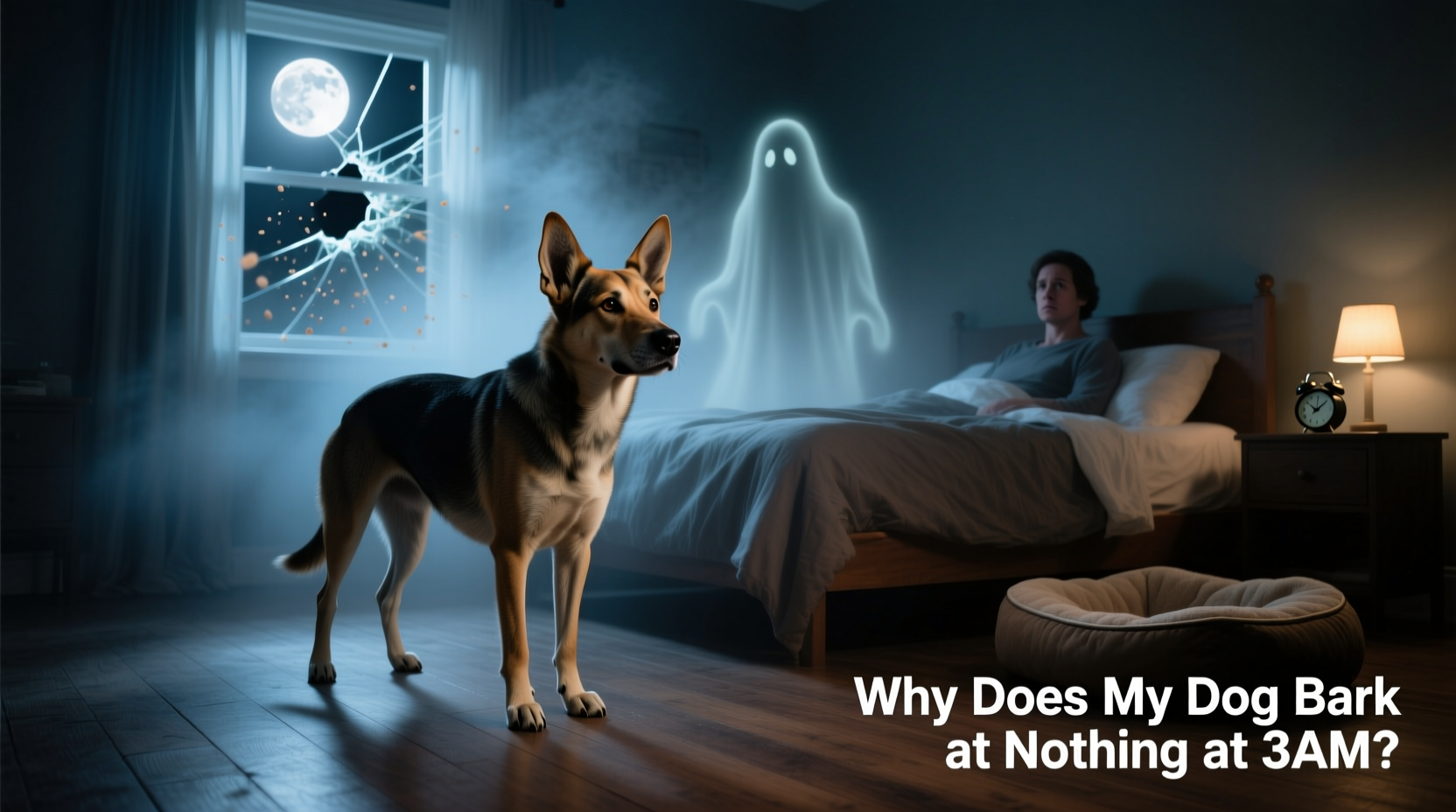
Dogs possess far superior hearing and smell compared to humans. They can detect high-frequency sounds up to 65,000 Hz (humans cap out around 20,000 Hz) and pick up scents miles away. At night, when ambient noise decreases, these senses become even more acute.
Common nocturnal stimuli include:
- Faint rustling from rodents or insects inside walls
- Distant sirens, traffic, or animal calls outside
- Changes in barometric pressure before weather shifts
- Smells drifting through vents from neighboring homes or wildlife outdoors
A dog might react to a sound imperceptible to you but startling to them. For example, a raccoon scratching near the foundation or a neighbor’s garage door opening two streets over could trigger alert barking. Unlike daytime distractions, nighttime silence amplifies these inputs, making them more noticeable—and alarming—to your pet.
Tip: Try recording audio near your dog’s sleeping area during an episode. You may discover subtle noises that explain their reaction.Anxiety and Fear-Based Barking
Not all barking stems from external stimuli. Some dogs bark due to internal emotional states, particularly anxiety. Midnight barking often links to:
- Separation anxiety: Even if your dog sleeps in your room, they may feel insecure when household energy shifts at night.
- Noise phobias: Past trauma related to storms, fireworks, or loud events can resurface with similar low-level sounds.
- Generalized anxiety: Some breeds are predisposed to nervousness, especially in quiet, dark environments.
Dogs with anxiety may pace, whine, or exhibit trembling alongside barking. The absence of visual cues doesn’t mean there’s no trigger—it just means the trigger is emotional rather than physical.
“Dogs don’t bark without reason. Even if we can’t perceive the stimulus, their behavior is communication.” — Dr. Karen Becker, DVM, Integrative Veterinarian
Cognitive Decline in Senior Dogs
If your dog is older (typically 7+ years, depending on breed), sudden nighttime barking could signal Canine Cognitive Dysfunction (CCD), often referred to as dog dementia. CCD affects memory, learning, and perception, leading to confusion and disorientation—especially during low-light hours.
Symptoms include:
- Barking at walls or corners
- Staring into space or getting “stuck” behind furniture
- Reversed sleep-wake cycles (sleeping during the day, active at night)
- Accidents indoors despite prior training
A study published in *Frontiers in Veterinary Science* found that over 60% of dogs aged 11–16 show at least one sign of cognitive decline. Nocturnal vocalization is among the earliest indicators.
| Age Group | Likelihood of CCD Symptoms | Common Nighttime Behaviors |
|---|---|---|
| 7–10 years | Low to moderate (15–30%) | Occasional confusion, mild pacing |
| 11–14 years | Moderate to high (50–75%) | Wandering, vocalizing, staring |
| 15+ years | Very high (up to 80%) | Severe disorientation, loss of house training |
Medical Conditions That Cause Nighttime Distress
Pain or discomfort can manifest as behavioral changes, including unexplained barking. Common medical issues include:
- Arthritis: Joint pain worsens after lying still for hours, prompting restlessness and vocalization.
- Hearing loss: Paradoxically, deaf dogs may bark more because they can’t hear their own voice or environmental feedback.
- Vision impairment: Blindness increases fear of movement in the dark, leading to defensive barking.
- Neurological disorders: Seizures or brain tumors may cause hallucinations or sudden arousal.
If your dog has never barked at night before and suddenly begins doing so, consult your veterinarian. Blood work, X-rays, or neurological exams may be necessary to rule out physical illness.
Tip: Monitor your dog’s mobility during the day. Stiffness, reluctance to jump, or limping may indicate pain contributing to nighttime agitation.Environmental and Routine Factors
Even small disruptions in routine can affect a dog’s sense of security. Consider whether any recent changes coincide with the onset of barking:
- New furniture or rearranged sleeping areas
- Recent moves or home renovations
- Changes in family schedule (e.g., someone working late)
- Exposure to new pets or people
Dogs thrive on predictability. A shift in bedtime rituals—like feeding later or skipping evening walks—can alter their circadian rhythm and increase nighttime arousal.
Step-by-Step Guide to Calm a Dog Barking at 3 a.m.
Reacting in frustration only reinforces anxiety. Instead, follow this structured approach to identify and resolve the issue:
- Observe silently: When your dog barks, resist the urge to shout or turn on lights. Quietly note duration, body language, and direction of focus.
- Rule out medical causes: Schedule a vet visit to check for pain, hearing/vision loss, or cognitive decline.
- Assess the environment: Walk through your home at night. Listen for dripping pipes, creaking floors, or outdoor noises.
- Establish a consistent bedtime routine: Feed, walk, and settle your dog at the same time every night.
- Create a safe sleep zone: Use a crate or designated bed with familiar bedding, calming music, or a white noise machine.
- Introduce calming aids: Try pheromone diffusers (Adaptil), anxiety wraps (Thundershirt), or natural supplements (melatonin, L-theanine).
- Train alternative behaviors: Teach a “quiet” command during the day using positive reinforcement.
- Gradually desensitize: If specific sounds trigger barking, play recordings at low volume and reward calm responses.
“Consistency is key. Dogs learn best through repetition and clear consequences.” — Victoria Stilwell, Animal Behaviorist and TV Host
Checklist: How to Respond to 3 a.m. Barking
Use this actionable checklist to assess and address your dog’s nighttime behavior:
- ☐ Observe barking pattern: frequency, duration, body posture
- ☐ Rule out medical issues with a veterinary exam
- ☐ Evaluate sleeping environment for disturbances
- ☐ Maintain a consistent daily routine (feeding, walking, bedtime)
- ☐ Introduce white noise or soft music at night
- ☐ Try a pheromone diffuser or anxiety wrap
- ☐ Train a “quiet” cue using treats and praise
- ☐ Avoid reinforcing barking with attention (even negative)
- ☐ Consult a certified dog trainer or veterinary behaviorist if needed
Mini Case Study: Bella, the 10-Year-Old Border Collie
Bella, a once-silent sleeper, began barking at 3 a.m. three times a week. Her owner, Mark, initially thought she was reacting to raccoons. After installing a motion sensor camera, no animals were detected. A vet visit revealed early-stage arthritis and mild hearing loss.
Mark adjusted Bella’s routine: he gave her joint supplements, moved her bed closer to his bedroom, and played classical music at night. He also started a “settle” training program using a mat and high-value treats during calm moments. Within four weeks, the barking decreased from three times weekly to once every ten days—and eventually stopped entirely.
The turning point was addressing both physical discomfort and emotional insecurity. Mark realized Bella wasn’t misbehaving—she was communicating distress.
Do’s and Don’ts: Managing Nighttime Barking
| Do’s | Don’ts |
|---|---|
| Stay calm and avoid yelling | Scold or punish your dog mid-bark |
| Use white noise or calming music | Turn on bright lights abruptly |
| Provide a comfortable, secure sleeping space | Allow free roam if it increases anxiety |
| Consult a vet for sudden behavior changes | Assume the behavior is “just being stubborn” |
| Train desired behaviors during the day | Reinforce barking with attention (even to stop it) |
FAQ
Is it normal for dogs to bark at night?
Occasional barking can be normal, especially in response to real stimuli. However, frequent or intense barking at 3 a.m. without an obvious cause warrants investigation. It may indicate anxiety, pain, or cognitive decline, particularly in older dogs.
Can I give my dog melatonin for nighttime anxiety?
Yes, melatonin is commonly used under veterinary guidance to regulate sleep cycles and reduce anxiety in dogs. Typical dosage ranges from 1–6 mg depending on size and condition. Always consult your vet before starting supplements.
Should I ignore my dog when they bark at night?
Partial ignoring is appropriate—if medical causes are ruled out and the barking appears attention-seeking. However, completely ignoring a dog in distress can worsen anxiety. Instead, calmly redirect them to a known command like “lie down” or “settle,” rewarding silence without over-engagement.
Conclusion: Turning Chaos Into Calm
Your dog isn’t barking at nothing—they’re responding to something you may not perceive. Whether it’s a distant sound, internal pain, or age-related confusion, their behavior is a form of communication. Dismissing it as nuisance barking risks missing important health or emotional signals.
By approaching the issue with empathy, structure, and professional support when needed, you can restore peaceful nights for both of you. Start with a vet visit, refine your dog’s environment and routine, and apply consistent training. Small changes often yield dramatic results.
💬 Have a story about your dog’s midnight barking? Share your experience or solution in the comments—your insight could help another pet owner find relief.








