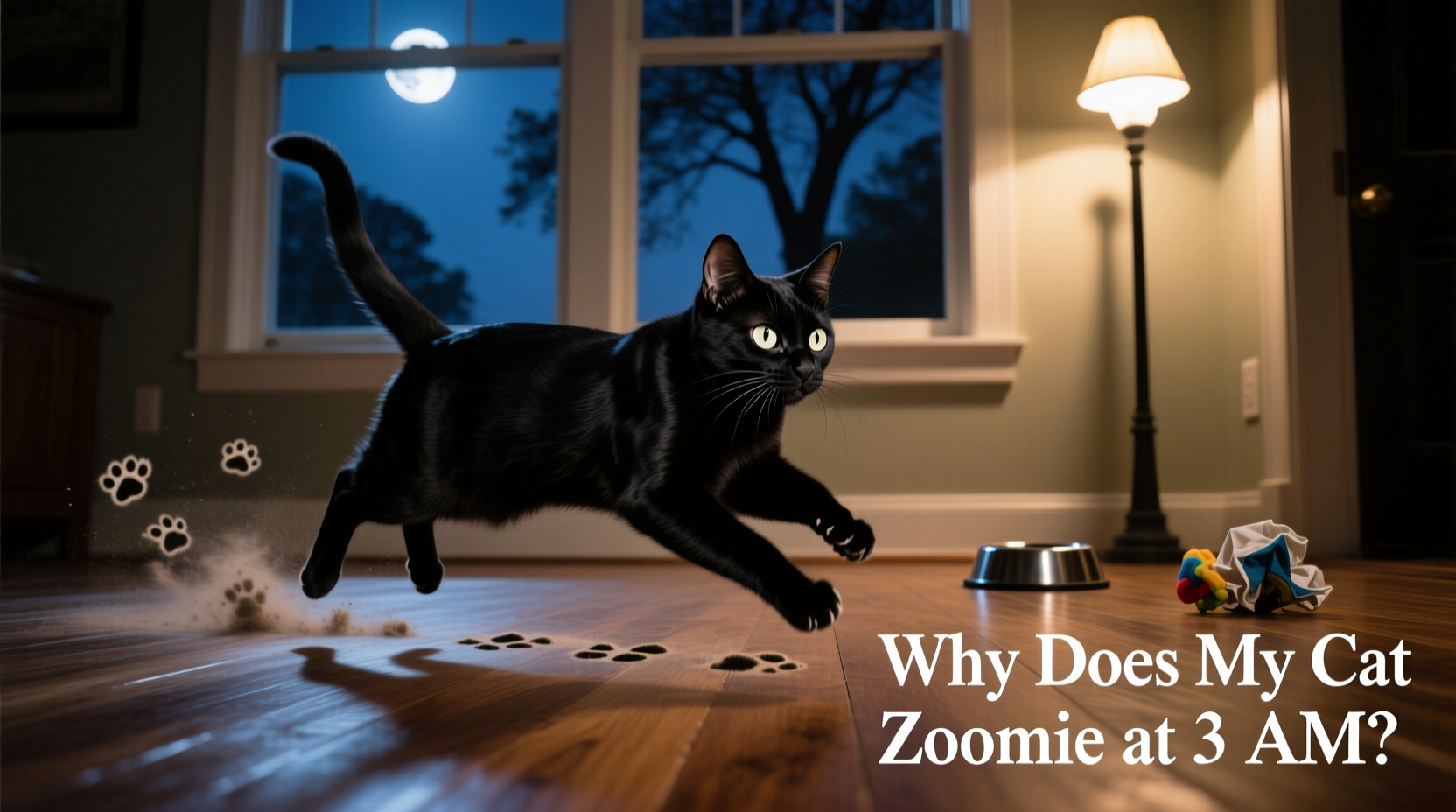
If you've ever been jolted awake at 3 a.m. by the sound of tiny paws thundering across the floor, only to see your cat skid around the corner like a furry racecar, you're not alone. These sudden, frenetic bursts of activity—commonly known as “zoomies”—are a hallmark of feline behavior, especially during the quiet hours when humans are least prepared. While amusing (and sometimes alarming), these episodes often leave pet owners wondering: Why does my cat do this? Is it normal? And more importantly, can anything be done to reduce the frequency or intensity of 3 a.m. acrobatics?
The truth is, midnight zoomies are deeply rooted in your cat’s biology, environment, and daily routine. Understanding the triggers behind these behaviors allows you to respond with empathy rather than frustration—and possibly even reshape your cat’s schedule for everyone’s benefit.
The Biology Behind Feline Nocturnality
Cats are crepuscular by nature, meaning they are most active during twilight hours—dawn and dusk. This evolutionary trait stems from their ancestry as hunters. In the wild, prey animals are more likely to emerge during low-light periods, making early morning and late evening optimal for stalking and pouncing. Though domesticated, today’s house cats retain much of this instinctual rhythm.
However, many indoor cats shift their peak activity window into the middle of the night, particularly between 2 a.m. and 4 a.m. This adjustment often occurs due to environmental cues—or lack thereof. When a cat spends the day napping while the household is busy, their internal clock naturally pushes high-energy periods into quieter, darker times.
Zoomies themselves are not random. They are short, explosive releases of pent-up energy. A typical episode lasts from 10 seconds to a couple of minutes and involves sprinting, sliding, tail-chasing, or sudden leaps. Biologically, this behavior serves several purposes:
- Energy regulation: Cats conserve energy through long rest periods, then release it in bursts.
- Muscle activation: Brief sprints help maintain neuromuscular coordination.
- Stress relief: Physical exertion can reduce anxiety or overstimulation.
- Hunting simulation: Even without prey, the chase satisfies deep-seated instincts.
“Cats aren’t being mischievous when they zoom at 3 a.m.—they’re being authentically feline. Their bodies are wired for intermittent, high-intensity activity, often timed to when the world is still.” — Dr. Lena Pruitt, DVM, Feline Behavior SpecialistTip: If your cat consistently wakes you at 3 a.m., try shifting their active period earlier by engaging in vigorous play just before bedtime.
Environmental and Lifestyle Triggers
While biology sets the stage, modern home life often amplifies nighttime hyperactivity. Indoor cats, in particular, face a paradox: they live in safe, enriched environments but may lack sufficient mental and physical stimulation during waking hours.
When a cat doesn’t receive enough engagement throughout the day, energy accumulates. Without natural outlets—like hunting or exploring large territories—that energy must go somewhere. The result? A midnight explosion of zigzagging, wall-scaling, and toy-tossing.
Common environmental contributors include:
- Limited daytime activity: Owners who work full-time may unintentionally deprive cats of interaction when they need it most.
- Predictable feeding schedules: Feeding only in the morning or evening reinforces nighttime alertness, especially if food motivates the cat to wake owners.
- Boredom: Lack of rotating toys, climbing structures, or sensory input leads to under-stimulation and erratic energy release.
- Loneliness: Some cats become hyperactive at night simply because they want attention and have learned that running around gets a reaction—even if it's negative.
A Real-Life Scenario: The Apartment Cat
Consider Miso, a 3-year-old tabby living in a downtown apartment. Her owners are out from 8 a.m. to 7 p.m., leaving her alone all day with minimal interaction. She naps on the windowsill, watches birds, and occasionally bats at a feather wand left on the floor. At night, she eats dinner at 8 p.m., grooms, and settles down—only to erupt into a 15-minute sprint session at 3:15 a.m., complete with couch-jumping and hallway laps.
Her behavior isn't defiance—it's adaptation. Miso has compressed her entire day’s worth of activity into a narrow window when stimuli are lowest and human presence is highest (even if asleep). By adjusting her afternoon enrichment and shifting playtime later, her owners successfully reduced her 3 a.m. episodes by over 70% within three weeks.
Managing Midnight Zoomies: A Step-by-Step Guide
You don’t need to eliminate zoomies entirely—they’re a healthy expression of feline vitality—but you can redirect them to less disruptive times. Follow this timeline to gradually shift your cat’s energy cycle:
- Evening Play Session (7–8 p.m.): Use interactive toys like wand teasers, motorized mice, or treat puzzles. Aim for 10–15 minutes of continuous, high-engagement play that mimics hunting sequences: stalk, chase, pounce, kill, groom.
- Post-Play Feeding (Right after play): Offer a meal immediately following the session. This replicates the natural post-hunt eating pattern and signals it’s time to wind down.
- Pre-Bedtime Calming Routine (9–10 p.m.): Dim lights, reduce noise, and offer quiet companionship. Gentle brushing or soft talking can reinforce relaxation.
- Daytime Enrichment (Throughout the day): Use automated toys, window perches, puzzle feeders, or background TV (nature documentaries) to keep your cat mentally engaged while you're away.
- Consistent Schedule (Daily): Stick to the same routine every day. Cats thrive on predictability, and a stable rhythm helps regulate their internal clock.
“Think of your cat’s energy like a battery. If it charges all day with no discharge, it will eventually short-circuit. Scheduled play is the controlled release valve.” — Rachel Kim, Certified Feline Training Consultant
Do’s and Don’ts of Handling Nighttime Hyperactivity
| Do | Don’t |
|---|---|
| Engage in structured play before bed | Chase or shout at your cat during a zoomie—it reinforces attention-seeking |
| Use puzzle feeders to extend mealtime | Give treats or attention immediately after a disruptive episode |
| Provide vertical space (cat trees, shelves) | Confine your cat to a room unless they’re truly destructive |
| Rotate toys weekly to maintain novelty | Assume zoomies mean your cat is unhappy or unwell |
| Monitor for signs of distress or injury | Try to suppress natural behavior with punishment |
When to Be Concerned: Medical and Behavioral Red Flags
While occasional zoomies are normal, sudden changes in frequency, duration, or demeanor warrant closer inspection. Excessive nighttime activity could indicate underlying issues such as:
- Hyperthyroidism: Common in older cats, this condition increases metabolism, leading to restlessness, weight loss, and increased vocalization at night.
- Cognitive Dysfunction Syndrome (CDS): Similar to dementia in humans, CDS can cause disorientation, confusion, and irregular sleep-wake cycles in senior cats.
- Pain or discomfort: Some cats mask pain by becoming agitated or hyperactive. Arthritis, dental disease, or gastrointestinal issues might manifest as restlessness.
- Anxiety or stress: Environmental changes (new pets, moves, loud noises) can trigger compulsive behaviors, including repetitive running.
If your cat exhibits any of the following, consult your veterinarian:
- Increased meowing or yowling at night
- Inability to settle after activity
- Aggression during or after zoomies
- Sudden onset in an older cat (over 8 years)
- Signs of physical distress (limping, vomiting, litter box avoidance)
FAQ: Common Questions About Cat Zoomies
Are 3 a.m. zoomies normal for cats?
Yes, they are common, especially in young, energetic, or under-stimulated cats. As long as the behavior is brief, non-destructive, and doesn’t involve signs of distress, it’s typically a normal expression of feline energy regulation.
Can I stop my cat from having zoomies?
You can’t—and shouldn’t—eliminate zoomies completely, as they’re a healthy outlet. However, you can reduce their frequency and timing by increasing daytime engagement and scheduling evening play sessions to tire your cat out before bed.
Should I be worried if my older cat starts zooming at night?
Yes, sudden behavioral changes in senior cats can signal health problems. Increased nighttime activity, especially with vocalization or disorientation, may indicate cognitive decline or metabolic disorders like hyperthyroidism. A veterinary checkup is recommended.
Conclusion: Living Harmoniously With Your Nocturnal Roommate
Your cat’s 3 a.m. sprint session isn’t a personal attack on your sleep schedule—it’s a reflection of millions of years of evolution packed into a 10-pound body with retractable claws and boundless enthusiasm. Rather than resisting this innate rhythm, the goal is to guide it. With thoughtful scheduling, environmental enrichment, and a touch of patience, you can align your cat’s natural impulses with a more human-friendly timetable.
Remember, a cat that zooms is usually a cat that’s physically capable and mentally alert. Celebrate the quirks while gently shaping the routine. Over time, those chaotic dashes may shift from 3 a.m. to 8 p.m., giving both you and your feline companion the rest you deserve.
💬 Have a funny or frustrating zoomie story? Share your experience in the comments—your insight might help another sleep-deprived cat owner feel a little less alone.








