Cats are enigmatic creatures. Their sudden bursts of energy, intense focus on invisible prey, and long, unblinking gazes can leave owners puzzled—especially when that gaze is fixed on an empty wall. If you’ve ever caught your feline staring into the void, motionless and silent, you’re not alone. Many cat owners wonder: Is this behavior normal, or could it signal something more serious?
The truth is, occasional wall-staring is typically harmless and rooted in natural feline instincts. However, persistent or extreme fixation may indicate underlying medical or behavioral issues. Understanding the reasons behind this behavior—and knowing when to act—is essential for ensuring your cat’s well-being.
Understanding Feline Behavior: The Instinct Behind the Stare
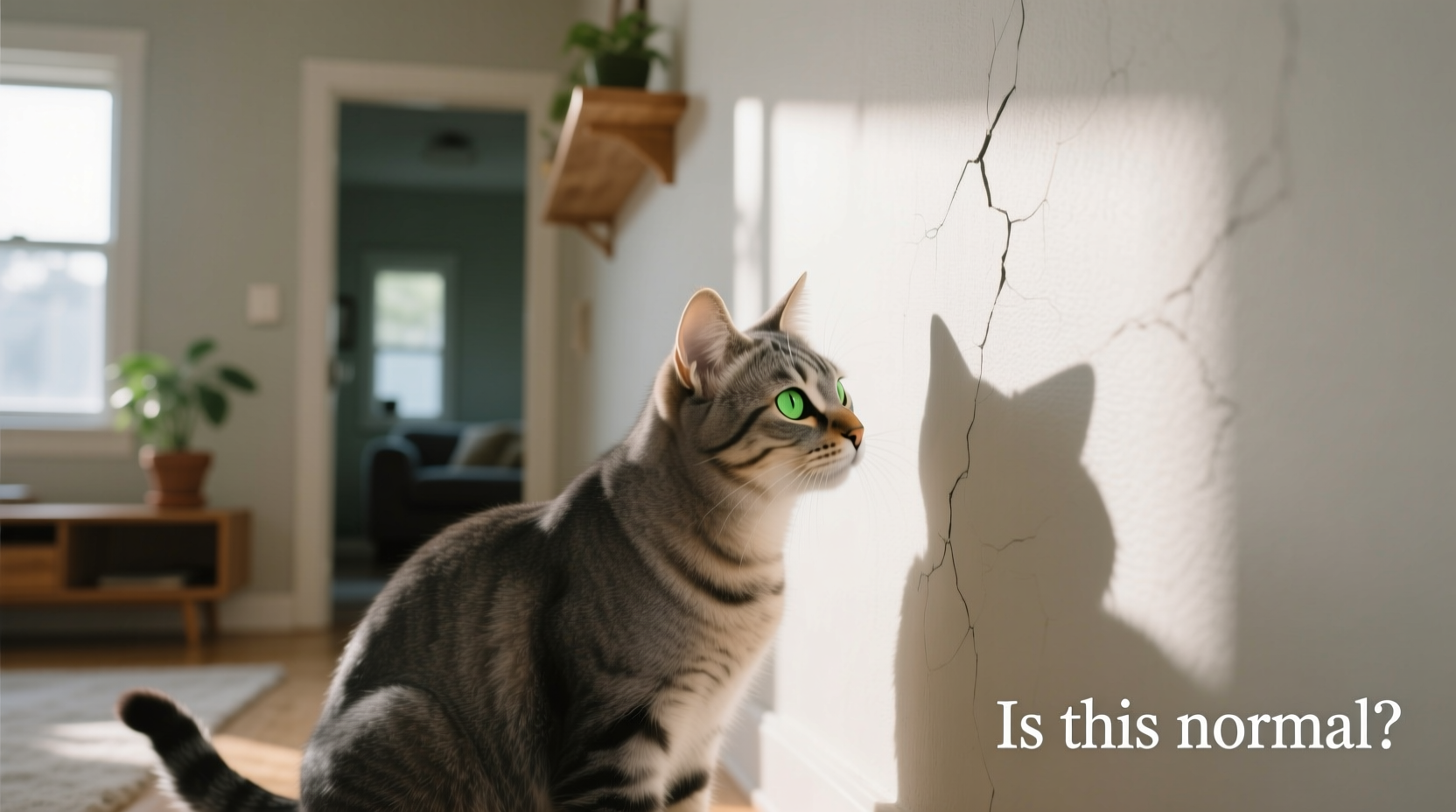
Cats are predators by nature. Even domesticated cats retain many of the hunting behaviors seen in their wild ancestors. Their eyes are adapted for detecting movement, and their brains are wired to respond to subtle changes in light, shadow, or air currents. A flicker on the wall from sunlight reflecting off a mirror, a draft moving a curtain, or even dust particles floating in a beam of light can trigger a cat’s attention.
This instinctual vigilance means cats often focus on things humans don’t notice. What appears to be “nothing” to us might look like a dancing insect or shifting pattern to a cat with superior motion detection. In such cases, wall-staring is simply your cat engaging with its environment using senses far more acute than our own.
Tip: Observe the time of day and lighting conditions when your cat stares. Natural light shifts or appliance hums (like a fridge cycling) may be triggering their attention.Common Non-Concerning Reasons Cats Stare at Walls
Before jumping to conclusions, consider these everyday explanations for wall-staring that do not require veterinary intervention:
- Motion or shadows: Sunlight moving across a textured wall can create patterns that mimic prey-like movement.
- Auditory stimuli: Cats hear frequencies beyond human range. Mice in walls, pipes knocking, or electrical buzzing may capture their focus.
- Playful anticipation: If toys bounce near walls, your cat may associate the area with fun and continue watching for action.
- Boredom: Indoor cats with limited stimulation may fixate on minor environmental changes out of curiosity or lack of enrichment.
- Dreaming or zoning out: Like humans, cats can enter a semi-trance state while resting, appearing to stare without purpose.
In most homes, one or more of these factors explains isolated episodes of wall-gazing. The key is consistency: if the behavior is brief, infrequent, and doesn’t disrupt your cat’s routine, it’s likely nothing to worry about.
When Wall-Staring May Signal a Health Problem
While occasional staring is normal, certain patterns should prompt concern. Prolonged, repetitive, or disoriented fixation on walls—especially when accompanied by other symptoms—can point to neurological, sensory, or psychological disorders.
Potential Medical Causes
Several health conditions can manifest through abnormal staring behavior:
- Epilepsy or Seizure Activity: Cats can experience partial (focal) seizures that don’t involve convulsions. During these episodes, a cat may freeze, stare blankly, drool, or twitch facial muscles. These episodes often last seconds to minutes and may be followed by confusion.
- Vision Problems: Cataracts, retinal degeneration, or high blood pressure affecting the eyes can cause visual disturbances. A cat may react to phantom shapes or flashes of light (a condition known as hallucinations due to vision loss).
- Hypertension (High Blood Pressure): Common in older cats, especially those with kidney disease or hyperthyroidism, hypertension can lead to retinal detachment and sudden blindness, sometimes causing disoriented staring.
- Cognitive Dysfunction Syndrome (CDS): Similar to dementia in humans, CDS affects senior cats. Symptoms include confusion, nighttime vocalization, litter box accidents, and prolonged staring into space.
- Brain Tumors or Lesions: Though rare, structural abnormalities in the brain can alter behavior, including obsessive focusing on objects or areas with no apparent stimulus.
“Cats are masters at hiding illness. Subtle behavioral changes like prolonged staring can be early red flags. Don’t dismiss them as quirks.” — Dr. Lena Torres, DVM, Feline Neurology Specialist
Behavioral vs. Medical: How to Tell the Difference
Distinguishing between harmless quirks and concerning symptoms requires careful observation. Use the following checklist to assess whether your cat’s behavior falls within normal limits or warrants a vet visit.
Wall-Staring Evaluation Checklist
Checklist:- ✅ Does the staring last only a few seconds or minutes?
- ✅ Does your cat respond normally afterward (eats, grooms, interacts)?
- ✅ Is it triggered by light, sound, or movement?
- ✅ Has the behavior been consistent over time without worsening?
- ❌ Does your cat seem unaware of surroundings during the episode?
- ❌ Are there additional symptoms (tremors, vocalizing, falling, pacing)?
- ❌ Has the frequency increased suddenly?
- ❌ Is your cat older than 10 years?
If most answers align with the first four points, the behavior is likely benign. However, if multiple “❌” items apply—especially in older cats—a veterinary evaluation is strongly recommended.
Real-Life Example: Bella the Senior Cat
Bella, a 13-year-old domestic shorthair, began spending increasing time staring at the corner of her bedroom wall. Her owner initially dismissed it as odd but harmless. Over weeks, Bella started bumping into furniture, meowing at night, and ignoring family members. Concerned, the owner recorded a video of one staring episode and brought it to the vet.
After bloodwork and an eye exam, Bella was diagnosed with hypertension and early-stage kidney disease. Her staring was linked to visual disturbances caused by retinal changes. With medication and dietary adjustments, her symptoms improved significantly within a month. This case highlights how seemingly minor behaviors can reveal serious underlying conditions—especially in aging cats.
What You Can Do: Monitoring and Prevention
Even if your cat seems healthy, proactive monitoring supports long-term wellness. Here’s a step-by-step guide to help you assess and manage wall-staring behavior.
Step-by-Step: Responding to Wall-Staring Episodes
- Observe quietly: When your cat stares, watch without interrupting. Note duration, body language (relaxed vs. tense), and any accompanying actions (twitching, vocalizing).
- Record the incident: Use your phone to film a short clip. This helps veterinarians evaluate the behavior objectively.
- Check the environment: Look for sources of light, sound, or movement that might explain the focus.
- Track frequency: Keep a log for 7–10 days. Include time, duration, triggers, and post-episode behavior.
- Schedule a vet visit if: Episodes last longer than 2–3 minutes, occur multiple times daily, or are paired with disorientation, appetite loss, or aggression.
Enrichment also plays a preventive role. Bored or under-stimulated cats are more prone to fixating on minor stimuli. Providing puzzle feeders, rotating toys, window perches, and interactive play sessions can redirect mental energy toward healthier outlets.
Do’s and Don’ts: Managing Wall-Staring Behavior
| Do’s | Don’ts |
|---|---|
| Provide daily interactive play with wand toys | Ignore sudden or worsening behavioral changes |
| Use pheromone diffusers (like Feliway) to reduce anxiety | Yell at or punish your cat during a staring episode |
| Keep regular veterinary checkups, especially for cats over 7 | Assume all strange behavior is “just how they are” |
| Install bird feeders outside windows for visual stimulation | Delay testing for hypertension in senior cats with odd behaviors |
| Document episodes with notes or video | Self-diagnose or search for alarming explanations online |
Frequently Asked Questions
Is it normal for cats to stare at walls for several minutes?
Occasionally, yes—especially if triggered by light or sound. However, staring for more than 2–3 minutes without response to stimuli may indicate a medical issue and should be evaluated by a veterinarian.
Can stress cause my cat to stare at walls?
Indirectly, yes. Highly anxious cats may develop compulsive behaviors, including repetitive staring or zoning out. Environmental stressors like new pets, loud noises, or changes in routine can contribute. Addressing the source of stress often reduces such behaviors.
Should I be worried if my young cat stares at walls?
Less commonly, but not impossible. While cognitive or hypertensive causes are rare in young cats, seizure disorders or congenital neurological issues can appear early. If episodes are frequent or intense, consult your vet regardless of age.
Conclusion: Trust Your Instincts, But Seek Clarity
Your cat’s wall-staring habit might be nothing more than a quirky expression of their sharp senses and curious mind. But because cats rarely show obvious signs of pain or illness, subtle shifts in behavior deserve thoughtful attention. What seems like zoning out could be a silent cry for help.
The best approach combines informed observation with timely veterinary care. By understanding the spectrum of possible causes—from environmental stimuli to neurological concerns—you empower yourself to make better decisions for your pet’s health.
💬 Have you noticed your cat staring at walls? Share your experience in the comments—your story might help another pet owner recognize a warning sign early.








