Cats are naturally curious creatures, and their behaviors often leave owners puzzled. One of the more mysterious habits some cats display is staring intently at blank walls for extended periods—sometimes several minutes at a stretch. While this can seem eerie or even concerning, occasional wall-staring isn't always a cause for alarm. However, understanding the underlying reasons, distinguishing between normal feline quirks and potential health issues, and knowing when to intervene can make all the difference in ensuring your cat’s well-being.
The Science Behind Feline Behavior
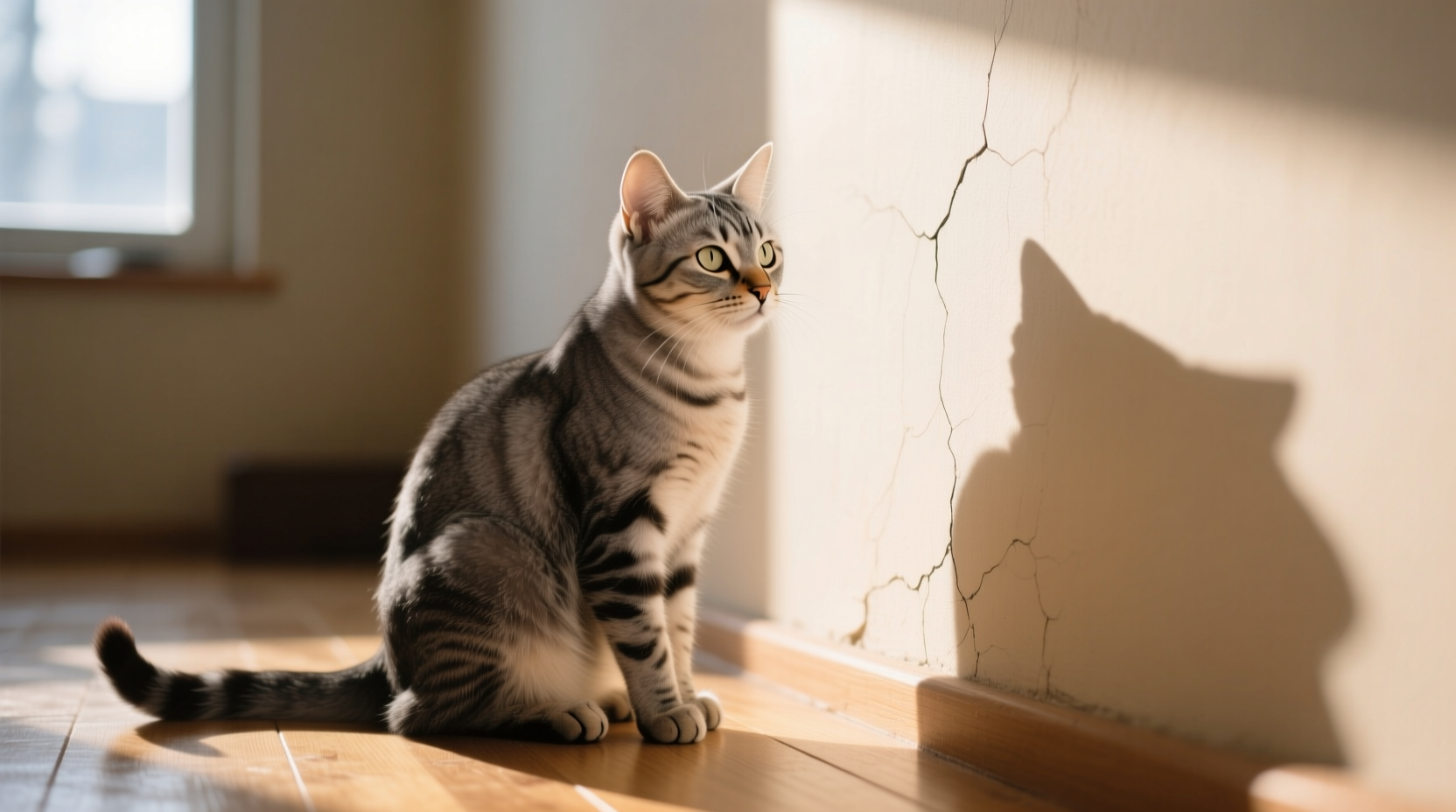
Cats possess highly developed senses, particularly vision and hearing, which far exceed human capabilities in certain ranges. Their eyes are adapted for low-light environments, allowing them to detect subtle movements invisible to us. Similarly, they can hear ultrasonic frequencies emitted by small rodents or insects. This sensory acuity means that what appears to be an empty wall to you may actually contain visual flickers, shadows, dust motes, or sounds imperceptible to human perception.
In many cases, your cat isn’t truly “staring at nothing.” They could be reacting to:
- Tiny insects crawling behind baseboards or within walls
- Shadows cast by sunlight shifting across textured surfaces
- Faint noises such as plumbing echoes, electrical buzzing, or rodent activity inside walls
- Dust particles moving in air currents near the ceiling or corners
These stimuli can trigger a cat’s predatory instincts, leading to focused observation. Since cats often engage in \"still hunting\"—remaining motionless while tracking prey—their prolonged fixation on a spot may simply reflect natural vigilance.
Tip: Observe your cat's body language during these episodes. If ears are forward, tail is still, and pupils are dilated, they’re likely focused on something real. If the posture seems rigid or disoriented, further evaluation may be needed.When Wall-Staring Is Normal
Not every instance of wall-gazing signals a problem. In fact, there are several benign explanations rooted in typical cat psychology and physiology:
Environmental Stimuli You Can’t Detect
As mentioned, cats perceive the world differently. A slight vibration from a refrigerator motor, high-frequency electronic noise, or even thermal drafts along a wall can capture a cat’s attention. Some homes have textured paint or wallpaper that creates optical illusions under certain lighting conditions—patterns that shift subtly with changes in ambient light.
Boredom or Understimulation
Cats left alone for long periods without adequate mental stimulation may develop repetitive behaviors. Staring at walls can become a form of self-entertainment, especially if no toys, perches, or windows offer alternative engagement. Indoor-only cats are particularly prone to developing idiosyncratic habits due to limited environmental complexity.
Dreaming or Light Sleep States
Sometimes, a cat may appear awake but is actually in a light dozing state. During these moments, they might exhibit slow blinking, twitching whiskers, or sudden eye movements—all signs of drowsiness rather than active focus. What looks like wall-staring could be a cat drifting in and out of sleep while maintaining partial alertness.
“Cats live in a sensory world we can barely imagine. Just because we don’t see anything doesn’t mean there’s nothing there.” — Dr. Sarah Thompson, Veterinary Ethologist
When Wall-Staring May Signal a Problem
While occasional or context-specific wall-gazing is usually harmless, persistent or abnormal staring—especially when accompanied by other symptoms—can indicate medical or neurological concerns. It’s important to recognize red flags early.
Potential Medical Causes
Several health conditions can manifest through unusual behaviors like prolonged wall fixation:
- Epilepsy or Seizure Disorders: Cats experiencing focal (partial) seizures may sit motionless, stare into space, drool, or twitch facial muscles without collapsing. These episodes can last seconds to minutes and may go unnoticed unless closely observed.
- Vision Problems: Cataracts, retinal degeneration, or hypertension-induced blindness can cause confusion. A visually impaired cat might fixate on walls due to misperception or spatial disorientation.
- Cognitive Dysfunction Syndrome (CDS): Older cats (typically over 10 years) can develop feline dementia, characterized by aimless wandering, altered sleep cycles, vocalization at night, and vacant staring.
- Hearing Loss: Deaf cats may rely more heavily on vision and can appear hyper-focused on static objects as they compensate for reduced auditory input.
Behavioral or Psychological Factors
Stress, anxiety, or trauma can also lead to compulsive behaviors. Cats exposed to loud noises, household changes, or inter-pet conflict may retreat into repetitive actions like over-grooming, pacing, or obsessive staring. This is more common in sensitive or formerly rehomed cats.
| Behavior | Normal? | When to Worry |
|---|---|---|
| Stares briefly after hearing a noise | ✅ Yes | Only if followed by collapse or confusion |
| Watches shadows or dust in sunlight | ✅ Yes | If obsession persists beyond stimulus |
| Fixed gaze with unblinking eyes for >5 mins | ⚠️ Possibly not | Especially if unresponsive or stiff |
| Staring accompanied by twitching or falling | ❌ No | Seek immediate veterinary care |
| Senior cat stares into corners daily | 🟡 Monitor | If paired with nighttime yowling or soiling |
Real-Life Example: Bella the Siamese
Bella, a 7-year-old Siamese cat, began spending increasing amounts of time sitting in front of the living room wall, staring silently. Her owner, Maria, initially dismissed it as quirky behavior until she noticed Bella would sometimes snap her head sideways mid-stare, as if following an invisible object. Over two weeks, the episodes grew longer and were occasionally followed by brief periods of disorientation.
Maria recorded one episode on her phone and brought it to her veterinarian. After a neurological exam and blood work, Bella was diagnosed with mild epilepsy. An MRI revealed a small lesion consistent with idiopathic seizure activity. With anti-seizure medication, the staring episodes decreased significantly within a month. This case highlights how subtle behavioral changes can signal underlying medical conditions—and why documentation and timely vet consultation matter.
Step-by-Step: How to Assess Your Cat’s Wall-Staring
If your cat frequently stares at walls, follow this practical timeline to determine whether action is needed:
- Observe Carefully (Day 1–3): Note duration, frequency, and triggers. Use a notebook or app to log each incident, including time of day, location, and any associated sounds or movements.
- Check the Environment: Look for possible stimuli—cracks in walls, insect trails, flickering lights, or appliances emitting hums. Try turning off electronics temporarily to test reactions.
- Assess Body Language: Is your cat relaxed or tense? Does she respond when called? Are there signs of drooling, trembling, or loss of balance?
- Rule Out Vision/Hearing Issues: Test response to visual cues (waving a toy) and auditory signals (crinkling paper behind her). Schedule a senior wellness check if your cat is over 8 years old.
- Consult Your Veterinarian: If episodes last longer than 2–3 minutes, occur multiple times weekly, or involve physical symptoms, schedule an appointment. Bring video evidence if possible.
Prevention and Enrichment Strategies
Whether the cause is boredom, stress, or sensory sensitivity, enriching your cat’s environment can reduce fixation behaviors and promote healthier mental function.
Environmental Enrichment Checklist
- Provide vertical spaces: Cat trees, shelves, or window perches
- Introduce rotating toys: Puzzle feeders, feather wands, automated mice
- Add background stimulation: Bird feeders outside windows, calming music designed for cats
- Establish play routines: Two 10-minute interactive sessions per day using wand toys
- Use pheromone diffusers: Feliway can ease anxiety in multi-cat households or stressful transitions
For older cats showing cognitive decline, consider dietary supplements containing antioxidants, omega-3 fatty acids, or medium-chain triglycerides (MCTs), which support brain health. Always consult your vet before introducing new supplements.
Frequently Asked Questions
Is it normal for cats to stare at walls?
Occasional staring, especially in response to unseen stimuli like sounds or movement, is normal. However, frequent, prolonged, or unresponsive staring—particularly in older cats—should be evaluated by a veterinarian to rule out medical causes like seizures or cognitive dysfunction.
Can cats see ghosts or spirits?
There is no scientific evidence that cats perceive supernatural entities. What may seem like ghost-spotting is more likely explained by their superior hearing and vision detecting things humans cannot—such as rodents behind walls, electromagnetic fields, or ultrasonic emissions from devices.
What should I do if my cat stares and then falls over?
This could indicate a seizure. Stay calm, ensure your cat is safe from injury, and do not restrain them. Record the episode if possible. Contact your veterinarian immediately—even if recovery seems quick—as neurological evaluation is essential.
Conclusion: Know Your Cat, Trust Your Instincts
Cat behavior exists on a spectrum between instinctual quirk and medical concern. While staring at walls isn’t automatically dangerous, dismissing it outright can delay diagnosis of serious conditions like epilepsy or cognitive decline. The key lies in pattern recognition: understanding what’s typical for your individual cat and noticing meaningful deviations.
By combining careful observation, environmental enrichment, and proactive veterinary care, you can ensure your cat remains mentally sharp and physically healthy throughout life. Don’t hesitate to seek professional advice if something feels off—even if the symptom seems minor. After all, the most devoted companions deserve nothing less than attentive, informed care.
💬 Has your cat ever stared at a wall in a way that concerned you? Share your experience in the comments below—your story might help another pet owner recognize a warning sign early.








