Cats are enigmatic creatures. One moment they're curled up in your lap, purring softly; the next, they're frozen in place, eyes locked on a blank stretch of wall with an intensity that would make a detective proud. If you've ever caught your cat staring into nothingness for minutes—or even hours—at a time, you're not alone. The behavior can be unsettling, especially when there’s clearly nothing there. Is your cat seeing something you can’t? Could it be ghosts, spirits, or some unseen energy? Or is this simply part of being a cat?
The truth is more grounded than supernatural theories suggest. While folklore often paints cats as spiritual guardians or psychic beings, veterinary science and animal behavior experts offer logical, evidence-based explanations. Most wall-staring episodes are rooted in instinct, sensory perception, or occasionally, underlying medical concerns. Understanding why your cat does this helps separate myth from reality—and ensures your pet stays healthy and happy.
The Science Behind Feline Focus
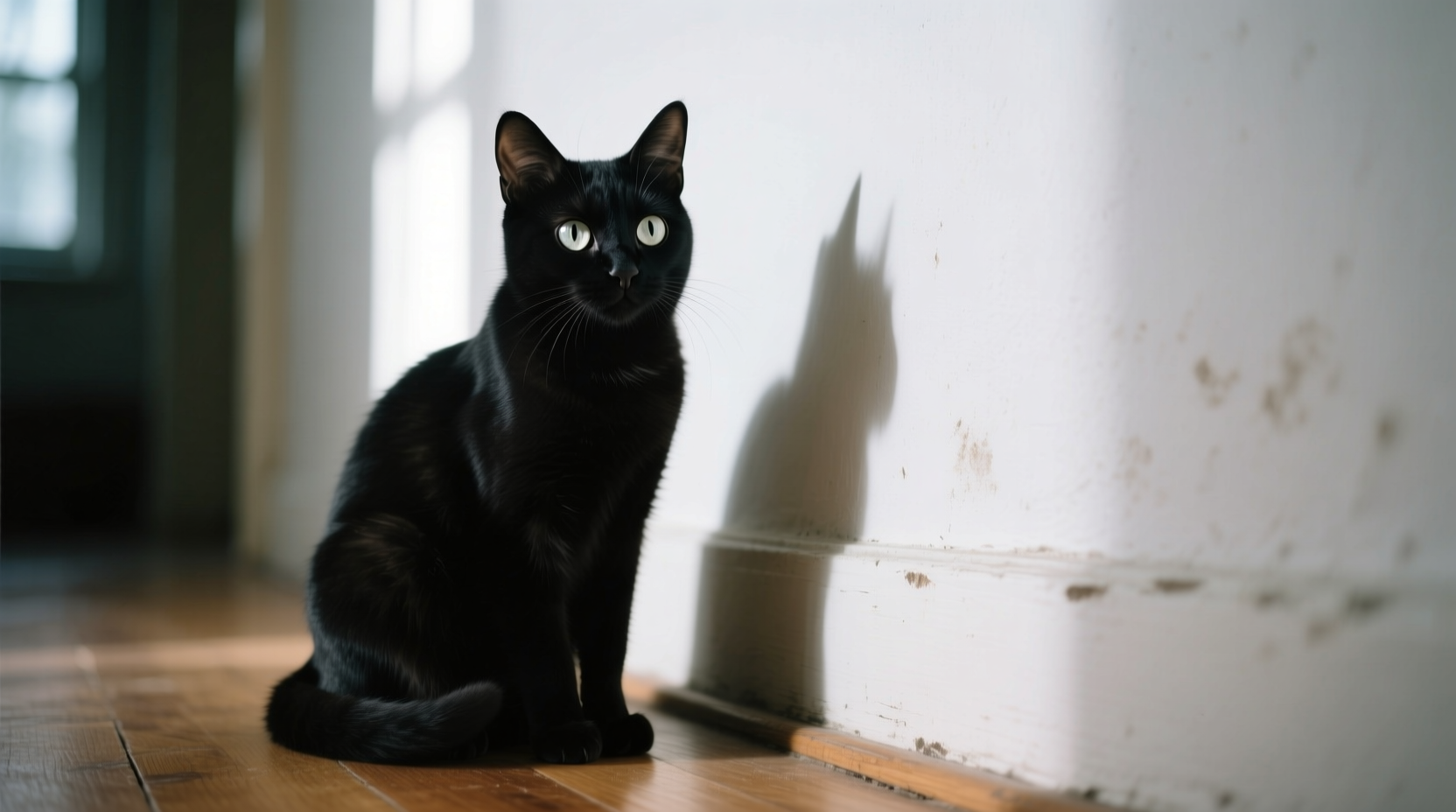
Cats have evolved as predators, and their senses are finely tuned to detect the slightest movement, sound, or change in light. What looks like a blank wall to you might be teeming with visual stimuli to your cat. Tiny cracks, shadows shifting from sunlight, dust motes floating in air currents, or even the flicker of electrical outlets can capture their attention. Their peripheral vision is wider than ours, and they’re more sensitive to motion, especially in low light.
A cat’s retina contains a high number of rod cells, which enhance night vision and motion detection. This means they can perceive movements too subtle for human eyes. A slight vibration from a pipe inside the wall, the flutter of an insect trapped behind drywall, or the hum of an appliance may trigger prolonged observation. In many cases, your cat isn't staring at nothing—they’re tracking something imperceptible to you.
“Cats live in a sensory world far richer than our own. What seems like vacant staring is often acute environmental monitoring.” — Dr. Lena Reyes, Feline Behavior Specialist, Cornell University College of Veterinary Medicine
Normal vs. Abnormal Staring: How to Tell the Difference
Not all wall-gazing is cause for concern. Occasional focus on a spot for 30 seconds to a few minutes is typical predatory behavior. However, when the staring becomes repetitive, unresponsive, or lasts for extended periods—especially if accompanied by other odd behaviors—it may signal a problem.
To help assess what’s happening, consider the context:
- Duration: Brief fixation (under 5 minutes) is usually normal. Hours-long episodes warrant closer observation.
- Response to stimuli: Can you snap your cat out of it with a sound or treat? If not, it may indicate altered awareness.
- Body language: Relaxed ears and tail suggest curiosity. Twitching, dilated pupils, or stiff posture may point to neurological activity.
- Frequency: Daily short stares are fine. Multiple long sessions per day are a red flag.
Potential Medical Causes of Prolonged Staring
While most instances are harmless, persistent wall-staring can sometimes indicate underlying health issues. The most common medical explanations include:
Feline Cognitive Dysfunction (FCD)
Similar to dementia in humans, FCD affects older cats (typically over 10 years). Symptoms include disorientation, changes in sleep patterns, litter box accidents, and vacant staring. Cats may appear “lost” in familiar environments.
Epilepsy or Seizure Activity
Cats can experience partial (focal) seizures that don’t involve convulsions. These may manifest as fixed gaze, lip-licking, twitching, or sudden stillness. Episodes can last from seconds to several minutes and may go unnoticed without careful observation.
Vision Problems or Hallucinations
Retinal diseases, glaucoma, or brain tumors can alter perception. Cats with vision loss may stare at walls due to confusion or misinterpretation of light patterns. In rare cases, hallucinations caused by toxins or metabolic imbalances lead to apparent fixation on non-existent stimuli.
Pain or Discomfort
A cat in chronic pain—such as from arthritis or dental disease—may withdraw and exhibit unusual behaviors, including zoning out. Staring could be a coping mechanism or sign of mental fatigue.
| Behavior | Normal? | Potential Concern |
|---|---|---|
| Stares for 1–2 minutes, then resumes activity | ✅ Yes | None |
| Unresponsive during episode, doesn’t react to voice | No | Possible seizure or neurological issue |
| Follows with repetitive actions (circling, meowing) | No | Cognitive dysfunction or anxiety |
| Occurs mainly at night | Sometimes | Could indicate FCD or sensory sensitivity |
| Recent onset in senior cat | No | Warrants vet evaluation |
When Ghosts Aren’t the Answer: Debunking Myths
The idea that cats see ghosts is deeply embedded in cultural lore. Ancient Egyptians revered them as spiritual protectors. In Japan, the maneki-neko (beckoning cat) is believed to attract good fortune. Even today, many pet owners interpret strange feline behavior as evidence of supernatural awareness.
However, no scientific study has ever confirmed that animals perceive spirits or alternate dimensions. What feels eerie to humans is often explainable through biology. Cats’ superior hearing allows them to detect ultrasonic sounds—like rodents in walls or electrical buzzing—inaudible to people. Their vertical slit pupils adjust rapidly to light changes, making them sensitive to flickering bulbs or reflections.
In one documented case, a cat named Milo was observed staring at the same corner every evening. His owner feared paranormal activity. A home inspection revealed a colony of mice nesting behind the baseboards. Once removed, the behavior stopped entirely.
“We love stories about cats and ghosts because they reflect our fascination with the unknown. But before invoking the supernatural, rule out the biological.” — Dr. Alan Prescott, DVM, Animal Neurology Consultant
Step-by-Step Guide: What to Do If Your Cat Stares at Walls
If your cat exhibits prolonged or frequent wall-staring, follow this practical timeline to determine the cause and take appropriate action:
- Observe quietly for 72 hours. Note duration, frequency, time of day, and accompanying behaviors (twitching, drooling, vocalizing).
- Check the environment. Look for drafts, insects, shadows, or appliances that cycle on/off. Try covering outlets or sealing gaps.
- Engage your cat normally. Call their name, shake a treat bag, or gently touch them. If they respond quickly, it’s likely curiosity.
- Review recent changes. New medications, diet shifts, or household stressors (moving, new pets) can affect behavior.
- Schedule a veterinary visit. Request a full physical, neurological exam, and blood panel. Mention all observed behaviors—even if they seem minor.
- Follow up as needed. If seizures are suspected, your vet may recommend video monitoring or referral to a veterinary neurologist.
Mini Case Study: Bella the Siamese
Bella, a 12-year-old Siamese cat, began spending hours each night staring at the living room wall. Her owner, Maria, noticed she’d freeze mid-step, pupils dilated, tail twitching. At first, Maria assumed Bella was reacting to outdoor noises. But when the behavior intensified and Bella started forgetting her litter box location, she consulted a vet.
After a thorough exam, Bella was diagnosed with early-stage feline cognitive dysfunction. Blood work ruled out kidney or thyroid issues. The vet recommended environmental enrichment—rotating toys, nightly puzzle feeders—and a prescription diet rich in antioxidants. Within six weeks, Bella’s staring decreased by 70%, and her nighttime restlessness improved significantly.
Maria now uses a white noise machine to reduce auditory distractions and keeps nightlights on to minimize shadow play. “I thought she was haunted,” Maria said. “Turns out, she just needed support as she aged.”
Prevention and Environmental Enrichment Checklist
Even if your cat’s staring is benign, enriching their environment reduces fixation and promotes mental health. Use this checklist to create a stimulating home:
- ✅ Provide daily interactive play sessions (10–15 minutes, twice a day)
- ✅ Rotate toys weekly to maintain novelty
- ✅ Install window perches for bird watching
- ✅ Use food puzzles or treat-dispensing balls
- ✅ Maintain consistent routines for feeding and interaction
- ✅ Minimize sudden changes in layout or furniture
- ✅ Introduce calming scents like Feliway diffusers if anxiety is suspected
FAQ: Common Questions About Cat Wall-Staring
Can cats really see ghosts or spirits?
There is no scientific evidence that cats—or any animals—perceive supernatural entities. Their heightened senses explain most so-called “ghost sightings.” While the idea is culturally compelling, it remains a myth unsupported by research.
How do I know if my cat is having a seizure?
Focal seizures may include fixed gaze, facial twitching, excessive salivation, or paw trembling without full-body convulsions. If your cat appears “zoned out” and doesn’t respond to stimuli, record a video and consult your vet immediately.
Is wall-staring more common in certain breeds?
No breed is inherently prone to staring. However, highly intelligent or vocal breeds like Siamese, Orientals, or Abyssinians may exhibit more intense focus due to curiosity or sensitivity. This doesn’t imply pathology unless paired with other symptoms.
Conclusion: Trust Observation Over Superstition
Your cat staring at the wall is rarely about ghosts. More often, it’s a blend of instinct, sensory input, and environmental cues. While occasional fixation is perfectly normal, persistent or unresponsive staring deserves attention. By observing carefully, adjusting the environment, and consulting a veterinarian when needed, you can ensure your cat’s behavior stems from wellness—not worry.
Understanding your cat doesn’t require believing in the paranormal. It requires patience, knowledge, and a willingness to look beyond the surface. The real magic isn’t in unseen spirits—it’s in the intricate way your cat experiences the world.
💬 Have a story about your cat’s mysterious behavior? Share your experience in the comments below—your insight could help another pet owner find clarity.








