
Cats are enigmatic creatures. Their behaviors often leave owners puzzled—especially when they fixate on something as uneventful as a blank wall. While occasional staring can be harmless, persistent or intense focus on empty spaces may signal underlying issues. Understanding the difference between normal feline quirks and potential health problems is essential for responsible pet ownership. This article explores the possible reasons behind your cat’s wall-staring habit, identifies warning signs, and provides clear guidance on when veterinary intervention is necessary.
Understanding Normal Feline Behavior
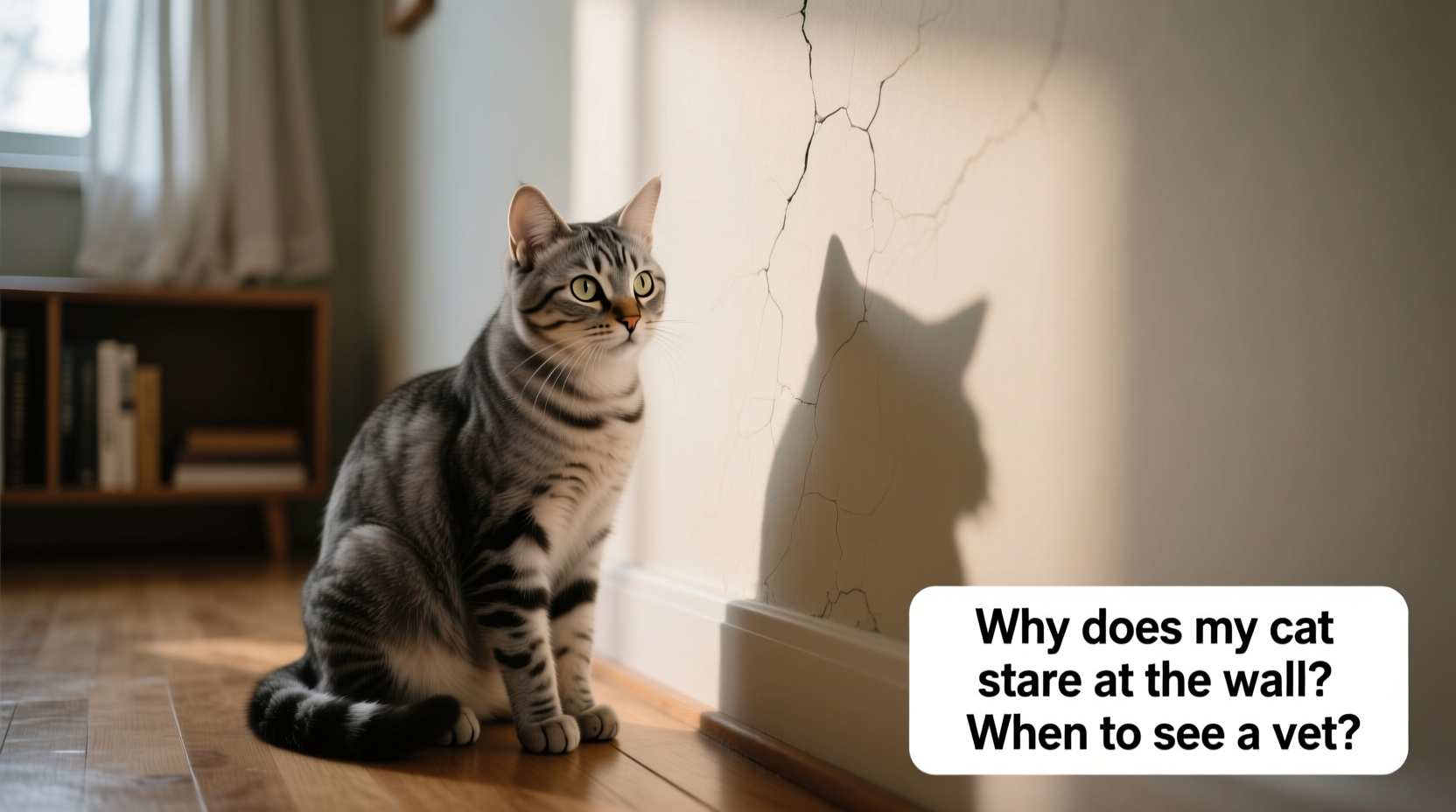
Cats rely heavily on their senses to interpret the world. Their hearing, vision, and instinctual alertness make them highly attuned to subtle environmental changes. A cat may appear to stare at a wall simply because she detects something imperceptible to humans—a flicker of light, a shadow, a draft, or even high-frequency sounds like electrical buzzing from appliances.
In many cases, this behavior is entirely normal. Cats often enter a state of hyper-awareness, especially during dawn or dusk, their naturally active periods. During these times, they may fixate on seemingly nothing as part of their predatory instincts. They could be tracking dust motes in a sunbeam, listening to insects within walls, or reacting to distant outdoor activity through vibrations or sound.
Tip: Observe your cat in context. If she blinks normally, resumes play or grooming afterward, and shows no other odd behaviors, the staring is likely benign.Potential Medical Causes of Wall Staring
While curiosity explains many instances of wall gazing, prolonged or repetitive fixation—especially when accompanied by other symptoms—can point to medical concerns. Neurological, sensory, or cognitive disorders may manifest in unusual behaviors, including apparent staring at nothing.
Epilepsy and Seizure Activity
Feline epilepsy can cause partial (focal) seizures that don’t always result in convulsions. Instead, cats may exhibit “absence seizures,” characterized by sudden stillness, dilated pupils, and fixed gaze lasting seconds to minutes. These episodes can resemble daydreaming but are involuntary neurological events.
“Cats with focal seizures may appear to stare into space, twitch their face, or show subtle paw movements—all while being unaware of their surroundings.” — Dr. Lena Torres, Veterinary Neurologist, DACVIM
Vision Problems and Hallucinations
Cats with deteriorating eyesight, such as those with retinal disease or glaucoma, may perceive visual disturbances. Similarly, conditions like hypertension can lead to sudden blindness, causing disorientation and fixation on static objects. In some cases, cats hallucinate due to metabolic imbalances or toxins, perceiving movement where there is none.
Cognitive Dysfunction Syndrome (CDS)
Older cats (typically over 10 years) can develop feline dementia, similar to Alzheimer’s in humans. Cognitive Dysfunction Syndrome leads to confusion, altered sleep patterns, vocalization, and vacant staring. These cats may stand motionless in corners, appear lost in familiar environments, or fail to respond to their names.
Pain or Discomfort
Chronic pain—such as from arthritis, dental disease, or internal illness—can cause a cat to withdraw and exhibit trance-like behavior. Staring may be a sign of discomfort rather than mental fixation, particularly if the cat avoids interaction or shows changes in posture.
Behavioral vs. Medical: How to Tell the Difference
Distinguishing between quirky behavior and pathological causes requires careful observation. The key lies in frequency, duration, and accompanying symptoms. A single episode of brief staring is rarely concerning. However, repeated or prolonged episodes warrant closer inspection.
| Aspect | Normal Behavior | Potential Medical Issue |
|---|---|---|
| Duration | Seconds to a minute | Several minutes or recurring multiple times daily |
| Response to Stimuli | Responds to voice or touch | Ignores calls, doesn't blink or react |
| Eye Movement | Natural blinking, slight shifts in gaze | Rigid, unblinking stare; pupils dilated or uneven |
| Afterward Behavior | Resumes normal activity | Appears confused, disoriented, or fatigued |
| Other Symptoms | None | Twitching, drooling, vocalizing, loss of balance |
When to Take Your Cat to the Vet: A Step-by-Step Guide
If you're unsure whether your cat’s behavior is harmless or concerning, follow this practical timeline to determine the appropriate course of action.
- Document the Behavior: Note the date, time, duration, and circumstances of each episode. Record any associated actions—twitching, drooling, falling, or vocalizing.
- Rule Out Environmental Triggers: Check for drafts, flickering lights, hidden pests, or electronic devices emitting noise. Try changing rooms or turning off appliances to see if the behavior stops.
- Monitor for Patterns: Does the staring happen at specific times? Is it more frequent at night? Does it follow eating, sleeping, or stress triggers?
- Assess Overall Health: Look for changes in appetite, litter box habits, grooming, mobility, or interaction. Even subtle shifts can indicate illness.
- Schedule a Veterinary Evaluation: If episodes last longer than two minutes, occur more than once a week, or are paired with other symptoms, book an appointment promptly.
Real-Life Example: Bella’s Sudden Staring Episodes
Bella, a 7-year-old domestic shorthair, began standing motionless in front of the living room wall every evening. Her owner, Sarah, initially dismissed it as boredom. But when Bella started drooling mid-stare and occasionally tipping sideways, Sarah grew concerned. She recorded a 90-second episode and brought it—and Bella—to the vet.
After a full exam, blood work, and blood pressure test, Bella was diagnosed with hypertension secondary to early kidney disease. Her staring was linked to visual disturbances caused by retinal changes. With medication and a renal-support diet, Bella’s episodes ceased within three weeks. This case highlights how seemingly odd behavior can be the first clue to a serious, treatable condition.
Checklist: Signs That Warrant a Vet Visit
If your cat exhibits any of the following, schedule a veterinary consultation without delay:
- Staring spells lasting more than 1–2 minutes
- Loss of awareness during the episode (doesn’t respond to name or touch)
- Facial twitching, jaw chomping, or drooling
- Loss of balance, falling, or circling after the episode
- Sudden changes in vision (bumping into furniture, hesitation on stairs)
- Increased vocalization, especially at night
- House soiling or disorientation in familiar spaces
- Behavioral changes: aggression, hiding, or withdrawal
Diagnostic Process: What to Expect at the Vet
Your veterinarian will begin with a thorough physical and neurological examination. Based on initial findings, they may recommend:
- Blood and urine tests: To check for kidney disease, thyroid imbalance, diabetes, or infections.
- Blood pressure measurement: Hypertension is common in older cats and can affect the brain and eyes.
- Ophthalmic exam: An evaluation of the retina and optic nerve to detect damage from high blood pressure or glaucoma.
- Imaging (MRI or CT scan): If seizures or brain abnormalities are suspected, advanced imaging may be needed—usually performed at a specialty clinic.
- EEG (electroencephalogram): Rarely used in general practice but helpful in confirming seizure activity.
Diagnosis often involves ruling out other conditions. There is no single test for feline seizures or cognitive decline, so veterinarians rely on history, clinical signs, and diagnostic results to form a comprehensive picture.
Frequently Asked Questions
Can cats have seizures without convulsing?
Yes. Focal or partial seizures in cats may only involve facial twitching, lip-smacking, or fixed staring without full-body convulsions. These can be easy to miss or misinterpret as odd behavior.
Is it normal for older cats to stare at walls?
Occasional zoning out may happen, but persistent staring, especially with confusion or disorientation, is not normal. It could indicate Cognitive Dysfunction Syndrome or another medical issue requiring attention.
Could indoor cats be reacting to things I can’t see?
Absolutely. Indoor cats often detect high-pitched sounds (like rodent movement inside walls), air currents, or tiny insects. However, if the behavior is new, repetitive, or disruptive, it should be evaluated to rule out health problems.
Conclusion: Trust Your Instincts and Act Early
Cat behavior exists on a spectrum—from instinctual hunting focus to signs of neurological distress. While not every wall stare demands emergency care, ignoring persistent or worsening episodes can delay diagnosis of serious conditions. The difference between normal curiosity and a medical red flag often lies in consistency, context, and accompanying symptoms.
Your role as a caregiver is not just to provide food and shelter, but to notice the subtle shifts in your cat’s demeanor. If something feels off—even if you can’t pinpoint why—seek professional insight. Early detection of conditions like hypertension, seizures, or cognitive decline can dramatically improve quality of life and longevity.
💬 Have you noticed your cat staring at the wall? Share your experience or questions in the comments—your story might help another pet owner recognize a warning sign early.








