
Cats are enigmatic creatures. One moment they’re curled up asleep, the next they’re frozen in place, eyes locked on a seemingly empty corner of the room. You might wonder: Is my cat seeing ghosts? Is there something supernatural happening I can’t perceive? Or is this just another quirk of feline behavior? The truth lies not in the paranormal, but in biology, evolution, and sensory perception far beyond human capabilities. Understanding why your cat stares at nothing requires peeling back layers of instinct, anatomy, and environmental awareness.
The Science Behind Feline Vision and Perception
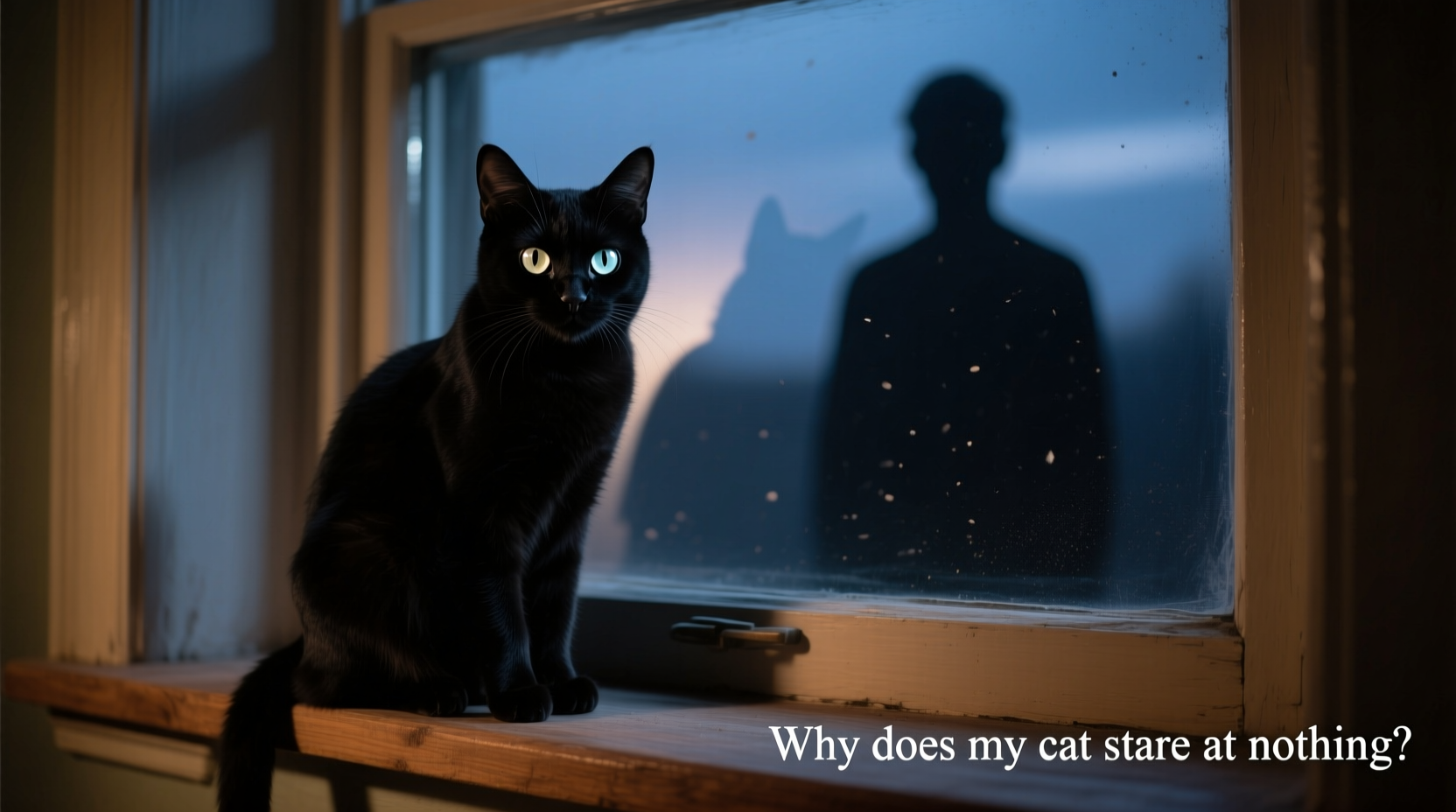
Cats don’t see the world as we do. Their visual system is optimized for survival, not for reading books or recognizing faces across a room. While humans have excellent color vision and detail clarity in daylight, cats excel in low-light conditions and motion detection. This evolutionary adaptation makes them superior nocturnal hunters.
A cat’s retina contains a high concentration of rod cells—photoreceptors sensitive to dim light and movement. These allow cats to detect even the faintest shifts in shadows or air currents. What looks like “nothing” to you may actually be a flicker of dust motes dancing in a sunbeam, a draft moving a curtain, or the subtle twitch of a spiderweb vibrating in a breeze. To a cat, these stimuli are worthy of full attention.
Additionally, cats possess a reflective layer behind the retina called the tapetum lucidum. This structure amplifies available light, giving them enhanced night vision—but it also causes visual artifacts. Some researchers suggest that this layer may create afterimages or distortions, which could explain why cats sometimes appear to focus on areas where no visible stimulus exists.
Tip: If your cat frequently stares at one particular spot, check for drafts, small insects, or reflections from windows or mirrors that may be triggering their attention.Instinctual Hunting Behavior and Hyper-Focus
Domestic cats may live in homes with food bowls and plush beds, but their brains remain wired for predation. Even well-fed indoor cats retain the instinct to stalk, pounce, and capture prey. When your cat fixates on an empty space, they may be tracking an invisible target—perhaps a memory, a sound, or a phantom movement only they can perceive.
This hyper-focused state is part of the predatory sequence: orientation, stalking, chasing, capturing, and killing. The staring phase corresponds to the initial orientation and assessment stage. Your cat isn’t hallucinating; they’re preparing for action based on sensory input below our threshold of awareness.
Dr. Sarah Elliott, a veterinary ethologist, explains:
“Cats live in a sensory world richer than ours. A sound at 50 kHz, a scent trail on the floor, or a shadow shift can trigger full predatory engagement—even if no physical object is visible to us.” — Dr. Sarah Elliott, Feline Behavior Researcher, University of Edinburgh
In multi-cat households, this behavior may also serve social functions. One cat staring intently might signal vigilance to others, prompting group alertness without overt vocalization.
Could It Be Something Paranormal?
Throughout history, cats have been associated with the mystical. Ancient Egyptians revered them as divine protectors. Sailors believed black cats brought good luck. And folklore often claims cats can see spirits, witches, or otherworldly beings. While these stories are culturally rich, there’s no scientific evidence supporting the idea that cats perceive ghosts or paranormal entities.
However, what we interpret as \"paranormal sensitivity\" may simply be acute sensory detection. For example:
- Infrasound: Cats can hear frequencies as low as 45 Hz, including rumbles from appliances, wind, or distant thunder—sounds imperceptible to humans.
- Electromagnetic fields: Some animals react to changes in electromagnetic energy. Though unproven in cats, anecdotal reports suggest unusual behavior before storms or earthquakes.
- Scent cues: Decomposing materials, mold, or even residual pheromones from previous pets can linger in walls or floors, drawing feline attention.
When a cat stares at a wall or corner, they may be responding to subtle environmental shifts—not spirits. Attributing such behavior to the supernatural often stems from human projection rather than observable evidence.
Table: Common Stimuli That Trigger Cat Staring (Visible vs. Invisible)
| Stimulus Type | Human Perception | Cat Perception | Example |
|---|---|---|---|
| Visual Motion | Rarely noticeable | Highly sensitive | Dust particles in sunlight |
| High-Frequency Sound | Inaudible | Clearly heard | Mice in walls, electronic whine |
| Scent Trails | Undetectable | Strongly perceived | Previous pet marking, food residue |
| Air Currents | Faint or absent | Noticeable via whiskers | Ventilation drafts, open windows |
| Electromagnetic Shifts | No awareness | Potential sensitivity | Before storms or power surges |
When Staring May Signal Health Concerns
While occasional staring is normal, persistent fixation—especially when accompanied by other symptoms—can indicate medical issues. Conditions such as hypertension, hyperthyroidism, cognitive dysfunction syndrome (similar to dementia in older humans), or seizures may manifest through repetitive, unfocused gazing.
Watch for these red flags:
- Staring for prolonged periods (>10 minutes) without reorientation
- Lack of response to name or sounds
- Disorientation, bumping into walls
- Excessive vocalization during episodes
- Changes in appetite, litter box use, or sleep patterns
If your cat exhibits any of these signs, consult a veterinarian. Diagnostic tests like blood panels, blood pressure checks, and neurological exams can rule out underlying conditions.
Mini Case Study: Bella the Window Watcher
Bella, a 7-year-old tabby, began spending hours each day staring at the ceiling near her favorite sunspot. Her owner, Lisa, worried she was ill or stressed. After ruling out medical causes, a home inspection revealed a tiny gap in the attic vent. Using a thermal camera, a technician detected movement—bats exiting at dusk. Though silent to humans, the high-frequency chirps and air vibrations were unmistakable to Bella. Once the vent was sealed, her staring decreased significantly. This case illustrates how cats respond to stimuli outside human sensory range.
Actionable Tips: How to Respond When Your Cat Stares
Understanding the cause helps determine whether intervention is needed. Most staring is harmless, but you can support your cat’s mental health and reduce anxiety-driven fixation with proactive care.
Tip: Rotate toys weekly and introduce puzzle feeders to keep your cat mentally engaged and less likely to fixate on minor environmental stimuli.Checklist: Supporting Your Cat’s Sensory Environment
- ✅ Provide vertical spaces (cat trees, shelves) for elevated observation points
- ✅ Use interactive toys that mimic prey movement (feather wands, robotic mice)
- ✅ Introduce daily play sessions lasting 10–15 minutes to satisfy hunting instincts
- ✅ Minimize sudden loud noises or chaotic household changes
- ✅ Monitor for repetitive behaviors and document frequency/duration
- ✅ Schedule annual vet checkups, especially for cats over 7 years old
- ✅ Consider pheromone diffusers (e.g., Feliway) if anxiety is suspected
FAQ: Common Questions About Cat Staring
Is it normal for cats to stare at walls?
Yes, especially if the surface reflects light, carries scents, or borders areas with airflow. However, frequent or prolonged wall-staring—particularly in senior cats—should be evaluated by a vet to rule out cognitive or neurological issues.
Can cats see things we can’t?
Absolutely. Cats detect higher-pitched sounds, subtle movements in low light, and microscopic air disturbances via their whiskers. They also have a secondary olfactory organ (the vomeronasal organ) that analyzes chemical signals invisible to us. So yes, they literally see, hear, and smell more than we do.
Should I interrupt my cat when they’re staring?
Generally, no. Interrupting can frustrate them or break concentration during natural hunting simulations. Unless the behavior seems obsessive or distressing, let them engage. Gently calling their name or offering a toy afterward can redirect focus if needed.
Conclusion: Trust Instinct Over Myth
Your cat isn’t haunted. They’re highly attuned. The mystery behind their vacant stares dissolves under scrutiny of feline biology and instinct. What appears supernatural is, in fact, a testament to millions of years of evolutionary refinement. Cats navigate a layered reality—one filled with whispers of sound, flickers of light, and trails of scent that escape our notice.
Instead of wondering about ghosts, celebrate your cat’s extraordinary senses. Enrich their environment, respect their focus, and observe with curiosity rather than concern. By doing so, you deepen your bond and honor the wild intelligence that thrives within your domestic companion.
💬 Have a story about your cat’s mysterious staring habits? Share your experience in the comments—your insight might help another cat owner understand their furry enigma better.








