If you've ever brought home a new appliance only to find your cat immediately claim the discarded cardboard box—despite barely fitting—you're not alone. This common feline behavior baffles and amuses pet owners worldwide. Cats routinely choose boxes that are visibly too small, curling their bodies into impossible shapes as if defying physics. While it may seem illogical or purely whimsical, this habit is deeply rooted in biology, psychology, and evolutionary survival strategies. Understanding why your cat insists on occupying undersized containers reveals much about their natural instincts and emotional needs.
The Instinct for Enclosed Spaces
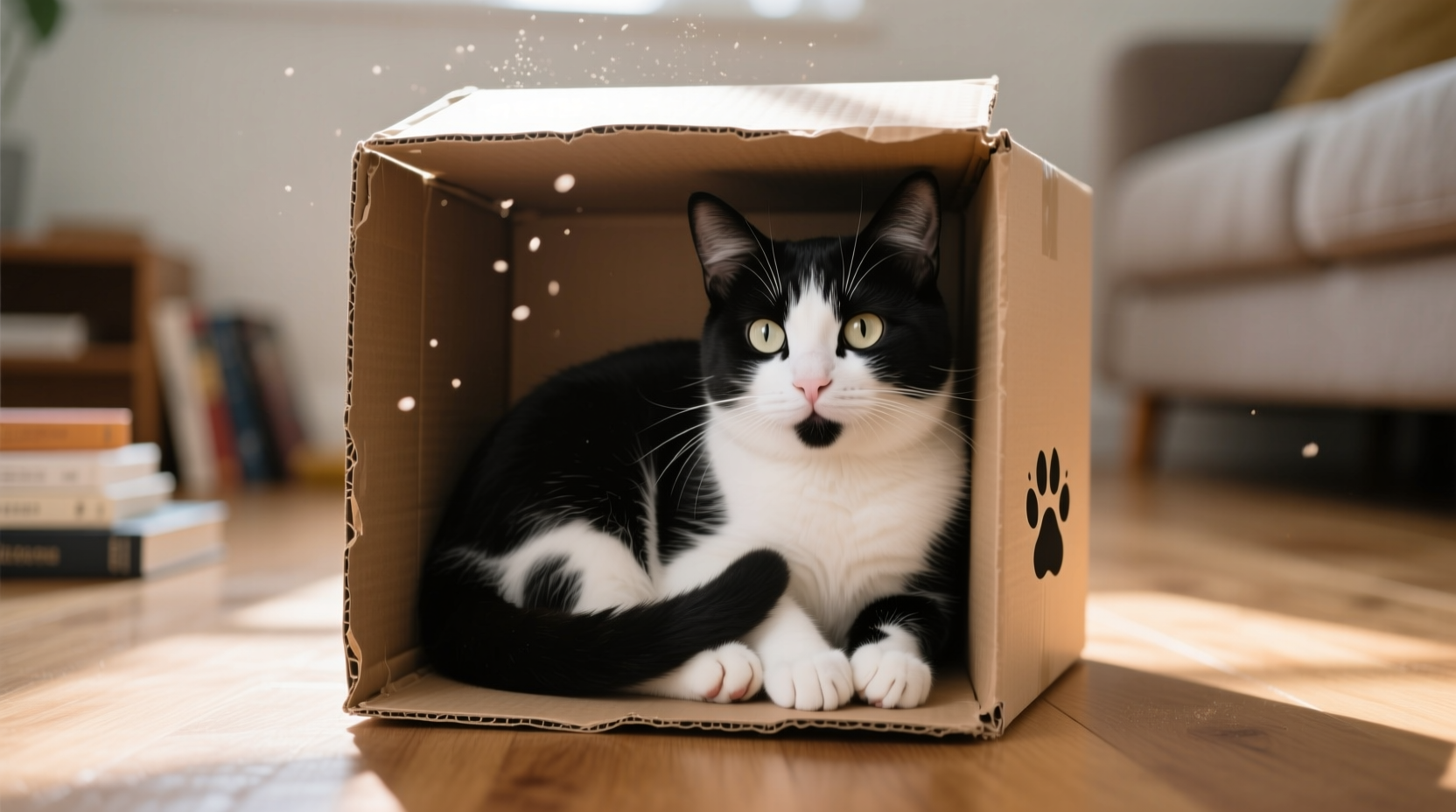
Cats are predators by nature, but they’re also prey animals in the wild. Their ancestors relied on concealment to avoid larger predators such as birds of prey, foxes, and wild dogs. An enclosed space like a cardboard box mimics the burrows, hollow logs, and dense underbrush where wild cats would hide. These spaces provide visual cover and physical protection, reducing exposure from all sides.
Even domesticated cats retain these instincts. A box offers a sense of security because it has high walls and limited entry points. This allows the cat to monitor its surroundings while feeling shielded. When a cat enters a confined space—even one that appears too tight—it experiences reduced anxiety and increased control over its environment.
Tip: If your cat seems stressed after visitors or loud noises, place an open box in a quiet corner. It may use it as a quick refuge.Thermoregulation and Warmth
One lesser-known reason cats favor small boxes is temperature regulation. The average resting body temperature of a cat ranges between 100.5°F and 102.5°F (38°C–39.2°C), which is higher than humans. To maintain this warmth efficiently, cats seek out insulated environments that help retain heat.
Cardboard is a surprisingly effective insulator. When a cat curls up inside a snug box, its body heat becomes trapped within the confined space, creating a microclimate similar to a heated den. Even if the box is slightly too small, the compression of the cat’s body against the walls enhances contact insulation, minimizing heat loss.
This preference explains why cats often choose cramped spots over spacious cat beds. A plush bed may look more comfortable to us, but without enclosure and insulation, it doesn’t offer the same thermal benefits.
Stress Reduction and Environmental Control
Modern homes can be overwhelming for cats. Constant movement, noise from appliances, unfamiliar guests, and other pets create sensory overload. In response, cats benefit greatly from “safe zones” where they can retreat and decompress.
A study conducted at the University of Utrecht found that shelter cats given access to hiding boxes adapted to their new environment significantly faster than those without them. The researchers concluded that \"hiding is a coping mechanism for stress\" and essential for psychological well-being.
“Providing accessible hiding places is not a luxury—it’s a fundamental component of feline welfare.” — Dr. Daniel Mills, Veterinary Behavioral Medicine Specialist
While any enclosed space helps, a small box is particularly effective because it limits sensory input. With fewer angles to monitor and less exposure, the cat can relax fully, lowering cortisol levels and improving overall mood. This need persists even in safe, loving homes—because being alert is hardwired into their nature.
Why Size Doesn’t Matter (To Them)
It might appear comical when a ten-pound cat attempts to fit into a shoebox, legs dangling over the edge and tail twitching outside. But from the cat’s perspective, partial enclosure still provides many of the benefits of full concealment. As long as the head and torso are covered, the animal feels protected enough to lower its guard.
Feline flexibility also plays a role. Cats have highly mobile spines and lack a rigid collarbone, allowing them to compress and reshape their bodies with remarkable ease. What looks physically impossible to us is merely inconvenient to a determined cat.
Additionally, once a cat claims a box, it often marks it with facial pheromones by rubbing its cheeks against the interior. This scent marking transforms the box into familiar territory, reinforcing its status as a personal sanctuary—even if it's barely big enough to accommodate half the cat.
Play, Curiosity, and Territory Marking
Beyond safety and comfort, boxes appeal to a cat’s innate curiosity. Novel objects in their environment trigger investigative behavior. A new box represents unexplored territory—an opportunity to sniff, paw, and assess potential threats or rewards.
This exploratory drive peaks during kittenhood but remains strong throughout life. Boxes become part of a cat’s spatial map, integrated into daily routines as preferred lounging or observation posts. Over time, frequent use turns the box into a de facto territory, defended against other pets or even humans who try to remove it.
The act of squeezing into a tight space may also simulate hunting behaviors. In the wild, cats navigate narrow crevices and dense foliage to stalk prey. Confinement isn’t inherently negative; in fact, it can be stimulating when self-initiated. Unlike forced restraint, voluntary confinement gives the cat complete control—which makes the experience enjoyable rather than stressful.
Do Cats Know They’re Too Big?
There’s no evidence that cats perceive size mismatch in the way humans do. They don’t experience embarrassment or cognitive dissonance when wedged into a tiny container. Instead, their decision is based on immediate sensory feedback: Is the space enclosed? Can I see what’s around me? Does it feel warm and secure?
If the answer to most of these questions is yes, the cat will stay—even if its back legs hang off the edge. Comfort is prioritized over aesthetics, and function outweighs form. Evolution didn’t select for vanity; it selected for survival. So, if a box offers protection and warmth, its dimensions are secondary.
Tip: Rotate boxes every few days to keep your cat mentally stimulated. Introduce different sizes and orientations to encourage exploration.Real Example: Luna and the Shipping Box
Sarah adopted Luna, a three-year-old domestic shorthair, from a local shelter. For the first week, Luna stayed mostly under the bed, emerging only at night. Concerned about her adjustment, Sarah placed a medium-sized cardboard box near the living room couch with a soft towel inside.
The next morning, she found Luna curled inside—but only partially. Her hindquarters spilled over the edge, and one paw dangled off the side. Yet, Luna was deeply asleep, something she hadn’t done since arriving. Over the following days, Sarah noticed Luna using the box regularly, eventually replacing it with a slightly larger one. Within two weeks, Luna began napping in open spaces and engaging more with the family.
Luna’s story illustrates how even imperfectly sized boxes serve critical emotional functions. The initial box wasn’t ideal, but it provided just enough enclosure to reduce anxiety and build confidence. Once she felt safer, her behavioral thresholds gradually expanded.
How to Support Your Cat’s Box Habit: A Practical Checklist
Embracing your cat’s love for boxes doesn’t mean littering your home with clutter. With thoughtful management, you can support their instincts while maintaining order.
- Provide multiple options: Offer different types of enclosures—cardboard boxes, plastic bins with cutouts, fabric tunnels, or commercially made cat caves.
- Vary the size: Include some boxes large enough for full-body stretching and others just big enough for partial concealment.
- Place strategically: Position boxes in quiet areas, near windows, or beside furniture where your cat already likes to rest.
- Encourage rotation: Swap out boxes weekly to prevent boredom and maintain novelty.
- Reinforce safety: Avoid tape, staples, or ink-covered interiors. Remove all packaging materials before offering a box.
- Respect ownership: Don’t remove a box your cat uses frequently unless absolutely necessary. If removal is needed, replace it with a similar alternative first.
Box Alternatives and Enrichment Ideas
While cardboard boxes are free and widely available, they aren’t the only way to meet your cat’s need for enclosed spaces. Consider these alternatives:
| Option | Benefits | Considerations |
|---|---|---|
| Insulated cat caves | Warm, cozy, durable; often washable | More expensive; may lack novelty |
| Paper bags (handles removed) | Cheap, crinkly texture stimulates interest | Can be chewed or torn quickly; supervise initially |
| Plastic storage bins (lid removed or cut) | Sturdy, easy to clean, reusable | May feel cold; add padding for comfort |
| Furniture with cubbies | Blends with home decor; multi-cat households | Higher cost; ensure adequate ventilation |
| Dryer tubes or large mailing tubes | Novel shape encourages play and crawling | Ensure diameter allows easy exit; check for sharp edges |
Frequently Asked Questions
Is it harmful if my cat sits in a box that’s too small?
No, it’s generally not harmful. Cats are flexible and will adjust their posture for comfort. As long as the cat can enter and exit freely and shows no signs of distress, occasional use of tight spaces is normal and safe. However, avoid boxes with loose tape, staples, or toxic inks.
Why does my cat prefer boxes over expensive cat beds?
Many commercial cat beds lack the enclosed, den-like structure cats naturally seek. Open beds expose the cat on all sides, making them feel vulnerable. A box provides better insulation, privacy, and a sense of containment. Try placing a soft bed inside a low-walled box to combine comfort with security.
Should I discourage my cat from chewing on cardboard?
Occasional nibbling is usually harmless, especially if the cardboard is plain and uncoated. However, excessive chewing could indicate dental issues, nutritional deficiencies, or stress. If your cat frequently eats non-food items, consult your veterinarian to rule out pica or other medical concerns.
Conclusion: Embrace the Quirk
The sight of a cat crammed into a box far too small is undeniably amusing, but it’s also a window into their complex inner world. What looks like a silly habit is actually a sophisticated blend of instinct, environmental adaptation, and emotional regulation. By providing access to safe, enclosed spaces—even humble cardboard ones—you support your cat’s mental health, reduce stress, and honor their natural behaviors.
Rather than question why your cat chooses discomfort over logic, celebrate the uniqueness of feline psychology. After all, their ability to turn a simple box into a fortress of solitude is part of what makes them so fascinating.
💬 Does your cat have a favorite hiding spot or a funny box-sitting moment? Share your story in the comments—chances are, other cat lovers will relate!








