Cats have a reputation for eccentric behavior—pouncing on invisible prey, licking plastic bags, or suddenly sprinting through the house at 3 a.m. But one of the most universally observed quirks is their undeniable attraction to cardboard boxes, especially ones significantly larger than their bodies. It’s not uncommon to see a small tabby curled up in a shipping container twice its size, seemingly defying logic. Why do cats do this? More importantly, what does choosing oversized boxes say about their mental state, evolutionary history, and emotional needs?
The answer lies deep within feline psychology—a blend of instinct, thermoregulation, security-seeking behavior, and subtle communication. Understanding this seemingly simple act offers valuable insight into how cats perceive safety, manage stress, and express comfort in human-dominated environments.
The Science Behind Box Preference
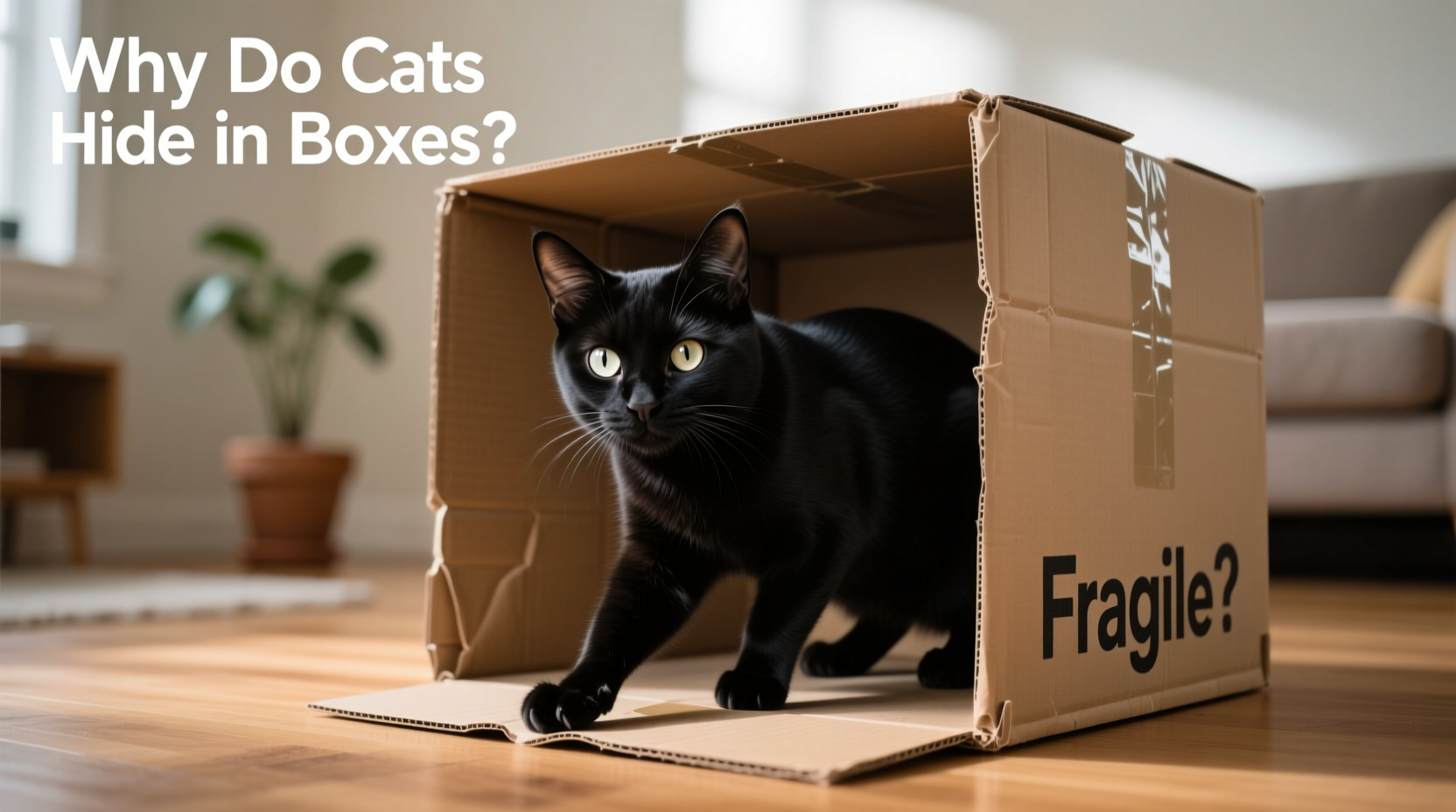
Research has consistently shown that cats benefit from access to enclosed spaces. A landmark study conducted at Utrecht University in the Netherlands examined stress levels in shelter cats given access to hiding boxes versus those without. The findings were clear: cats with boxes adapted to new environments faster, exhibited fewer signs of stress, and showed improved social behavior within days.
While the study focused on boxes as hiding places, it underscores a broader principle: enclosure equals control. For a species that evolved as both predator and prey, having a defined boundary—even one made of flimsy cardboard—provides psychological containment. This sense of control reduces anxiety and enhances environmental predictability.
Interestingly, the size of the box doesn’t negate its function. Even when a box is too large to fully enclose the cat, the symbolic presence of walls creates a perceived safe zone. The cat may not be completely hidden, but the structure defines a personal territory, which satisfies an innate need for spatial ownership.
“Enclosures, no matter how rudimentary, give cats a critical sense of agency over their surroundings. That’s foundational to feline well-being.” — Dr. Sarah Ellis, Co-Author of *The Trainable Cat* and Feline Behavior Specialist
Thermoregulation and Comfort
Beyond psychology, there’s a physiological driver behind the box obsession: warmth. Cats maintain a higher body temperature than humans—between 100.5°F and 102.5°F—and seek out warm spots to conserve energy. Cardboard is a surprisingly effective insulator, trapping body heat and buffering against cold floors.
When a cat enters a large box, it often rearranges itself into a compact loaf position, minimizing surface area exposed to air. Even in a spacious container, this behavior maximizes heat retention. The walls of the box, though distant, still contribute to a microclimate less affected by drafts or tile conductivity.
This thermal motivation explains why cats favor boxes in cooler rooms, near radiators, or atop recently vacated laundry baskets. The combination of insulation and elevation (if the box is off the ground) further enhances comfort. In essence, the box becomes a makeshift thermoregulatory nest—one that happens to double as a fortress.
Tip: If your cat frequently uses large boxes, place a soft blanket inside to enhance warmth and cushioning. Replace periodically to maintain hygiene.Sensory Security and Environmental Control
Cats are highly attuned to sensory input. Sudden noises, unfamiliar scents, or unpredictable movements can trigger low-grade stress, even in seemingly calm household settings. Boxes—regardless of size—offer a buffer against overstimulation.
A large box allows the cat to position itself with its back to the wall, maintaining visual control of the entrance while minimizing exposure. This vantage point aligns with predatory instincts: observe without being seen, retreat if necessary, and maintain escape routes. Even in a domestic setting devoid of real threats, these behaviors persist because they are hardwired for survival.
Moreover, the crinkly sound of cardboard provides auditory feedback that reassures the cat of the structure’s integrity. Unlike transparent containers or open shelves, a box—large or small—offers tactile resistance and acoustic confirmation of boundaries. This multisensory reinforcement contributes to a feeling of stability.
The Role of Scent Marking
Cats have scent glands concentrated on their cheeks, paws, and flanks. When they rub against objects—or settle into a space—they deposit pheromones that mark the area as familiar and safe. A large box becomes a blank canvas for this olfactory claiming.
By spending time in an oversized container, the cat effectively \"claims\" it as part of its secure zone. Over time, the accumulation of the cat’s scent helps reduce anxiety, especially in multi-pet households or homes with frequent visitors. The box, though temporary, functions like a mobile den—a portable piece of territory in an otherwise shared environment.
Behavioral Insights: What Oversized Boxes Reveal
The choice of a box much larger than the cat’s body might seem inefficient, but it actually reflects nuanced decision-making. Observing *how* a cat uses a large box can reveal aspects of its personality and current emotional state.
- Curled tightly in one corner: Indicates a desire for maximum concealment; possibly elevated stress or cautious temperament.
- Stretched out across the center: Suggests high comfort and confidence; the cat feels secure enough to expose its vulnerable underside.
- Frequent repositioning: May signal ongoing assessment of the environment or sensitivity to minor disturbances.
- Bringing toys into the box: Demonstrates the space has been designated as a resource-safe zone, ideal for play or prey simulation.
In multi-cat homes, dominant individuals often claim the largest boxes, using them as status markers. Subordinate cats may use smaller enclosures or avoid boxes altogether unless supervision is absent. This hierarchy mirrors wild feline social structures, where access to prime resting spots correlates with rank and safety.
Mini Case Study: Luna and the Moving Boxes
Luna, a three-year-old domestic shorthair, moved with her owner from an apartment to a house with a large backyard. Initially, she hid under furniture and avoided open spaces. Her owner placed several unpacked moving boxes in quiet corners. Within hours, Luna began sleeping in a large appliance box, despite its size.
Over two weeks, her behavior shifted. She started lounging with her head outside the box, then eventually napping in the middle of the living room floor. The oversized box served as a transitional security blanket—her personal base camp during environmental adjustment. Once acclimated, she abandoned the box entirely, indicating successful stress adaptation.
This case illustrates how oversized containers can act as psychological scaffolding during change, offering a controlled space from which exploration becomes possible.
Do’s and Don’ts: Supporting Your Cat’s Box Habits
| Do | Don’t |
|---|---|
| Provide multiple box sizes in quiet areas | Force your cat out of a box abruptly |
| Replace damp or soiled boxes promptly | Use tape, staples, or toxic inks on accessible surfaces |
| Add soft bedding for older or arthritic cats | Assume disinterest means the cat doesn’t need hiding spaces |
| Rotate boxes to refresh novelty and scent profile | Place boxes in high-traffic zones without escape routes |
| Observe usage patterns to assess stress levels | Discard a box immediately after unpacking—it may be needed |
Step-by-Step Guide to Creating a Cat-Friendly Box Environment
- Choose sturdy, clean cardboard boxes – Avoid containers with food residue, strong odors, or chemical labels.
- Cut one side to create an entryway – Ensure the opening is large enough for easy access but not so big that it compromises the sense of enclosure.
- Place in low-stress zones – Ideal locations include quiet corners, near windows (for bird watching), or adjacent to your bed or couch.
- Line with washable fabric – Use old towels or fleece blankets to increase comfort and encourage scent marking.
- Introduce gradually – Sprinkle catnip or place treats inside to promote positive association.
- Monitor and adapt – If unused after a few days, relocate the box or try a different size.
- Replace regularly – Cardboard degrades; replace boxes that become soggy, torn, or excessively scratched.
FAQ
Is it normal for my cat to prefer boxes over expensive cat beds?
Absolutely. Most commercial cat beds fail to replicate the enclosed, elevated, and scent-retentive qualities of a cardboard box. Many cats find plush beds too exposed or unstable. A box offers predictable boundaries and better heat retention, making it a more appealing choice despite cost differences.
Should I be concerned if my cat suddenly starts using boxes more frequently?
Increased box usage can indicate stress, illness, or environmental change. Monitor for other symptoms such as appetite loss, litter box avoidance, or vocalization. If behavioral shifts persist beyond a few days, consult a veterinarian or feline behaviorist.
Can I reuse boxes from deliveries?
Yes, but inspect them first. Remove all tape, plastic liners, and adhesive labels. Wipe down interiors if they appear dusty or contaminated. Avoid boxes that carried chemicals, cleaning supplies, or non-food items with strong odors.
Conclusion: Respecting the Box as a Psychological Tool
The sight of a cat nestled in a box far too large to snugly fit may inspire amusement, but it represents something profound: a creature balancing ancient instincts with modern life. That box is more than a quirky perch—it’s a sanctuary, a thermal refuge, a territorial marker, and a coping mechanism all in one.
By recognizing the depth behind this behavior, we move beyond seeing cats as merely whimsical pets. They are complex animals whose choices reflect cognitive processing, emotional regulation, and adaptive intelligence. The next time you catch your cat sprawled across a giant box meant for a microwave, resist the urge to remove it. Instead, consider it a window into your cat’s inner world—one that values security, autonomy, and just the right amount of cardboard.
💬 Have you noticed patterns in how your cat uses boxes? Share your observations in the comments—your experience could help others understand their feline companions better.








