
Cats are enigmatic companions. One moment they're curled in your lap, purring like a tiny engine, and the next—snap—they’ve sunk their teeth into your hand. This sudden shift from affection to aggression confuses and sometimes frightens owners. Is this normal feline behavior? A sign of love, overstimulation, or something more concerning? Understanding why your cat purrs then bites requires insight into feline communication, emotional thresholds, and instinctual behaviors. This article explores the science behind this common yet misunderstood phenomenon and offers actionable guidance for managing and preventing sudden biting episodes.
The Dual Nature of Feline Purring
Purring is often interpreted as a universal sign of contentment. While that���s true in many cases, cats also purr in situations involving stress, pain, or anxiety. Research indicates that the frequency of a cat’s purr—typically between 25 and 150 Hz—can promote healing by stimulating bone and tissue regeneration. This means purring serves multiple purposes: emotional regulation, self-soothing, and even physical recovery.
When a cat purrs while being petted, it may initially signal pleasure. However, continued petting can lead to sensory overload. Cats have highly sensitive nerve endings in their skin, especially along the back and tail base. What starts as enjoyable stimulation can quickly become overwhelming, prompting a defensive reaction—even if the cat continues to purr.
“Purring doesn’t always mean happiness. It can be a coping mechanism during discomfort or overstimulation.” — Dr. Sarah Ellis, Feline Behavior Scientist, University of BristolTip: Watch for subtle body language cues—like tail flicking or skin rippling—before your cat reaches its tolerance threshold.
Understanding Petting-Induced Aggression
Sudden biting after purring is commonly referred to as “petting-induced aggression” or “overstimulation aggression.” This behavior occurs when a cat tolerates petting beyond its comfort level. Unlike dogs, most cats do not enjoy prolonged physical contact. Their social structure is rooted in independence, and touch is often transactional rather than purely affectionate.
The transition from purring to biting is rarely random. It follows a predictable escalation pattern:
- Initial enjoyment: The cat approaches, rubs against you, and begins to purr.
- Signs of tension: Ears flatten slightly, tail twitches, pupils dilate, or the skin along the back ripples.
- Tolerance threshold reached: The cat may give a soft nip or pull away.
- Aggressive response: If ignored, the cat may deliver a harder bite and flee.
This sequence reflects an internal conflict: the cat wants closeness but becomes overwhelmed by sensory input. Biting is not malicious—it’s a last-resort communication tool.
Common Triggers of Overstimulation
- Prolonged petting, especially near the tail or lower back
- Ignoring early warning signs (e.g., tail flicking)
- Petting a cat that isn’t in a relaxed state
- Forced interaction with children or unfamiliar people
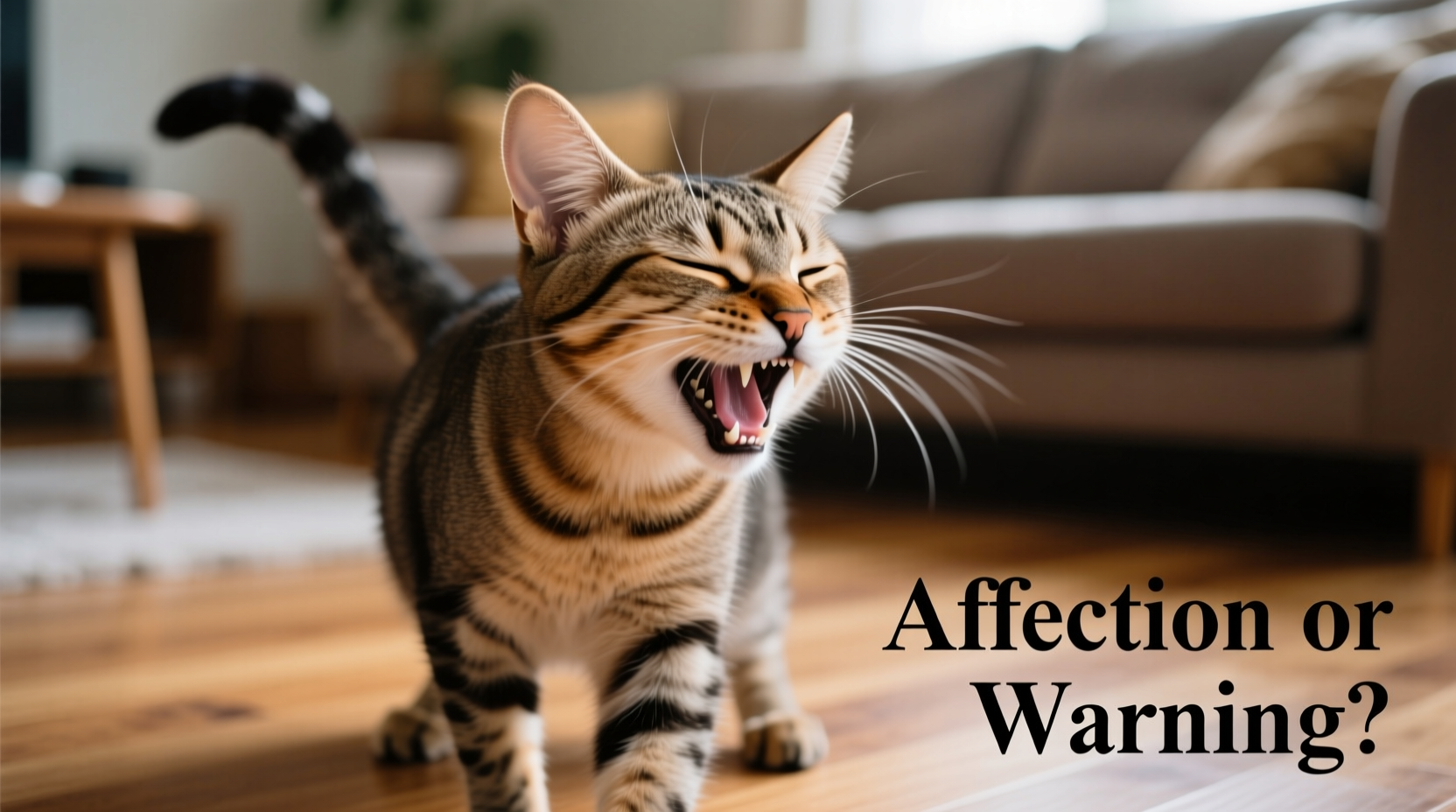
Is It Affection or a Warning?
The key to distinguishing affectionate purring from warning purring lies in context and body language. A truly content cat will display relaxed posture, half-closed eyes, slow blinks, and gentle kneading. In contrast, a cat on the verge of biting may exhibit micro-expressions of stress despite continuing to purr.
Consider this real-world example:
Maria noticed her cat, Luna, would purr while sitting on her lap but suddenly lunge and bite after just two minutes of petting. Concerned, she consulted a veterinary behaviorist. Upon review of video footage, the expert pointed out that Luna’s tail tip began twitching at the 45-second mark, her ears rotated backward at one minute, and her pupils widened—all classic signs of rising arousal. Maria had been interpreting the purring as ongoing approval, missing the escalating tension. After adjusting her petting duration and learning to recognize these signals, Luna stopped biting entirely.
This case illustrates how easily miscommunication occurs between species. Cats rely heavily on nonverbal cues, while humans focus on vocalizations like purring. Bridging this gap requires education and observation.
Decoding Cat Body Language
| Behavior | Meaning | Action to Take |
|---|---|---|
| Purring + slow blinking | Contentment, trust | Continue gentle interaction |
| Purring + tail flicking | Overstimulation building | Stop petting, give space |
| Purring + flattened ears | Discomfort or anxiety | End interaction calmly |
| Purring + dilated pupils | Heightened arousal | Do not touch; observe |
| Purring + skin rippling | Sensory overload | Immediately cease contact |
Other Reasons Cats Bite After Purring
While overstimulation is the most common cause, several other factors may explain sudden biting:
Play Aggression
Kittens and young cats often use biting as part of play. If a cat was not taught boundaries early, it may redirect playful nipping toward human hands during affectionate moments. These bites are usually quick and not intended to injure, but they can still break skin.
Redirected Aggression
A cat may appear calm while purring but suddenly bite if agitated by an external stimulus—such as another animal outside the window. The built-up tension finds release through the nearest target: you.
Medical Issues
Pain or neurological conditions can lower a cat’s threshold for touch. Arthritis, dental disease, or skin allergies may make certain areas painful to touch. A previously tolerant cat might begin biting unexpectedly due to underlying illness.
Attention-Seeking Behavior
In some cases, cats learn that biting ends unwanted petting. They may use it strategically to control interactions. This is particularly common in cats who cannot easily escape (e.g., those held on laps).
Tip: Never punish a cat for biting. Instead, redirect the behavior with toys and reinforce positive interactions with treats.Step-by-Step Guide to Prevent Sudden Biting
Managing this behavior involves adjusting your interaction style and respecting feline boundaries. Follow this timeline to build safer, more predictable relationships with your cat:
- Week 1: Observe and Record
Spend time watching your cat during interactions. Note how long they tolerate petting before showing signs of tension. Keep a journal of triggers and responses. - Week 2: Shorten Petting Sessions
Limit touching to 10–15 seconds at a time, stopping *before* any warning signs appear. Reward calm behavior with treats or verbal praise. - Week 3: Learn Your Cat’s Preferences
Most cats prefer head and chin scratches over back or belly touches. Test different areas and respect individual preferences. - Week 4: Introduce Alternatives
Use wand toys or interactive play before cuddle sessions to burn excess energy. This reduces the likelihood of redirected aggression. - Ongoing: Reinforce Boundaries
If your cat shows discomfort, stop immediately and walk away. This teaches them that calm disengagement leads to future positive interactions.
“Cats don’t need to be ‘fixed’—they need to be understood. Respecting their limits builds deeper trust than forced affection ever could.” — Dr. Karen Overall, Veterinary Behavioral Medicine Specialist
Checklist: How to Respond When Your Cat Bites
- ✅ Stay calm—do not shout or react harshly.
- ✅ Gently remove your hand without jerking (jerking can trigger chase-bite reflex).
- ✅ End the interaction and give your cat space.
- ✅ Avoid holding the cat down or restraining them.
- ✅ Examine the environment for potential stressors (noises, other pets, etc.).
- ✅ Schedule a vet check if biting is new or worsening.
- ✅ Use positive reinforcement for gentle behavior.
Frequently Asked Questions
Why does my cat bite me softly after purring?
Soft biting, often called “love nibbles,” is typically a sign of overstimulation or playful behavior. It’s not aggressive but indicates your cat has reached their touch threshold. It may also mimic grooming behavior seen in kittenhood.
Can I train my cat not to bite during petting?
Yes. Through consistent training, you can teach your cat to tolerate brief petting sessions. Use positive reinforcement—offer treats when they remain calm—and always end interactions on a positive note before tension builds.
Should I be worried if my cat suddenly starts biting?
A sudden change in behavior warrants attention. Rule out medical causes first with a veterinary exam. If no health issues are found, consult a certified cat behavior consultant to assess environmental and emotional factors.
Conclusion: Building a Healthier Human-Cat Relationship
Your cat’s purr-to-bite behavior is not a flaw—it’s a form of communication shaped by instinct, sensitivity, and individual temperament. By learning to read the subtle cues that precede biting, you transform confusing moments into opportunities for deeper understanding. Respect your cat’s autonomy, honor their sensory limits, and replace frustration with empathy. Over time, these adjustments foster trust, reduce conflict, and strengthen your bond.
💬 Have you experienced sudden cat bites after purring? Share your story or tips in the comments—your experience could help another cat owner find clarity and peace.








