If you’ve been jolted awake at 3 a.m. by your cat’s persistent, loud meowing—sometimes right in your ear—you’re not alone. This behavior is one of the most common complaints among cat owners. While cats are naturally more active during dawn and dusk, consistent vocalization in the middle of the night can disrupt sleep, strain relationships, and even signal underlying health or behavioral issues. Understanding the root causes is the first step toward restoring peace to your household.
Cats don’t meow at humans for no reason. Unlike their wild ancestors, domestic cats have developed meowing as a form of communication specifically with people. When your cat chooses 3 a.m. for a serenade, it’s usually trying to tell you something—whether it’s hungry, bored, anxious, or unwell. The key is to decode the message without reinforcing the unwanted behavior.
The Biological Clock: Cats and Nocturnal Behavior
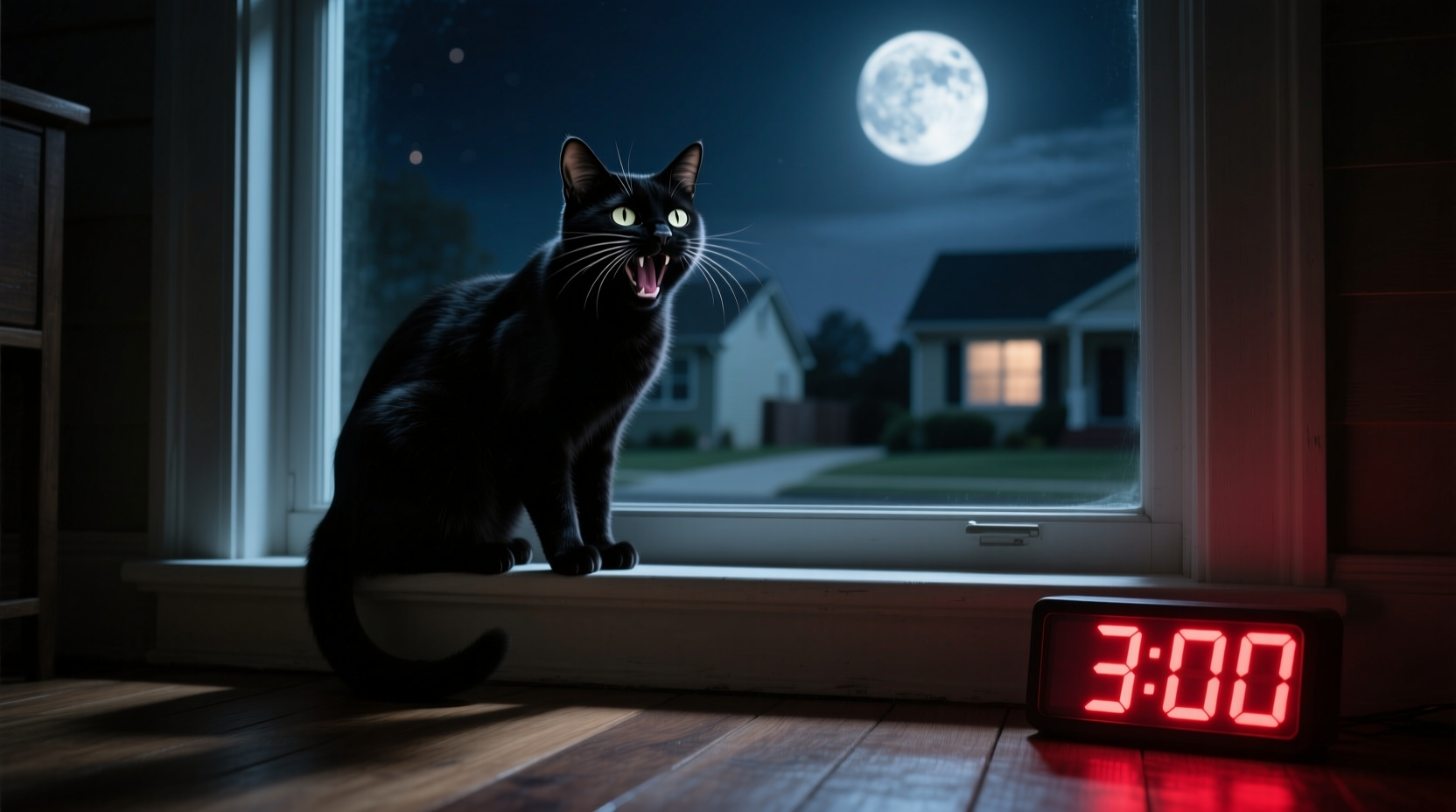
Cats are crepuscular animals, meaning they are most active during twilight hours—dawn and dusk. This evolutionary trait helped wild felines hunt when prey was most abundant and visibility was low enough to remain hidden. Even indoor cats retain this instinctual rhythm, which often translates into bursts of energy late at night or early in the morning.
At around 3 a.m., many cats experience a natural peak in alertness. If they haven’t expended enough energy during the day, they may engage in zoomies, pacing, or vocalizing to burn off excess stimulation. In some cases, the timing aligns with human sleep cycles, making the disruption especially noticeable.
Tip: Engage your cat in vigorous play sessions before bedtime to help tire them out and shift their activity cycle earlier in the evening.However, normal crepuscular activity doesn’t fully explain loud, insistent meowing. That kind of vocalization typically indicates a specific need or distress, not just instinctive timing.
Common Reasons for 3 a.m. Meowing
Several interrelated factors can cause your cat to meow loudly at 3 a.m. Identifying the primary driver is essential for developing an effective solution.
Hunger or Feeding Schedule Misalignment
One of the most frequent causes is hunger. If your cat is used to being fed upon waking, it may learn that meowing at 3 a.m. results in food. Over time, this becomes a reinforced behavior. Automatic feeders set to dispense food at dawn can inadvertently encourage this pattern if the cat anticipates the meal and starts vocalizing in anticipation.
Boredom and Lack of Stimulation
Indoor cats, especially those left alone during the day, often suffer from under-stimulation. Without sufficient mental and physical engagement, they may become restless at night. Meowing can be a way of seeking attention, initiating play, or expressing frustration.
Attention-Seeking Behavior
Cats are intelligent and quickly learn what works. If you’ve ever responded to nighttime meowing—even once—by petting, talking to, or feeding your cat, you’ve unintentionally trained them to repeat the behavior. From the cat’s perspective, “I meowed → I got attention” equals success.
Medical Issues
Persistent nighttime vocalization can also be a red flag for health problems. Conditions such as hyperthyroidism, hypertension, cognitive dysfunction (especially in older cats), dental pain, or urinary tract infections can cause discomfort or confusion, leading to increased vocalization. Senior cats, in particular, may develop feline cognitive dysfunction syndrome (CDS), which disrupts sleep-wake cycles and leads to disorientation and anxiety at night.
“Nighttime yowling in older cats should never be dismissed as ‘just aging.’ It’s often a sign of pain or neurological change that warrants veterinary evaluation.” — Dr. Lena Torres, DVM, Feline Behavior Specialist
Environmental Stressors
Changes in the home environment—new pets, moving furniture, loud noises outside, or even shifts in routine—can increase a cat’s anxiety. Some cats vocalize more at night when they feel insecure or perceive threats, such as outdoor animals near windows or unfamiliar sounds in the dark.
Step-by-Step Guide to Reducing Nighttime Meowing
Fixing this issue requires consistency, patience, and a structured approach. Follow this timeline over 2–4 weeks to retrain your cat’s behavior.
- Week 1: Assess and Adjust Daily Routine
- Implement two high-energy play sessions daily—one in the late afternoon and one right before bed (15–20 minutes each).
- Use interactive toys like wand teasers or motorized mice to simulate hunting.
- Feed your cat a larger meal just before bedtime to promote satiety through the night.
- Week 2: Modify the Sleep Environment
- Install blackout curtains to minimize external light changes that might trigger activity.
- Provide alternative sleeping areas away from your bedroom, ideally with cozy beds, heated pads, or familiar scents.
- Consider using a white noise machine to mask outdoor sounds that may provoke vocalization.
- Week 3: Reinforce Desired Behaviors
- Ignore all meowing during the night. Do not make eye contact, speak, or respond physically.
- Only provide attention or treats when your cat is quiet for at least 30 seconds.
- Gradually delay responses to reinforce that silence—not noise—gets rewards.
- Week 4: Evaluate and Consult
- If meowing persists despite behavioral adjustments, schedule a veterinary check-up.
- Request blood work to rule out hyperthyroidism, kidney disease, or high blood pressure.
- Discuss possible environmental enrichment tools like puzzle feeders or catios.
Do’s and Don’ts: Managing Nighttime Vocalization
| Do’s | Don’ts |
|---|---|
| Play actively with your cat before bedtime | Give in to meowing by feeding or petting |
| Use automatic feeders timed for early morning (e.g., 5 a.m.) | Yell at or punish your cat—it increases stress |
| Provide vertical spaces and hiding spots for security | Leave windows open where outdoor cats can be seen or heard |
| Keep a consistent daily routine | Allow nighttime meowing to continue unchecked |
| Consult a vet if behavior is sudden or worsening | Assume it’s “normal” without ruling out medical causes |
Real-Life Example: How Sarah Reduced Her Cat’s 3 a.m. Meows
Sarah adopted a 3-year-old tabby named Milo who had been previously kept outdoors. Within days, she noticed he would pace and yowl between 2:30 and 4 a.m., sometimes waking her partner across the house. She tried closing him out of the bedroom, but the crying intensified.
After consulting her veterinarian, Sarah learned that while Milo was healthy, his transition from outdoor to indoor life had left him under-stimulated. She implemented a new routine: 20 minutes of laser-chase play at 7 p.m., followed by a food puzzle filled with kibble. She also installed a bird feeder outside a window he could safely observe during the day.
She set an automatic feeder for 5:30 a.m. and committed to ignoring any vocalization before then. Within ten days, Milo’s meowing dropped significantly. By week three, he was sleeping quietly on a perch near the living room window. Sarah noted, “He wasn’t being annoying—he was bored and didn’t know what else to do.”
Checklist: Stop the 3 a.m. Meowing for Good
- ✅ Schedule two interactive play sessions per day, especially before bedtime
- ✅ Feed a substantial meal or use a slow-feeder puzzle at night
- ✅ Install an automatic feeder set for early morning (but not midnight)
- ✅ Rule out medical conditions with a vet visit, especially for cats over 8 years old
- ✅ Ignore all nighttime vocalizations—no eye contact, touch, or sound
- ✅ Enrich the environment with climbing shelves, hiding boxes, and sensory toys
- ✅ Maintain a consistent daily schedule for feeding, play, and lights-out
Frequently Asked Questions
Is it normal for cats to meow at night?
Occasional soft vocalization can be normal, especially in kittens or newly adopted cats adjusting to a home. However, loud, repetitive meowing at the same time every night is not typical and usually indicates a behavioral or medical issue that needs addressing.
Should I lock my cat out of the bedroom?
It depends. If your cat calms down when alone and sleeps quietly elsewhere, providing a comfortable space outside the bedroom can help. But if exclusion increases anxiety or vocalization, focus instead on training and environmental enrichment within shared spaces. Never shut a cat in a room without resources (litter, water, warmth).
Can older cats develop nighttime meowing suddenly?
Yes. Cats over 10 years old may develop feline cognitive dysfunction, similar to dementia in humans. Symptoms include confusion, litter box accidents, and increased vocalization at night. Blood tests and a veterinary neurologic assessment can help determine if medication or supportive care is needed.
Conclusion: Silence the 3 a.m. Serenade for Good
Your cat’s 3 a.m. meowing isn’t just a quirky habit—it’s a signal. Whether rooted in biology, boredom, or health, the behavior can be changed with empathy, consistency, and the right strategy. Ignoring the cries is difficult, but responding only reinforces the cycle. Instead, focus on enriching your cat’s daytime life, adjusting routines, and seeking medical advice when needed.
💬 Have a tip that worked for your cat? Share your story in the comments below—your experience could help another sleep-deprived owner find relief.








