
Cat owners often find themselves on the receiving end of a peculiar yet endearing ritual: their feline companion climbs onto their lap, settles in, and begins rhythmically pushing their paws into their thighs or chest—much like a baker working dough. This behavior, known as kneading, is common across cats of all breeds and ages. While it may seem random or even uncomfortable at times, kneading is deeply rooted in biology, emotion, and social connection. Far from being a meaningless habit, it’s one of the most telling signs of trust, affection, and emotional security a cat can express.
Understanding why cats knead—and what it communicates about your relationship with them—can deepen your bond and help you respond more empathetically to your pet’s needs. From kittenhood instincts to territorial signaling and emotional regulation, kneading serves multiple functions throughout a cat’s life. More than just a quirky physical quirk, it’s a window into your cat’s inner world.
The Origins of Kneading: A Behavior Rooted in Survival
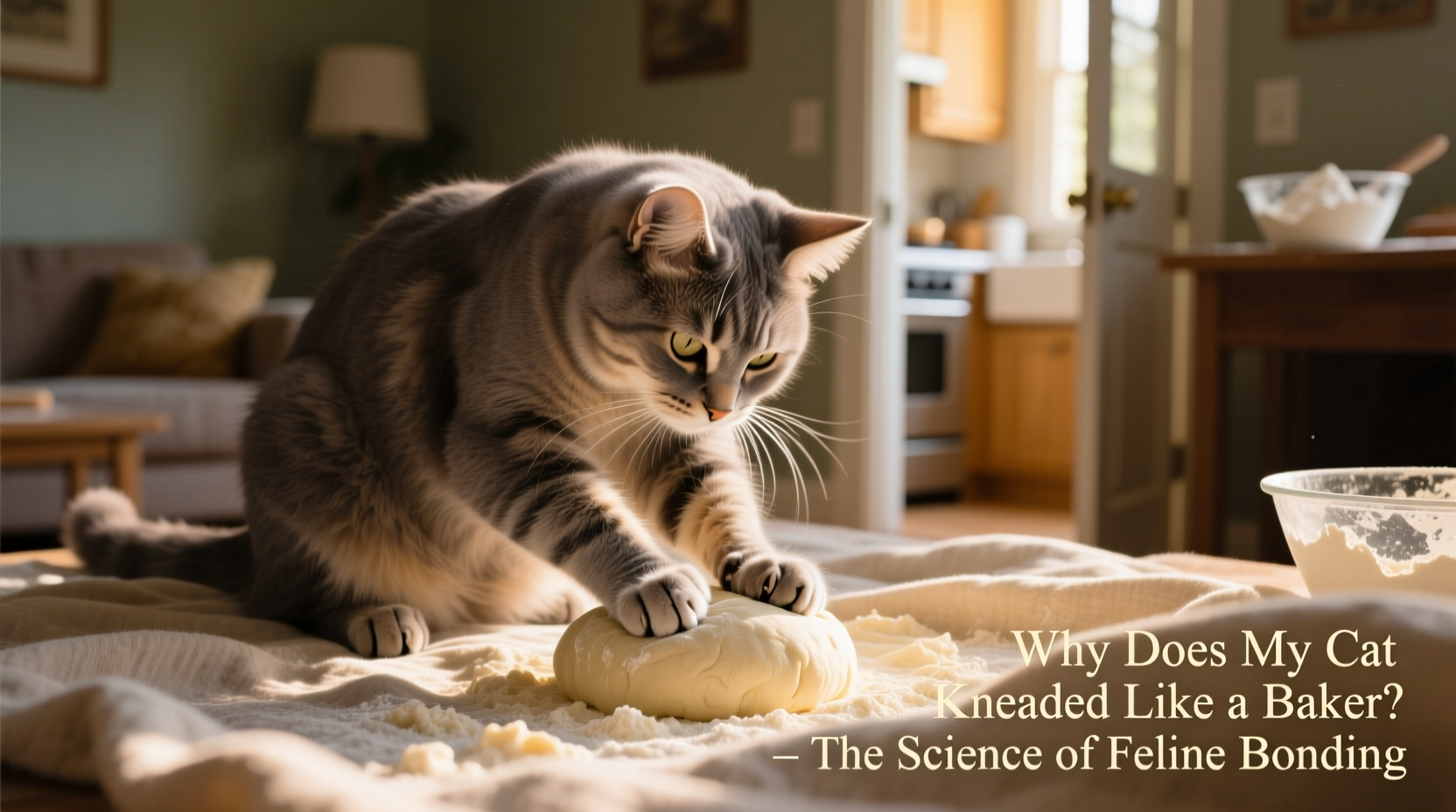
Kneading begins in the earliest days of a cat’s life. Newborn kittens instinctively press their tiny paws against their mother’s mammary glands to stimulate milk flow during nursing. This action is essential for survival—it ensures nourishment and strengthens the mother-kitten bond. The rhythmic motion becomes associated with warmth, safety, and comfort, embedding itself into the kitten’s behavioral memory.
As cats mature, they often retain this behavior into adulthood, even though they no longer rely on nursing. When an adult cat kneads a soft surface—whether it’s a blanket, a pillow, or your lap—it’s tapping into those primal feelings of security and contentment. The act triggers the same neurological pathways linked to early nurturing experiences, effectively transporting the cat back to a state of emotional well-being.
This explains why kneading typically occurs during moments of relaxation or when a cat feels particularly safe. It’s not just muscle memory; it’s emotional recall. According to Dr. Sarah Ellis, co-author of *The Trainable Cat*, “Kneading in adult cats is a clear sign of positive emotional arousal. It reflects a state of deep comfort, often linked to early maternal care.”
“Kneading is one of the purest expressions of feline contentment. It’s a throwback to kittenhood, but in adults, it signifies trust and emotional safety.” — Dr. Mikel Delgado, Feline Behavior Scientist
What Kneading Says About Your Bond With Your Cat
When your cat chooses you as the surface for kneading, it’s a significant gesture. Cats are selective about where and with whom they display vulnerable behaviors. Since kneading involves exposing the soft underside of their paws and often leads to relaxed, open-body postures, it indicates that your cat views you as a source of safety and affection.
In multi-pet households or shelters, researchers have observed that cats are far more likely to knead in the presence of individuals they’ve formed strong attachments to. This isn’t merely about physical comfort—it’s social signaling. By kneading on you, your cat is essentially saying, “You are my safe space.”
Moreover, many cats purr simultaneously while kneading, creating a dual sensory signal of happiness. This combination—purring plus kneading—is among the strongest indicators of emotional bonding in domestic cats. Unlike behaviors driven by hunger or attention-seeking, kneading cannot be easily trained or manipulated. It emerges spontaneously when a cat feels genuinely at ease.
Tip: If your cat kneads you frequently, consider it a compliment. You’ve earned their deepest level of trust.The Role of Scent Marking in Kneading
Beyond emotional comfort, kneading also serves a biological function: scent marking. Cats have scent glands located in the pads of their paws, which release pheromones when pressure is applied. These chemical signals are undetectable to humans but play a crucial role in feline communication.
When a cat kneads a surface—or a person—they’re subtly marking it as part of their secure territory. In the wild, such marking helps establish familiarity in an environment and reduce stress. In a home setting, your cat is integrating you into their personal colony, reinforcing social cohesion.
This territorial aspect doesn’t imply dominance; rather, it reflects inclusion. Your cat isn’t claiming you as property—it’s including you in its trusted inner circle. Other scent-based behaviors, such as head-bunting and cheek rubbing, operate on the same principle. Together, these actions form a complex olfactory language through which cats build and maintain relationships.
| Behavior | Scent Gland Location | Primary Purpose |
|---|---|---|
| Kneading | Paw pads | Emotional comfort & territorial marking |
| Head-bunting | Temporal glands (near temples) | Social bonding & familiarity |
| Cheek rubbing | Perioral glands (around mouth) | Claiming safe spaces |
| Scratching | Paw pads & interdigital glands | Visual + olfactory marking |
Why Some Cats Knead More Than Others
Not all cats knead with equal frequency or intensity. Individual differences stem from a mix of genetics, early life experiences, and temperament. Kittens weaned earlier may retain stronger kneading impulses, as the behavior was more strongly associated with feeding success. Conversely, cats raised in high-stress environments or without consistent maternal contact may exhibit reduced or absent kneading.
Breed tendencies also play a role. Long-haired breeds like Himalayans and Persians are often reported to knead more frequently, possibly due to inherited traits linked to docility and affectionate behavior. However, anecdotal evidence suggests that kneading prevalence varies widely within breeds, emphasizing the importance of individual personality.
Environmental factors matter too. Cats in stable, enriched homes with predictable routines are more likely to engage in comfort behaviors like kneading. In contrast, anxious or insecure cats may suppress such actions, especially if they haven’t fully bonded with their caregivers.
Mini Case Study: Luna, the Rescue Cat Who Learned to Knead
Luna, a three-year-old domestic shorthair, was adopted from a rural shelter after being found as a stray at eight weeks old. Initially wary of human touch, she spent her first two months in her new home hiding under furniture and avoiding direct interaction. Her adopters, Maya and Tom, focused on building trust through quiet companionship, daily feeding rituals, and interactive play.
About five months after adoption, Luna began sitting near Maya on the couch. Then, one evening, she climbed onto her lap and started kneading slowly, retracting her claws. It was her first recorded instance of the behavior. Over time, the kneading became more frequent and confident. Today, Luna regularly kneads both Maya and Tom, often while purring loudly.
Her story illustrates how kneading can emerge as a sign of healing and attachment. For Luna, the behavior didn’t appear until she felt emotionally secure—a powerful reminder that bonding takes time, especially for cats with uncertain pasts.
Managing Kneading: Comfort, Boundaries, and Care
While kneading is a positive behavior, it can sometimes be uncomfortable, especially if your cat uses their claws. Untrimmed nails or enthusiastic kneading on bare skin can lead to scratches or irritation. Fortunately, there are humane and effective ways to manage this without discouraging the emotional expression behind it.
Step-by-Step Guide: Reducing Discomfort During Kneading
- Trim your cat’s nails regularly – Use cat-specific clippers every 1–2 weeks to keep claws short and blunt.
- Place a barrier between paws and skin – Drape a thick blanket or cushion over your lap before allowing your cat to settle.
- Redirect to an alternative surface – Offer a soft pillow or fleece mat nearby and gently move your cat’s paws onto it.
- Reinforce gentle behavior – Reward kneading without claw extension with quiet praise or a treat.
- Avoid punishment – Never push your cat away or yell; this damages trust and may suppress bonding behaviors.
Checklist: Is Your Cat’s Kneading Healthy?
- ✅ Occurs during relaxed, calm moments
- ✅ Accompanied by purring or half-closed eyes
- ✅ Not causing injury to your cat or yourself
- ✅ Does not involve excessive biting or drooling (unless typical for your cat)
- ✅ Can be redirected without distress
If kneading is paired with signs of anxiety, vocalization, or self-harm (such as over-grooming), consult a veterinarian or certified feline behaviorist. In rare cases, compulsive kneading may indicate underlying stress or medical issues.
Frequently Asked Questions
Do all cats knead?
No, not all cats knead. While it’s a common behavior, some cats never develop it, especially if they were separated from their mothers very early or had traumatic early experiences. Others may knead only in specific contexts or with certain people.
Why does my cat drool when kneading?
Drooling during kneading is usually a sign of extreme relaxation and nostalgia for kittenhood. Since nursing involved sucking and swallowing, some cats associate kneading with feeding, triggering salivation. As long as the drool is clear and the cat is otherwise healthy, it’s harmless.
Can I stop my cat from kneading?
You can redirect the behavior, but you shouldn’t try to eliminate it entirely. Kneading is emotionally beneficial for cats. Instead of stopping it, focus on making it more comfortable for both of you using barriers, nail trims, and designated surfaces.
Conclusion: Embracing the Dough-Making Ritual
Kneading is more than a quirky feline habit—it’s a profound expression of love, memory, and belonging. When your cat presses their paws into your leg, they’re not just mimicking a baker; they’re revisiting the safest moments of their lives and inviting you into that sacred space. It’s a gesture built on instinct, refined by emotion, and offered freely to those they trust most.
By understanding the depth behind this behavior, you gain insight into your cat’s emotional landscape and strengthen the invisible threads of connection between you. Rather than seeing kneading as a nuisance, reframe it as a privilege—one that reflects the quality of care, patience, and affection you’ve provided.
💬 Does your cat knead? Share your story in the comments—what does their dough-making ritual mean to you?








