Cats are creatures of habit, and introducing a new scratching post into their environment doesn’t always go as smoothly as expected. You may have invested in a sturdy, attractive post—only to find your cat walking past it without so much as a sniff. This common frustration often leaves pet owners wondering: why won’t my cat use it? The answer lies not in defiance, but in instinct, placement, design, and social learning. Understanding feline behavior is key to turning that ignored post into a favorite fixture.
Scratching is not just about claw maintenance. It serves multiple purposes: marking territory through scent glands in the paws, stretching muscles, relieving stress, and even communicating mood. When a cat ignores a new scratching post, it's rarely about the object itself—but rather how it fits (or doesn’t fit) into their established routines and environmental preferences.
Understanding Why Cats Ignore New Scratching Posts
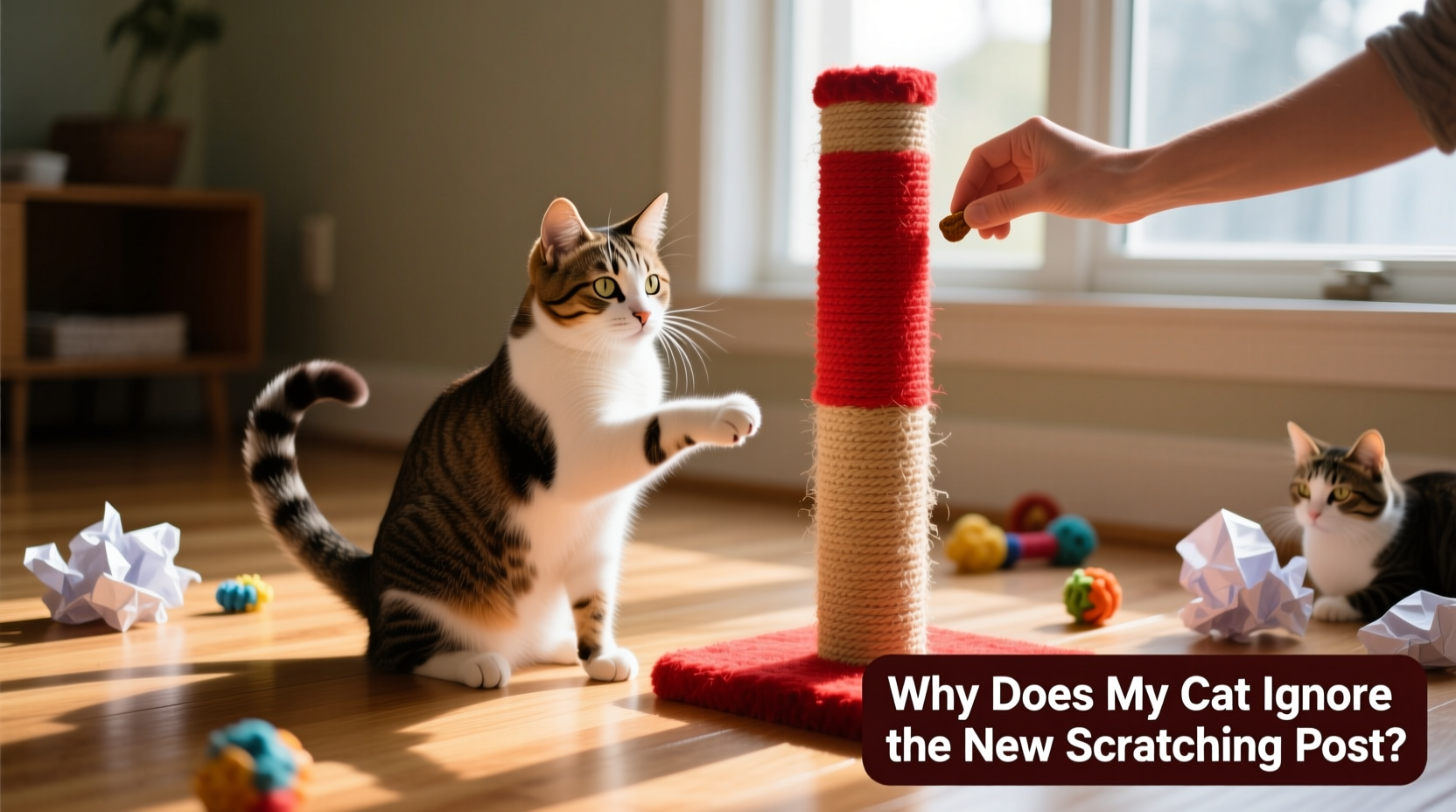
Cats rely heavily on routine and familiarity. A sudden addition to their space—no matter how well-intentioned—can be met with skepticism. The issue isn't usually the post alone, but the context in which it appears. Common reasons for disinterest include:
- Poor placement: If the post is tucked away in a quiet corner, far from where the cat spends time, it’s unlikely to attract attention.
- Wrong texture or material: Many cats prefer vertical sisal or corrugated cardboard over plush fabric or carpeted surfaces.
- Lack of association with existing habits: Cats often scratch after waking up or when marking high-traffic areas. A post placed outside these zones may be overlooked.
- Competition with existing furniture: If your cat already has a favorite chair or corner, they may see no reason to switch—even if you’ve banned them from using it.
- Stress or environmental changes: New pets, moving homes, or loud noises can make cats more cautious about interacting with unfamiliar objects.
Choosing the Right Scratching Post: Material, Height, and Stability
Not all scratching posts are created equal. A wobbly, short, or overly soft post may be dismissed immediately. Cats need stability to fully stretch and lean into a scratch. They also tend to prefer taller posts that allow them to extend their bodies vertically—ideally at least 30 inches high.
The material matters just as much. While some manufacturers cover posts in plush carpeting, many cats avoid this due to its similarity to household rugs they’re discouraged from scratching. Instead, natural fibers like sisal rope or cardboard offer better traction and durability.
| Material Type | Pros | Cons |
|---|---|---|
| Sisal Rope | Durable, mimics tree bark, excellent grip | Can fray over time; requires replacement |
| Cardboard | Affordable, replaceable, appealing texture | Less durable; needs frequent changing |
| Carpeted | Soft feel, familiar texture | Encourages scratching carpets/furniture |
| Wood/Composite | Very stable, long-lasting | Expensive; limited availability |
“Cats don’t scratch out of mischief—they do it because it’s biologically essential. Providing an appropriate outlet reduces stress and prevents destructive behavior.” — Dr. Sarah Thompson, Feline Behavior Specialist
Strategic Placement: Location Matters More Than You Think
Even the best-designed scratching post will fail if placed incorrectly. Cats typically scratch in locations tied to daily routines: near sleeping areas, entryways, or along pathways they frequently travel. Placing a post directly beside the couch they love to claw may seem counterintuitive, but it allows for redirection—not elimination—of the behavior.
Start by identifying your cat’s current scratching zones. Then, place the new post within 1–3 feet of those spots. Over time, you can gradually shift it to a more convenient location once acceptance is established.
Additionally, consider multi-cat households. Dominant cats may claim certain areas, leaving others underused. In such cases, having multiple posts in different zones ensures each cat feels safe using them.
Step-by-Step Guide to Introducing a New Scratching Post
- Assess current scratching behavior: Note when, where, and how your cat scratches now.
- Select the right post: Choose one based on observed preferences—height, texture, orientation (vertical vs. horizontal).
- Place it strategically: Position near existing scratching zones or high-traffic areas like bedroom doors or living room entrances.
- Add scent attraction: Rub catnip on the base or sprinkle silver vine to encourage investigation.
- Use positive reinforcement: Reward any interaction—sniffing, pawing, scratching—with treats or affection.
- Discourage alternatives temporarily: Cover furniture legs with double-sided tape or aluminum foil during the transition.
- Maintain consistency: Rotate or refresh materials every few months to keep interest alive.
Behavioral Conditioning: Making the Post Irresistible
Getting a cat to use a scratching post isn’t just about availability—it’s about making it rewarding. Behavioral conditioning works best when combined with sensory cues and consistent feedback.
Catnip, valerian root, or silver vine can act as powerful attractants. Sprinkle a small amount on the post daily for the first week. Some cats respond instantly; others take repeated exposure. Pair this with interactive play nearby: toss a toy close to the post or drag a feather wand up its side to simulate climbing prey.
When your cat shows interest—even briefly—offer immediate praise or a treat. Over time, the brain begins to associate the post with positive outcomes. Avoid punishment for ignoring the post; this creates negative associations with the area and increases anxiety.
Mini Case Study: From Ignored to Indispensable
Lena adopted a two-year-old rescue cat named Milo who had developed a strong habit of scratching her leather armchair. She purchased a tall sisal post and placed it in the basement, thinking it would “keep the mess contained.” Unsurprisingly, Milo never used it.
After consulting a behaviorist, Lena moved the post directly beside the armchair—the very spot Milo targeted daily. She rubbed catnip on the rope and placed Milo’s favorite feather toy at the base. Within three days, he began sniffing it. By day six, he gave his first full-body scratch. Over the next month, Lena gradually shifted the post five inches at a time toward a less obtrusive corner. Today, the original chair remains unharmed, and Milo uses both the main post and a smaller horizontal pad by his bed.
The lesson? Meet the cat where they are—both physically and behaviorally.
Common Mistakes That Undermine Success
Even well-meaning efforts can backfire if based on misconceptions. Here are frequent errors that prevent adoption:
- Placing the post too far from activity zones: Cats won’t go out of their way to scratch unless it aligns with their routine.
- Using unstable or undersized posts: A shaky base signals danger and discourages full-body engagement.
- Expecting immediate results: Acceptance can take days or weeks, especially in older or anxious cats.
- Removing old posts too soon: Transition gradually—don’t eliminate familiar options until the new one is consistently used.
- Relying solely on deterrents: Foil or sprays stop scratching but don’t redirect it. Without a viable alternative, stress builds.
“Redirection, not restriction, is the cornerstone of successful scratching management.” — Jessica Reed, Certified Cat Behavior Consultant
Checklist: Ensuring Your Scratching Post Gets Used
- ☑️ Post is at least 30 inches tall for vertical scratching
- ☑️ Made of sisal, cardboard, or another preferred texture
- ☑️ Placed in a high-traffic or rest/sleeping area
- ☑️ Stable and does not wobble when pushed
- ☑️ Treated with catnip or silver vine initially
- ☑️ Paired with toys or play sessions nearby
- ☑️ Existing scratching zones are gently redirected, not punished
- ☑️ Multiple posts available in multi-cat homes
Frequently Asked Questions
How long should I wait before deciding the post isn’t working?
Give it at least 2–3 weeks with active encouragement. Cats may investigate slowly, especially if they’re cautious or set in their ways. Adjust placement and add attractants before giving up.
My cat only likes horizontal scratching—should I still get a vertical post?
Yes, but prioritize offering both. Some cats prefer one over the other, while others use both depending on mood. Provide a flat cardboard scratcher alongside a vertical option to cover all bases.
Can I train an older cat to use a new scratching post?
Absolutely. While kittens adapt faster, adult and senior cats can learn new habits with patience and consistency. Focus on gradual introduction and positive reinforcement rather than force.
Conclusion: Building a Lasting Habit Through Trust and Environment
A cat’s refusal to use a new scratching post isn’t rebellion—it’s communication. They’re telling you the post doesn’t meet their needs in form, function, or location. By observing their natural behaviors, choosing appropriate materials, and guiding them with empathy, you can transform disinterest into daily use.
Remember, the goal isn’t just to protect your furniture. It’s to support your cat’s instinctual needs in a way that strengthens trust and improves quality of life. A well-placed, properly designed scratching post becomes more than a tool—it becomes part of your cat’s comfort system.
💬 Have a success story or challenge with your cat’s scratching habits? Share your experience below—your insight could help another cat owner find the solution they’ve been searching for!








