If you’ve ever seen your cat perched by the window, tail twitching and emitting a rapid series of high-pitched chirps or chatters while staring intently at a bird outside, you’ve witnessed one of the most fascinating displays of feline instinct. This behavior—commonly referred to as “chirping,” “chattering,” or “twittering”—is more than just an odd noise. It’s a complex expression of natural hunting drive, emotional arousal, and even frustration. Understanding why cats do this not only deepens your bond with your pet but also provides insight into their evolutionary roots and daily psychological needs.
The Science Behind the Chirp: A Natural Hunting Reflex
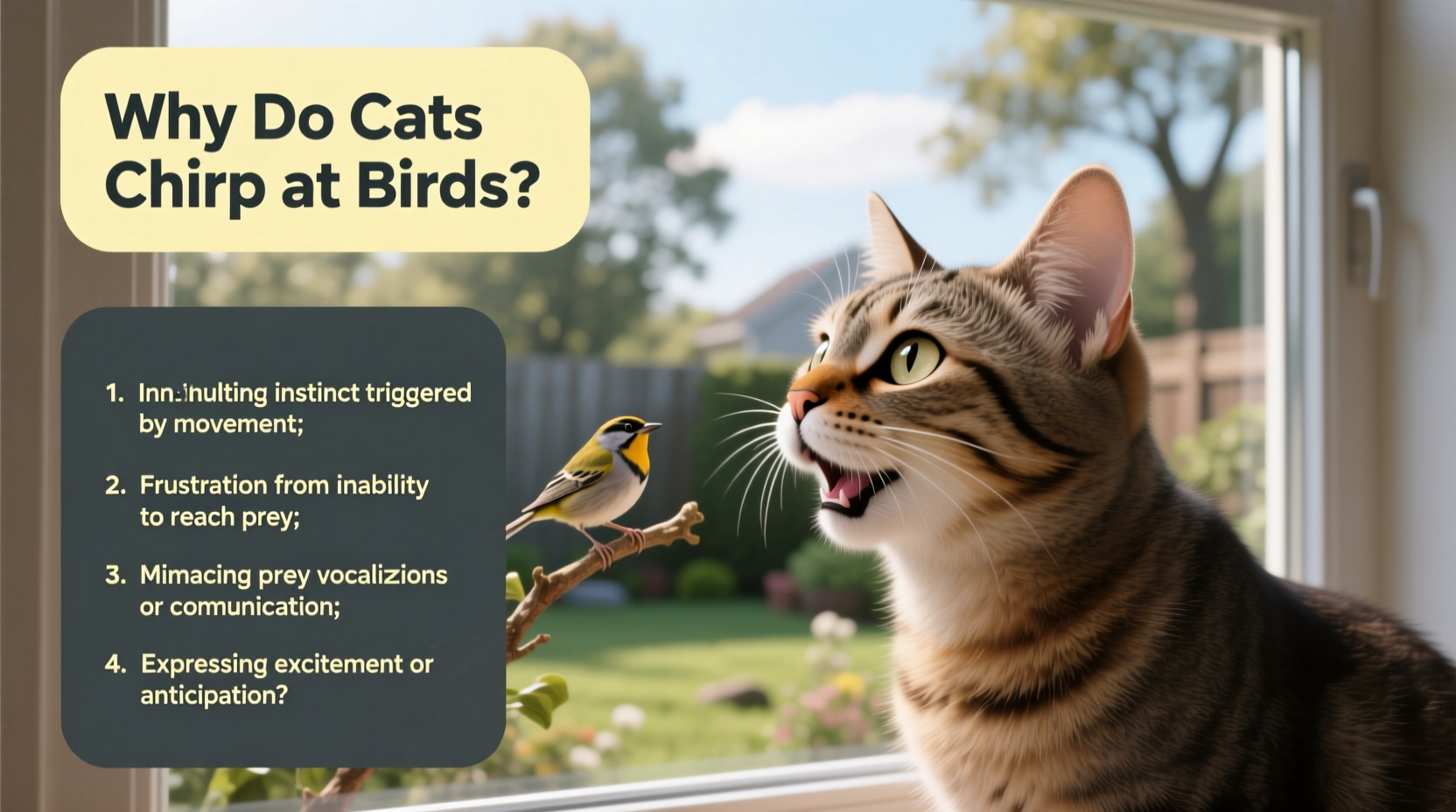
Cats are hardwired predators. Even domesticated housecats retain the same neural circuitry that drives wild felines to stalk, pounce, and kill prey. When a cat sees a bird through a window, its predatory sequence is triggered: orient, eye, stalk, chase, pounce, bite, and kill. However, the glass barrier prevents the final stages, leaving the cat in a state of heightened arousal without release.
The chirping sound—often accompanied by rapid jaw movements resembling biting—is believed to be a motor mimicry of the killing bite. In the wild, cats deliver a precise bite to the back of the neck to sever the spinal cord. The chattering motion replicates this action, even when no physical contact is possible. Researchers suggest this behavior is involuntary, stemming from the surge of adrenaline and focus during the hunt.
“Chattering is a displaced behavior—a physical manifestation of a cat’s urge to hunt when actual predation is blocked.” — Dr. Sarah Ellis, Feline Behavior Scientist, University of Lincoln
This reflex isn’t limited to birds. Some cats chirp at squirrels, insects, or even fast-moving toys. The key trigger is quick, erratic movement typical of small prey species, which activates the cat’s innate visual tracking system.
Emotional Triggers: Excitement, Frustration, and Communication
While the chirp originates from instinct, it’s also shaped by emotion. The sound often reflects a mix of excitement and frustration. Your cat sees potential prey, its body prepares for action, but the window halts everything. This creates a psychological tension that finds release in vocalization.
Interestingly, some experts believe chirping may also serve as a form of self-stimulation. The act of making the sound could reinforce focus, much like a human athlete might grunt during exertion to maintain concentration. Others propose it mimics bird calls—an unconscious attempt to lure prey closer, though this theory lacks strong empirical support.
In multi-cat households, chirping can also be social. One cat may start vocalizing at a bird, prompting others to join—even if they weren’t initially interested. This suggests the behavior can be contagious, possibly signaling “prey alert” to other felines in the territory.
Tip: If your cat seems overly stressed or fixated on birds, consider using frosted window decals to reduce visual access without blocking all light.Decoding the Sounds: Chirps, Chatters, and Trills
Not all bird-directed vocalizations are the same. Cats use a range of sounds depending on context and emotional state:
- Chirping: Short, high-pitched bursts, often likened to a bird’s call. Typically indicates excitement or focused attention.
- Chattering: Rapid teeth-clicking combined with a staccato vocalization. Most commonly seen during intense hunting arousal.
- Trilling: A melodic, rolling sound usually used in friendly communication. May occur if the cat is excited but not frustrated.
- Hissing or growling: Indicates agitation or territorial response, especially if another animal (like a neighborhood cat) is involved.
Distinguishing these sounds helps owners interpret their cat’s internal state. A soft chirp may mean playful interest, while aggressive chattering suggests pent-up energy needing an outlet.
Is Chirping Normal? When to Be Concerned
Yes, chirping at birds is entirely normal and healthy. It shows your cat is mentally engaged and responding appropriately to environmental stimuli. However, excessive or obsessive behavior—such as constant pacing, vocalizing for hours, or signs of anxiety—may indicate underlying issues.
Cats confined indoors with little mental stimulation may become hyper-focused on window prey, leading to stress or displacement behaviors like over-grooming or aggression. In such cases, the chirping isn’t the problem—it’s a symptom of unmet predatory needs.
| Behavior | Normal? | Action Needed? |
|---|---|---|
| Occasional chirping when birds pass by | ✅ Yes | No |
| Intense chattering lasting a few minutes | ✅ Yes | No – provide enrichment afterward |
| Constant fixation on window, inability to disengage | ⚠️ Possibly excessive | Yes – assess environment and routine |
| Vocalizing at night, pacing, loss of appetite | ❌ No | Yes – consult veterinarian or behaviorist |
Mini Case Study: Luna the Apartment Cat
Luna, a 3-year-old tabby living in a high-rise apartment, spent several hours each day pressed against the living room window, chirping and chattering at pigeons on the balcony across the street. Her owner noticed she was less playful with toys and sometimes seemed agitated after long sessions. A feline behavior consultant recommended introducing structured “hunt-eat-rest-sleep” cycles using interactive toys twice daily. Within two weeks, Luna’s window fixation decreased by half, and her overall mood improved. The chirping didn’t stop—but it became shorter and less intense, indicating better emotional balance.
Satisfying the Hunter: Enrichment Strategies
You can’t let your cat hunt real birds—and ethically, you shouldn’t. But you can satisfy their predatory drive in safe, constructive ways. The goal is to replicate the full hunting sequence: search, stalk, catch, and “kill.”
- Interactive Play Sessions: Use wand toys to mimic bird flight patterns. Move erratically, then let your cat “catch” the toy. End with a food reward to simulate the eat phase.
- Puzzle Feeders: Replace meals with foraging toys that require effort, engaging the search-and-capture instinct.
- Window Perches and Bird Feeders: Install a secure perch near a window. Consider placing a bird feeder outside—but at a safe distance (to protect wildlife). Watching birds becomes part of environmental enrichment.
- Simulated Prey Toys: Motorized toys that move unpredictably can trigger hunting behaviors indoors.
- Rotating Toy Library: Keep toys out of sight and rotate them weekly to maintain novelty and curiosity.
Checklist: Reducing Obsessive Bird-Watching
- ☑ Provide at least 10–15 minutes of interactive play twice daily
- ☑ Rotate toys weekly to prevent habituation
- ☑ Install a window perch or catio for safe outdoor viewing
- ☑ Use puzzle feeders instead of bowls for meals
- ☑ Limit continuous access to bird-heavy windows with blinds or curtains
- ☑ Monitor for signs of stress or fixation
- ☑ Consult a vet if behavior changes suddenly
FAQ: Common Questions About Cat Chirping
Do all cats chirp at birds?
No, not all cats exhibit this behavior. Personality, early life experiences, and level of environmental stimulation influence whether a cat chirps. Some remain silent but still show intense focus. Others may meow or purr instead.
Can I encourage my cat to chirp more?
There’s no need to encourage chirping specifically. Instead, focus on enriching your cat’s environment. Healthy predatory expression—whether vocal or silent—is a sign of good mental health. Forcing interaction with birds (e.g., opening windows) risks escape or injury.
Is chirping a sign of happiness?
It’s more accurate to say it’s a sign of engagement. Chirping reflects arousal, which can include excitement and pleasure, but also frustration. Context matters: a relaxed posture with chirping likely indicates enjoyment; tense muscles and dilated pupils suggest stress.
Conclusion: Embracing Your Cat’s Wild Side
The chirp your cat makes at a bird outside the window is a window into their primal soul. It’s not misbehavior—it’s a testament to their evolutionary brilliance and sensory acuity. Rather than discouraging this natural instinct, embrace it as a clue to your cat’s inner world. By understanding the reasons behind the chirp, you gain the power to meet their psychological needs in humane, fulfilling ways.
Transform your home into a habitat that honors their hunter identity. Offer daily opportunities to stalk, pounce, and triumph—even if the “prey” is a feather on a string. In doing so, you don’t just reduce frustration; you enrich your cat’s life on a fundamental level.
💬 Have a story about your cat’s bird-watching habits? Share your observations in the comments and connect with fellow cat lovers who understand the joy—and mystery—of the feline chirp.








