Tonsil stones, also known as tonsilloliths, are small, calcified formations that develop in the crevices of the tonsils. While often harmless, they can cause discomfort, persistent bad breath, and a feeling of something lodged in the back of the throat. Understanding how and why these stones form is key to managing them effectively. This article explores the underlying causes, recognizable symptoms, and evidence-based treatment and prevention strategies.
What Are Tonsil Stones?
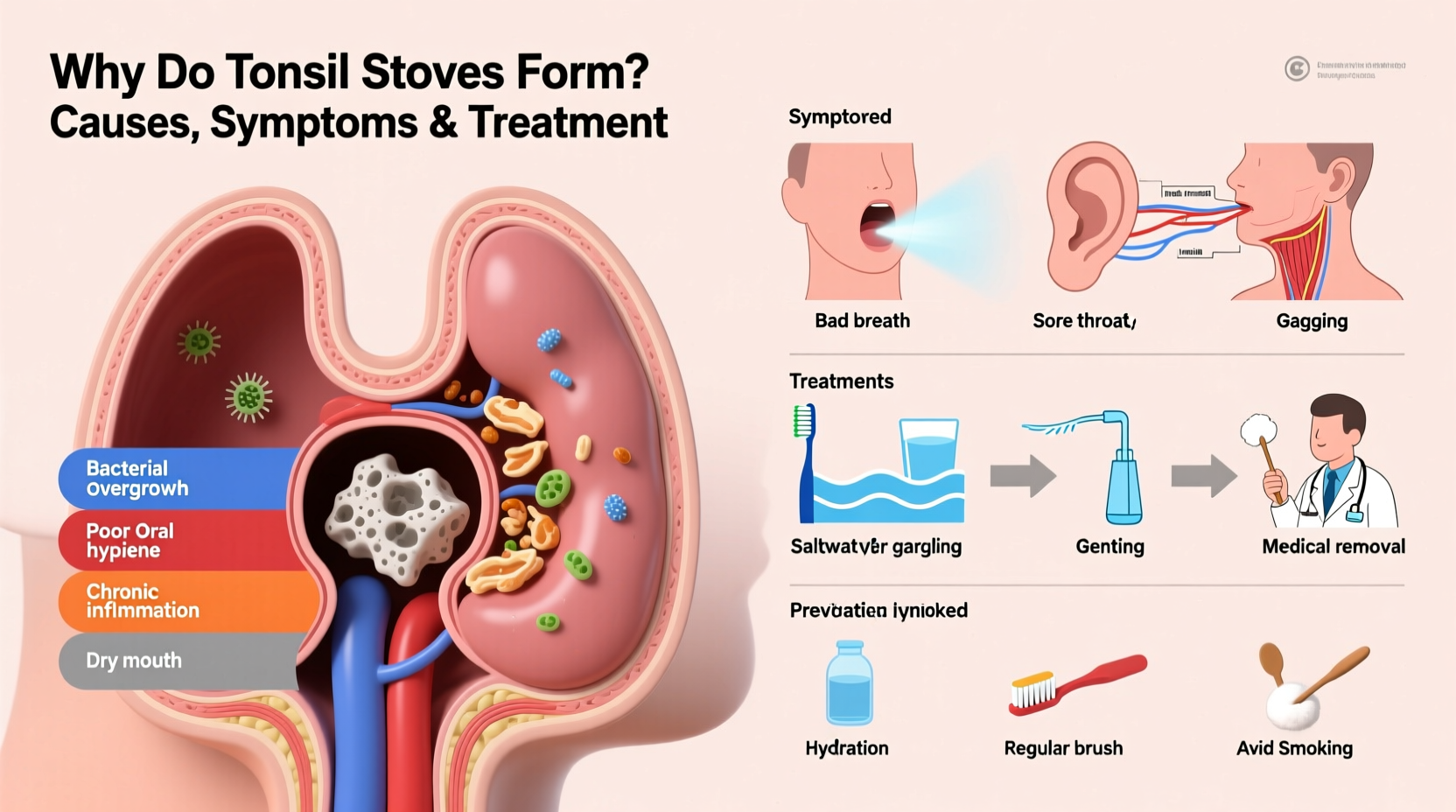
Tonsil stones occur when debris—such as dead cells, mucus, saliva, and food particles—become trapped in the tonsillar crypts, which are small pockets or folds in the surface of the tonsils. Over time, this material hardens due to bacterial activity and mineral deposits, forming a stone-like mass. These formations can range from tiny specks to larger, pea-sized lumps and may appear white, yellow, or gray.
Though not always symptomatic, tonsil stones are more common in individuals with chronic tonsillitis, large tonsils, or poor oral hygiene. They are typically benign but can lead to recurrent discomfort if left unmanaged.
Primary Causes of Tonsil Stone Formation
The development of tonsil stones is influenced by several interrelated factors. Identifying these causes helps in both treatment and long-term prevention.
- Anatomy of the Tonsils: People with deep crypts or fissures in their tonsils are more prone to trapping debris, increasing the likelihood of stone formation.
- Poor Oral Hygiene: Inadequate brushing, flossing, and tongue cleaning allow bacteria and food particles to accumulate, contributing to buildup in the tonsillar area.
- Chronic Sinus Issues: Postnasal drip introduces excess mucus into the throat, which mixes with bacteria and dead cells, creating ideal conditions for stone development.
- Recurrent Tonsillitis: Frequent infections cause inflammation and tissue damage, leading to deeper crypts and increased debris retention.
- Dietary Habits: Diets high in dairy or sugary foods may increase mucus production and bacterial growth, indirectly promoting stone formation.
- Dehydration: Dry mouth reduces natural cleansing action from saliva, allowing debris to settle more easily in the tonsils.
Recognizing Symptoms of Tonsil Stones
Some people have tonsil stones without noticing any symptoms. However, when signs do appear, they can be both physical and social in impact—especially due to associated bad breath.
Common Symptoms Include:
- Persistent halitosis (bad breath) that doesn’t improve with brushing
- Sensation of a foreign object stuck in the throat
- Visible white or yellow spots on the tonsils
- Sore throat or irritation, especially on one side
- Difficulty swallowing (in cases of larger stones)
- Ear pain (referred pain via shared nerve pathways)
- Swollen tonsils or frequent throat clearing
“Many patients come in for chronic bad breath only to discover tonsil stones during examination. It’s a frequently overlooked but treatable cause.” — Dr. Alan Wu, Otolaryngologist
Effective Treatment Options
Treatment depends on the size, frequency, and severity of symptoms. Most cases can be managed at home, while persistent or painful stones may require medical intervention.
Home Remedies and Self-Care
- Salt Water Gargle: Mix 1/2 teaspoon of salt in a cup of warm water. Gargle deeply for 30 seconds, twice daily. This helps loosen debris and reduce inflammation.
- Cotton Swab or Finger Pressure: With clean hands and a mirror, gently press around the stone to dislodge it. Avoid aggressive poking to prevent injury.
- Water Flosser (Oral Irrigator): Use a low-pressure setting to flush out crypts. Aim the stream toward visible stones, but don’t force it.
- Mouthwash with Cetylpyridinium Chloride: This ingredient targets odor-causing bacteria and may reduce microbial buildup in the tonsils.
Medical Treatments
| Treatment | How It Works | Best For |
|---|---|---|
| Professional Removal | ENT uses suction or curette to extract stones under visualization | Larger, impacted stones causing pain or infection |
| Laser Cryptolysis | Laser resurfaces tonsil crypts to reduce depth and trap fewer particles | Recurrent stones; minimally invasive option |
| Tonsillectomy | Surgical removal of tonsils | Chronic, debilitating cases with repeated infections |
Step-by-Step Guide to Safe At-Home Removal
- Wash your hands thoroughly and use a sanitized cotton swab.
- Stand in front of a well-lit mirror and open your mouth wide.
- Gently press the tissue around the visible stone—usually near the top of the tonsil.
- Apply slight pressure until the stone pops out. Do not dig deeply.
- Rinse your mouth with salt water afterward to disinfect the area.
- Dispose of the swab and wash hands again.
Prevention Checklist
Reducing the recurrence of tonsil stones involves consistent lifestyle and hygiene habits. Follow this checklist to minimize risk:
- ✅ Brush teeth twice daily, including the tongue surface
- ✅ Floss daily to reduce overall oral bacteria
- ✅ Gargle with salt water or non-alcoholic mouthwash after meals
- ✅ Stay hydrated throughout the day to maintain saliva flow
- ✅ Treat sinus infections or allergies promptly to reduce postnasal drip
- ✅ Avoid smoking, which dries the mouth and increases bacterial growth
- ✅ Consider using a water flosser 2–3 times per week for deep cleaning
Real-Life Example: Managing Chronic Tonsil Stones
Sarah, a 34-year-old teacher, struggled with persistent bad breath despite excellent dental hygiene. She frequently felt a tickle in her throat and occasionally coughed up small, foul-smelling lumps. After visiting an ENT specialist, she was diagnosed with recurring tonsil stones. The doctor attributed them to her history of seasonal allergies and deep tonsillar crypts.
Sarah began daily saltwater gargles and incorporated a water flosser into her routine. She also started using a tongue scraper each morning. Within three weeks, her symptoms improved significantly. Her follow-up visit confirmed no new stone formation. Sarah now manages her condition proactively and reports greater confidence in social interactions.
Frequently Asked Questions
Can tonsil stones go away on their own?
Yes, small tonsil stones may dislodge or dissolve naturally through coughing, swallowing, or gargling. However, larger or deeply embedded stones often require manual removal or treatment.
Are tonsil stones dangerous?
No, tonsil stones are generally not dangerous. However, they can cause discomfort, bad breath, and secondary infections if they become large or inflamed. Rarely, they may mimic more serious conditions like abscesses or tumors, so persistent symptoms warrant medical evaluation.
Can children get tonsil stones?
Yes, though less commonly than adults. Children with large tonsils or frequent throat infections are more susceptible. Parents should avoid attempting removal at home and consult a pediatric ENT if symptoms persist.
Conclusion: Taking Control of Your Throat Health
Tonsil stones are more than just a nuisance—they can affect your comfort, confidence, and daily life. By understanding the causes and symptoms, you’re better equipped to address them early and prevent recurrence. Simple changes in oral hygiene, hydration, and nasal health can make a significant difference. For those with chronic issues, modern treatments offer lasting relief.
💬 Have you dealt with tonsil stones? Share your experience or tips in the comments below—your insight could help someone find relief today.








