Squirrels are among the most vocal and expressive small mammals in urban and natural environments. Their rapid, high-pitched chattering is a familiar sound in backyards, parks, and forests. While it may seem like random noise to the untrained ear, this chattering is actually a sophisticated form of communication. Scientists have spent decades studying these vocalizations to understand their meanings, functions, and evolutionary significance. From warning calls to territorial disputes, every chirp, squeak, and moan serves a purpose in the intricate social lives of squirrels.
The Science Behind Squirrel Vocalizations
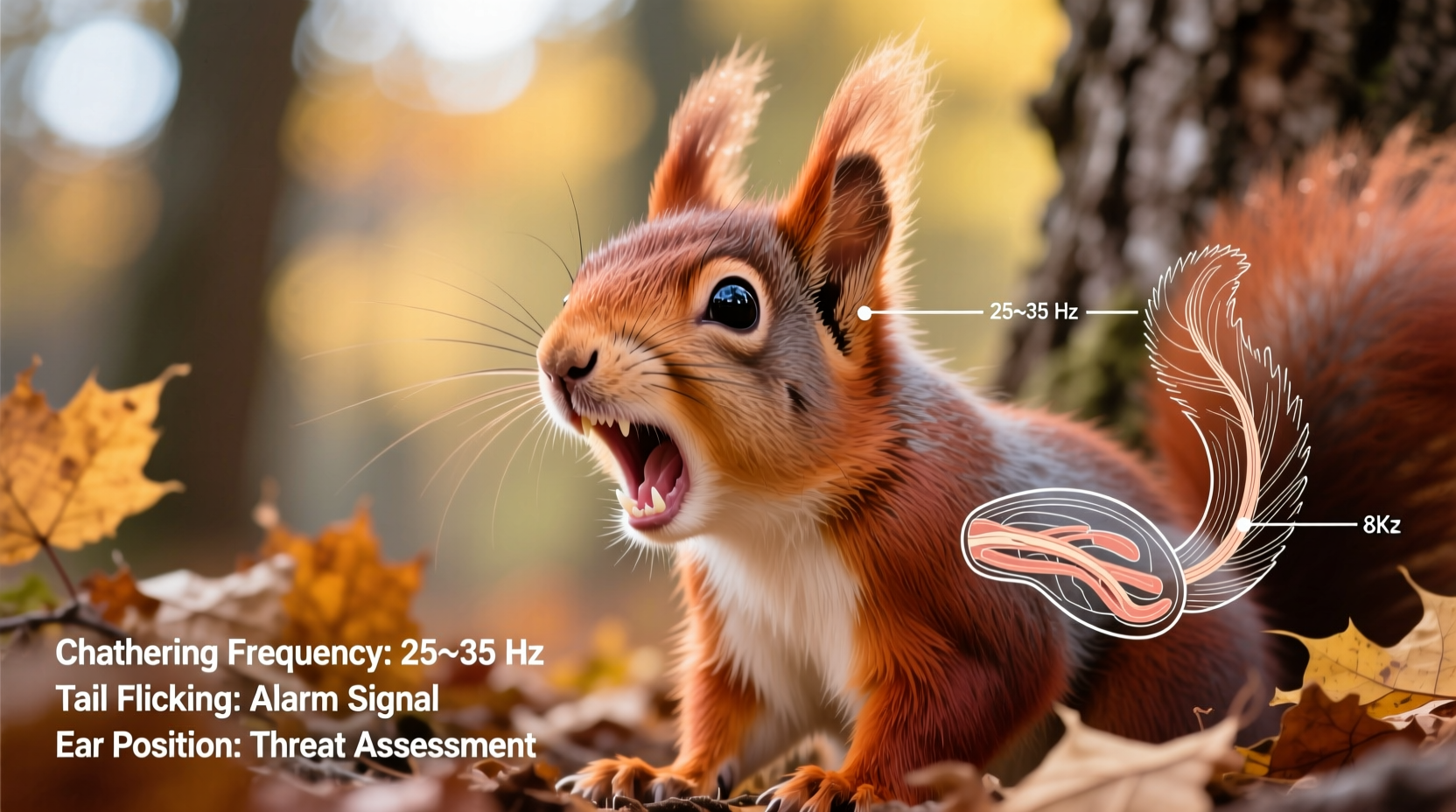
Squirrel communication is far more complex than simple alarm signals. Researchers have identified multiple types of vocalizations, each with distinct acoustic properties and behavioral contexts. Eastern gray squirrels (Sciurus carolinensis), one of the most studied species, produce a range of sounds including:
- Alarm calls: Short, repetitive \"kuk\" or \"quaa\" sounds used to signal danger.
- Mating calls: Soft, melodic coos produced during courtship.
- Aggressive chatters: Rapid sequences of harsh notes during territorial confrontations.
- Infant distress calls: High-pitched whines used by young squirrels to locate their mothers.
A landmark study by Dr. Robert Lishak at Auburn University revealed that squirrels use specific call patterns depending on the type of predator. For example, aerial threats like hawks trigger short, high-frequency barks, while ground predators such as cats elicit longer, lower-frequency “quaa” calls. This indicates that squirrels not only recognize different dangers but also convey detailed information about them through sound.
“Squirrel vocalizations are not just reflexive alarms—they’re structured signals with contextual meaning, much like early forms of language.” — Dr. Jessica Watson, Behavioral Ecologist, University of Alberta
Decoding Common Squirrel Sounds
Understanding what squirrels are saying requires attention to both the sound itself and the situation in which it occurs. Here’s a breakdown of the most common vocalizations and their likely meanings:
| Sound Type | Description | Meaning / Context |
|---|---|---|
| Kuk-Kuk-Kuk | Short, staccato barks repeated rapidly | Immediate threat detection—often used when a predator is spotted nearby |
| Quaa | Longer, drawn-out moaning sound | General alert; used after initial alarm to indicate ongoing danger |
| Seet | High-pitched whistle, almost bird-like | Aerial predator warning—difficult for raptors to locate due to frequency |
| Chatter | Rapid sequence of mixed kiks, quaas, and squeals | Aggression or territorial defense; often directed at rival squirrels |
| Coo-Purring | Soft, rhythmic cooing | Mating behavior or mother-offspring bonding |
This nuanced system allows squirrels to communicate efficiently without drawing excessive attention to themselves—a critical balance in environments teeming with predators.
Tip: If you hear a sudden burst of \"kuk\" calls in your yard, scan the sky and ground—there’s likely a cat, hawk, or other threat nearby.Social Functions of Chattering Beyond Warnings
While predator alerts dominate public perception, chattering plays a vital role in squirrel social dynamics. These animals are not strictly solitary; they maintain loose social networks where vocalizations help establish hierarchy, defend resources, and coordinate breeding activities.
In urban areas, where food sources like bird feeders or trash bins are concentrated, competition intensifies. Squirrels will often engage in prolonged chattering bouts to assert dominance over a feeding site. Observational studies show that dominant individuals initiate chatters more frequently and are less likely to retreat when challenged.
Mothers also use vocal cues to guide their offspring. Juvenile squirrels learn to interpret alarm calls by observing adult reactions. In one documented case, a mother squirrel repeatedly gave “seet” calls whenever a shadow passed overhead—even if no actual predator was present. Her kits quickly learned to freeze and hide, demonstrating how vocalizations serve as teaching tools.
Mini Case Study: The Park Bench Encounter
In Toronto’s High Park, a regular visitor noticed two gray squirrels engaged in an intense chattering match near a picnic table. One squirrel stood upright, tail flicking, emitting rapid-fire barks, while the other circled cautiously. Over several days, the same pair repeated this behavior around lunchtime. A wildlife biologist later explained that this was a classic territorial dispute—the first squirrel had claimed the area as its foraging zone, using vocal displays to deter the intruder without physical confrontation. Eventually, the challenger began approaching only when the resident was absent, illustrating how consistent signaling can shape spatial behavior.
Body Language and Sound: A Combined Communication System
Vocalizations rarely occur in isolation. Squirrels integrate sound with dramatic body movements to amplify their message. Key behaviors include:
- Tail flagging: Rapid side-to-side flicks of the tail, often paired with “kuk” calls to enhance visibility.
- Teeth chattering: Audible clicking used in close-range aggression.
- Posturing: Standing on hind legs to appear larger during confrontations.
Research from the University of Miami found that squirrels combine tail flags with alarm calls up to 78% of the time when predators are near. This multimodal approach increases the likelihood that nearby conspecifics (other squirrels) will notice and respond appropriately—even if they don’t hear the sound, they may see the movement.
Step-by-Step: How to Interpret Squirrel Chatter in Your Yard
You don’t need a degree in zoology to begin understanding squirrel communication. Follow this practical guide to decode what the squirrels outside your window might be saying:
- Pause and listen: Stop what you’re doing and focus on the sound. Is it fast and sharp, or slow and moaning?
- Locate the source: Identify which squirrel is vocalizing and note its posture.
- Scan the environment: Look for potential threats—cats, birds of prey, humans, or other squirrels.
- Observe nearby squirrels: Do others freeze, flee, or join in the chorus? Mobbing behavior often follows alarm calls.
- Record patterns: Keep a brief journal over a week. You may notice certain calls at specific times (e.g., dawn chatters linked to territorial patrols).
Over time, you’ll start recognizing signature calls and even individual “personalities” among local squirrels.
Common Misconceptions About Squirrel Noise
Despite growing scientific understanding, several myths persist:
- Myth: Squirrels chatter just to be annoying.
Truth: Every vocalization has a functional purpose tied to survival or reproduction. - Myth: They’re always warning about immediate danger.
Truth: Many calls are social or territorial, not predator-related. - Myth: All squirrels sound the same.
Truth: Species vary widely—fox squirrels have deeper calls, while red squirrels produce bird-like trills.
FAQ: Frequently Asked Questions
Do squirrels recognize individual voices?
Emerging evidence suggests they can distinguish between familiar and unfamiliar individuals based on call variations, particularly among kin. This ability helps reduce unnecessary conflicts within established neighborhoods.
Can humans mimic squirrel calls?
Yes—some wildlife researchers use recorded or mouth-made “kuk” calls to test responses. However, mimicking a call may attract unwanted attention from curious or defensive squirrels.
Why do squirrels chatter at night?
Most squirrel vocalizations occur during daylight hours. Nocturnal noises are rare and could indicate distress, disorientation, or misidentification (e.g., raccoons or flying squirrels making similar sounds).
Tip: Use a voice memo app to record squirrel sounds in your area. Compare them over time to identify recurring patterns and seasonal changes.Conclusion: Listening to the Language of the Trees
The next time you hear a squirrel chattering from a rooftop or treetop, take a moment to listen closely. That sound is more than background noise—it’s a coded message shaped by millions of years of evolution. Whether issuing a life-saving warning, defending a prized acorn stash, or calling to a mate, squirrels rely on their vocal repertoire to navigate a complex world. By learning to interpret these signals, we gain not only insight into animal behavior but also a deeper connection to the natural rhythms unfolding in our own backyards.
💬 Have you noticed unique squirrel sounds in your neighborhood? Share your observations in the comments and help build a community understanding of these clever, communicative creatures!








