
It’s a scene familiar to many pet owners: your dog suddenly stops mid-play, turns its head toward the corner of the room, and fixes its gaze on nothing at all. Or your cat sits motionless for minutes, pupils dilated, locked onto a blank patch of wall. At first, it might seem amusing—or even eerie. But when this behavior becomes frequent or intense, concern naturally follows. What are they seeing? Are they unwell? Is something wrong?
Veterinarians and animal behaviorists have studied this phenomenon extensively. While occasional staring can be normal, persistent fixation on walls or empty spaces may signal underlying issues ranging from neurological conditions to environmental stressors. Understanding the possible causes is essential for responsible pet ownership and timely intervention.
Common Behavioral Explanations
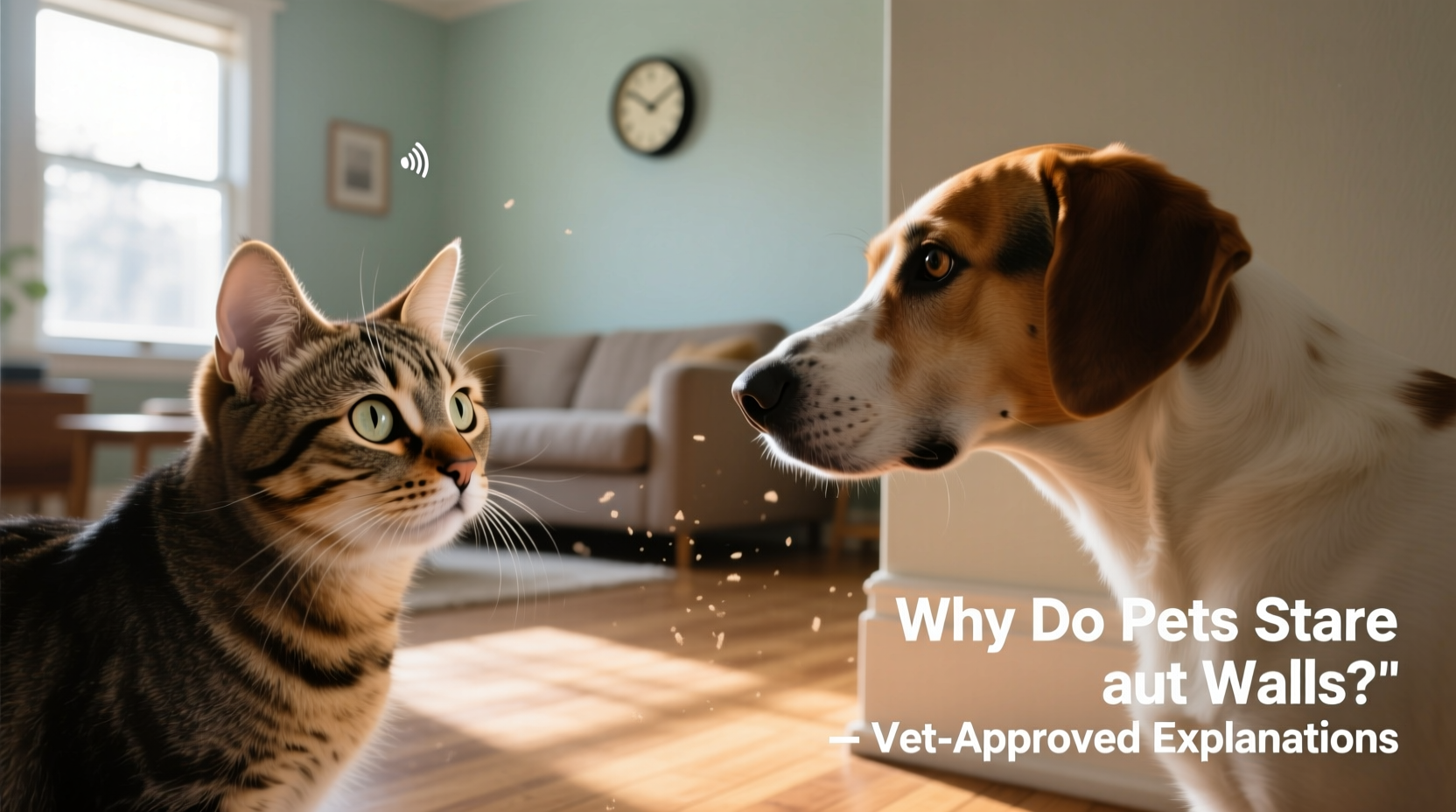
Not every instance of wall-staring indicates a problem. Pets process their environment differently than humans, and what seems like odd behavior may simply reflect natural instincts or heightened sensory perception.
- Tracking subtle movement: A flickering shadow, dust motes in sunlight, or even air currents from a vent can capture a pet’s attention. Cats, in particular, have exceptional peripheral vision and sensitivity to motion.
- Responding to sounds: High-frequency noises—inaudible to humans—such as rodents inside walls, electrical buzzing, or plumbing vibrations may draw a pet’s focus to a specific spot.
- Boredom or compulsive behavior: In under-stimulated environments, pets may develop repetitive actions, including staring, pacing, or licking. This is especially common in dogs left alone for long periods.
When Curiosity Crosses into Concern
The line between harmless curiosity and problematic behavior often lies in frequency, duration, and accompanying symptoms. Occasional glances at a corner are not alarming. However, if your pet stares for extended periods, appears disoriented, or shows other unusual signs—such as vocalizing at the wall, trembling, or loss of balance—it’s time to investigate further.
Medical Causes Behind Wall-Staring
Persistent staring at walls or corners can be a clinical sign of neurological or systemic illness. Veterinarians consider several medical conditions when evaluating such behavior.
Epilepsy and Focal Seizures
One of the most serious—and often overlooked—causes is partial (focal) seizures. Unlike generalized seizures that involve convulsions, focal seizures may present subtly: a pet may appear \"zoned out,\" twitch one eye, drool, or fixate on a point without reacting to stimuli.
These episodes originate in a specific area of the brain and can affect vision, perception, or motor control. Because they’re brief and intermittent, owners often miss them or mistake them for daydreaming.
“Focal seizures are frequently misdiagnosed because they don’t fit the classic image of a seizure. A dog staring silently at a wall for 30 seconds, then resuming normal activity, could be experiencing a neurological event.” — Dr. Laura Chen, Veterinary Neurologist, UC Davis School of Veterinary Medicine
Cognitive Dysfunction Syndrome (CDS)
Similar to dementia in humans, Cognitive Dysfunction Syndrome affects older pets. It’s estimated that over 50% of dogs and cats over age 11 show signs of cognitive decline. Wall-staring is a common symptom, alongside confusion, altered sleep cycles, and reduced interaction.
Pets with CDS may forget house training, wander aimlessly, or become stuck behind furniture. The behavior stems from changes in brain chemistry and structure, particularly in areas governing memory and spatial awareness.
Vision and Hearing Loss
Sensory decline can also lead to apparent wall-staring. A pet with deteriorating vision may look toward light sources or contrast patterns on walls, mistaking them for objects. Similarly, hearing-impaired animals may visually fixate on movements they can no longer hear, leading to prolonged gazing.
Brain Tumors or Lesions
Although less common, space-occupying lesions in the brain—such as tumors or inflammation—can disrupt normal neural pathways. Depending on the location, these may cause hallucinations, abnormal eye movements, or obsessive focus on non-existent stimuli.
Diagnosis typically requires advanced imaging like MRI or CT scans, especially if other neurological deficits are present.
Environmental and Psychological Triggers
Even in the absence of medical conditions, a pet’s surroundings play a major role in shaping behavior. Stress, anxiety, and poor environmental design can manifest in ways that mimic neurological disorders.
Anxiety and Fear-Based Behaviors
Dogs and cats with separation anxiety, noise phobias, or past trauma may exhibit displacement behaviors—actions that serve no purpose but help relieve internal tension. Staring into corners might be part of a ritualized response to perceived threats.
For example, a rescue dog that was previously confined in a small space may associate corners with safety or danger, prompting repeated visual checks.
Lack of Environmental Enrichment
A barren or monotonous living space fails to meet a pet’s mental and physical needs. Indoor cats, especially, require stimulation through climbing structures, interactive toys, and visual access to the outdoors. Without these, they may resort to self-soothing or obsessive behaviors, including wall-gazing.
Tip: Install a bird feeder outside a window your pet can watch. Natural movement provides hours of safe, engaging entertainment.How to Assess the Behavior: A Step-by-Step Guide
If your pet is staring at walls regularly, follow this timeline to determine whether veterinary care is needed.
- Observe and document: Note the time of day, duration, frequency, and any triggers (e.g., after waking, during storms). Record video if possible.
- Check for other symptoms: Look for drooling, tremors, disorientation, accidents in the house, or changes in appetite or sleep.
- Review recent changes: Has there been a move, new pet, construction noise, or change in routine? These can trigger stress-related behaviors.
- Eliminate environmental factors: Inspect for drafts, flickering lights, insect activity, or high-pitched electronic sounds near where your pet stares.
- Schedule a vet visit: If the behavior persists beyond a few days or worsens, consult your veterinarian. Request a full physical, bloodwork, and neurological assessment if indicated.
Do’s and Don’ts When Your Pet Stares at Walls
| Do’s | Don’ts |
|---|---|
| Keep a journal of episodes (time, duration, context) | Ignore repeated or worsening episodes |
| Provide mental stimulation with toys and routines | Yell at or punish your pet for staring |
| Minimize stress with consistent schedules and safe spaces | Assume it’s “just weird” without investigation |
| Seek veterinary advice if you notice other neurological signs | Delay treatment hoping it will resolve on its own |
| Use calming aids (pheromone diffusers, white noise) if anxiety is suspected | Self-diagnose or medicate without professional guidance |
Real-Life Case Study: Max, the Golden Retriever
Max, a 7-year-old golden retriever, began staring at the same corner of the living room every evening. His owner initially dismissed it as boredom. Over two months, the episodes increased in frequency—from once a week to daily—and were sometimes followed by lip-smacking and circling.
Concerned, Max’s owner recorded a 45-second episode and brought it to the vet. After a thorough exam and blood tests (which ruled out metabolic causes), Max was referred to a veterinary neurologist. An MRI revealed a small lesion in the temporal lobe, consistent with focal epilepsy.
Max was started on anti-seizure medication. Within three weeks, the staring episodes ceased entirely. Follow-up videos confirmed no recurrence. This case highlights how subtle symptoms can indicate serious conditions—and why early documentation and professional evaluation are crucial.
FAQ: Common Questions About Wall-Staring in Pets
Is it normal for my cat to stare at the wall occasionally?
Yes, brief moments of focused attention are normal, especially if triggered by light, shadows, or tiny movements. However, if the behavior becomes repetitive, prolonged, or is accompanied by twitching, growling, or disorientation, consult your vet.
Can old age cause pets to stare at nothing?
Yes. Cognitive Dysfunction Syndrome is common in senior pets. Alongside wall-staring, look for nighttime vocalization, getting lost in familiar spaces, or changes in social behavior. Early intervention with diet, supplements, and environmental adjustments can slow progression.
Could my pet be seeing ghosts or spirits?
While some owners speculate about supernatural explanations, veterinary science attributes such behaviors to sensory, neurological, or psychological causes. Pets have keener senses than humans and may detect stimuli we cannot perceive—but there’s no scientific evidence they see “ghosts.” Focus on medical and behavioral assessments instead.
Prevention and Long-Term Management Checklist
- ✅ Schedule annual wellness exams, especially for pets over 7 years old
- ✅ Monitor behavior changes using a journal or mobile app
- ✅ Provide daily mental enrichment (puzzle toys, training, exploration)
- ✅ Reduce household stress with predictable routines and safe zones
- ✅ Install nightlights for aging pets with poor vision
- ✅ Use calming pheromone diffusers (e.g., Feliway for cats, Adaptil for dogs) in high-anxiety areas
- ✅ Seek a veterinary neurologist if seizures are suspected
Conclusion: Pay Attention—Your Pet Can’t Tell You What’s Wrong
Pets communicate primarily through behavior. When your dog or cat stares at a wall, they aren’t being strange—they’re responding to something in their world, whether real or perceived. As a caregiver, your role is to interpret those signals accurately and act with compassion and urgency when needed.
Some causes of wall-staring are harmless and easily addressed. Others require medical treatment to prevent suffering or deterioration. By staying observant, documenting changes, and partnering with your veterinarian, you can ensure your pet’s well-being—mind and body.
💬 Has your pet ever stared at a wall or empty corner? Share your experience and what you learned in the comments below. Your story could help another pet owner recognize a warning sign early.








