Parrots are intelligent, social birds known for their vibrant personalities—and their loud vocalizations. If you share your home with a parrot, you’ve likely experienced the piercing shrieks that often begin at dawn. While this behavior is natural, it can be disruptive, especially in urban environments or shared living spaces. Understanding the root causes of morning screaming is the first step toward managing it effectively. More importantly, reducing noise should never come at the expense of your bird’s emotional health. This article explores the biological, social, and environmental reasons behind morning screaming in parrots and offers practical, science-backed solutions to minimize excessive noise.
The Natural Instinct Behind Morning Screaming
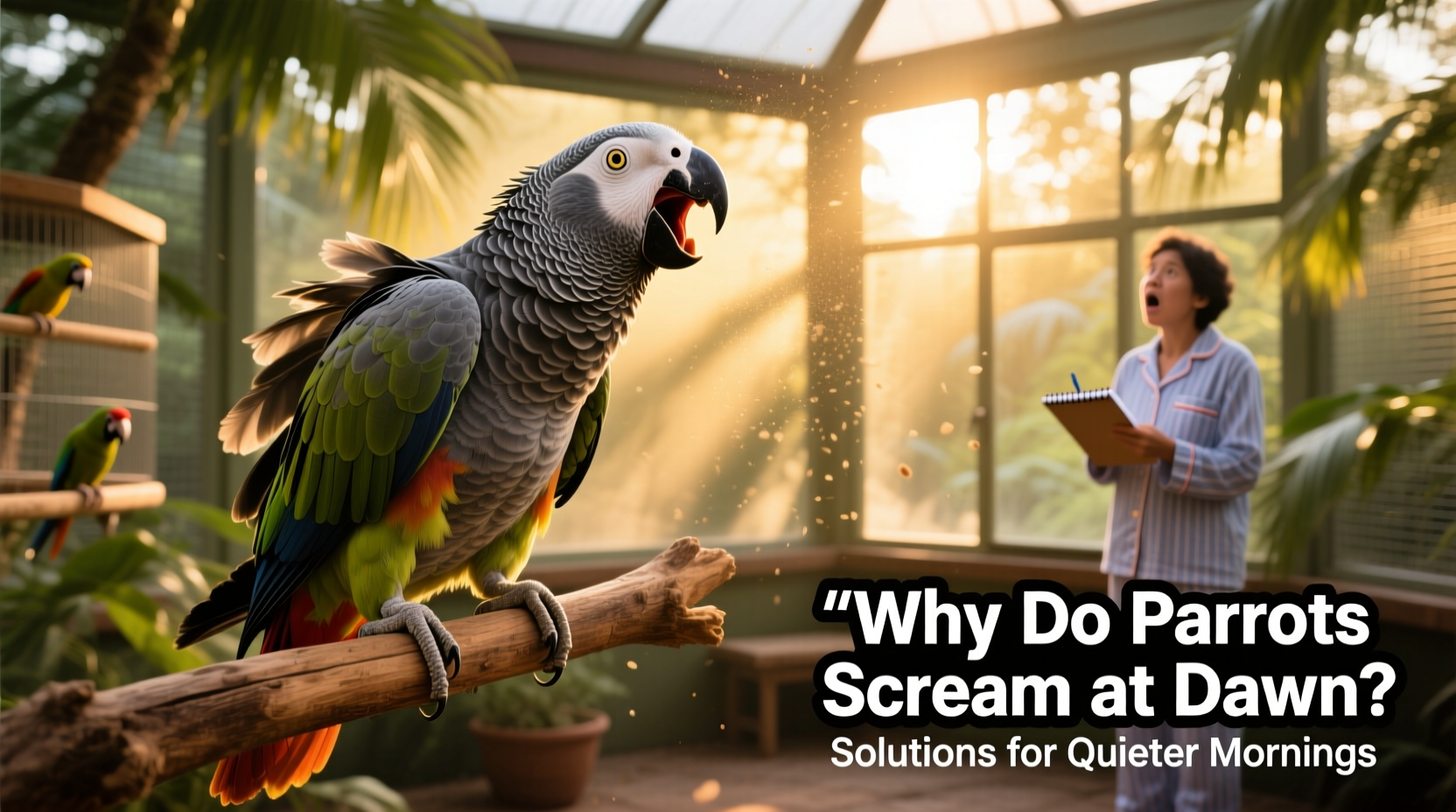
In the wild, parrots are highly social creatures that live in flocks. Their survival depends on communication, coordination, and territorial awareness. One of the most critical times for vocalization is early morning, shortly after sunrise. This period, known as the “dawn chorus,” is when wild parrots call out to locate flock members, establish territory, and signal safety after a night apart.
Domesticated parrots retain these instincts. Even if they’re the only bird in the household, their internal clock—regulated by circadian rhythms—triggers a burst of vocal activity at daybreak. This behavior mimics the natural flock-checking routine. A lone pet parrot may scream loudly to “reconnect” with its human family, whom it perceives as its flock.
“Parrots don’t scream to annoy us—they scream to survive. In the wild, silence could mean danger or separation. What sounds like noise to us is a lifeline to them.” — Dr. Irene Pepperberg, Avian Cognition Researcher
Understanding this instinct reframes the issue: morning screaming isn’t misbehavior—it’s an expression of deeply rooted biology. Suppressing it entirely is neither realistic nor ethical. The goal should be to manage volume and duration while meeting the bird’s psychological needs.
Common Triggers That Amplify Morning Noise
While instinct plays a central role, several environmental and behavioral factors can intensify morning screaming:
- Lack of sleep: Parrots require 10–12 hours of uninterrupted rest. Artificial lighting or late-night household activity can disrupt sleep, making birds more irritable and vocal at dawn.
- Attention-seeking: If a parrot learns that screaming results in interaction—even negative attention like yelling—it will repeat the behavior.
- Boredom or lack of stimulation: Birds kept in bare cages with no toys or enrichment may resort to screaming out of frustration.
- Separation anxiety: Being isolated from family members overnight can trigger distress calls when the bird wakes up alone.
- Dietary imbalances: Poor nutrition affects mood and energy levels, potentially increasing agitation and vocalization.
Effective Strategies to Reduce Morning Screaming
Reducing excessive noise requires a multi-pronged approach that respects the bird’s nature while modifying the environment and routines. Here’s a step-by-step guide to help you create a calmer morning experience—for both you and your parrot.
1. Establish a Consistent Sleep Schedule
Parrots thrive on routine. Sudden changes in light or noise can startle them awake and trigger panic calls. Use automatic timers for room lights or cage covers to ensure your bird gets consistent darkness from 7 PM to 7 AM. Avoid leaving TVs or phones on late into the night near the cage.
2. Modify the Wake-Up Environment
Instead of allowing your parrot to wake up in silence and isolation, consider adjusting your own routine slightly. If possible, have a soft radio or ambient music playing quietly before sunrise. Familiar background sounds can ease the transition from sleep and reduce the urgency to call out.
3. Provide Pre-Dawn Enrichment
Some owners use timed treat dispensers or puzzle toys that activate just before sunrise. The idea is to give the bird something engaging to focus on instead of screaming. For example, a toy that releases a seed after manipulation can occupy the bird during the first few minutes of waking.
4. Reinforce Quiet Behavior
Never reward screaming with attention. Wait until your parrot is quiet for at least five seconds, then offer praise, a treat, or interaction. This teaches the bird that calmness—not noise—gets results. Be patient; this conditioning takes time but is far more effective than punishment.
5. Increase Daytime Mental Stimulation
A tired, mentally engaged parrot is less likely to engage in excessive vocalization. Rotate toys weekly, teach simple tricks, and allow supervised out-of-cage time for exploration. Species like African Greys and Amazons need at least 2–3 hours of active engagement daily.
Tip: Introduce foraging activities—hide treats in paper rolls or cardboard boxes—to mimic natural feeding behaviors and reduce stress-related screaming.Do’s and Don’ts When Managing Parrot Noise
| Do’s | Don’ts |
|---|---|
| Provide 10–12 hours of quiet, dark sleep | Leave lights or loud noises near the cage at night |
| Use positive reinforcement for quiet behavior | Scream back or yell at the bird |
| Offer a variety of rotating toys and puzzles | Keep the cage empty or monotonous |
| Interact calmly when the bird is quiet | Let the bird out of the cage immediately after screaming |
| Cover the cage partially at night for security | Use heavy, non-breathable materials that restrict airflow |
Real-Life Example: Reducing Noise in a Household with a Blue-and-Gold Macaw
Sarah, a teacher living in an apartment complex, adopted a 5-year-old blue-and-gold macaw named Rio. Within weeks, neighbors began complaining about his 6:15 AM screaming fits. Rio would shriek for 20–30 minutes every morning, startling the entire floor.
After consulting an avian behaviorist, Sarah made several changes. She installed a timer to turn on a soft lamp near Rio’s cage at 6:10 AM, simulating gradual sunrise. She also placed a foraging toy filled with almonds inside the cage each evening. Most importantly, she committed to waiting until Rio was silent before uncovering the cage or speaking to him.
Within three weeks, Rio’s morning calls decreased in frequency and duration. By week six, he chirped softly upon waking and focused on his toy. The screaming didn’t vanish completely—but it became manageable. Sarah reported that her relationship with Rio improved because she no longer resented his noise.
Step-by-Step Plan to Reduce Morning Screaming (Over 4 Weeks)
- Week 1: Assess current sleep schedule and environment. Ensure 10–12 hours of darkness. Begin covering the cage at night with a breathable fabric.
- Week 2: Introduce one new enrichment toy focused on foraging or problem-solving. Remove any broken or ignored toys to prevent boredom.
- Week 3: Start ignoring screaming episodes. Only interact when the bird is quiet for at least five seconds. Use verbal praise or a small treat as a reward.
- Week 4: Adjust lighting with a timer to gradually brighten the room before sunrise. Monitor progress and note changes in duration and intensity of vocalizations.
This plan emphasizes consistency and patience. Results vary by species and individual temperament, but most owners see improvement within 30 days when all elements are applied diligently.
Frequently Asked Questions
Is it normal for my parrot to scream every morning?
Yes, it’s completely normal. Most parrots vocalize heavily at dawn due to natural flock communication instincts. However, excessive or prolonged screaming (more than 30 minutes) may indicate unmet needs such as loneliness, boredom, or poor sleep.
Can I train my parrot to stop screaming altogether?
No—and you shouldn’t try. Vocalization is essential to a parrot’s mental health. The goal is not elimination but reduction of problematic noise through environmental enrichment and behavioral training. Expect some level of natural calling, especially at dawn and dusk.
Will getting a second parrot stop the screaming?
Not necessarily. While companionship can help, introducing another bird adds complexity. Some parrots bond strongly with humans and may become jealous or aggressive. Others may redirect their vocalizations toward the new bird. Always consult an avian expert before adding a companion.
Conclusion: Balancing Nature and Noise
Living with a parrot means embracing both the joy and the noise. Morning screaming is not a flaw—it’s a feature of a healthy, expressive bird. With thoughtful adjustments to routine, environment, and interaction, you can significantly reduce disruptive noise without suppressing your parrot’s natural instincts.
The key lies in empathy: seeing the world from your bird’s perspective. When you meet its need for security, stimulation, and connection, the screaming often diminishes on its own. Instead of seeking silence, aim for harmony—a home where both human and bird feel heard.
💬 Have a tip that worked for your noisy parrot? Share your experience in the comments and help fellow bird owners find peace—without sacrificing their feathered friend’s happiness.








