
If you’ve spent time observing wildlife in your garden or backyard, you may have noticed small lizards bobbing up and down on rocks, fences, or patios. These rhythmic movements resemble human push-ups and are more than just random exercise—they’re a complex form of communication rooted in evolutionary biology. This behavior, most commonly seen in species like the western fence lizard or Anolis lizards, plays a crucial role in territorial defense, mating rituals, and social signaling. Understanding what these movements mean offers a window into the intricate world of reptilian behavior.
The Science Behind Lizard Push-Ups
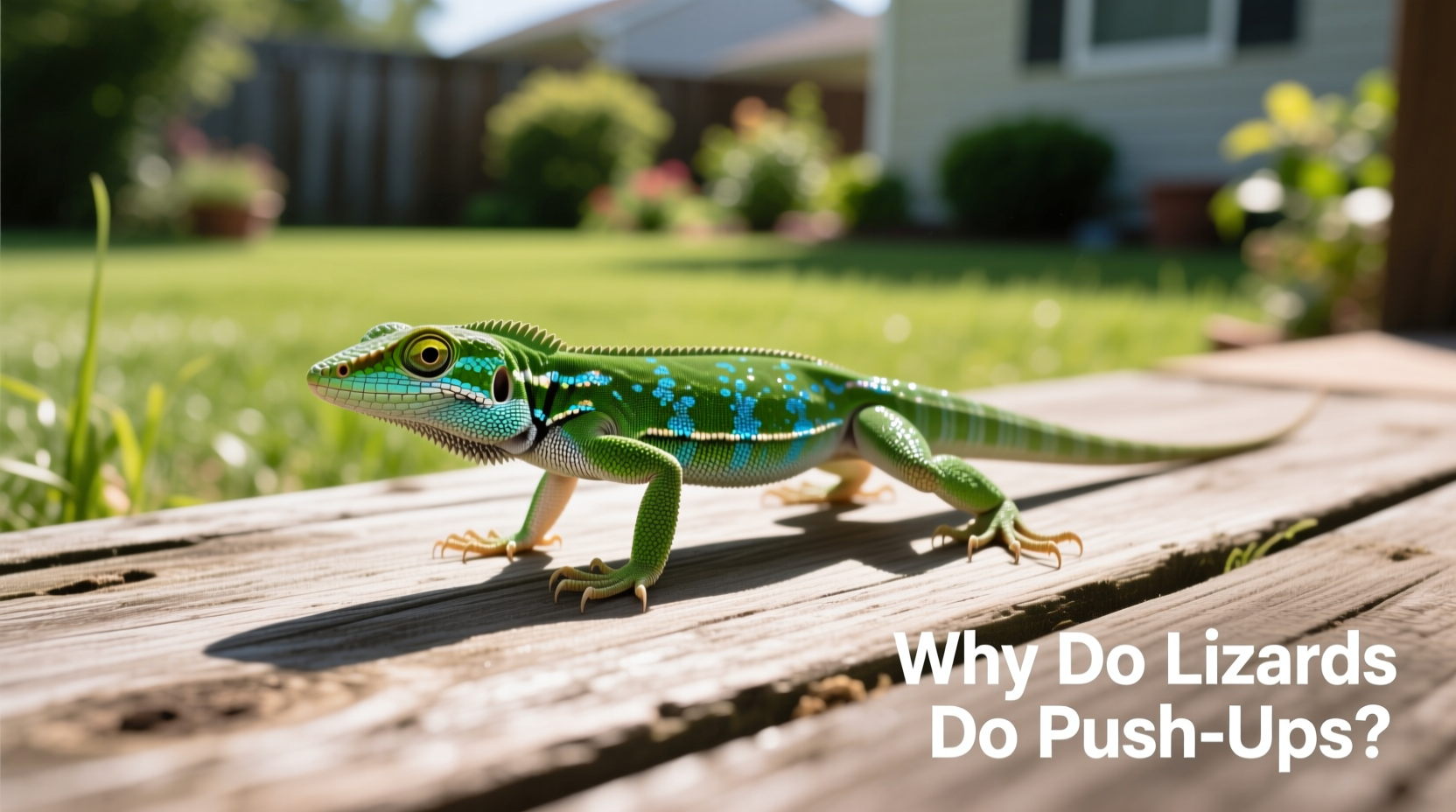
Lizard push-ups are not about building muscle or improving fitness. Instead, they are a visual signal used primarily by males to assert dominance, attract mates, and warn rivals. The up-and-down motion increases the visibility of key physical traits such as bright throat fans (dewlaps) and lateral body stripes, which serve as indicators of health, strength, and genetic quality.
This behavior is especially prevalent during breeding season when competition for territory and females intensifies. By performing push-ups, a male lizard broadcasts his presence and readiness to defend his space. The frequency, speed, and duration of the movements can convey different messages: rapid, vigorous push-ups often signal aggression, while slower, deliberate ones may function more as a territorial marker.
“Push-up displays are a low-cost way for lizards to resolve conflicts without physical combat. It’s essentially a ‘ritualized duel’ where size, stamina, and coloration determine the winner.” — Dr. Manuel Leal, Evolutionary Biologist, Duke University
Functions of Push-Up Behavior in Backyard Lizards
Lizard push-ups serve multiple purposes depending on context, species, and environment. Below are the primary functions observed in common backyard species:
1. Territorial Defense
Male lizards are highly territorial. When another male enters their claimed area—such as a sunny rock, fence post, or garden wall—the resident performs push-ups to issue a warning. If the intruder persists, the display may escalate into chasing or physical confrontation. However, in many cases, the visual signal alone is enough to deter a rival.
2. Mate Attraction
Females are drawn to males who exhibit strong, consistent displays. A robust push-up routine indicates vitality and good genes. Males often combine push-ups with dewlap extensions—flaring out a brightly colored flap of skin under the chin—to create a more striking performance. In species like the green anole, red or pink dewlaps contrast sharply against green bodies, making them highly visible.
3. Communication Across Distances
In environments with dense vegetation or uneven terrain, vocalizations are less effective. Visual signals like push-ups allow lizards to communicate across moderate distances, especially in open, sunlit areas where movement is easily seen. The repetitive nature of the motion helps ensure the message is received even if briefly obstructed.
4. Thermoregulation and Readiness Display
While not the primary purpose, some researchers suggest that push-ups may also help lizards assess their own physical condition after basking. A lizard that has warmed its body sufficiently will be more agile and capable of rapid movements, making it more likely to perform energetic displays. Thus, the ability to perform push-ups effectively may indirectly reflect thermal readiness and metabolic efficiency.
Tip: Observe lizards in the morning hours when they're most active after basking—this is peak display time.Species-Specific Push-Up Patterns
Not all lizards perform push-ups the same way. Different species have evolved unique rhythms, amplitudes, and accompanying behaviors. Here’s a comparison of three common backyard species:
| Species | Push-Up Style | Dewlap Use | Primary Purpose |
|---|---|---|---|
| Western Fence Lizard (Sceloporus occidentalis) | Rapid, high-amplitude bobbing; 5–20 reps per session | Blue patches on throat and belly flashed during dips | Territorial defense and mate attraction |
| Green Anole (Anolis carolinensis) | Slower, deliberate head-bobbing with dewlap extension | Bright red or pink dewlap prominently displayed | Mate signaling and dominance |
| Desert Spiny Lizard (Sceloporus magister) | Vigorous full-body push-ups, often from elevated perches | Yellow or orange throat markings shown during motion | Intimidation of rivals and territory marking |
The variation in display styles reflects adaptations to habitat, predation pressure, and social structure. For example, urban lizards may modify their push-up frequency due to increased noise and visual clutter, relying more on proximity-based signaling.
Environmental Influences on Push-Up Behavior
Several environmental factors influence how often and how intensely lizards perform push-ups:
- Temperature: Lizards are ectothermic, meaning their body temperature depends on external heat. Push-ups are rare when temperatures are too low because muscles cannot contract efficiently. Optimal display occurs between 75°F and 85°F (24°C–29°C).
- Time of Day: Most push-up activity peaks in mid-morning and late afternoon, coinciding with basking periods and mating activity.
- Habitat Structure: Open areas with clear lines of sight encourage more frequent displays. In contrast, densely vegetated gardens may reduce visual signaling, leading to shorter or less intense performances.
- Human Presence: Some studies suggest that lizards in urban backyards adapt their behavior around people. While they may continue push-ups near patios, they often reduce display duration when frequently disturbed.
Mini Case Study: Urban Lizard Signaling in Austin, Texas
In a 2021 observational study conducted in residential neighborhoods of Austin, researchers monitored green anoles on chain-link fences and wooden decks. They found that lizards near busy walkways performed 30% fewer push-ups than those in quieter backyard corners. However, when displays did occur, they were faster and more exaggerated—suggesting compensation for reduced visibility or attention. One particularly dominant male was observed performing synchronized push-ups with dewlap flares every 15 minutes during peak daylight, successfully maintaining a 3-square-meter territory for over six weeks.
This case illustrates how lizards balance energy expenditure with communication effectiveness, adjusting their behavior based on environmental feedback—a hallmark of adaptive animal intelligence.
How to Observe and Interpret Lizard Push-Ups
If you're curious about the lizards in your yard, here’s a step-by-step guide to interpreting their push-up behavior:
- Choose the Right Time: Visit your backyard between 9 AM and 11 AM or 4 PM and 6 PM, when lizards are most active.
- Identify Perching Sites: Look for elevated spots like fence posts, rocks, walls, or tree trunks—common staging areas for displays.
- Watch for Repetition: Count the number of push-ups in a single sequence. More than 10 rapid bobs often indicate aggression; fewer, slower ones may be territorial markers.
- Note Accompanying Features: Check for dewlap extension, color changes, or chasing behavior. A flared dewlap combined with push-ups usually signals mating intent.
- Monitor Interactions: If two lizards face each other and both perform push-ups, this is a “display duel.” The one that stops first typically retreats.
- Record Patterns Over Time: Keep a simple log over several days. You may notice certain individuals dominate specific zones.
Checklist: What to Look For in Lizard Push-Up Displays
- ✅ Frequency and rhythm of the bobbing motion
- ✅ Presence and color of the dewlap
- ✅ Body posture (upright vs. flattened)
- ✅ Environmental context (sunlight, perch height)
- ✅ Response from nearby lizards (retreat, counter-display)
- ✅ Time of day and ambient temperature
Common Misconceptions About Lizard Push-Ups
Despite growing interest in backyard wildlife, several myths persist about why lizards do push-ups:
- Myth: They’re exercising to stay fit.
Reality: Push-ups are not for physical conditioning. Energy is conserved in wild animals, and such repetitive motion would be wasteful without a communicative purpose. - Myth: All lizards do this.
Reality: Only certain families—mainly Iguanidae and Dactyloidae—exhibit this behavior regularly. Skinks, geckos, and many desert species use other forms of signaling. - Myth: It’s a response to humans watching them.
Reality: While lizards may adjust behavior around people, push-ups are directed at other lizards, not observers. You’re simply witnessing a natural interaction.
FAQ
Do female lizards ever do push-ups?
Yes, but rarely and usually in defensive contexts. Some females, particularly in highly competitive environments, may perform limited push-ups to defend nesting sites or food resources. However, their displays are typically less frequent and lack dewlap extension.
Can I encourage lizards to visit my yard and display more?
Absolutely. Provide sun-exposed basking spots like flat stones or wooden boards, plant native shrubs for cover, avoid pesticides, and maintain a small water source. A lizard-friendly habitat increases both population and observable behaviors.
Are push-ups harmful to lizards?
No. These displays are natural and low-energy. Lizards only engage in prolonged or intense sequences when necessary, and the behavior is part of their normal social repertoire.
Conclusion: Appreciating the Complexity of Simple Movements
The next time you see a tiny lizard doing push-ups on your patio, remember—you’re not just watching a quirky backyard spectacle. You’re witnessing a sophisticated language of survival, shaped by millions of years of evolution. Each bob and flare communicates identity, intent, and status in a world where silence speaks volumes.
By learning to interpret these signals, we deepen our connection to the natural world right outside our doors. Whether you're a casual observer or a budding herpetologist, taking the time to understand lizard behavior enriches your experience of urban wildlife and fosters greater respect for even the smallest inhabitants of your ecosystem.
🚀 Start observing today! Grab a notebook, find a sunny spot, and document the push-up patterns in your yard. Share your findings with local wildlife groups or online nature communities—you might contribute to citizen science efforts tracking urban reptile behavior.








